 Coffee Gear Picks
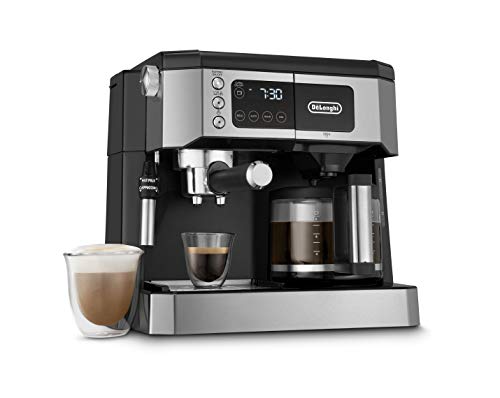
DeLonghi All in One COM532M Review (2026)
The De'Longhi COM532M is worth buying if you want a shared pot of coffee and enjoy making espresso yourself. Our researched verdict is 3.75/5: useful flexibility, but no grinder or one-touch milk drinks.
Verdict: 3.75/5: Buy the COM532M for a drip carafe plus manual pump espresso, not automatic lattes. Price band: $$.
Best for: Mixed coffee households wanting a drip carafe and traditional espresso preparation.
Our rating: 3.75/5
Pros
- ✓ Genuine drip and portafilter espresso formats
- ✓ 10-cup glass carafe
- ✓ Adjustable steam wand
- ✓ De'Longhi publishes simultaneous coffee and espresso preparation
Cons
- ✗ No built-in grinder
- ✗ Manual espresso and milk preparation
- ✗ Not prosumer equipment or a tiny-counter pick
- Price band
- $$
- Weight
- 13.54 pounds
- Finish/material
- Stainless steel finish
- Key feature
- Dual Heating System
Should you buy the De'Longhi COM532M?
Buy it if a pot of coffee is your daily staple and espresso is a drink you want to prepare, not just order from a screen. Skip it for capsule-only speed, automatic milk drinks, precise prosumer-style espresso control, or a very small counter. This is two brewing formats in one body, not two chores removed.
The sweet spot is a home where one person pours a large mug and another wants a cappuccino. Nobody has to turn espresso into an Americano, which is espresso diluted with water, just to satisfy the coffee drinker. You can keep the two drinks distinct without making room for two full-size brewing appliances.
Before choosing this layout, read our Best Coffee Maker Espresso Machine Combos (2026). It compares capsule, portafilter, pod, and super-automatic formats. That distinction matters more than the word “all-in-one”: a machine that makes both drink sizes may still lack the carafe or manual espresso workflow you want.
This review compares De'Longhi's published features with reporting from Consumer Reports, Good Housekeeping, and Best Buy Blog. The score rewards the useful combination of brewing formats, then weighs the missing grinder, manual milk work, and counter demands. It is an editorial buying judgment, not a measured taste score.
What are the COM532M's published specifications?
| Specification | Published detail |
|---|---|
| Model | COM532M |
| Type | Combination coffee maker and espresso machine |
| Drip capacity | 10-cup glass coffee pot |
| Pump | 15-bar pressure pump |
| Milk system | Advanced adjustable steam wand |
| Heating | Dual Heating System for coffee and espresso simultaneously |
| Controls | Digital touchscreen and 24-hour programmable timer |
| Dimensions | 14.52 x 11.03 x 12.79 inches |
| Weight | 13.54 pounds |
| Finish | Stainless steel finish |
| Warranty | 1 Year Manufacturer |
| Built-in grinder | No |
How does it handle drip coffee, espresso, and milk?
The COM532M is most convincing as a flexible household brewer, not an espresso specialist. Its drip side handles the shared pot, its pump side gives you traditional espresso preparation, and its wand adds milk drinks. Good Housekeeping's review covers all three, but convenience and drink quality should still be judged separately.
Drip coffee: the reason to choose a combo
The carafe matters when several people want coffee at once. You fill and load the drip side for a batch instead of preparing a small drink for each person. De'Longhi's programmable timer also lets you schedule that side ahead of time. It does not schedule the grinding, loading, and milk work for your morning latte.
Good Housekeeping's year-long review discusses drip coffee in both its lab and extended-use reporting. Consumer Reports' COM532M assessment separates brew performance and temperature from convenience. Those are useful distinctions: a programmable pot can make mornings easier without proving the water reaches the right temperature throughout brewing.
Espresso: a pump is a starting point, not a guarantee
This is genuine pump-and-portafilter equipment. A portafilter is the handled holder you fill with coffee and lock into the machine. That is a different process from brewing a short, strong drip shot. You take responsibility for the grounds and preparation rather than handing everything over to a capsule.
Do not buy it because “15 bar” sounds better than a smaller number. Serious Eats' espresso-machine guide explains the importance of pressure, temperature, and preparation together. Grinder quality, dose (the amount of coffee), and puck preparation (loading and pressing the grounds evenly) all affect the result. The pump label alone cannot tell you whether a shot will taste sweet, sharp, or bitter.
Milk drinks: adjustable, but still manual
De'Longhi publishes an adjustable steam wand for milk preparation. That makes the COM532M a better fit for someone interested in learning the pitcher routine than someone wanting a latte button. Good Housekeeping discusses the wand alongside espresso in its review. Treat milk preparation as its own skill, not a bonus feature you never have to think about.
For a latte, the goal is milk that looks glossy like wet paint, rather than a cap of large soap-like bubbles. A cappuccino can use more airy foam. Those are texture goals, not a promise that this machine delivers them automatically. You still need to handle the pitcher, select the appropriate wand setting, and clean the wand afterward.
Dual heating: helpful overlap, not a cafe workflow
De'Longhi says the Dual Heating System supports coffee and espresso preparation simultaneously. The useful implication is simple: you can start a pot for the table without waiting for that cycle to finish before preparing espresso. This is a manufacturer claim, not a timing result from Coffee Gear Picks.
Keep that claim narrow. It does not establish simultaneous espresso extraction and milk steaming, nor does it turn the COM532M into a prosumer dual-boiler machine. Prosumer equipment is the more specialized gear bought for finer control over shots. If you want to explore delicate light roasts and closely manage brewing temperature, this combo's format advantage is the wrong reason to choose it.
Controls and setup: learn each side separately
The digital touchscreen and timer are published features, but a screen does not make the whole machine automatic. Consumer Reports includes control comprehension, reservoir handling, and filter insertion in its convenience assessment. Those everyday actions deserve attention because you repeat them far more often than you change a clock setting.
Good Housekeeping's setup and controls reporting and Best Buy Blog's usability review provide practical context alongside the specifications. A practical approach is to learn drip brewing first, then espresso, then milk. For your first pot, check that the filter sits correctly and the carafe is in place. For espresso, follow the machine's instructions rather than assuming a familiar drip grind will work.
Counter fit: measure the working area, not just the body
One appliance is not automatically a compact setup. The published dimensions describe the body, but you also need space to turn the portafilter, move the pitcher, and load water and grounds. Good Housekeeping's design discussion is useful here; its photographs can help you picture the layout better than a size number alone.
Before buying, mark out the dimensions on your counter with tape. Then place a mug and pitcher beside that outline and check the overhead clearance. If you plan to grind fresh beans, leave a place for the grinder too. A machine tucked tightly between a toaster and a wall may fit on paper but make every milk drink awkward.
Do you need a separate grinder, and what does a morning involve?
You need a separate grinder if you want to brew from whole beans; the COM532M does not include one. Preground coffee is an option, but it removes your ability to adjust the grind for a particular espresso shot. Expect to load, tamp, brew, and prepare milk yourself rather than press one drink button.
Choose grinding before you commit to the layout
Serious Eats emphasizes that espresso needs a suitable grinder, not just a capable brewer. Fine adjustment helps you change how quickly water passes through the grounds. A drip-focused grinder can be useful for the carafe yet leave you frustrated on the espresso side. Two brew methods do not necessarily share one convenient grinder setting.
If that changes your shopping priorities, our Best Coffee Grinder and Espresso Machine 2026 guide compares options for readers who care more about integrated or separate grinding than a carafe-plus-portafilter layout. Decide where the grinder will live and how often you will switch settings before calling this a space-saving purchase.
A carafe-and-latte morning
The preparation you still do yourself
Step 1 Start the pot
- Load drip grounds and water
- Start the carafe brew
Step 2 Prepare espresso
- Use the appropriate grind and dose
- Load, tamp, lock in, and brew
Step 3 Finish the milk drink
- Steam milk using the instructions
- Pour, then clean the wand
Result
Coffee for the household, with a separately prepared espresso drink.
For a mixed household, that routine can be a satisfying compromise: the pot serves everyone while one person handles espresso. For a single latte drinker, it is extra equipment with little payoff. Think about an ordinary Tuesday, not the occasional weekend when you feel like making every possible drink.
How much cleaning does the COM532M need?
Plan on cleaning two coffee paths plus the milk wand, not just rinsing a carafe. The shared body reduces appliance count, but the drip basket, espresso holder, and milk-contact parts still need attention. Good Housekeeping and Best Buy Blog both discuss cleaning in their reviews; neither format removes the work associated with the other.
Use the manufacturer's instructions as your checklist for removable parts and cleaning products. After drip brewing, empty the grounds and clean the basket and carafe as directed. After espresso, remove spent coffee and clean the holder and basket. Do not assume every removable piece can go into the dishwasher merely because it looks sturdy.
Milk cleanup deserves priority. Wipe and purge the wand as instructed after use so milk does not sit and dry on it. Purging means briefly letting steam flow to clear residue. Use care around hot parts and steam, and let components cool before taking them apart for more thorough cleaning.
The longer-term tradeoff is also worth considering: both brewing functions live in one appliance. Separate brewers let you replace or upgrade one without changing the other. That is not a reliability prediction about the COM532M. It is a practical downside of the combo format if you expect your espresso interest to grow quickly.
Which alternatives make more sense if this layout is wrong for you?
Choose the Ninja CFN601 if you want a carafe but prefer capsule espresso preparation. Choose the Ninja Luxe Café Premier ES601 if built-in grinding and assisted preparation matter more. Choose the Philips 3200 LatteGo if you want bean-to-cup convenience and can give up the shared drip pot.
The CFN601 combines ground-coffee carafe brewing with Nespresso Original-compatible capsules, so it removes the espresso loading and tamping step. The ES601 adds integrated grinding and guided preparation, but it is not the same traditional glass-carafe layout. Both are covered in our combo guide linked above. Pick by the task you want to remove, not by which machine offers the longest drink menu.
The Philips 3200 LatteGo takes a different route: automatic drinks from whole beans instead of a drip carafe beside a portafilter. If you no longer need a combo at all, read Best Espresso Machine DeLonghi: 2026 Picks for a wider comparison within the brand. My final call: keep the COM532M on your shortlist only when serving a pot and preparing manual espresso are both real weekly habits.
Frequently asked questions
Is the De'Longhi COM532M worth buying?
Yes, if your household regularly wants both a drip carafe and manually prepared espresso. Our editorial verdict is 3.75/5. Skip it if you mainly want one-button lattes, integrated grinding, or a small single-cup machine. Its value comes from using both sides.
Does the De'Longhi COM532M make real espresso?
Yes, it uses a pump and portafilter rather than making a concentrated drip-coffee shot. That does not guarantee cafe-quality results. Serious Eats explains why grind quality, the amount of coffee, how you load the grounds, and brewing temperature matter alongside pressure.
Does the COM532M have a built-in grinder?
No, the COM532M has no built-in grinder. You supply ground coffee for both brewing sides, or use a separate grinder. For fresh-bean espresso, choose a grinder with fine enough adjustment for espresso, not just one that has a fine setting on the dial.
Can the COM532M brew coffee and espresso at the same time?
Yes, De'Longhi says its Dual Heating System supports simultaneous coffee and espresso preparation. That means the drip cycle need not take turns with espresso brewing. It does not mean the machine grinds, tamps, or steams milk automatically, and it is not a promise about simultaneous espresso and steaming.
Can the De'Longhi COM532M make lattes and cappuccinos?
Yes, you can combine an espresso shot with milk prepared using the adjustable steam wand. You hold the pitcher and manage the milk yourself. It is not a one-touch latte system, so allow for preparation and cleaning rather than expecting a finished drink from one button.
Will the COM532M fit on a small kitchen counter?
Check the published dimensions of 14.52 x 11.03 x 12.79 inches against your available space before buying. Also leave room to load coffee, handle the portafilter, and use a milk pitcher. A separate grinder adds to the setup, even though the two brewers share one body.