 Coffee Gear Picks

How to Fix Espresso Machine Rust (2026)
Unplug and cool your machine before tackling espresso machine rust. Clean only an intact exterior; unexplained flakes or brown water need service advice, not stronger chemicals.
A stainless finish does not mean every internal part is stainless or rust-proof.
Deal with rust safely
Exterior marks and internal corrosion need different fixes
Step 1 Diagnose
- Unplug and cool
- Locate the residue
Step 2 Isolate
- Check the finish
- Separate removable parts
Step 3 Clean exterior
- Use an approved cleaner
- Wipe and dry
Step 4 Check water path
- Look at accessible parts
- Leave casing closed
Step 5 Prevent or escalate
- Keep surfaces dry
- Arrange service for damage
Result
Know what you can clean and what needs a technician
Should you clean, repair, or replace the machine?
Clean a small surface mark only when the surrounding finish is intact and your manual permits it. Pitting (tiny holes), peeling metal, leaks, or suspected corrosion inside need professional assessment. Get a repair quote before replacing a machine; polishing cannot rebuild metal that has been eaten away.
If safe repair is unavailable, our Best Espresso Machine Stainless Steel Picks 2026 offers a researched replacement shortlist for damaged finishes or internal corrosion.
What do you need before cleaning?
Gather soft cloths, water, and your model’s cleaning instructions before choosing an exterior cleaner. Check whether the affected part is bare stainless, coated metal, or plastic with a metallic finish. A cleaner suitable for bare steel may be wrong for a coating, so do not guess from looks alone.
- Two clean microfiber cloths, one for wiping and one for drying.
- A flashlight and phone for documenting marks.
- An exterior cleaner expressly permitted by the manual, if needed.
How do you remove rust marks safely?
Start with a gentle wipe, then treat only confirmed exterior marks using your machine’s instructions. Keep cleaners out of openings, controls, and the water system. Inspect accessible removable parts without opening the casing. Stop if you find damage rather than a stain, or cannot tell where the residue comes from.
1. Diagnose the residue
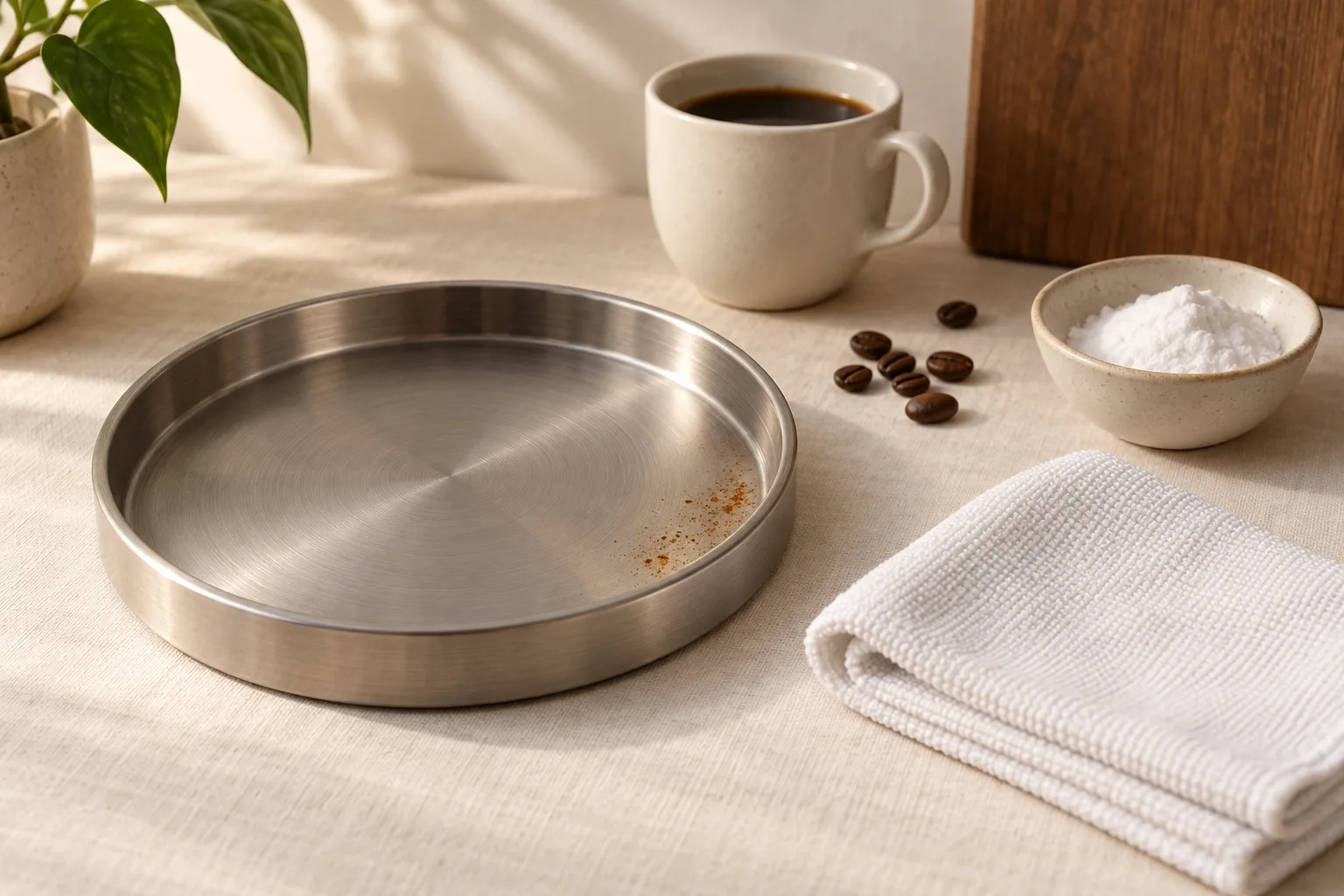
Photograph the mark, then wipe gently with a damp cloth. Greasy brown smears around coffee spills suggest oils; chalky crust suggests mineral deposits. Orange specks may be surface rust or transferred iron from another metal item. Color alone cannot identify the cause. Do not taste suspect water.
2. Isolate the affected part
Remove only parts the manual lets you remove, such as the drip tray. Check underneath for trapped water and nearby rusty utensils. Keep the casing closed. If the stain surrounds a leak, skip cosmetic cleaning and contact service.
3. Clean only the exterior
Use the mildest permitted method. GE Appliances’ “How to Clean Rust from Stainless Steel” describes baking-soda paste or an oxalic-acid cleaner with a soft cloth. That is general surface advice, not permission to use either on your machine.
KitchenAid Product Help specifies a 5% oxalic- or acetic-acid-based cleaner for its stainless surfaces and wiping with the grain. Follow your own manufacturer’s directions instead if they differ. Patch-check a hidden area, apply to the cloth rather than spraying the machine, then remove residue and dry as instructed.
4. Inspect accessible water-path parts
Look inside the removable tank and at accessible outlets. Do not dismantle the boiler or run water just to investigate. Unexplained flakes, peeling material, or brown outlet water warrant stopping use and contacting the manufacturer. Send photos and your cleaning history; exterior cleaner never belongs in the tank.
5. Prevent recurrence or arrange service
Dry the cleaned surface and note whether the mark returns. Nuova Ricambi connects water quality with scale and corrosion in coffee equipment. Ask service to check the water source and any leak, not just replace the stained part.
Which cleaning mistakes should you avoid?
Avoid steel wool, abrasive sponges, bleach, and household rust removers. Do not mix cleaners or use exterior acids inside the machine. Barista Hustle’s “P 5.02 - Corrosion” explains that stainless steel can corrode under some conditions involving water, heat, air, and chemicals. More aggressive cleaning is not automatically better.
- Soaking the appliance: Remove washable parts instead; never immerse the body.
- Scrubbing through a coating: Peeling finish needs assessment, not sanding.
- Ignoring cleaner residue: Complete the label’s removal instructions before reassembly.
What if the marks return or flakes appear?
Recurring marks need a cause check, not repeated polishing. Look for standing water, a rusty removable part, or a leak. Flakes from an outlet or unexplained water discoloration belong with a technician. Keep photos of the change and leave the machine unplugged if water has reached electrical areas.
Orange dots return under the tray
Dry the area and check removable parts for corrosion. If the panel is pitted or the tray leaks, ask about replacing the affected part.
Brown water or flakes come from an outlet
Stop brewing. Report the outlet involved and recent cleaning products to service; do not attempt an improvised chemical flush.
How can you keep rust from coming back?
Keep spill-prone surfaces dry, empty the drip tray, and follow your model’s tank-cleaning and water guidance. Quick Mill’s “How to clean an espresso machine” recommends microfiber cleaning, tank care, and avoiding abrasive sponges. Build a routine you will actually keep, rather than waiting for another orange patch.
For simpler routines and accessible parts, see Best Espresso Machine Low Maintenance (2026). For easier-to-rinse milk systems and removable parts, compare Best Espresso Machine Easy to Clean (2026): 7 Low-Mess Picks.
If replacement is necessary, the Bambino Plus is our compact reference, not a corrosion guarantee. You will still need to clean and dry it.
Frequently asked questions
Can stainless steel espresso machines rust?
Yes. Stainless steel resists corrosion, but it is not immune. Barista Hustle’s corrosion lesson explains how water, heat, air, and cleaning chemicals can contribute. A stainless exterior also tells you little about the materials inside.
Is brown residue always rust?
No. Coffee oils and deposits from your water can look brown too. Location, texture, and whether a gentle wipe removes it provide clues, not proof. Unexplained residue from the water outlet needs service advice.
Can I use vinegar to remove espresso machine rust?
Do not pour vinegar into the machine as a rust treatment. KitchenAid permits specific acid-based cleaners on certain stainless exteriors, not every machine. Follow your model’s manual for both surface cleaning and descaling.
Should I descale a machine with suspected internal rust?
Ask the manufacturer or a technician first. Descaling removes mineral buildup; it is not a repair for corroded metal. If flakes or unexplained discoloration come from the water path, stop brewing rather than experimenting with chemicals.
Can I keep using a machine with an orange exterior spot?
An isolated mark on an intact exterior does not automatically mean the water path is damaged. Clean it only as the manual permits and watch for recurrence. Leaks, pitting, flakes, or residue from an outlet call for a different response: stop and seek service.
Does internal corrosion mean I need a new machine?
Not necessarily. A technician may be able to replace the affected component. Ask about parts availability, the cause, and the repair warranty before deciding. Replacement makes more sense when safe repair is unavailable or the damage is widespread.