 Coffee Gear Picks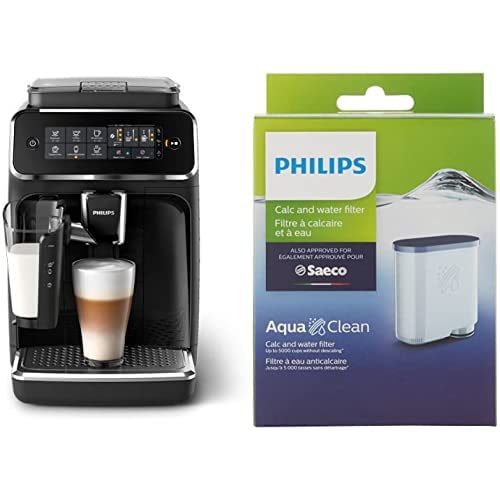
Best Espresso Machine Easy to Clean (2026): 7 Low-Mess Picks
The best espresso machine easy to clean is the Philips 3200 Series LatteGo for most homes, especially if cappuccinos and lattes are in your normal rotation. Cleanup pain usually comes from milk tubes, steam wands, drip trays, grinder crumbs, and hidden wet parts, not from the espresso shot itself.
Easy-Clean Espresso Machines Worth Shortlisting
Ranked by milk cleanup, grinder mess, removable parts, descale support, and daily rinsing work
Easiest Overall
No milk tubes to babysit after every latte
- Two-part milk system
- No hidden milk tubes
- Dishwasher-safe status
- AquaClean filter support
Top Pick Philips 3200 LatteGo
$$$
Best cleanup story for milk drinks
Check Price on Amazon One-Touch Milk
More drink buttons with auto-clean support
- LatteCrema system
- Auto-clean function
- Dishwasher-safe parts
- 60 oz water capacity
Top Pick De'Longhi Magnifica Evo LatteCrema
$$$
Best for latte variety
Check Price on Amazon Compact Semi-Auto
Tiny footprint without built-in grinder mess
- Fast ThermoJet heat-up
- Auto steam wand
- Separate grinder setup
- Small-counter friendly
Top Pick Breville Bambino Plus
$$
Best small-kitchen pick
Check Price on Amazon Budget Simple
Basic removable parts, fewer fancy systems
- Removable water tank
- Simple drip tray
- Manual steam wand
- Low entry price
Top Pick CASABREWS 3700 Essential
$
Best low-cost option
Check Price on AmazonTop pick: Philips 3200 Series LatteGo — the easiest choice for most people because its two-part, no-tube milk system is simpler to rinse than traditional milk hoses while still making one-touch espresso drinks.
- Price band: $$$
- Weight: 8 kg
- Materials: Plastic exterior; reusable filter system
- Key cleaning feature: Two-part LatteGo milk system with no tubes or hidden parts; listed as dishwasher safe
Buy Philips 3200 LatteGo if you want the easiest overall milk-drink cleanup. Buy De'Longhi Magnifica Evo LatteCrema if you want more one-touch drink variety and auto-clean support. Buy Breville Bambino Plus if you want compact semi-automatic espresso without integrated grinder mess, and buy CASABREWS 3700 Essential if you want a low-cost machine with basic removable parts.
Quick picks
Our Top Picks


Which easy-clean espresso machine should you buy?
Philips 3200 LatteGo is the simplest choice if milk cleanup is your biggest headache. De'Longhi Magnifica Evo is the move if you want more one-touch milk drinks. Breville Bambino Plus fits small kitchens and separate-grinder setups. The table below keeps the cleanup trade-offs visible.
| Product | Best for | Price band | Key spec | Verdict |
|---|---|---|---|---|
| Philips 3200 LatteGo | Milk drinks with minimal tube cleanup | $$$ | Two-part LatteGo milk system; no tubes or hidden parts | The easiest cleanup story for most milk-drink homes. |
| De'Longhi Magnifica Evo LatteCrema | One-touch lattes and cappuccinos | $$$ | LatteCrema milk system with dishwasher-safe parts | Great if you want more one-touch drink variety. |
| Breville Bambino Plus | Small kitchens and separate-grinder setups | $$ | 3-second ThermoJet heat-up; auto steam wand | Compact, fast, and cleaner than grinder-in-machine setups. |
| Breville Barista Touch Impress | Guided espresso with assisted tamping | $$$ | Guided workflow with integrated grinder and assisted tamping | Premium convenience, but more grinder-area cleanup. |
| Gaggia Classic Evo Pro | Traditional espresso users who maintain gear | $$ | 58mm commercial portafilter and 9-bar extraction | Not the lowest daily mess, but simple to maintain long term. |
| De'Longhi Dedica Maestro Plus | Narrow counters and removable-part cleanup | $$ | Slim body with automatic steam wand and dishwasher-safe parts | A tidy fit for narrow counters. |
| CASABREWS 3700 Essential | Low-cost espresso with simple removable parts | $ | Removable 43.9 oz tank and simple steam wand workflow | Cheap and basic, with fewer reminders or automations. |
How are easy-clean espresso machines compared?
We scored machines on the chores you feel before your first sip: milk cleanup, grounds mess, water and drip access, maintenance prompts, and long-term serviceability. Espresso quality matters, but for this guide, the tiebreaker is simple: fewer sticky, hidden places for milk and wet coffee to hang out.
Milk cleanup comes first. No-tube systems, detachable carafes, auto steam-wand purges, and dishwasher-safe parts can turn “I should make a latte” into “I will make a latte” on a weekday. We also looked at where wet grounds collect, whether the drip tray slides out without spilling, and whether the machine nudges you before scale turns the water path crusty.
Grinder mess matters too. Super-automatic machines hide grinding, but they still have hoppers, burrs, chutes, and spent-puck bins that need periodic attention. Semi-automatic machines put the mess in your hands, which can be annoying, but it’s also easier to see, wipe, and keep from going stale.
Which espresso machines are easiest to live with?
Milk drinks are where “easy to clean” is won or lost. Philips wins for milk-drink households because it avoids tubes. De'Longhi is strong when you want more drink buttons with built-in rinse support. Breville’s compact semi-autos suit people who don’t mind knocking out a puck. Gaggia is for owners who value repairable simplicity over one-touch convenience.
1) Philips 3200 LatteGo
Philips has the clearest cleanup advantage in this list. The Philips/Amazon listing describes LatteGo as a two-part milk system with no tubes or hidden parts, plus dishwasher-safe cleaning. That’s exactly the design that saves you from poking a tiny brush through a milk hose after every cappuccino.
The trade-off is that it’s still a super-automatic: you’ll empty the spent-grounds container, rinse the drip tray, keep the water tank fresh, and stay on top of descaling. (Philips also mentions AquaClean filter support on the listing, which can reduce how often you descale.) Skip it if you want the full manual ritual of weighing, tamping, and steaming; buy it if your goal is “latte now, cleanup later, and later is easy.”
Pros
- ✓ No-tube milk system is the best cleanup design here
- ✓ Dishwasher-safe milk parts reduce sticky residue work
- ✓ Filter support can reduce descale frequency (per listing)
Cons
- ✗ More internal parts than a simple semi-automatic machine
- ✗ Plastic exterior will not feel as tank-like as steel machines
2) De'Longhi Magnifica Evo LatteCrema
Magnifica Evo is for the latte person who wants choices without building a little café station on the counter. The De'Longhi/Amazon listing highlights one-touch recipes, the LatteCrema milk system, an auto-clean function, and dishwasher-safe parts. That’s a strong combo if your main cleanup pain is “milk drinks for two people, twice a day.”
The honest downside: a more involved milk system usually means more parts to rinse and keep track of, even with rinse cycles. Pick this over Philips if drink variety and a more feature-rich front panel matter more than absolute milk-system simplicity. Skip it if you want the fewest possible milk parts.
Pros
- ✓ Strong one-touch milk-drink workflow
- ✓ Auto-clean support helps after latte sessions
- ✓ Large water capacity means fewer tank refills
Cons
- ✗ Milk system is more involved than Philips LatteGo
- ✗ Still needs regular carafe and drip-tray cleaning
3) Breville Bambino Plus
Bambino Plus keeps cleanup visible and small. The Breville/Amazon listing notes a 3-second ThermoJet heat-up, a 54mm portafilter, and automatic steam-wand claims. In plain English: it heats fast, makes real portafilter espresso, and helps with milk texture, without committing you to an integrated grinder.
You still knock out the puck, rinse the basket, and wipe/purge the wand after milk. But if you hate the idea of old grounds living inside your espresso machine, this “separate grinder” setup is cleaner in the long run. For grinder picks, start with our best burr grinder for espresso guide.
Pros
- ✓ Tiny footprint for tight counters
- ✓ No built-in grinder chamber to clean
- ✓ Automatic steam wand reduces milk-frothing fuss
Cons
- ✗ Requires a separate espresso grinder
- ✗ Manual puck and portafilter cleanup after every shot
4) Breville Barista Touch Impress

Barista Touch Impress is the “help me do this right” option. Breville positions the Impress line around assisted dosing/tamping and a guided workflow, and the integrated grinder means fewer separate gadgets to wipe down. If your main cleanup annoyance is a messy tamping station, this can simplify the routine.
The trade-off is that grinders create their own maintenance: hopper wiping, chute brushing, and dealing with retention (old grounds that hang around). If you like the idea of a guided machine but still want a cleaner grinder situation, compare it against the Bambino Plus + separate grinder approach.
Pros
- ✓ Guided workflow is friendly for beginners
- ✓ Integrated grinder reduces separate gear clutter
- ✓ Large water capacity suits frequent drinks
Cons
- ✗ Built-in grinder adds more cleaning zones
- ✗ Bigger and pricier than most cleanup-first shoppers need
5) Gaggia Classic Evo Pro

Gaggia Classic Evo Pro, Thunder Black is not the lowest-effort daily machine, and that’s the point. The Gaggia/Amazon listing highlights 9-bar extraction, a three-way solenoid valve, steel housing, and a 58mm commercial portafilter. Those are traditional-machine signals: fewer “mystery systems,” more straightforward parts you can see and clean.
You wipe and purge the steam wand, knock out pucks, and rinse the portafilter like a normal espresso routine. The upside is long-term sanity: no milk carafe to disassemble, and fewer internal milk-path surprises. Pick this if you value serviceable simplicity. Skip it if you want one-touch cappuccinos.
Pros
- ✓ Simple traditional layout is easy to understand
- ✓ Steel housing feels more durable than plastic-heavy machines
- ✓ 58mm portafilter gives room to grow
Cons
- ✗ More manual cleanup after every shot
- ✗ No one-touch milk-drink convenience
6) De'Longhi Dedica Maestro Plus

Dedica Maestro Plus is the narrow-counter specialist. If you want a machine that’s easier to wipe down and easier to live beside a sink, the slim body matters as much as any feature list. The listing also notes dishwasher-safe parts, which is helpful for the pieces that tend to get sticky and gross.
It’s still a semi-automatic workflow: you handle grounds, baskets, and the drip tray. The automatic wand can reduce milk guesswork, but you still need to wipe and purge right after steaming. Buy it if space is the limiting factor. Skip it if you want true one-touch milk drinks.
Pros
- ✓ Slim shape fits crowded counters
- ✓ Dishwasher-safe status helps with removable parts
- ✓ Automatic steam wand lowers milk texture guesswork
Cons
- ✗ Still requires portafilter cleanup
- ✗ Small body can feel cramped during busy drink sessions
7) CASABREWS 3700 Essential

CASABREWS keeps the promise modest: a simple espresso machine with a removable tank, basic drip-tray workflow, and a manual steam wand. There are fewer automatic systems to learn, which can be refreshing if you mainly want affordable espresso and don’t expect the machine to remind you about everything.
The downside is that less automation means more memory. You need to wipe the wand right away, empty the tray before it sloshes, and stay on top of descaling. If budget is the main concern, compare our best espresso machine under $200 picks before you buy.
Pros
- ✓ Low price keeps expectations realistic
- ✓ Simple removable parts are easy to understand
- ✓ No built-in grinder to trap stale grounds
Cons
- ✗ Few maintenance prompts compared with pricier machines
- ✗ Manual steam wand needs quick wiping after milk drinks
Frequently asked questions
What is the easiest espresso machine to clean?
The Philips 3200 Series LatteGo is the easiest choice for most people because its milk system has two parts and no tubes. You still need to rinse the drip tray, empty spent grounds, and follow descale prompts, but milk cleanup is much less fussy.
Are automatic espresso machines easier to clean than manual ones?
Automatic machines are usually easier day to day because they grind, dose, brew, and often rinse with prompts. The catch is long-term internal maintenance. Semi-automatic machines ask for more daily wiping and puck cleanup, but they are often simpler inside.
Which espresso machine with milk frother is easiest to clean?
For milk drinks, Philips LatteGo is the easiest style here because it avoids long milk hoses. The De'Longhi Magnifica Evo is also strong if you want more one-touch recipes and an auto-clean function, but its milk system has more going on.
Do I need to descale an easy-to-clean espresso machine?
Yes. Easy-clean does not mean scale-proof. Mineral buildup still forms inside boilers and water paths, especially with hard water. Descale reminders, water filters, and removable tanks make the job easier, but they do not remove the job completely.
Are dishwasher-safe espresso machine parts worth it?
Yes, especially for milk parts and drip trays. Dishwasher-safe pieces turn sticky milk film into a normal kitchen chore instead of a tiny brush project. Just check the manual first, because not every removable part belongs in the dishwasher.
Is a built-in grinder harder to clean?
Usually, yes. A built-in grinder saves counter space, but it adds a bean hopper, burr chamber, and grounds chute to maintain. A separate grinder creates its own mess, but it is easier to brush out and replace if something wears out.
Which related guides help reduce espresso cleanup?
The machine is only one part of the mess. Your grinder, grind setting, and cleaning routine decide whether your counter looks like a tidy café bar or a cocoa-powder crime scene. These guides help you build the rest of the setup without adding chores you’ll hate.
- Best espresso machine under $200 — useful if CASABREWS is your budget starting point.
- Best burr grinder for espresso — the right match for Bambino Plus, Gaggia, and Dedica setups.
- How to clean a burr coffee grinder — keep stale grounds from sneaking into fresh shots.
- Burr grinder settings for espresso — dial in without wasting half a bag of beans.