 Coffee Gear Picks
How Often Should I Descale My Espresso Machine? (2026)
Descale when your machine manual or descale alert tells you to. Without model-specific guidance, roughly every two to three months is a practical daily-use starting point, adjusted for water hardness and use.
Find your descaling schedule
Four checks before you reach for a bottle
- Find the descale instructions
- Identify the correct alert
- Measure hardness as directed
- Check filter instructions
- Use the model interval
- Record your last cycle
- Use an approved formula
- Finish every rinse
A schedule that fits your machine, not a random date on the calendar
What interval should you start with?
Use two to three months only as a planning starting point for daily home brewing when your model gives no interval. Whole Latte Love suggests two months for semi-automatic machines, qualified by water conditions. De’Longhi’s three-month household guidance is not a rule for every machine.
De’Longhi’s pump-machine FAQ instead recommends after 200 uses and says hardness matters. Calendar advice and use counts are different, so choose your model’s instructions over either general figure.
Supplies and optional descalers
You need your model’s manual, an approved descaler, fresh water, and a container for the discharged solution. Have a water-hardness test ready if the manual calls for one. The five options below are supplies, not reasons to descale sooner. Choose the formula your machine permits before choosing liquid or powder.
- EcoDecalk specs: 0.5 kg; biodegradable plant-based lactic acid; alcohol-free and bleach-free.
- Bottle: 500 ml / 16.9 fl oz, listed as a 15-month supply, not a promised maintenance interval.
Need help choosing? Best Espresso Machine Descaler (2026): 7 Safe Picks compares formats and machine-compatibility considerations.
Our Top Picks

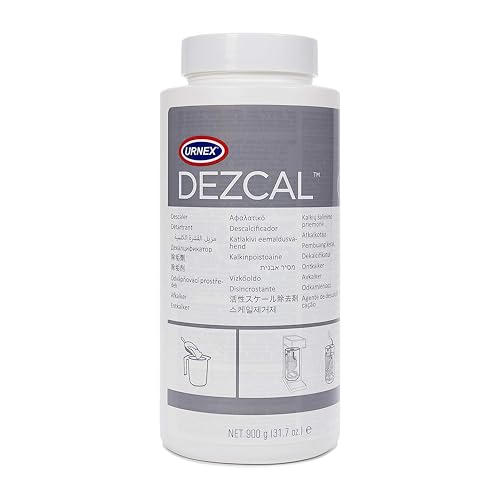

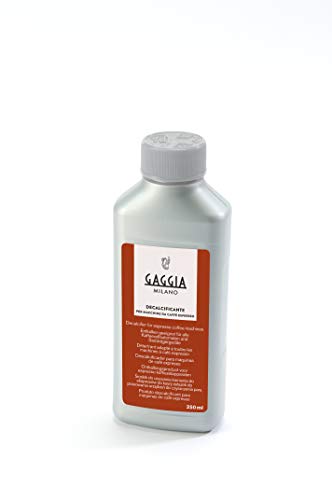

Urnex Full Circle Espresso Machine Descaler 2 Packets
$
Check Price on AmazonSet your schedule in four steps
Start with your model’s instructions, check the water you actually put in the tank, then record your next due date. Treat an alert as a model-specific instruction, not a guess about taste. Only run the chemical cycle after confirming that home descaling is allowed and that you have the right supplies.
1. Identify the right reminder
Look up the exact light or screen message. The Breville BES880 manual separates cleaning from descaling and ties descale frequency to hardness and use. Do not copy another model’s button sequence.
2. Check hardness and filter settings
Test the water as your manual directs and enter the correct hardness setting, if available. Hardness means the minerals that can leave chalky deposits, like the white crust in a kettle. Whole Latte Love explains that some machines calculate reminders from hardness.
Water settings and cleaning alerts shape your ongoing workload. Best Espresso Machine Low Maintenance (2026) compares machines designed to reduce routine maintenance burden.
3. Record the last cycle
Log the completion date, water source, and filter change. Use your model’s interval or use count for the next reminder. Recheck the schedule if you switch water sources or start making several drinks a day.
4. Follow the approved cycle
Use the specified dilution, collection container, and rinse sequence. Check whether the tank filter must come out; Whole Latte Love notes this may be required. Finish all rinses and reset the reminder only as instructed.
Do not confuse cleaning with descaling
Detergent cleaning removes coffee oils and residue; descaling removes mineral deposits in the water system. Backflushing means cleaning through the brew system with a blind basket, only on machines that allow it. Breville’s manual treats these as separate cycles, so a cleaning light does not automatically mean you need descaler.
For detergent guidance, see Best Espresso Machine Cleaner (2026): 7 Picks. Do not substitute vinegar by default: Tom’s Guide’s expert roundup supports checking manufacturer instructions rather than treating vinegar as a universal solution.
What if flow slows or the alert stays on?
Check the manual’s troubleshooting steps before repeating a descale cycle. Slow flow, changed taste, or cooler coffee can have several causes; none proves scale on its own. An alert that remains after descaling may mean the sequence was not completed. Check the rinse and reset instructions rather than adding more chemical.
Slow shots or an unfamiliar taste
Check grind, coffee freshness, and routine cleaning too. Whole Latte Love discusses scale-related flow and heating problems, but persistent trouble after approved maintenance calls for manufacturer support, not stronger solution.
Reminder still showing
Confirm you ran the descale program, not the cleaning program, and finished the required rinses. If the message remains, contact support with your model number and the steps you completed.

Frequently asked questions
How often should I descale my espresso machine?
Follow your machine manual and descale alert first. For daily home use without model-specific guidance, roughly every two to three months is a starting point, not a guarantee. That range reflects Whole Latte Love’s qualified two-month advice and De’Longhi’s average-household three-month guidance.
How often should I descale an espresso machine with hard water?
Hard water generally means a shorter interval because it brings more scale-forming minerals into the machine. Breville’s BES880 manual ties frequency to hardness and use. Set your machine’s hardness setting as directed, then follow its alert or schedule rather than choosing a fixed monthly rule.
Can you descale an espresso machine too often?
Yes, you can run unnecessary chemical cycles. More is not automatically better, and the wrong formula or dose can create problems. Follow the approved interval and procedure instead of adding extra cycles just because your coffee tastes different. Investigate other causes too.
What happens if you don’t descale an espresso machine?
Scale can build up inside the water system. Whole Latte Love’s cleaning guidance discusses scale-related performance problems: flow and heating may suffer, which can affect taste. Persistent buildup may also put components at risk. These are possible consequences, not proof that every slow shot needs descaling.
Should I clean or descale my espresso machine first?
Use the order in your model’s manual; there is no universal sequence. Breville’s BES880 manual treats detergent cleaning or backflushing and descaling as separate jobs. Cleaning tackles coffee residue, while descaling tackles minerals in the water system. One cycle does not replace the other.
Does filtered water reduce how often you need to descale?
It can, if the filter actually reduces scale-forming minerals. Do not assume every drinking-water filter does that. Whole Latte Love explains that reminders may depend on water-hardness settings. Follow your filter replacement schedule and machine instructions; filtered water does not cancel a descale alert.