 Coffee Gear Picks

How to Froth Oat Milk With a Milk Frother (2026)
Froth shaken oat milk in a small batch, using gentle heat for hot drinks or no heat for cold foam. With a handheld wand, add air first, then swirl it into finer bubbles.
Oat-milk foam in five steps
Choose hot or cold before you start
Step 1 Prepare
- Choose barista-style milk
- Shake the carton
Step 2 Measure
- Respect frothing fill lines
- Warm gently or keep cold
Step 3 Froth
- Select the matching program
- With a wand, add air then swirl
Step 4 Smooth
- Swirl the vessel
- Look for fine, pourable foam
Step 5 Serve
- Have your coffee ready
- Pour without waiting
Result
Aim for flowing foam, not a mound of dry bubbles.
What is the quickest way to get better oat-milk foam?
Start with shaken barista-style oat milk and the correct frothing fill line. For hot drinks, use gentle heat; for iced drinks, skip heating. Match the technique to your tool: an automatic machine runs its own cycle, while a handheld whisk needs you to control where air enters.
Need a tool? Best Milk Frother (2026): 7 Picks for Better Lattes compares automatic, handheld, cold-foam, oat-milk, cleanup, and budget options.
What do you need before starting?
You need oat milk, a frother, and room for the foam to expand. A handheld wand also needs a separate heat-safe vessel for hot drinks. Choose barista-style milk first: Zulay Kitchen’s oat-milk guide recommends it over regular versions, whose formulations can foam differently.
- Oat milk, shaken before measuring.
- Automatic frother or handheld wand.
- Pitcher or tall, heat-safe vessel.
- Optional thermometer for separately warmed milk.
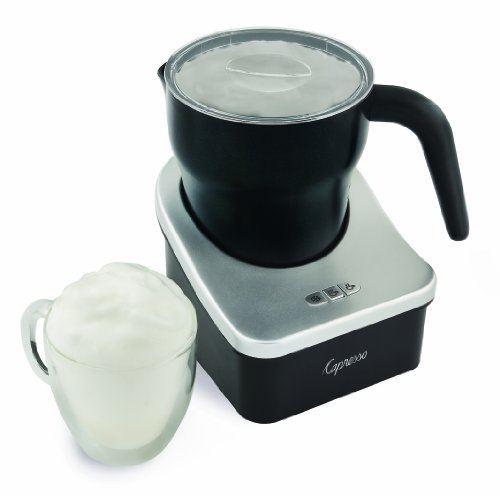
Breville lists adjustable temperature, induction heating, two discs, and a dishwasher-safe jug. This is a hot-drink convenience choice, not a reason to replace a working wand.
Our Top Picks
Our Top Picks




How do you froth oat milk for hot or cold drinks?
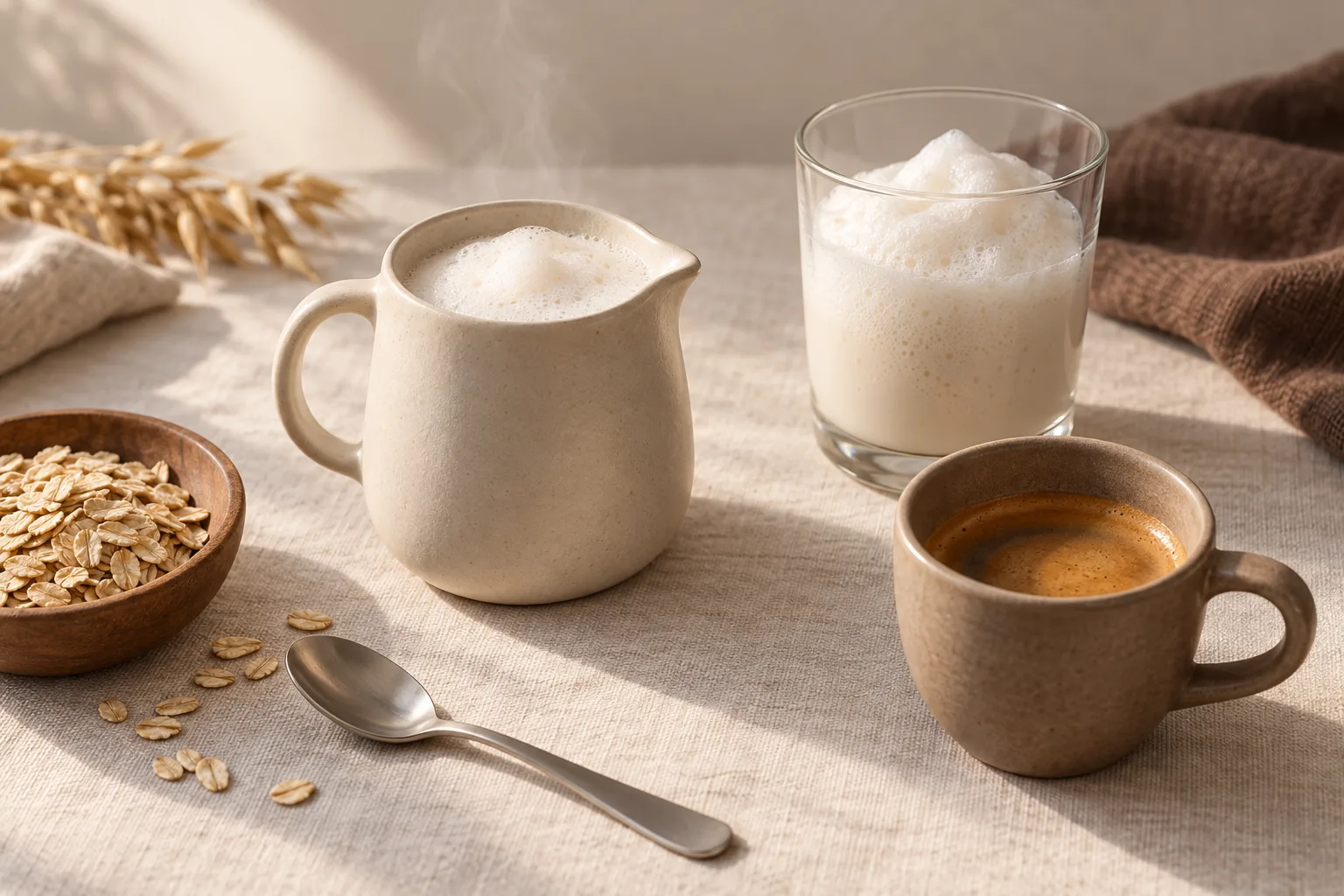
Prepare the milk, choose the temperature, then use your tool’s matching method. Automatic frothers handle the movement for you. With a handheld wand, briefly whisk near the surface before going deeper. Finish by swirling and pouring promptly. Aim for glossy, flowing foam rather than something you could scoop like shaving cream.
1. Shake and measure
Shake the carton as directed, then measure one drink’s worth. For machines, stay between the minimum and the frothing maximum, which may differ from the heating maximum. For a wand, leave plenty of empty space above the milk.
2. Choose hot or cold
For hot drinks, start around 130–150°F, the range published by Zulay Kitchen in the guide linked above. It warns that overheating weakens oat-milk foam. Warm wand batches separately, checking with a thermometer instead of boiling. If your machine has no temperature dial, use its recommended program.
3. Use the matching frothing method
Automatic: Fit the frothing attachment, add milk, and select hot foam, latte, or the closest manufacturer-approved program. Let the cycle finish. Keurig’s oat-milk guidance also directs readers to their frother’s settings.
Handheld: Put the whisk just beneath the surface before switching it on. Add air briefly, then lower it and tilt the vessel to make a whirlpool. Elise Tries To Cook gives a 15–30-second frothing window. Treat that as a starting point; stop before stiff bubbles take over.
Cold foam: Keep the milk fridge-cold and select cold foam, not hot foam followed by cooling. Zulay Kitchen separates these methods. A wand needs no heating; Elise Tries To Cook also describes a French-press fallback using the plunger to aerate milk.
4. Smooth the foam
Swirl the pitcher gently. If you see large bubbles, give a heat-safe pitcher a gentle tap on a protected counter. Look for milk and foam moving together, not a dry cap sitting above thin liquid.
5. Pour immediately
Have the coffee ready before the frothing ends. Swirl once more and pour right away, as Keurig recommends preparing the milk close to serving. For iced coffee, pour the cold foam over the finished drink.
Why is the foam thin, bubbly, or disappearing?
Use the symptom to choose your next change, rather than frothing longer by default. Thin milk calls for checking air entry and formulation; big bubbles call for less surface whisking. If foam appears but fades quickly, check heat and serving delay. Zulay Kitchen highlights low protein and overheating as common trouble spots.
- Thin foam: A deeply buried wand mixes without adding much air. Start shallower; try barista-style milk if your regular carton is low in protein.
- Huge bubbles: Lower the whisk sooner and build a deeper whirlpool.
- Weak foam after heating: Reduce heat next time; do not reheat repeatedly.
- Overflow: Reduce the batch to the frothing fill line.
- Uneven results: Check that you shook the carton each time.
- Foam gone before serving: Make the coffee first and shorten the wait.
What if the machine still gives you flat milk?
Check the attachment and selected program before blaming the carton. A heating-only setting is not a foam setting. Follow the manual to confirm that the whisk or disc is fitted correctly, then retry with a fresh measured batch. Keep the milk choice unchanged while you sort out the machine.
Is an espresso machine’s steam wand the same tool?
No. A spinning frother whisks milk; a steam wand injects steam to heat and texture it. A standalone frother does not make espresso. If you want espresso and milk preparation together, Best Espresso Machine Milk Frother Picks (2026) compares machines offering both in one setup.
For the steaming route, Best Espresso Machine With Steam Wand (2026) covers manual steaming, automatic wands, milk texture, grinder needs, and the learning curve. Do not apply spinning-whisk instructions to a steam wand.
Frequently asked questions
How do you use a frother with oat milk?
Shake the carton, measure a small batch, and choose hot or cold foam. Follow your automatic frother’s program instructions. With a handheld wand, introduce air near the surface first, then lower the whisk to swirl the milk. Pour as soon as it is ready.
How do you make oat milk foam with an electric frother?
Fit the frothing whisk or disc, add oat milk within the frothing fill limits, and select the closest latte or foam program. Let the cycle finish before opening. Swirl the jug gently and pour promptly. A heating-only program will not do the same job.
Can you froth oat milk cold?
Yes. Keep the milk cold and use a cold-foam program or a handheld whisk without heating it first. Zulay Kitchen describes cold frothing as a separate method from hot foam. A French press is another option if you do not have a cold-capable appliance.
Why is my oat milk not frothing?
Check the milk formulation, temperature, fill level, and whisk position. Zulay Kitchen identifies low protein and overheating as reasons for weak oat-milk foam. Try a shaken barista-style carton and change one thing at a time, rather than repeatedly heating the same batch.
What oat milk is best for frothing?
Start with an oat milk labeled barista-style. Zulay Kitchen recommends these versions for frothing, but brands and recipes differ, so the label is a starting point rather than a guarantee. Keep the same carton type while adjusting your technique so you can spot what helps.