 Coffee Gear Picks
Best Espresso Machine Milk Frother Picks (2026)
Top pick: Breville Bambino Plus — it is the best espresso machine milk frother pick for most homes because its automatic steam wand makes milk drinks easier without forcing buyers into a large super-automatic machine.
- Price band: $$
- Weight: 11 lb
- Materials: stainless steel exterior finish
- Key feature: automatic milk steam wand with ThermoJet fast heat-up
The Bambino Plus needs a separate grinder. If you want one machine with grinder and frother, look first at the Ninja Luxe Café Premier or step up to a super-automatic option like the Philips 3200 LatteGo or De'Longhi Magnifica Evo LatteCrema.
Best Milk-Frothing Espresso Machines for 2026
Ranked by milk workflow, grinder needs, cleanup, footprint, and daily latte convenience
Overall
Small machine, easy milk foam
- Automatic steam wand
- Fast heat-up
- Compact counter fit
- Separate grinder needed
Top Pick Breville Bambino Plus
$$
Best for most latte homes
Check Price on Amazon All-in-one
Grinder and frother in one body
- Built-in burr grinder
- Assisted tamping
- Hands-free frothing
- Espresso plus drip coffee
Top Pick Ninja Luxe Café Premier
$$
Best fewer-devices setup
Check Price on Amazon Budget
Cheap entry into real steaming
- Manual steam wand
- Compact footprint
- Low entry price
- Technique matters
Top Pick De'Longhi Stilosa
$
Best low-cost starter
Check Price on Amazon One-touch
Push a button, get a latte
- Automatic milk system
- Built-in grinder
- Recipe buttons
- Easier cleanup path
Top Pick De'Longhi Magnifica Evo LatteCrema
$$$
Best convenience pick
Check Price on AmazonWhich espresso machine with a milk frother is best for most homes?
The Breville Bambino Plus is the best espresso machine with a milk frother for most homes because it makes the milk part easy, heats quickly, and stays compact. It suits latte and cappuccino drinkers who want real espresso without turning the counter into a café workstation.
Buy the Ninja Luxe Café Premier if you want the grinder, tamping help, espresso, drip coffee, cold brew, and frothing in one box. Choose the Philips 3200 LatteGo if cleanup matters more than manual control. Pick the Gaggia Classic Evo Pro, Thunder Black only if you actually want to learn the craft.
Quick picks
Our Top Picks
How do the best espresso machines with milk frothers compare?
The main split is simple: Bambino Plus gives the best milk-drink balance for most people, Ninja adds a grinder and broader coffee modes, and super-automatic machines trade control for push-button drinks. Manual machines cost less or teach more, but they ask for better grinding and steadier technique.
| Product | Best for | Price band | Key spec | Verdict |
|---|---|---|---|---|
| Breville Bambino Plus | Most home latte and cappuccino drinkers | $$ | Automatic milk steam wand | Best balance of size, milk ease, and espresso control. |
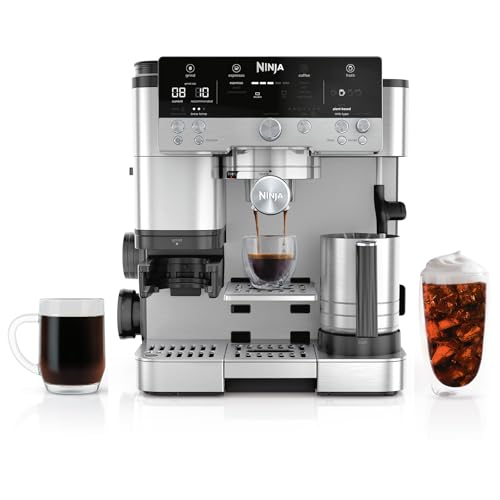
| Ninja Luxe Café Premier | Homes that want espresso, drip coffee, cold brew, grinder, and frother in one machine | $$ | Built-in conical burr grinder | Best if you want fewer separate devices. |
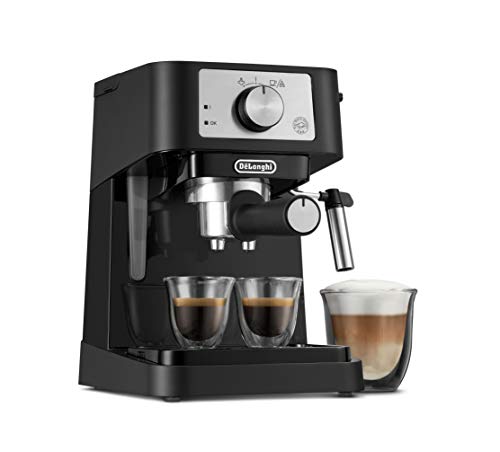
| De'Longhi Stilosa | Budget buyers learning manual milk frothing | $ | 15-bar pump and manual wand | Cheap and capable, but not forgiving. |
| Gaggia Classic Evo Pro | Espresso learners who want manual steam control and a 58mm portafilter | $$ | 58mm commercial portafilter | Best learning path for manual steaming. |
| Philips 3200 LatteGo | One-touch milk drinks with quick milk-system cleanup | $$ | Two-part no-tube LatteGo system | Easiest milk cleanup in this group. |
| De'Longhi Magnifica Evo LatteCrema | Push-button lattes, cappuccinos, americanos, and iced coffee | $$$ | 7 recipes and 13 grind settings | Strong one-touch latte convenience. |
| Breville Barista Touch Impress | High-budget buyers who want guided espresso, assisted tamping, and automatic microfoam | $$$ | Auto MilQ automatic steam wand | Premium guided choice for milk nerds with money. |
How should you choose an espresso machine for lattes and cappuccinos?
Choose by milk workflow first, grinder setup second, and cleanup third. For lattes and cappuccinos, the espresso shot matters, but the drink lives or dies on milk texture: thin bubbles taste airy, while glossy microfoam feels smooth like melted ice cream.
We compared Amazon listing specs for frother type, grinder presence, wattage, size, capacity, and included tools, then weighed those against expert buying guides and how much daily fuss each milk system adds. Bon Appétit notes that traditional steam wands give more control and precision for high-quality foam, which is why manual picks still matter.
A separate grinder is not optional for semi-automatic machines. The Bambino Plus, Gaggia, and Stilosa need grounds fine enough for espresso, so read our best burr grinder for espresso guide before you spend the whole budget on the machine.
Which milk-frothing espresso machines are worth buying?
The seven machines below are worth buying because each solves a different milk-drink problem: easy automatic foam, all-in-one convenience, low price, manual control, easy cleaning, one-touch recipes, or premium guidance. Skip the one that sounds impressive but fights your actual morning routine.
1) Breville Bambino Plus — Best Overall
The Bambino Plus is the one I would point most latte drinkers toward first. The automatic steam wand handles the fussy part — stretching and texturing milk — while the small body keeps your counter from feeling crowded. The Amazon listing calls out the ThermoJet fast heat-up and included 16 fl oz stainless milk jug, which fits the home-latte workflow nicely.
The catch is the grinder. This machine takes ground coffee, so weak pre-ground espresso will taste flat under all that milk. Pair it with an espresso grinder and use our espresso grinder settings guide when shots run sour, bitter, or watery.
Pros
- ✓ Automatic steam wand is friendly for beginners
- ✓ Compact body fits small kitchens
- ✓ Fast heat-up suits weekday drinks
Cons
- ✗ Needs a separate espresso grinder
- ✗ Not a one-touch latte machine
2) Ninja Luxe Café Premier — Best All-in-One
The Ninja Luxe Café Premier is for the household that wants one machine to do a lot. According to its Amazon listing, it combines espresso, drip coffee, cold brew, a built-in conical burr grinder with 25 settings, assisted tamping, and a Dual Froth System hands-free frother.
That mix makes sense if one person drinks cappuccinos and another wants a mug of drip coffee. It is not the purest espresso path, but it is practical. Fewer boxes, fewer cords, fewer “who moved the tamper?” mornings.
Pros
- ✓ Built-in grinder saves counter space
- ✓ Assisted tamping lowers the learning curve
- ✓ Handles espresso, drip coffee, and cold brew
Cons
- ✗ Bigger footprint than compact machines
- ✗ Less upgrade-friendly than separate gear
3) De'Longhi Stilosa — Best Budget
The De'Longhi Stilosa is the cheap doorway into espresso and steamed milk. Its Amazon listing highlights a 15-bar pump, compact body, and manual milk frother, so it covers the basic cappuccino checklist without a scary price.
Be honest with yourself, though: budget machines make you work. Milk texture depends on wand position and timing, and the shot depends heavily on grind. If money is tight, compare it with our best espresso machine under $200 picks and consider a low-cost grinder path like our hand grinder for espresso under $100 guide.
Pros
- ✓ Low entry price
- ✓ Manual wand can teach real steaming basics
- ✓ Small enough for tight counters
Cons
- ✗ More technique-sensitive
- ✗ Needs a capable grinder to shine
4) Gaggia Classic Evo Pro — Best Manual Steam Wand

The Gaggia Classic Evo Pro, Thunder Black is the better choice if you want to learn, tweak, and grow. The Amazon listing notes a 58mm stainless steel commercial portafilter, 9-bar pressure, 2.1-liter capacity, and manual steam wand, which puts it closer to a classic café-style workflow.
It is not the easiest machine here. You are choosing control over comfort. But if the idea of polishing milk until it looks like wet paint sounds fun, the Gaggia gives you a stronger learning path than a push-button frother.
Pros
- ✓ Manual wand gives more milk control
- ✓ 58mm portafilter supports a serious workflow
- ✓ Good platform for espresso learning
Cons
- ✗ Less beginner-friendly
- ✗ Separate grinder is required
5) Philips 3200 LatteGo — Best Easy-Clean Automatic
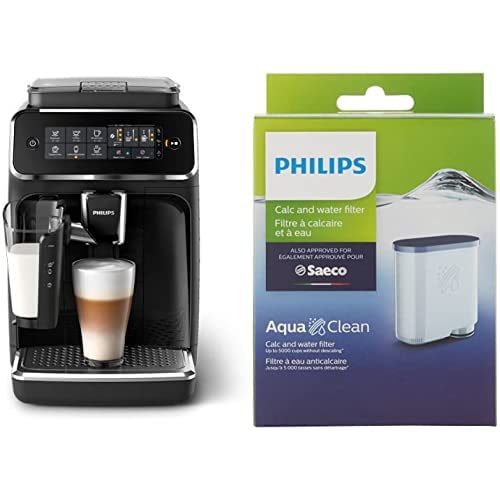
The Philips 3200 LatteGo is for people who want milk drinks but do not want a sink full of tiny parts. The Amazon listing describes the LatteGo milk system as two-part, no-tube, and dishwasher safe, which is exactly the sort of detail that matters after a sticky cappuccino.
It will not give you the same direct milk control as a wand. That is the trade. But for daily one-touch drinks, the easy cleanup is the whole point.
Pros
- ✓ Two-part milk system is easy to rinse
- ✓ One-touch milk drinks
- ✓ Built-in ceramic grinder
Cons
- ✗ Less control over milk texture
- ✗ Larger than a compact semi-automatic
6) De'Longhi Magnifica Evo LatteCrema — Best One-Touch Latte Machine

The De'Longhi Magnifica Evo LatteCrema is the “please just make my latte” pick. Its Amazon listing points to a LatteCrema automatic milk system, 7 one-touch recipes, a 60 fl oz capacity, and a built-in conical burr grinder with 13 settings.
This is the right kind of machine for a busy kitchen where convenience wins. You give up the little rituals: grinding separately, tamping, swirling the pitcher. In return, you get repeatable milk drinks with far less babysitting.
Pros
- ✓ Automatic milk carafe supports one-touch lattes
- ✓ Built-in grinder with 13 settings
- ✓ Good recipe range for mixed households
Cons
- ✗ Higher price band
- ✗ Less manual control than semi-automatic machines
7) Breville Barista Touch Impress — Best Premium Guided Machine

The Breville Barista Touch Impress is for the buyer who wants guidance without giving up the feel of making espresso. The Amazon listing calls out an integrated grinder, assisted tamping, touchscreen guidance, and Auto MilQ automatic steam wand with alternative milk settings.
The price is the obvious sting. It also takes more counter space than the Bambino Plus. But if oat milk lattes, guided setup, and fewer beginner mistakes are worth paying for, this is the premium machine that makes sense.
Pros
- ✓ Touchscreen guidance helps new users
- ✓ Assisted tamping keeps the workflow tidy
- ✓ Auto MilQ includes alternative milk settings
Cons
- ✗ Expensive
- ✗ Large and heavy compared with compact machines
Competitor topic coverage
Major espresso roundups cover broader machine shopping, while this guide stays locked on milk-drink buyers. That means less espresso theory, more attention to frother type, grinder needs, cleanup, and whether the machine fits latte, cappuccino, or flat-white routines.
Serious Eats covers espresso machines across budget, semi-automatic, automatic, and premium categories, with heavy attention to usability and steaming. Wirecutter focuses strongly on beginner espresso setups, grinder importance, and guided features.
Those guides are useful context, but they are much broader. If your real question is “what makes the least annoying cappuccino at home?” the decision narrows fast: Bambino Plus for most people, Ninja for all-in-one convenience, Philips or De'Longhi for one-touch milk, and Gaggia for manual control.
Frequently asked questions
What is the best espresso machine with milk frother for beginners?
The Breville Bambino Plus is the best beginner pick for most people because its automatic steam wand removes the hardest milk step. You still need a separate espresso grinder, but the milk side feels far less fussy than learning a manual wand on day one.
Is an automatic milk frother better than a steam wand?
An automatic frother is better for convenience; a steam wand is better for control. If you want reliable weekday lattes, automatic milk is lovely. If you want to learn glossy microfoam for latte art, a manual wand gives you more say over texture.
Can a cheap espresso machine make good cappuccino foam?
Yes, a cheap machine can make good cappuccino foam, but it asks more from you. A model like the De'Longhi Stilosa can steam milk, yet the texture depends on wand angle, milk depth, and patience. Expect more practice and less consistency.
Do I need a built-in grinder for lattes?
No, you do not need a built-in grinder for lattes. You do need an espresso-capable grinder somewhere in the setup. Built-in grinders save counter space, while separate grinders make upgrading easier and often give you more control over shot taste.
Which espresso machine is easiest to clean after milk drinks?
The Philips 3200 Series LatteGo is the easiest clean-after-milk pick here because its milk system has two main parts and no tube. That matters if you make milk drinks daily and hate scrubbing little hoses before work.
What espresso machine is best for oat milk lattes?
The Breville Barista Touch Impress is the strongest oat milk pick if your budget allows it because Auto MilQ includes alternative milk settings. For less money, the Bambino Plus still works well if you use barista-style oat milk and let the wand handle texture.
What related espresso gear should you consider?
The most useful related gear is an espresso-capable burr grinder, a small scale, a milk pitcher, and fresh beans. Semi-automatic machines especially need a grinder that can make tiny adjustments, because a latte built on weak espresso tastes like warm milk with coffee perfume.
- Best burr grinder for espresso — start here if you choose the Bambino Plus, Gaggia, or Stilosa.
- Burr grinder settings for espresso — use this when shots run too fast, too slow, sour, or bitter.
- Best espresso machine under $200 — compare budget machines before buying the Stilosa route.
- Best hand grinder for espresso under $100 — a smart low-cost grinder path for patient beginners.