 Coffee Gear Picks
Why Is My Espresso Machine Vibrating? (2026)
A steady pump hum can be normal. A machine that suddenly rattles or walks across your counter needs a closer look, not a heavier cup on top.
Find the source of the shaking
Safe checks before calling for service
- Hum or new rattle?
- Look for warning signs
- Check counter and feet
- Inspect removable parts
- Refill and seat tank
- Use manual-approved maintenance
- Stop if warnings remain
- Arrange qualified service
Separate normal pump movement from a fault that needs attention.
Is the vibration normal?
Some pump vibration is normal, according to De’Longhi’s official vibration FAQ. A familiar hum with slight movement is different from walking, a loose rattle, grinding noise, leaks, or a sudden change. Those symptoms call for diagnosis; dangerous signs mean stopping rather than brewing another shot.
For replacement options, our best quiet espresso machine picks for 2026 compare workflows, including pump, grinder, and milk-system noise.
What you'll need
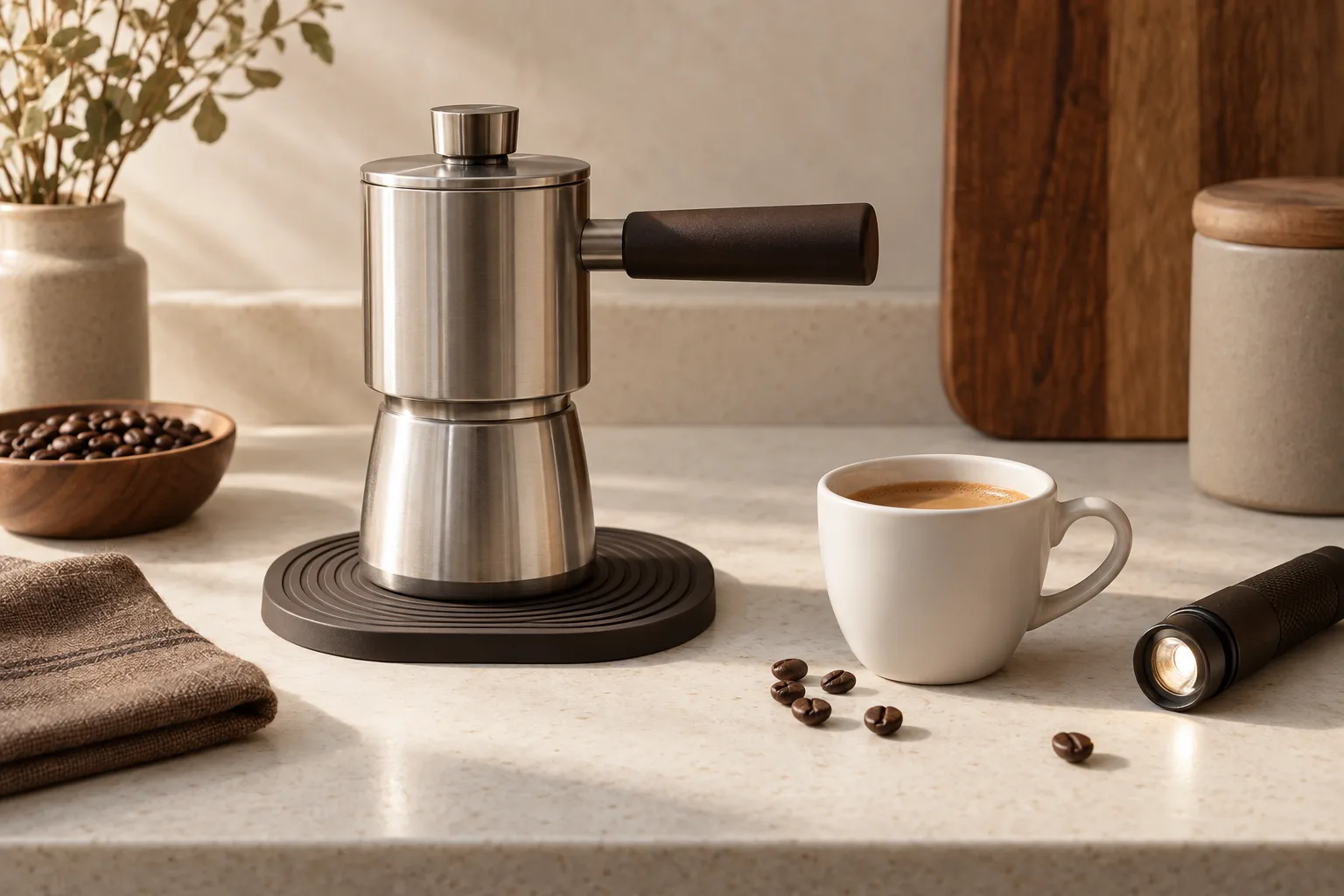
You need your machine’s manual, a flashlight, and clean water for these outside-the-case checks. A suitable silicone or rubber equipment mat is optional. Unplug and let the machine cool before inspecting its underside or removable parts. A mat is for isolation, not an internal repair.
- Owner’s manual for your exact model
- Flashlight to inspect feet and tank seating
- Clean water for the reservoir
- Optional non-slip equipment mat that leaves vents clear
Which checks should you do first?
Check the symptom first, then the surface, removable parts, and water supply. Change one thing at a time so you can tell what helped. Only run the machine again if there are no warning signs, the tank has water, and everything is fitted as the manual requires.
1. Identify when the sound happens
Note whether the noise starts during grinding, brewing, or milk preparation. Clive Coffee’s pump explainer describes a vibratory pump’s back-and-forth piston movement, which naturally creates a hum and physical vibration. Rotary pumps are generally smoother and quieter, but pump type alone does not make a machine silent.
2. Check the counter and feet
With the machine unplugged and cool, check that it sits level with every foot supported. Meraki’s shaking guide points to uneven surfaces and worn feet; De’Longhi’s official FAQ also says intact bottom feet help damp vibration. Replace damaged feet through the manufacturer, rather than propping the machine on folded cardboard.
3. Isolate rattles and transmitted vibration
Remove loose cups from the top, then reseat the drip tray, tank, and lid. Clive Coffee’s quieting guide recommends checking reservoir seating and accessible tank components. Secure only parts the manual lets you handle. Its silicone/rubber isolation advice may help a hard counter act less like a sounding board; keep ventilation clear.
4. Verify water and approved maintenance
Fill and properly seat the reservoir. BaristaFix’s noise guide identifies air and restricted flow, including scale, as possible causes of changed pump sound. Never run the pump dry. Prime or descale only as your manual directs, including its run-time limits. That source is context, not permission to use another machine’s procedure.
5. Stop if the new vibration remains
Arrange service if the checks do not resolve a new vibration or water still will not flow after safe priming. Keep the case closed. Give the technician your model, when the noise started, and whether flow changed.
What should you avoid?
Do not hide a changed sound by adding padding and calling it fixed. Clive Coffee’s isolation advice addresses vibration reaching the counter, not every cause inside the machine. Keep the diagnosis separate from noise reduction, and resist these shortcuts when your morning coffee is on hold.
- Holding it down: stop a walking machine instead.
- Adding weight on top: do not use heavy objects as a repair.
- Opening the case: leave internal mounts and electrical work to qualified service.
When is service or replacement the better choice?
Stop using the machine for an internal water leak, burning smell, repeated breaker trips, or metallic/grinding pump noise. No water after the manual’s safe prime procedure also needs service. For persistent new vibration, get a diagnosis and quote before deciding that a replacement is your only option.
A repair quote or repeated fault changes the decision
Check warranty coverage first. If a worn pump or repeated fault makes repair unattractive, our budget-conscious espresso options under $600 offer alternatives. Compare the full workflow, not just the pump. Check Philips availability
The machine is too large or still unsuitable for your counter
If safe placement leaves too little room, or the machine remains too loud for your home, consider our compact espresso choices for small kitchens. They are replacement options, not fixes for instability or damaged feet.
Frequently asked questions
Is it normal for an espresso machine to shake slightly while brewing?
A little movement during pumping can be normal. Clive Coffee explains that a vibratory pump moves a piston back and forth to push water. Judge the machine against its usual behavior, not against an expectation of complete stillness.
Why does espresso machine vibration noise sound louder on my kitchen counter?
Your counter can carry the vibration and make the hum more noticeable, as Clive Coffee explains. A suitable equipment mat may reduce that transmitted sound. It will not silence grinding, milk preparation, or an internal mechanical fault.
How to stop an espresso machine vibrating on the counter without opening it?
Start with a level, stable surface and intact feet, then consider a suitable non-slip equipment mat. Meraki identifies surface and foot problems as causes of walking. If it still moves toward the edge, stop brewing and seek service rather than holding it down.
Will descaling fix an espresso machine that suddenly vibrates more?
Only if scale is contributing to restricted water flow; BaristaFix lists it as one possible cause of changed pump noise. Descaling cannot fix worn feet or broken internal parts. Follow your manual, and do not descale a leaking or electrically suspect machine.
Should I keep priming if the pump hums but no water comes out?
No. Stop when you reach the limit in your manual, and arrange service if water still does not flow. BaristaFix discusses air in the water path, but noise alone cannot confirm that diagnosis. Repeated dry running is not a safe workaround.
When should I stop using a vibrating espresso machine immediately?
Stop for an internal leak, burning smell, repeated breaker trips, or metallic grinding from the pump. Do not open the case or attempt electrical repairs. Persistent new vibration also needs service, even if the machine still manages to make coffee.