 Coffee Gear Picks
58mm vs 54mm Portafilter (2026): Which Fits?
58mm is the better default for a new setup because it offers a broader commercial-style accessory ecosystem. A compatible 54mm machine is still a sensible choice for a compact home routine, and the smaller size does not make inferior espresso.
Want a researched shortlist of machines that use the larger format? See Best Home Espresso Machine with 58mm Portafilter (2026).
What changes between 58mm and 54mm?
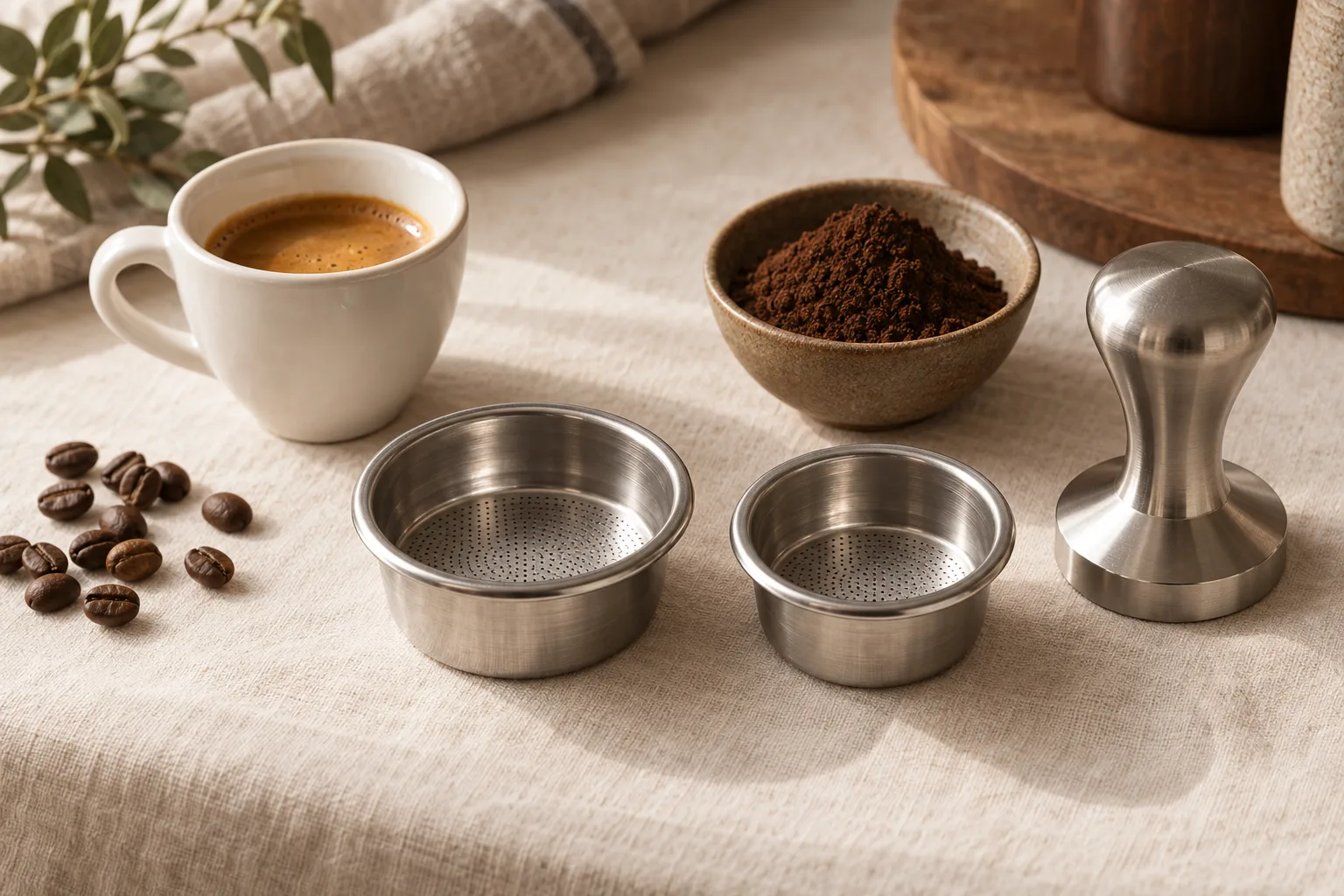
The main changes are accessory choice and basket shape, not a guaranteed flavor upgrade. Whole Latte Love identifies 58mm as the most common commercial-style diameter and notes 54mm use on many Breville/Solis machines. The number describes the basket format, not the width of the whole handle or its locking tabs.
58mm format
Broader commercial-style tool choices. The handle still needs exact machine compatibility.
54mm format
A sensible home format with size-specific tools. Basket capacity varies by design.
58mm: room to build around your machine
I would lean toward 58mm if you enjoy swapping baskets and refining how you load and tamp the grounds. The advantage is shopping freedom. It is not a universal socket: a basket or tamper may transfer to another machine, but the entire portafilter handle might not.
54mm: no need to start over
If your compatible Breville/Solis-style machine already suits your mornings, buy tools for it and keep brewing. A narrower basket is not a warning label. Also, do not use 54mm as shorthand for a tiny machine: check the actual counter footprint, water-tank access, and space for steaming milk.
What should you check before buying tools?
Check your exact machine model first, then the basket diameter, depth, and handle fit. Breville separates its 54mm and 58mm accessories, so the brand name alone is not enough. Use the manufacturer’s compatibility list as the final authority when a retailer’s description says something different. Close enough is not good enough here.
Handle fit: diameter is only one measurement
The ears, or tabs, are the little metal wings that lock a portafilter into the group head. Their thickness and position matter alongside diameter. A bottomless portafilter, which leaves the basket underside exposed, still needs the correct tabs. Removing the spouts does not make a handle universal.
Before ordering a replacement
- Match the full machine model number, including the version.
- Confirm the nominal basket diameter and recommended basket depth.
- Check the number, position, and thickness of the locking tabs.
- Look for explicit group-head compatibility from the manufacturer.
- For baskets, confirm rim fit and clearance inside the existing handle.
Dose and depth: follow the basket, not a fixed recipe
Meraki’s size guide describes typical 18–20g double-basket use for 58mm and slightly smaller doses in some 54mm baskets. Treat that as context, not a limit. A deeper 54mm basket can hold more than a shallow one, and 58mm baskets come in different capacities too.
Meraki also discusses the different shapes of the coffee bed: at the same dose, a narrower basket makes a deeper bed of grounds. Think of the same scoop spread across a wide saucer or piled into a small cup. That changes your starting recipe, but it does not promise a sweeter or stronger shot. Follow the basket’s rated dose and machine instructions for clearance above the coffee.
Accessory fit: build a small, matched kit
A tamper presses the grounds flat; choose its base to match the basket’s inner diameter. A dosing funnel catches stray grounds while loading. A puck screen sits above the coffee, so its thickness also matters for clearance. Breville’s espresso accessory pages are a useful reminder to check compatibility tool by tool.
Cleanup gear needs less obsession over basket diameter, but brushes and cleaning products must still suit your machine’s instructions. Start with a correctly sized tamper, a scale, and a towel before buying every shiny extra. For a broader tool-selection guide, see Best Espresso Machine Accessories (2026).
Shot quality: look beyond the shiny handle
Craft Coffee Spot’s portafilter-size guide explains why diameter alone does not decide shot quality. Extraction means how much flavor water pulls from the grounds. Your grinder, coffee, brewing temperature, and how evenly you load the basket all belong in the decision alongside size.
My shopping rule: do not sacrifice the routine you want just to get 58mm. If you make two milk drinks before work, compare heating and steaming arrangements. If you want to learn manual brewing, check which controls you can adjust. Neither question gets answered by measuring the basket.
Which size suits your budget and routine?
Spend on the whole routine, not the diameter badge. A new buyer who wants interchangeable tools should lean toward 58mm; an existing 54mm user should budget for matched accessories first. Across price bands, compare grinder needs, milk workflow, and service options. A larger basket is not a substitute for those features.
| Price band | Shopping priority | What to check |
|---|---|---|
| $ | A workable first setup | Exact tool fit, grinder budget, and available replacement parts |
| $$ | Control or a traditional learning path | Temperature settings, brew-to-steam routine, and repair support |
| $$$ | Convenience or deeper adjustment | Whether you prefer automation, separate tools, or faster milk preparation |
First machine: choose the morning you want
If easy first steps matter more than commercial-size accessories, see Best Espresso Machine Beginner Picks 2026 for beginner-oriented alternatives. Write down your usual drink and how much effort you want to give it. That is a better starting point than buying a machine to match a tamper.
Existing setup: upgrade for a specific reason
Keep 54mm if the machine works for you and the tools you need are available. Consider switching when you want controls, steaming, or service options your current machine lacks. Before moving to 58mm, list which accessories can transfer and which need replacing. Include the portafilter handle on the check-again list.
Which shopping mistakes are worth avoiding?
Avoid shopping by photos, brand names, or an assumed future upgrade. The costly mistake is buying a pile of tools before confirming the machine and basket you will actually use. Save the compatibility page when ordering so you have a clear reference if the item that arrives does not match.
- Buying for a machine you might own later. A 58mm tamper cannot solve today’s 54mm fit problem. Buy what works now unless the machine change is already planned.
- Copying a recipe without checking capacity. An 18g recipe is not permission to force 18g into every basket. Check its recommended dose first.
- Ordering the deepest basket available. Confirm that it clears the handle’s bottom and fits the machine before treating extra capacity as an upgrade.
- Expecting a screen to fit without changing anything. Check thickness and the space above the coffee. Follow the machine and accessory maker’s instructions instead of squeezing everything in.
Where should you look for actual machine picks?
Use the machine shortlist linked above once you know your preferred workflow. The Gaggia example suits a traditional semi-automatic learning path, while the 58mm category also includes assisted options. Compare those routines rather than expecting all machines with the same basket diameter to feel alike on a busy morning.
For an assisted example, Breville’s Oracle Jet page specifies a 58mm portafilter alongside integrated grinding and automatic milk texturing. That shows why brand and diameter tell only part of the story. Read the full recommendations for trade-offs, and check manufacturer compatibility before ordering extra tools.
Frequently asked questions
Is a 58mm portafilter better than a 54mm portafilter?
58mm is better for accessory choice, not automatically for espresso flavor. Whole Latte Love identifies it as the most common commercial-style size. Choose it when building a flexible setup, but keep a compatible 54mm machine if its workflow suits you and your coffee tastes good.
Can I put a 58mm portafilter on a 54mm machine?
No, a 58mm portafilter is not a drop-in upgrade for a 54mm group head. The group head is the part that holds the handle while brewing. Its opening and locking tabs must match, so buy a replacement that explicitly lists your exact machine model.
Do all Breville espresso machines use 54mm portafilters?
No, Breville uses both 54mm and 58mm formats. Its Oracle Jet product page specifies a 58mm portafilter, while many smaller home models use 54mm. Check the model number and the manufacturer accessory compatibility list rather than buying something labeled only for Breville.
How much coffee fits in a 58mm vs 54mm basket?
The basket rating determines the dose, not the diameter alone. Meraki describes 18–20g as typical for 58mm double baskets and slightly smaller doses for some 54mm baskets. Those are examples, not rules. Start with the dose recommended for your particular basket and leave the required clearance above the coffee.
Will my 58mm tamper fit every 58mm basket?
Not necessarily, because nominal size does not describe every basket’s exact inner shape. Some tampers are slightly wider for a closer fit, and tapered baskets can narrow lower down. Check the basket maker’s recommendation and the tamper’s stated compatibility before choosing a snug-fitting base.
Should I replace a working 54mm machine just to get 58mm?
No, diameter alone is a weak reason to replace a working machine. Upgrade when you want a different milk routine, clearer temperature control, or specific basket options that your current setup cannot offer. If an accessory does not fit, try finding the correctly matched version first.