 Coffee Gear Picks
Best Espresso Machine Beginner Picks 2026
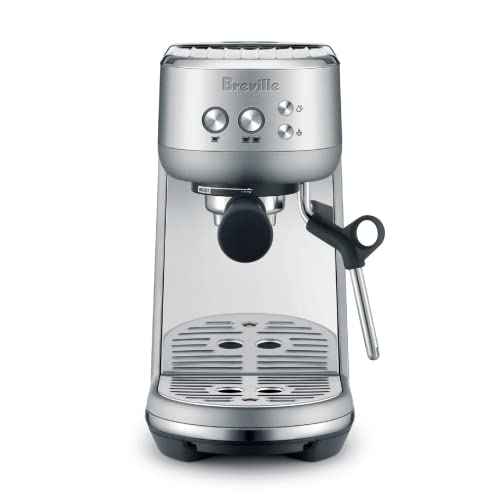
The best espresso machine beginner pick for most readers is the Breville Bambino Plus because it removes the two biggest first-month headaches: waiting for heat and learning milk texture.
Best Beginner Espresso Machines for 2026
Easy picks for milk drinks, tight counters, built-in grinders, and learning real espresso
Overall
Fast, forgiving, and friendly for milk drinks
- 3-second heat-up
- Automatic milk texture
- Compact body
- PID temperature control
Top Pick Breville Bambino Plus
$$$
Best weekday latte machine
Check Price on Amazon Value
Breville basics for less money
- Narrow 6.3-inch width
- 47 fl oz tank
- 3-second heat-up
- Manual milk wand
Top Pick Breville Bambino
$$
Best compact Breville buy
Check Price on Amazon With grinder
One box gets you grinding and brewing
- Built-in burr grinder
- 25 grind settings
- Weight-based dosing
- Assisted tamping
Top Pick Ninja Luxe Café Premier ES601
$$$
Best simple shopping list
Check Price on Amazon Learning
Traditional workflow with room to grow
- 58mm portafilter
- 9-bar extraction
- Steel housing
- Commercial steam wand
Top Pick Gaggia RI9380/46 E24
$$$
Best for espresso practice
Check Price on AmazonBuy the Breville Bambino Plus for the easiest milk drinks. Buy the Breville Bambino if you want Breville performance for less, the Ninja Luxe Café if you want a grinder built in, and the Gaggia E24 if you want to learn real espresso skills.
If price is the hard wall, start with the De'Longhi Stilosa or CASABREWS CM5418. They are not as polished, but they let you learn dosing, tamping, and steaming without turning your kitchen into a gear shrine.
Quick picks
Our Top Picks
Which beginner espresso machines are easiest to compare?
Compare beginner machines by the trade-offs you will feel every day: milk workflow, heat-up time, whether you need a separate grinder, and how much counter space the machine eats. Once you pick your “friction point,” the right machine usually becomes obvious.
| Product | Best for | Price band | Key spec | Verdict |
|---|---|---|---|---|
| Breville Bambino Plus | Easiest milk drinks | $$$ | 3-second ThermoJet heat-up, 11 lb, automatic milk texturing | Best overall beginner pick |
| Breville Bambino | Breville value | $$ | 47 fl oz capacity, 6.3-inch width, 3-second heat-up | Best if you can steam manually |
| Ninja Luxe Café Premier ES601 | All-in-one setup | $$$ | Built-in conical burr grinder with 25 settings and weight-based dosing | Best if you do not own a grinder |
| Gaggia RI9380/46 E24 | Learning traditional espresso | $$$ | 58mm commercial portafilter, 9-bar extraction, steel housing | Best practice machine |
| De'Longhi Stilosa | Tight budgets | $ | 15-bar pump, 33.8 fl oz tank, manual steam wand | Best low-cost starter |
| CASABREWS CM5418 | Cheap compact counters | $ | 20-bar pressure system, 34 oz tank, pressure gauge | Best ultra-budget compact pick |
| De'Longhi Dedica Duo | Hot and iced drinks | $$ | Espresso, double espresso, and cold brew presets with slim design | Best slim iced-drink option |
How did we choose beginner espresso machines?
We prioritized machines that make the first month easier, not machines with the longest spec sheets. The big things were fast heat-up, repeatable shot controls, friendly milk frothing, counter footprint, cleanup, upgrade path, and whether the buyer must immediately add a separate espresso grinder.
Heat and milk matter first because they affect every drink you make. Breville lists ThermoJet 3-second heat-up and PID temperature control on the Bambino Plus, while the Bambino listing also calls out 3-second heat-up and low-pressure pre-infusion. That means less standing around in pajamas, waiting for the machine to wake up.
Grinder needs were the second filter. Machines without grinders can make decent starter drinks with pressurized baskets and good pre-ground coffee, but real espresso asks for a capable grinder. Wirecutter also frames the beginner setup around the machine, grinder, and accessories, which is the honest way to shop.
Which beginner espresso machine should you buy?
Buy the beginner espresso machine that removes your biggest friction point. If milk drinks scare you, pick automatic frothing. If grinder shopping sounds exhausting, pick an all-in-one. If you want espresso as a hobby, pick the machine that teaches the classic routine instead of hiding it from you.
1) Breville Bambino Plus — Best Overall
The Bambino Plus is the machine we point most first-time latte drinkers toward because it cuts out two classic beginner pain points: waiting for the machine to heat and fighting with milk texture. Breville calls out a 3-second ThermoJet heat-up, PID temperature control, and automatic milk texturing, which makes the day-to-day workflow feel less fussy.
The real value is consistency. You can focus on dialing in grind and dose while the machine handles milk foam that is “good enough” far sooner than most people can manage by hand. Serious Eats has also highlighted the Bambino Plus as approachable. Skip it if you want a built-in grinder or you specifically want to learn on a 58mm, more traditional setup.
Pros
- ✓ Automatic milk texturing is beginner-friendly
- ✓ Very fast heat-up for weekday mornings
- ✓ Compact enough for small kitchens
Cons
- ✗ Still needs a grinder for best espresso
- ✗ Costs more than basic starter machines
2) Breville Bambino — Best Value Breville
The regular Bambino is the “save money, keep the good parts” option. You still get Breville’s quick-heat approach and a compact footprint, but you give up the automatic milk system. For a lot of beginners, that trade is worth it: you can put the savings toward a better grinder or a scale.
Buy it if you mainly drink straight espresso or Americanos (or you are genuinely excited to learn to steam). Skip it if you want push-button cappuccinos or you are buying for someone who wants convenience above all else.
Pros
- ✓ Lower-cost way into the Breville Bambino line
- ✓ Skinny footprint saves counter space
- ✓ Large 47 fl oz tank for its size
Cons
- ✗ Manual milk takes practice
- ✗ No built-in grinder
3) Ninja Luxe Café Premier ES601 — Best With Grinder
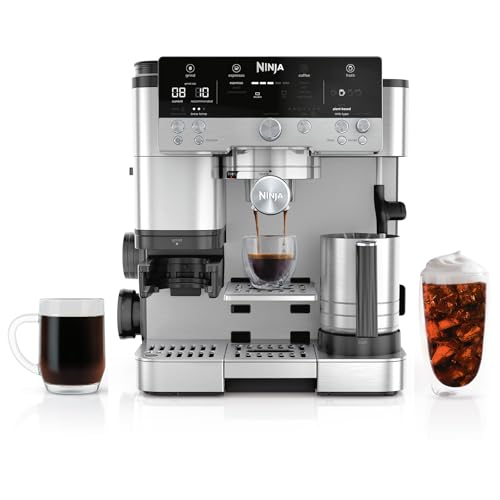
The Ninja Luxe Café is the easiest recommendation for someone who says, “Please do not make me research grinders.” Ninja lists a built-in conical burr grinder with 25 settings, weight-based dosing, an assisted tamper, and hands-free frothing, so the whole routine feels more guided than piecing together a separate grinder + machine.
That guidance is the big win: fewer variables to manage while you learn. The tradeoff is footprint and price. If you are short on counter space (or you want something you can tuck away), a smaller machine like the Bambino line makes more sense.
Pros
- ✓ Built-in grinder keeps the shopping list simple
- ✓ Weight-based dosing helps reduce guesswork
- ✓ Assisted tamping is friendly for beginners
Cons
- ✗ Larger footprint than compact machines
- ✗ More expensive than basic non-grinder models
4) Gaggia RI9380/46 E24 — Best for Learning
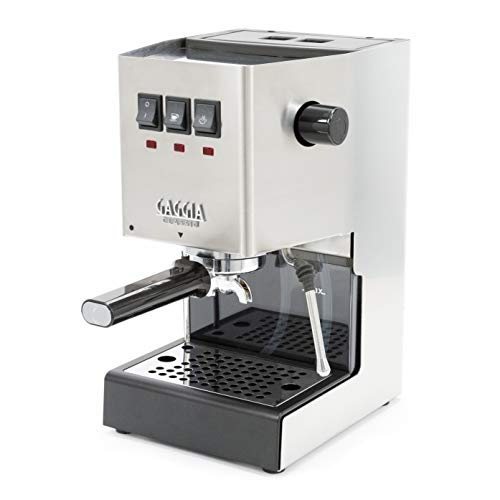
The Gaggia E24 is for the beginner who actually wants to become an espresso person. Gaggia lists solid steel housing, a 58mm commercial portafilter, 9-bar extractions, a commercial steam wand, and a three-way solenoid valve. In plain English: it is built around the classic café workflow.
That is both the magic and the catch. You will learn how grind size, dose, tamping, and steaming affect the cup, but the machine will not hand you a “pretty good” latte on day one. Skip it if you want quick weekday cappuccinos with the least fuss.
Pros
- ✓ Traditional 58mm workflow teaches useful skills
- ✓ Steel housing feels more serious
- ✓ Commercial steam wand gives room to improve
Cons
- ✗ Less forgiving for total beginners
- ✗ Needs a good espresso grinder
5) De'Longhi Stilosa — Best Budget
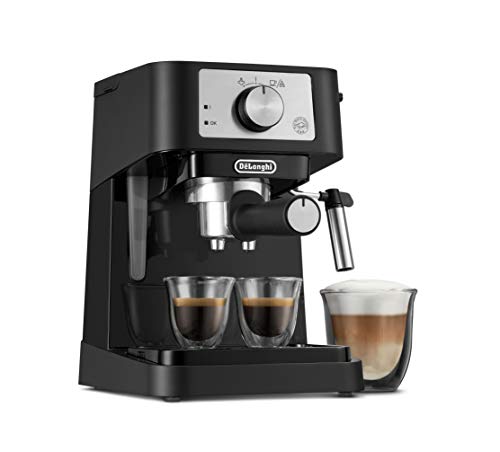
The De'Longhi Stilosa is the “I just want to start” pick. It is a straightforward manual machine that lets you learn the basics without paying for convenience features you may not care about yet.
The best use case is casual milk drinks: Americanos, small lattes, and weekend cappuccinos. The tradeoff is that it feels more manual and more budget-built than the Breville machines. If you already know you will chase better shots soon, save for a machine with more upgrade runway.
Pros
- ✓ Very approachable starter price
- ✓ Manual steam wand lets you learn basics
- ✓ Good fit for casual milk drinks
Cons
- ✗ More plastic than pricier machines
- ✗ Less upgrade room for hobby espresso
6) CASABREWS CM5418 — Best Ultra-Budget

The CASABREWS CM5418 is the cheap compact pick with one fun beginner feature: a pressure gauge. It is a sensible choice if your goal is “good enough” espresso-style drinks in a small kitchen, and you do not want to spend Breville money.
The gauge gives you something to watch while you learn, like a speedometer for your shot. Just do not mistake it for a guarantee of better espresso. This is a value machine, not a long-term upgrade platform.
Pros
- ✓ Very compact 5.47-inch width
- ✓ Pressure gauge helps beginners see shot behavior
- ✓ Low buy-in for small kitchens
Cons
- ✗ Not as refined as pricier picks
- ✗ 51mm accessories offer less upgrade range
7) De'Longhi Dedica Duo — Best Slim Iced-Drink Pick

The De'Longhi Dedica Duo is for the person who wants espresso-style drinks but also lives on iced coffee when the weather turns sticky. The listing calls out espresso, double espresso, and cold brew presets, plus low-pressure pre-infusion, 9-bar extraction, thermoblock heating, and a My LatteArt steam wand.
Its standout is flexibility. You can make hot espresso drinks and lean into cold presets without buying a giant machine. The honest downside is that the Amazon detail page has less structured spec data than some rivals, so we would buy this for the drink presets and slim concept, not for a spec-sheet victory lap.
Pros
- ✓ Hot and cold drink presets are beginner-friendly
- ✓ Slim design suits tight counters
- ✓ 9-bar extraction claim is more meaningful than pump-max hype
Cons
- ✗ Less structured spec detail on the listing
- ✗ Manual milk still takes practice
Frequently asked questions
What is the best espresso machine for a beginner?
The Breville Bambino Plus is the best espresso machine for most beginners because it heats fast, takes up little space, and handles milk texture automatically. It still rewards better beans and a good grinder, but it removes a lot of early frustration.
Is the Breville Bambino or Bambino Plus better for beginners?
The Bambino Plus is better if you make lattes or cappuccinos often because the automatic milk frothing is easier. The regular Bambino is the better value if you are happy learning a manual steam wand and want the lower price.
Do beginners need a grinder for an espresso machine?
Yes, unless you buy an all-in-one machine like the Ninja Luxe Café. Espresso needs a fine, adjustable grind. Pre-ground coffee can work with pressurized baskets, but fresh grinding gives you much better control over sweetness, crema, and shot speed.
Is a cheap espresso machine worth it for beginners?
A cheap espresso machine can be worth it if your goal is casual milk drinks and practice. The De’Longhi Stilosa and CASABREWS CM5418 keep the buy-in low, but expect more plastic, more manual steps, and less long-term upgrade room.
What is easier for beginners, manual or automatic milk frothing?
Automatic milk frothing is easier because it handles the air and heat for you. Manual steam wands give better practice and more control, but your first few pitchers may look more like soap bubbles than glossy paint.
Does a 20-bar espresso machine make better espresso?
No, a 20-bar pump does not automatically make better espresso. Many consumer machines advertise pump maximums, while espresso is commonly brewed around 9 bars at the coffee puck. Grind size, dose, temperature, and workflow matter more.
Which related guides help after you pick a machine?
The most useful next guides are the ones that fix the weak link in your setup. For most beginners, that means grinding finer, weighing doses, or choosing a cheaper machine with eyes open. Espresso gets easier when each tool has a clear job.
- Best burr grinder for espresso — choose a grinder that can actually dial in shots.
- Burr grinder settings for espresso — learn what to change when shots taste sour, bitter, or thin.
- Best coffee scale for espresso and pour-over — make dosing repeatable instead of guessing by scoop.