 Coffee Gear Picks
Best Espresso Machine Accessories (2026)
The best espresso machine accessories are not the flashy ones with the prettiest Instagram photos. They are the tools that make your morning shot easier to repeat when you are half awake, a little grumpy, and just want espresso that tastes rich instead of weirdly sour.
If you are building your setup from scratch, buy a scale first. Then get a better tamper or a WDT tool if your puck prep still feels messy. After that, think about cleanup tools and nice-to-have extras. That order matters. It saves money, and it keeps you from filling your counter with gear that looks cool but does almost nothing in the cup.
We compared these picks by one simple question: does this accessory make espresso more consistent, less messy, or less annoying? If the answer was no, it did not make the list.
The Espresso Accessories Actually Worth Buying
Start with the tools that make your shots easier to repeat, then add the quality-of-life stuff after that
Start Here
The one tool I would buy first
- Tracks dose and yield
- Stops shot guesswork
- Fits small espresso stations
- Useful every single day
Top Pick MiiCoffee Nano Pro Coffee Scale
$$
First real workflow upgrade
Check Price on Amazon Consistency
Best upgrade once you own a scale
- Spring-loaded feel
- Cleaner tamping rhythm
- Fits 58mm baskets
- Easy to repeat
Top Pick Normcore 58.5mm Tamper V4
$$
Better pucks with less guesswork
Check Price on Amazon Budget Fix
Tiny tool, surprisingly big payoff
- Breaks up clumps
- Helps prevent channeling
- Works with any basket size
- Cheap upgrade
Top Pick Normcore WDT Tool V2
$
The cheap fix most people feel immediately
Check Price on Amazon Cleanup
Makes your station less annoying
- Fast puck disposal
- Less mess in the sink
- Stable on the counter
- Easy rinse-down
Top Pick Breville Knock Box Mini
$
Small tool, calmer cleanup
Check Price on AmazonQuick answer: If you only buy three things, make them a scale, a better tamper if your stock one stinks, and a WDT tool. That combo fixes the biggest beginner problems fast: guessing yield, tamping unevenly, and leaving clumps in the basket.
Skip for now: oversized tamping stations, duplicate distribution gadgets, and any 58mm accessory if your machine really uses a 54mm basket. That last mistake happens all the time, and it is the espresso version of buying shoes two sizes too big and pretending you will grow into them.
Quick picks
Our Top Picks


Comparison table
| Accessory | Best For | Fits | What It Fixes | Cleanup | Price Tier | |
|---|---|---|---|---|---|---|
| MiiCoffee Nano Pro Coffee Scale | First real workflow upgrade | Most espresso drip trays and brew bars | Shot timing and yield guesswork | Wipe dry and recharge by USB-C | $$ | Check Price |
| Normcore V4 Tamper, 58.5mm | Better pucks with less guesswork | 58mm baskets using a 58.5mm precision tamper fit | Crooked or inconsistent tamping | Brush clean and wipe the base after use | $$ | Check Price |
| Normcore WDT Distribution Tool V2 | The cheap fix most people feel immediately | Works across basket sizes | Clumps and uneven puck prep | Rinse or brush needles carefully | $ | Check Price |
| Normcore V2 Magnetic Funnel, 58mm | Mess control during dosing and WDT | 58mm portafilters | Mess during dosing and WDT | Quick wipe or rinse after prep | $ | Check Price |
| Breville Knock Box Mini | Small tool, calmer cleanup | Most home espresso stations with a small footprint | Messy puck disposal | Removable knock bar makes rinsing easy | $ | Check Price |
| IKAPE 58.5mm Espresso Puck Screen | Keeps shower screen cleaner between shots | 58mm baskets using a 58.5mm puck screen | Cleaner shower screen and tidier puck surface | Rinse after each shot | $ | Check Price |
How we evaluate espresso accessories
I do not care if an accessory sounds impressive on a product page. I care about what it does when coffee is flying everywhere and you are trying to get out the door. So we compared each pick by the stuff you actually feel in daily use.
- Repeatability: Does it help you pull the same shot twice, or does it just add one more step?
- Compatibility: Does it fit the baskets and machines people actually own, especially 54mm and 58mm home setups?
- Mess control: Does it keep grinds off the counter and wet pucks out of your hands?
- Cleanup: Can you rinse it, wipe it, and move on, or does it become one more crusty thing beside the sink?
- Value: Would I tell a friend to buy this before upgrading their grinder, or is it more of a late-game bonus?
That is also why this list leans hard toward tools that fix workflow. If your shots are still bouncing around, our espresso shot dial-in workflow and burr grinder settings for espresso guides will help you get more from the gear you already own.
Individual reviews
1) MiiCoffee Nano Pro Coffee Scale — Best first buy
If you are still stopping shots by eye, start here. A scale turns espresso from guesswork into something you can actually learn. You will see your dose, your yield, and how fast things are moving. That sounds basic. It is. It is also the difference between “why did this taste thin?” and “okay, I ran 6 grams too long.”
This MiiCoffee model makes sense because it is built for cramped espresso stations. It is 3.9 by 3.7 inches, it reads in 0.1-gram steps, and the product listing calls out auto-tare plus a timer that starts once the first drops hit. The charging port and switches sit on the side, away from machine steam. That makes it feel less like a math quiz and more like a useful kitchen tool.
If I were helping a friend build an espresso setup from scratch, this is the first accessory I would put in the cart. Not because it is glamorous. Because it fixes the biggest problem fastest.
Pros
- ✓ The fastest way to make your shots repeatable
- ✓ Compact size works better on small drip trays
- ✓ Timer helps with both shot timing and ratio work
- ✓ More useful than most “upgrade” tools for beginners
Cons
- ✗ You still need to keep it dry around steam and splashes
- ✗ Touch controls are never as foolproof as a big physical button
- ✗ If you hate weighing anything, this will not magically change your personality
2) Normcore V4 Tamper, 58.5mm — Best consistency upgrade
A good tamper is like a good chef's knife. You notice it most when you go back to the cheap one. This Normcore V4 is a spring-loaded tamper with replaceable springs, a stainless steel base, and a stand. In real life, what that means is your tamping feels more level and less wobbly.
That said, do not buy this before a scale unless your stock tamper is truly awful. Tamping matters, but being able to measure your shot matters more. Once your numbers are under control, a tamper like this helps tighten the whole routine so it feels smoother and more repeatable.
Pros
- ✓ Spring-loaded feel helps keep tamping consistent
- ✓ 58.5mm size suits many 58mm precision baskets well
- ✓ Steel base and stand make it feel like a real upgrade
- ✓ Useful once you care about repeatable puck prep
Cons
- ✗ Wrong size for Breville 54mm users
- ✗ A nice tamper cannot rescue bad grind distribution on its own
- ✗ Costs more than the basic tampers many people already own
3) Normcore WDT Distribution Tool V2 — Best cheap fix
WDT stands for Weiss Distribution Technique, basically stirring the grounds with very fine needles so you break up clumps before tamping. It sounds nerdy. It is actually simple. And when your grinder throws little clumps into the basket, it can help a lot.
This Normcore tool uses fine spring wires and an aluminum handle. The nice thing about WDT is that it is not locked to one basket diameter the way tampers and funnels are. If your espresso prep looks like lumpy brown gravel instead of fluffy cocoa powder, this is a smart, cheap fix.
Honestly, this is one of those accessories that can feel silly until you use it for a week. Then you stop getting random fast channels down one side of the puck and think, “Oh. Right. That helped.”
Pros
- ✓ Cheap way to clean up clumps before tamping
- ✓ Works across basket sizes and machines
- ✓ Helps make extractions more even
- ✓ Easy add-on if your grinder is a little messy
Cons
- ✗ One more step in the workflow
- ✗ Needles need a little care so you do not bend them
- ✗ If your grinder already distributes beautifully, the difference is smaller
4) Normcore V2 Magnetic Funnel, 58mm — Best for mess control

If your counter looks like a sandbox every time you grind, a dosing funnel earns its keep fast. This Normcore V2 uses a magnetic base and is made for 58mm portafilters. In plain English: it sits on top of the basket so you can dose and stir without flinging coffee in every direction.
Do you need it? No. But if you are doing WDT or grinding directly into the basket, it can make the whole prep flow feel cleaner and less annoying. I like accessories like this when they remove friction, not when they add ceremony.
Pros
- ✓ Cuts down on mess during dosing and WDT
- ✓ Magnetic fit is faster than fiddly slip-on rings
- ✓ Nice quality-of-life add-on for 58mm users
- ✓ Pairs well with a WDT tool
Cons
- ✗ Does not improve flavor by itself
- ✗ Only useful if your basket and workflow match it
- ✗ Another size-specific item to keep straight
5) Breville Knock Box Mini — Best cleanup upgrade
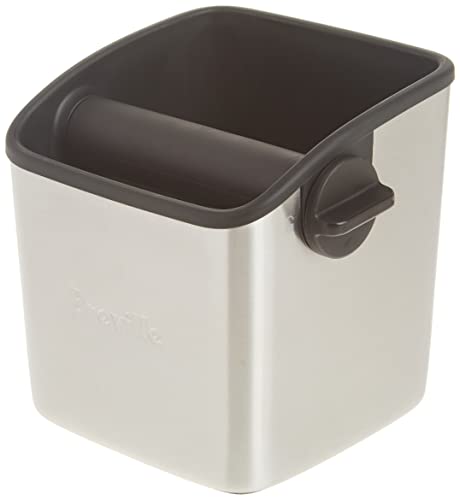
Some accessories make your espresso taste better. Some just make your life less irritating. A knock box is firmly in the second group, and that is fine. Wet pucks in the trash are gross. Knocking a portafilter against the sink is noisy and a little chaotic. This fixes both.
The Breville Knock Box Mini is small enough for home counters and the product listing calls out a removable bar plus easy cleaning. That is exactly what you want. You use it, dump it, rinse it, move on.
If your espresso station is already cramped, this one is worth measuring for first. But if you have the room, it is one of those little upgrades that makes the whole routine feel more grown-up.
Pros
- ✓ Makes puck disposal quick and tidy
- ✓ Removable bar makes cleanup easier
- ✓ Small footprint compared with bigger knock drawers
- ✓ Works with basically any home espresso setup
Cons
- ✗ Takes up counter space for a non-essential job
- ✗ Does nothing for shot quality
- ✗ Can feel unnecessary if you only pull a shot once in a while
6) IKAPE 58.5mm Espresso Puck Screen — Best tidy add-on

Puck screens live in the “nice if you like the workflow” category. This IKAPE model is a 58.5mm, 0.2mm-thick stainless steel screen, and the usual reason people buy one is simple: cleaner shower screens and a little more control over how water hits the puck.
I would not tell a beginner to rush out and buy one before they own a scale or WDT tool. But once the basics are sorted, it can be a satisfying little extra. Think of it like putting a tray under a messy cutting board. It is not the main event. It just keeps things calmer.
Pros
- ✓ Can help keep the group head cleaner
- ✓ Thin 0.2mm design is easy to rinse after use
- ✓ Simple add-on for 58.5mm basket setups
- ✓ Cheap enough to try without a huge gamble
Cons
- ✗ Absolutely not a must-have for most people
- ✗ Size-specific, so it is easy to buy the wrong one
- ✗ Adds one more little thing to rinse after every shot
Basket size matrix: buy the right size or waste your money
This is the part a lot of accessory roundups gloss over, and it matters. Size mismatch is the easiest way to buy a “great” tool that is completely useless when it arrives.
| Accessory Type | 54mm Breville Home Machines | 58mm / 58.5mm Machines | My Take |
|---|---|---|---|
| Tamper | Buy a 54mm version only | 58mm or 58.5mm makes sense | The fit matters a lot. Wrong size here feels awful immediately. |
| Dosing funnel | Needs the exact 54mm version | 58mm funnel is the normal buy | Great for mess control, but only if the fit is right. |
| WDT tool | Works fine | Works fine | This is the least size-sensitive tool on the list. |
| Puck screen | Needs a 54mm screen | 58.5mm screens are common | Nice extra, but easy to buy in the wrong size. |
| Scale / knock box | Usually fine | Usually fine | These care more about counter space than basket size. |
If you own a Breville Bambino, Bambino Plus, Barista Express, or Infuser, double-check every size-specific tool before you buy. If you own a 58mm prosumer machine, 58mm and 58.5mm accessories are the usual lane. It sounds obvious. People still mess it up constantly.
Must-have vs nice-to-have: where your money should go first
A smarter order for buying espresso accessories
Buy the tools that fix actual problems in your cup before the tools that just make the station prettier
Step 1 Buy first
- Get a scale with a timer
- Learn your dose and yield numbers
- Stop guessing when to end the shot
Step 2 Buy next
- Upgrade the tamper if your stock one is sloppy
- Add a WDT tool if you see clumps
- Tighten your puck prep
Step 3 Buy later
- Add a dosing funnel for less mess
- Grab a knock box for easier cleanup
- Try a puck screen if you want a tidier group head
Result
Better espresso with less wasted money and less random countertop clutter
If your budget is tight, do not spread it across six mediocre accessories. Buy one or two that solve the pain you are actually feeling. If your shots are inconsistent, get the scale and WDT tool. If your prep is fine but cleanup is annoying, add the knock box. Match the tool to the headache.
That same logic applies if you are still choosing a machine. Our best espresso machine under $200 guide is worth a look before you load up on extras for a machine that might not suit you long term.
What beginners usually get wrong
They buy for vibes instead of problems. A beautiful accessory is still a waste if it does not fix anything that is bothering you.
They buy the wrong size. This is the biggest unforced error. Especially with tampers, funnels, and puck screens.
They buy too many tools before learning the basics. If you cannot explain your current dose, yield, and shot time, another shiny gadget is not the answer.
They expect cleanup tools to improve the cup. A knock box is great. It just will not turn a bad shot into a good one.
When an accessory is worth more than a coffee bean upgrade
Fresh beans matter. A lot. But sometimes an accessory solves a more basic problem first. If your shots taste different every morning because you are eyeballing the yield, no bean on earth is going to fix that. A scale will.
The same goes for puck prep. If your grinder tends to spit clumps and you tamp them down as-is, a WDT tool can be a bigger upgrade than trying to chase the “perfect” roast. That is why I like accessories that remove noise from the workflow. They make the rest of your setup easier to understand.
Once the workflow is steady, then it makes more sense to get picky about beans, baskets, and tiny taste differences. Build the foundation first. The fun details land better after that.
Best accessory stack by machine type
If you use a Breville 54mm home machine, your smartest stack is usually: scale first, WDT second, then a 54mm tamper if the stock one feels sloppy. After that, add cleanup gear only if the mess is driving you nuts. A lot of 54mm owners waste time shopping the same accessory lists as 58mm prosumer users, then realize half the sexy tools do not fit their basket. Do not copy somebody else's counter. Build around your own machine.
If you use a 58mm or 58.5mm setup, you have more room to lean into size-specific tools because the accessory ecosystem is huge. That is where something like the Normcore tamper or magnetic funnel makes more sense. The upside is fit and choice. The downside is temptation. There is always one more gadget promising a cleaner puck, smoother prep, or better crema. Usually the right move is still boring: fix measurement first, then improve prep, then clean up the station.
If you use a manual lever or travel setup, keep it lean. A compact scale and one prep tool you trust are usually enough. Big countertop cleanup gear makes less sense when your whole workflow is meant to stay simple and portable. In those setups, every extra item needs to earn its keep fast or it becomes dead weight.
What each accessory changes in the cup
A scale changes the cup the most because it tells you whether you are even pulling the recipe you think you are pulling. Too much yield and the shot thins out. Too little and it can turn sharp and cramped. The scale is the scoreboard. Without it, you are arguing about the game with your eyes closed.
A WDT tool can change the cup too, especially if your grinder makes obvious clumps. When coffee clumps together, water can punch little tunnels through the puck. That is called channeling, basically water finding the easy path instead of soaking through evenly. Stirring the grounds first helps level that out, which can make the shot taste sweeter and less split between sour and bitter.
A tamper matters more for consistency than for dramatic flavor swings. If your tamp is crooked or shallow one day and firm the next, your shot behavior drifts. A better tamper helps the workflow feel steady. It is more about reducing wobble than unlocking some hidden flavor dimension.
Funnels, knock boxes, and puck screens mostly shape the experience around the cup. That still matters. Less mess means less friction. Less friction means you are more likely to keep your routine consistent. But if somebody asks me which accessory actually changes the espresso in the demitasse first, I am still pointing them to the scale and WDT tool before anything else.
Accessories I would skip until your routine is stable
I would wait on wedge distributors for most beginners. Some people love them. Personally, I think they often become an expensive extra step when a WDT tool and a good tamp already handle the job better. If you are still learning basic puck prep, a wedge distributor can feel like buying a fancy steering wheel before you know how to park.
I would also skip giant tamping stations unless your counter is basically a permanent espresso shrine. They look good. They can organize things. But they eat space fast, and most home stations are already fighting for breathing room. A small scale and one or two useful tools usually beat a giant wooden dock full of accessories you barely touch.
Finally, skip duplicate versions of the same tool. You do not need three tampers, two WDT tools, and a drawer full of puck screens “just in case.” Espresso already has enough moving parts. Simpler setups are easier to repeat, easier to clean, and a lot easier to live with.
My honest buying order if you have about $100 to spend
I would spend the first chunk on a compact scale. No debate. That gives you the biggest jump in clarity for the least confusion. After that, I would look at a WDT tool if your grinder tends to clump, or a better tamper if your stock tamper feels flimsy and awkward in the hand.
If there is money left, then I would think about quality-of-life tools like a funnel or a knock box. Those can make the station feel calmer, cleaner, and less chaotic. They just are not the first domino. Get the stuff that teaches you what your shot is doing. Then get the stuff that makes the routine nicer to live with.
Frequently asked questions
What is the first espresso accessory I should buy?
A scale, no question. It is the fastest way to stop guessing your shot yield. Once you can see your numbers, every other upgrade makes more sense.
Do I need a tamper if my machine came with one?
Maybe not right away. If the stock tamper feels flimsy, too small, or inconsistent, upgrading makes sense. But a good scale and basic puck prep usually matter more first.
Will 58mm tools fit every espresso machine?
No. Many prosumer machines use 58mm baskets, but Breville Bambino, Barista Express, and other Breville home machines usually use 54mm baskets. Always match the tool to your basket size before buying.
Is a puck screen a must-have?
Not for most people. It is more of a tidy little extra. Nice if you want to keep your shower screen cleaner or calm down water spread a bit, but not as important as a scale, tamper, or WDT tool.
What accessories are mostly skip-worthy for beginners?
Start by skipping anything that looks fancy but does not fix a real problem in your cup. Distributor wedges, oversized tamping stations, and drawer-fulls of duplicate tools can wait until you know what is actually bothering you.