 Coffee Gear Picks
What's the Best French Press Water Temperature? (2026)
The best French press water temperature is 200°F (93°C) for most medium roasts. It is a dependable starting point for a round, sweet cup with the full body people expect from a French press, without needlessly emphasizing roast bitterness.
Brew French Press at the Right Temperature
Four steps to a balanced, sweet cup
Step 1 Pick your temp
- Light roast 205°F
- Medium 200°F
- Dark 195°F
Step 2 Heat the water
- Set kettle preset
- or bring to a full boil
Step 3 Cool & verify
- Rest 60–90 sec off boil
- Check with a thermometer
Step 4 Pour & steep
- Pour over coarse grounds
- Steep 4 minutes
Result
A sweet, full-bodied French press with no bitterness
What temperature should French press water be?
Use 200°F (93°C) for a medium roast, 205°F (96.1°C) for a light roast, and 195°F (90.6°C) for a dark roast. This 195–205°F range is a practical starting point: hotter water can help draw flavor from a dense light roast, while slightly cooler water can make a dark roast taste less roasty and drying.
Barista Hustle’s French press temperature analysis and Fellow’s French press temperature guide both support treating temperature as an extraction variable. Start at 200°F, taste, and change one variable at a time rather than treating it as a fussy rule.
What do you need to control French press water temperature?
You need a French press, coarse grounds, water, and either a kettle with a temperature setting or a simple thermometer. A thermometer is the budget move; it lets you use the kettle already on your stove instead of upgrading.
- French press and coarse coffee: use a coarse, consistent grind rather than powdery grounds.
- Kettle: any kettle can work; a temperature-control model removes guesswork.
- Thermometer: the TempPro is the no-upgrade path for checking water before you pour.
Our Top Picks
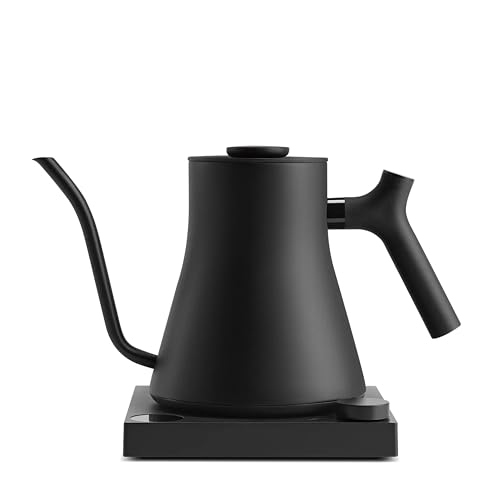
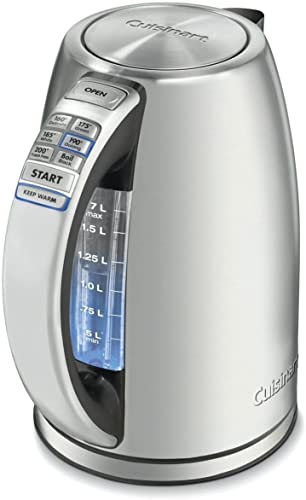
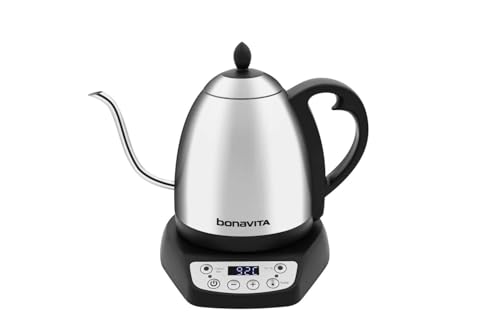

How do you brew French press coffee at the right temperature?
Choose a roast-matched target, heat water to it, then pour and steep for four minutes. Keep your grind and coffee-to-water ratio steady while you change temperature, or you will not know which change improved the cup.
Step 1: Pick 200°F as your starting point
Start at 200°F for a medium roast. If a light roast tastes lemony and thin, try 205°F next time; if a dark roast tastes charred, try 195°F. SCA research on brewing temperature identifies water heat as a meaningful brewing variable, so make small moves rather than changing everything at once.
Step 2: Heat water, then let it settle if it boiled
Set a variable-temperature kettle to your target while the water comes up. If you are shopping, our gooseneck kettle picks note which models make the 200°F setting one-touch. With a plain kettle, bring water to a full boil, take it off heat, and wait 60–90 seconds as a starting estimate.
Step 3: Check the temperature and keep the grind coarse
Dip an instant-read thermometer into the water before pouring; do not let the probe rest against the kettle wall. Lock in a consistent coarse grind with our French press grinder picks so temperature becomes the thing you tune, not another moving target. James Hoffmann’s French Press Technique video uses a longer settle after the initial four minutes for a cleaner cup; it is a useful alternative method, not a reason to change several variables at once.
Step 4: Pour, steep four minutes, and press slowly
Pour the water over all the grounds, give them a gentle stir, and steep for four minutes. Royal Cup’s French press brew guide likewise calls for water cooled for a minute after boiling and a four-minute steep. Press slowly rather than forcing the plunger down; use our coffee brewing ratio guide to weigh your water so temperature is the only variable you adjust.
Which French press temperature mistakes spoil the cup?
The usual mistakes are using full-boil water for every roast, assuming a cooling wait is exact, and changing grind, temperature, and steep time together. Each one hides the real cause of a rough cup and makes a repeatable morning habit feel like luck.
- Using 212°F for every coffee — a dark roast can taste rough at that temperature. Start at 195°F and judge the cup before changing anything else.
- Trusting a cooling estimate as exact — 60–90 seconds is a useful rule of thumb, not a measurement. A heavy kettle and a cold kitchen cool differently.
- Grinding too fine to compensate — fine particles can leave sediment and a drying finish. Go coarser first.
How do you fix sour or bitter French press coffee?
Sour, thin coffee often benefits from hotter water or a finer grind; bitter, dry coffee often benefits from cooler water or a coarser grind. Change one thing per brew, starting with temperature in 5°F steps, and use taste—not a fixed rule—to decide the next move.
The cup is sour and weak
Raise the water from 200°F to 205°F, especially with a light roast. If it is still sour, make the grind a little finer while keeping the four-minute steep. Fellow’s French press guidance and SCA brewing research both point to temperature as one of several connected extraction variables, so hold the ratio steady while you adjust.
The cup is bitter or drying
Lower the water to 195°F for a dark roast, then check the grind. A finer-than-coarse grind can cause the papery, drying finish people blame on temperature. Keep your ratio fixed and shorten the steep only after those two checks.

Frequently asked questions
What is the best French press water temperature?
200°F (93°C) is the best French press water temperature for most medium-roast coffee. It is a practical starting point that aims for sweetness and body without an overly dry finish. Move up to 205°F for a light roast or down to 195°F for a dark roast, then adjust by taste.
What is French press water temperature in Celsius?
93°C is the easy Celsius target for a medium roast. Use 96°C for a light roast and 91°C for a dark roast. Those small shifts are a useful way to match water temperature to how readily a particular coffee extracts.
How long should I wait after boiling water for French press?
Wait 60–90 seconds after a full boil as a practical starting point. That can bring water close to 200°F, but room temperature, kettle shape, water volume, and altitude change the cooling speed. An instant-read thermometer is the only way to know the temperature rather than estimate it.
Can I use boiling water in a French press?
Yes, especially if a light roast tastes sharp or underdeveloped at lower temperatures. For a medium or dark roast, start just below boiling instead. Fellow’s French press guidance puts the workable range at 195–212°F, so boiling water is an option, not a requirement.
Why does my French press taste bitter at 200°F?
Keep 200°F, then check grind and steep time first. A grind that is too fine creates more tiny particles and can leave a muddy, drying cup; go coarser before lowering the water temperature. If the coffee is a dark roast, try 195°F on the next brew.
Do I need a temperature-control kettle for French press?
No. A basic kettle plus an instant-read thermometer lets you hit a repeatable target without buying another kettle. A temperature-control kettle simply saves time on busy mornings: set 200°F, then pour when it signals that it is ready.