 Coffee Gear Picks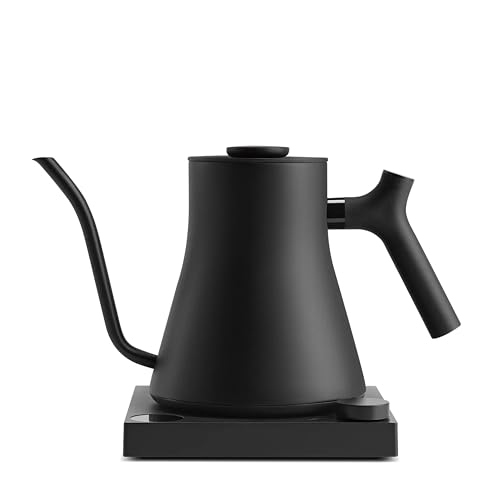
Best Gooseneck Kettle for Pour Over (2026): 5 Smart Picks
The best gooseneck kettle for pour over is the one that makes your recipe easier to repeat on busy mornings, not just the one with the longest feature list. We researched current listings, compared specs that matter for everyday brewing, and ranked the strongest electric and stovetop options for control, consistency, and value.
Best Gooseneck Kettle for Pour Over
Electric and stovetop picks ranked by stream control, temperature workflow, and long-term value
Overall
Best all-around daily precision
- Variable temp control
- Hold-temperature mode
- Excellent stream stability
- Strong daily workflow
Top Pick Fellow Stagg EKG Pro
$$$
Premium precision routine
Check Price on Amazon Budget
Best value electric option
- Variable temperature
- 1.0L practical volume
- Simple controls
- Great value for features
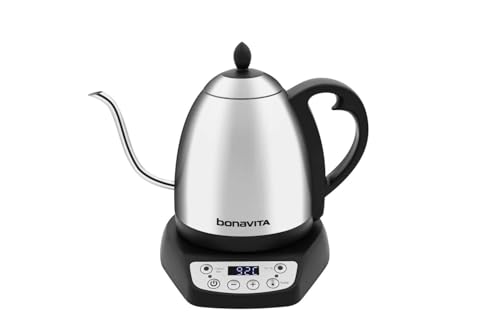
Top Pick Bonavita 1.0L
$$
Value electric consistency
Check Price on Amazon Manual
Best stovetop reliability
- No electronics to fail
- 1.2L stovetop capacity
- Classic pour profile
- Easy long-term ownership
Top Pick Hario V60 Buono
$
Manual classic for pour over
Check Price on Amazon Temperature
Best temp presets for repeatability
- Preset temperatures
- Low learning curve
- Quick heat-up workflow
- Friendly daily controls
Top Pick COSORI Electric
$$
Consistent temp control workflow
Check Price on AmazonQuick answer: If you want the most complete electric workflow, choose the Fellow Stagg EKG Pro. If you want better value with variable-temperature control, choose the Bonavita 1.0L. If you prefer manual simplicity and long-term durability, the Hario V60 Buono is the safest stovetop pick for most brewers.
Quick picks
Our Top Picks

Comparison table
| Product | Best for | Type | Capacity | Temperature workflow | Check price |
|---|---|---|---|---|---|
| Fellow Stagg EKG Pro Electric Kettle | Most home brewers who want precision and convenience | Electric gooseneck | 0.9L | Variable with hold mode | Check Price |
| Bonavita 1L Variable Temperature Kettle | Strong value electric workflows | Electric gooseneck | 1.0L | Variable with hold behavior | Check Price |
| Hario V60 Buono Stovetop Kettle | Manual brewers prioritizing simplicity | Stovetop gooseneck | 1.2L | Manual heat control | Check Price |
| COSORI Electric Gooseneck Kettle | Simple first electric gooseneck | Electric gooseneck | 0.8L | Preset + variable control | Check Price |
| Fellow Stagg Stovetop Pour-Over Kettle | Design-forward manual workflows | Stovetop gooseneck | 1.0L | Manual heat control | Check Price |
How we evaluate
For this update, we compared each kettle against five practical decision factors: stream control, temperature behavior, ergonomics, capacity fit, and value versus feature set. We also reviewed how each model supports real home workflows, including single-cup weekday brews, two-cup back-to-back sessions, and slower weekend routines where stability matters more than speed.
Stream control was weighted first. In pour over coffee, your kettle is the steering wheel for extraction. A stable, predictable stream helps you manage bloom agitation and pulse timing without over-disturbing the bed. Kettles that feel jumpy near the end of a pour can make good recipes feel inconsistent even when grind and dose are solid.
Temperature behavior came next. Electric models were evaluated on ease of setting targets, hold-temperature behavior, and recovery between brews. Stovetop models were assessed on control feel and predictability when paired with a basic heating routine. The point is not gadget complexity — it is whether you can repeat your chosen recipe with low friction.
Ergonomics and balance were reviewed from a daily-use perspective: handle comfort, wrist stability during slow circles, and confidence when the kettle is partially filled. A kettle can have good specs and still be tiring to use if its balance is awkward mid-pour. That matters over hundreds of brews.
Capacity fit focused on real households. Many brewers overbuy capacity, then end up with a kettle that feels heavier and less precise than necessary. For most people, 0.8L to 1.0L is the best compromise between practical volume and pour control. Larger sizes make sense only if you consistently brew multiple cups per cycle.
Value compared what you actually gain at each price tier. Budget picks were rewarded for covering core brew needs without major compromise. Premium picks had to justify extra spend through meaningful workflow advantages, not cosmetic upgrades alone. This keeps recommendations useful for both first-time buyers and experienced brewers upgrading one part of a larger setup.
If your kettle decision is tied to broader setup planning, pair this guide with our best coffee grinder for pour over roundup, then lock dose and yield with the coffee brewing ratio guide. For cleaner recipe consistency, a responsive scale also matters; see best coffee scale for espresso and pour over.
Individual product reviews
1) Fellow Stagg EKG Pro Electric Kettle (ASIN: B0BF7DXLBF)
The Stagg EKG Pro remains our best overall recommendation because it balances precision, simplicity, and everyday usability better than most competitors. You get variable temperature control, hold behavior for repeated brews, and a stream profile that is easy to modulate during bloom and pulse pours. That combination lowers friction for both new and experienced brewers.
Where this kettle stands out is repeatability under normal life constraints. On paper, many models offer similar controls. In real routines — early mornings, interrupted brews, switching between recipes — the Stagg EKG Pro stays predictable. That makes it easier to diagnose recipe issues quickly because your kettle variable is stable.
It also fits “one good cup, then another” workflows well. If you brew for yourself and one other person, hold behavior and fast control adjustments save time while preserving consistency. For brewers tracking light-roast recipes where temperature shifts matter, this can reduce avoidable cup-to-cup swings.
The tradeoff is cost. If your grinder is still entry level, budget may be better spent on grind quality first. But once your grinder and scale are already strong, this kettle is a meaningful quality-of-life and consistency upgrade.
Pros
- ✓ Excellent stream control and balance
- ✓ Reliable variable-temperature workflow
- ✓ Strong hold mode for repeat brews
Cons
- ✗ Premium pricing
- ✗ 0.9L capacity is modest for larger households
2) Bonavita 1L Variable Temperature Kettle (ASIN: B005YR0F40)
The Bonavita 1.0L is the strongest budget electric pick for people who want real temperature control without premium-brand pricing. It gives you the core features that matter for pour over consistency, and it does so with a straightforward interface that does not get in your way.
Its value shows up in practical routines. The 1.0L volume is useful when you brew multiple cups, and the controls are simple enough for households where more than one person makes coffee. You are not paying for flashy extras; you are paying for baseline precision and repeatability.
For many buyers, this is the best “balanced setup” choice because it leaves budget for a better grinder, fresh filters, or a responsive scale. In terms of cup quality improvement per dollar, that systems approach usually beats overspending on a single piece of gear.
It does not feel as refined as top-tier models, and stream feel may be less polished in very slow pours. Still, for value-focused electric brewing, it remains a strong recommendation.
Pros
- ✓ Strong price-to-feature ratio
- ✓ Useful 1.0L capacity
- ✓ Simple variable-temp workflow
Cons
- ✗ Less premium fit and finish
- ✗ Not the most refined stream feel in class
3) Hario V60 Buono Stovetop Kettle (ASIN: B000IGOXLS)
The Hario V60 Buono is our best stovetop value pick because it is durable, predictable, and easy to own long term. If you prefer manual workflows and fewer electronic failure points, this kettle still delivers excellent control for pour over fundamentals.
The biggest advantage is ownership simplicity. You do not need to worry about electric base issues, firmware-like quirks, or proprietary parts. Heat it, pour it, maintain it. That makes it appealing for buyers who want reliability over feature density.
It is especially good for people who already brew with a thermometer routine or who are comfortable using sensory cues for water readiness. In those setups, the lack of digital control is not a blocker. It is simply a different style of precision.
The main compromise is convenience. There is no hold mode and recovery speed depends on your stovetop. But if your goal is clean manual control at a fair price, it is still one of the safest picks in the category.
Pros
- ✓ Reliable manual stream control
- ✓ Durable stainless-steel construction
- ✓ Excellent value for stovetop users
Cons
- ✗ No built-in temperature hold
- ✗ Slower back-to-back workflow than electric options
4) COSORI Electric Gooseneck Kettle (ASIN: B07T1CH2HH)

COSORI is our top beginner electric recommendation because it reduces learning friction. Preset temperatures and simple controls make it easy to start brewing with more precision than a standard kettle, even if you are brand new to pour over technique.
This kettle is a practical first step when you are transitioning from basic drip routines to manual brewers like V60 or Kalita Wave. You get immediate gains in stream control and workflow consistency without having to master a complex interface.
It also works well in shared kitchens where multiple people brew differently. Straightforward controls reduce mistakes and make the kettle approachable for everyone in the household, not just the person who nerds out on extraction variables.
Compared with premium options, materials and stream nuance are less refined. But for most first-time buyers, the jump in control and convenience is substantial enough to justify the pick.
Pros
- ✓ Easy controls for first-time users
- ✓ Useful preset and variable settings
- ✓ Strong everyday value
Cons
- ✗ Less refined build feel than premium picks
- ✗ Fine stream modulation is weaker than top-tier models
5) Fellow Stagg Stovetop Pour-Over Kettle (ASIN: B014UN7B7C)
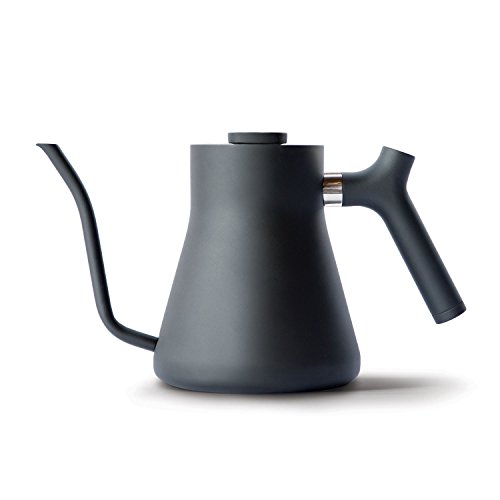
If you want a premium manual setup, the Fellow Stagg stovetop model is the most compelling upgrade path. It keeps stovetop simplicity while improving feel, balance, and visual design for people who brew daily and care about tactile control.
In use, it feels more deliberate than budget stovetop models, especially during slow final pours where wrist stability matters. For brewers who enjoy manual brewing as a ritual, this improved ergonomics profile can make a noticeable difference over time.
This kettle also makes sense if you want one long-term stovetop tool instead of rotating through cheaper replacements. Build quality and ownership satisfaction are part of the value equation for gear that lives on your counter and gets used constantly.
It is not the right pick for strict budget buyers. But for design-conscious manual brewers, it is a strong premium option with practical upside beyond aesthetics.
Pros
- ✓ Premium manual handling and build quality
- ✓ Confident stream profile for controlled pours
- ✓ Great fit for long-term stovetop workflows
Cons
- ✗ Higher price than basic stovetop models
- ✗ No electric convenience features
Electric vs stovetop gooseneck kettles
Both styles can produce excellent pour over coffee. The right choice depends on your routine, not internet debates. Electric kettles are best for consistency with lower effort: set target temperature, heat quickly, and repeat with less guesswork. Stovetop kettles are best for simplicity and long-term durability when you prefer manual control and fewer electronics.
If you brew one cup before work and need fast recovery for a second cup, electric usually wins. Hold-temperature behavior helps avoid reboil cycles, and repeatable targets reduce recipe drift when you switch between coffees. In fast routines, these small convenience gains add up and often improve consistency by making the “correct process” easier to follow.
Stovetop tends to win for buyers who value durability, straightforward maintenance, and lower complexity. With a stable routine, a stovetop kettle can be just as effective for extraction control. The key is consistency in your heat timing and pour pattern. If you already use a scale and timer reliably, manual workflows can be very repeatable.
A practical rule: if convenience is your bottleneck, buy electric. If reliability and simplicity are your priorities, buy stovetop. Either way, your grinder quality and brew ratio discipline will still matter as much as kettle choice.
Common buying mistakes (and how to avoid them)
Buying too much capacity. Bigger kettles can feel less agile and more fatiguing in delicate pours. Unless you regularly brew for several people at once, 0.8L to 1.0L is usually enough.
Chasing features instead of workflow fit. A long feature list does not guarantee better coffee. Prioritize controls you will actually use every week, not options you may never touch.
Ignoring water hardness and maintenance. Scale buildup affects heat behavior over time. Build descaling into your routine from day one so your kettle stays predictable.
Overspending before fixing bigger bottlenecks. If your grinder is inconsistent, kettle upgrades have reduced impact. Balance your budget across grinder, scale, and kettle to improve cups faster.
Choosing by aesthetics alone. Design matters, but control feel matters more. If possible, prioritize stream stability and handling confidence over visual style.

Frequently asked questions
Do I need an electric gooseneck kettle for pour over?
No. A good stovetop gooseneck can make excellent coffee. Electric kettles mainly improve convenience through faster reheats, hold-temperature behavior, and repeatable target settings.
What temperature should I use for pour over coffee?
Most brewers do well between 195°F and 205°F. Lighter roasts often perform better near the higher end, while darker roasts can taste cleaner slightly lower.
What capacity is best for most home users?
For most households, 0.8L to 1.0L is the practical sweet spot. It is enough for one to two cups while staying easier to control than oversized kettles.
How often should I descale a gooseneck kettle?
Check monthly. In hard-water areas, many people descale every 2 to 4 weeks. In softer-water areas, every 1 to 2 months is common.
Can a gooseneck kettle improve extraction consistency?
Yes. Better stream control makes it easier to repeat bloom and pulse pours, which helps maintain more stable extraction from brew to brew.