 Coffee Gear Picks
Best Coffee Grinder for French Press (2026): 7 Top Picks
If you want cleaner French press cups with less sludge, your grinder matters more than almost any other piece of gear. We researched seven strong options across manual and electric categories, then compared them for coarse consistency, fines control, cleanup burden, and everyday value for different household routines.
4 French Press Grinders Worth Your Money
Picked for coarse consistency, low fines, and practical daily workflow
Budget
Best value under $100
- Affordable entry price
- Simple daily workflow
- Low maintenance burden
- Beginner friendly
Top Pick TIMEMORE Chestnut C2
$
Reliable budget starter
Check Price on Amazon Overall
Best all-around French press grinder
- Stable coarse output
- Stepped repeatability
- Strong parts support
- Multi-method flexible
Top Pick Baratza Encore ESP
$$
Dependable daily grinder
Check Price on Amazon Manual
Premium hand-ground quality
- Excellent coarse consistency
- Low fines output
- Precise click control
- Quiet operation
Top Pick KINGrinder K6
$$
Upgrade-level manual pick
Check Price on Amazon Compact
Best for small kitchens
- Small counter footprint
- Batch brewing speed
- Broad brew range
- Convenient electric workflow
Top Pick Bodum Bistro Burr Grinder
$$
Space-saving all-rounder
Check Price on AmazonQuick picks
Our Top Picks

Comparison table
| Product | Best For | Type | Price Band | |
|---|---|---|---|---|
| Baratza Encore ESP | Best Overall | Electric burr grinder | $$ | Check Price |
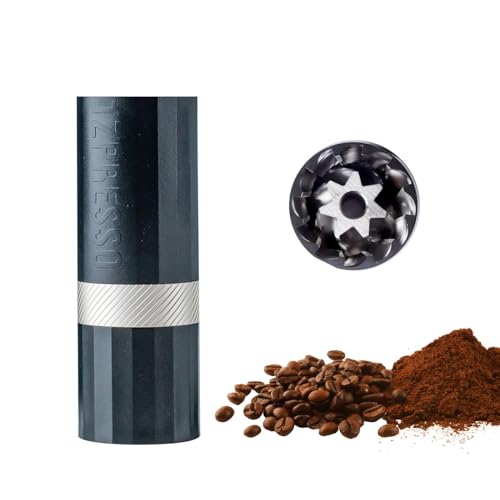
| 1Zpresso Q Air | Best Manual Travel Pick | Manual burr grinder | $$ | Check Price |
| TIMEMORE Chestnut C2 | Best Budget Under $100 | Manual burr grinder | $ | Check Price |
| OXO Brew Conical Burr Grinder | Best Electric Value | Electric burr grinder | $ | Check Price |
| KINGrinder K6 Manual Coffee Grinder | Best Manual Upgrade | Manual burr grinder | $$ | Check Price |
| Bodum Bistro Burr Grinder | Best Compact Countertop Pick | Electric burr grinder | $ | Check Price |
How We Evaluate
For this best coffee grinder for french press roundup, we weighted four practical criteria that affect your cup every day: particle consistency at coarse settings, fines output, ease of workflow, and cleanup burden. French press is forgiving on many things, but it is not forgiving when grind distribution is messy. Too many fines create a muddy texture and can make even good coffee taste dull or over-extracted. That is why we prioritize burr geometry and adjustment usability instead of gimmicky features.
We also compared value over time. A grinder that costs less today but produces inconsistent coarse grounds often gets replaced quickly, which makes it more expensive in practice. A stronger grinder at the same price can improve cup quality immediately and reduce upgrade churn. We looked at manufacturer specifications, listing details, community usage patterns, and consistency expectations across common brew doses (18g to 36g) so recommendations stay grounded in real home use.
Another major factor is tolerance to imperfect technique. Most home brewers do not run lab-like routines every morning. Real life includes slight dose variation, occasional timer drift, and rushed plunges before work. Better grinders are more forgiving in those conditions, producing acceptable cups even when your process is not perfect. Weak grinders punish small errors with bigger flavor swings, which is frustrating for beginners and experienced brewers alike.
Finally, we weighted practical ownership details: replacement part availability, workflow friction, and whether the grinder still makes sense if your habits evolve. Many buyers start with French press and later add pour-over or occasional espresso. Models that remain useful across those transitions deliver better long-term value than grinders locked into a narrow range.
If you are deciding between brew methods first, read AeroPress vs French Press. If your budget is strict, compare this page with best manual coffee grinder under $100. For broader options, see best burr coffee grinder under $200.
Individual product reviews
1) Baratza Encore ESP — Best Overall Coffee Grinder for French Press
The Baratza Encore ESP lands in the best-overall spot because it gives most people the safest combination of repeatability, cleaner cups, and upgrade flexibility. Its stepped adjustment makes it easy to return to previous settings, which matters when you brew French press on weekdays and switch methods on weekends. For French press specifically, the coarse range is consistent enough to keep sediment at manageable levels while preserving body and sweetness.
This grinder also has practical long-term value. Replacement parts and support are easier to find than with many low-cost alternatives, so ownership friction stays lower over time. If you want one grinder now without boxing yourself into a future upgrade, Encore ESP is a dependable choice.
Pros
- ✓ Stable coarse grind output with lower fines than most entry electric grinders.
- ✓ Simple stepped adjustment makes repeat recipes easier to maintain.
- ✓ Strong long-term support and parts availability for home users.
Cons
- ✗ It is usually priced above strict budget grinders.
- ✗ Static can appear in dry climates without basic workflow tweaks.
2) 1Zpresso Q Air — Best Manual Travel Pick
For people brewing one or two cups and valuing portability, 1Zpresso Q Air is a very practical winner. Manual grinding means a bit more effort, but you trade that for low retention, quieter operation, and better grind quality-per-dollar versus many cheap electric models. Its size also makes it easy to carry for office, travel, or small apartment use.
Q Air is especially compelling when your priority is reducing sludge without spending near electric mid-tier pricing. It gives enough control for French press dialing while keeping daily workflow simple.
Pros
- ✓ Portable and quiet with strong coarse consistency for its size.
- ✓ Low retention helps keep cleanup fast.
- ✓ Great value for buyers who do not need electric speed.
Cons
- ✗ Manual effort adds friction for larger doses.
- ✗ Not ideal for households brewing several mugs back-to-back.
3) TIMEMORE Chestnut C2 — Best Budget Under $100
Chestnut C2 remains one of the most straightforward budget upgrades for French press brewers moving from blade grinders. Its coarse output is not as tight as premium manual models, but it is generally clean enough to improve cup clarity immediately at a low cost. Workflow is beginner-friendly, and maintenance is simple.
If your top goal is spending less while still getting noticeably better French press results, C2 stays relevant in 2026. It is not a forever grinder for everyone, but it is a strong first step that avoids many common budget pitfalls.
Pros
- ✓ Reliable value pick for cleaner cups under $100.
- ✓ Simple daily workflow and low maintenance burden.
- ✓ Good entry point for first-time burr grinder buyers.
Cons
- ✗ Particle consistency trails premium manual grinders.
- ✗ Switching between brew methods is slower than external-dial designs.
4) OXO Brew Conical Burr Grinder — Best Electric Value
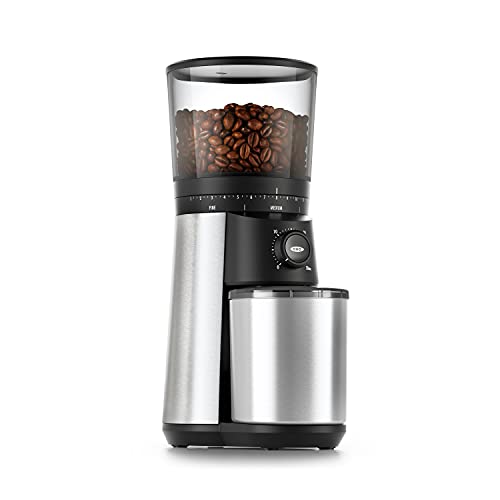
OXO Brew Conical Burr is a sensible electric option for buyers who want convenience without jumping straight to higher pricing tiers. It handles coarse ranges well enough for French press and offers a workflow that feels familiar to most users. If you brew daily and want lower effort than hand grinding, this model can be a comfortable middle path.
The key compromise is that fines control is decent, not exceptional. In return, you get straightforward operation and value that still makes sense in a crowded segment.
Pros
- ✓ Easy electric workflow for regular home use.
- ✓ Good coarse settings for immersion brewing routines.
- ✓ Strong value when convenience is a priority.
Cons
- ✗ Fines control is weaker than the top-performing grinders here.
- ✗ Can show extra static around the grounds bin in dry weather.
5) KINGrinder K6 — Best Manual Upgrade

KINGrinder K6 is for buyers willing to trade electric convenience for noticeably tighter grind performance. In French press use, that often means cleaner separation in the cup and reduced sediment when compared with many lower-cost grinders. Its adjustment precision also makes it easier to fine-tune based on bean roast and brew time targets.
If cup quality is your top metric and manual grinding does not bother you, K6 is one of the most compelling options in this range. It feels like an upgrade you can keep for years instead of a temporary stopgap.
Pros
- ✓ Excellent coarse consistency and low fines for the price.
- ✓ Precise adjustment helps with repeatability across different beans.
- ✓ Strong upgrade candidate for quality-focused home brewers.
Cons
- ✗ Manual grinding is slower for larger French press batches.
- ✗ Higher price than entry-level hand grinders.
6) Bodum Bistro Burr Grinder — Best Compact Countertop Pick

Bodum Bistro still appeals to small-space buyers who need an electric grinder with a compact footprint. It is easy to place on tighter countertops and simple to operate for casual daily use. While it does not match top picks for fines control, it can still serve French press users who care more about convenience and size than maximum grind precision.
This is a practical option when space and budget come first. If cleaner cup clarity is your main target, one of the higher-ranked grinders above is the safer long-term choice for most buyers.
Pros
- ✓ Compact body works well in small kitchens.
- ✓ Simple controls and easy onboarding for beginners.
- ✓ Accessible pricing for casual electric use.
Cons
- ✗ More fines than stronger options in this roundup.
- ✗ Can require more frequent cleanup to keep output consistent.
Frequently asked questions
What grind size is best for French press coffee?
Medium-coarse is the best starting point for French press. It slows extraction enough to avoid bitterness and helps reduce muddy sediment in the final cup.
Should I buy a manual or electric grinder for French press?
Manual grinders usually give stronger burr quality per dollar, while electric grinders are faster for larger batches. Your best choice depends on whether convenience or portability matters more in your daily routine.
Can I use a blade grinder for French press?
You can, but blade grinders tend to create uneven particles. That usually means more fines, more sludge, and less consistent flavor than a burr grinder.
How can I reduce sludge in my French press?
Use a burr grinder set to medium-coarse, avoid aggressive plunging, and let brewed coffee settle for 30 to 60 seconds before pouring. Keeping your grinder clean also helps maintain particle consistency.
How often should I clean a grinder used for French press?
A quick brush every few brews and a deeper burr clean every 4 to 6 weeks keeps old oils from affecting flavor and helps maintain consistent coarse output.