 Coffee Gear Picks
Do You Need a Gooseneck Kettle for Pour Over Coffee? (2026)
Top pick: Cosori Gooseneck Electric Kettle for brewers who have decided they want easier, repeatable pour control; its narrow spout plus preset temperature controls add convenience without making a gooseneck mandatory.
| Spec | Verified detail |
|---|---|
| Price band | $$ |
| Weight | 3.5 lb |
| Materials | Food-grade 304 stainless-steel interior, lid, and spout |
| Key feature | Five one-touch temperature presets and a one-hour hold function |
You can make pour over without this kettle. A gooseneck improves control; it does not automatically make better coffee.
Gooseneck Kettle Decision Check
A simple way to decide whether pour control is actually your bottleneck
Step 1 Assess your pouring
- Watch your stream
- Check if the bed craters
- Note if pulses feel jumpy
Step 2 Prioritize the basics
- Lock in dose
- Use a timer
- Repeat the same water amount
Step 3 Choose your upgrade path
- Keep your current kettle
- Add a scale first
- Buy a gooseneck if control is the pain
Result
You know whether a gooseneck kettle solves a real brewing problem or simply adds unnecessary gear.
Quick answer
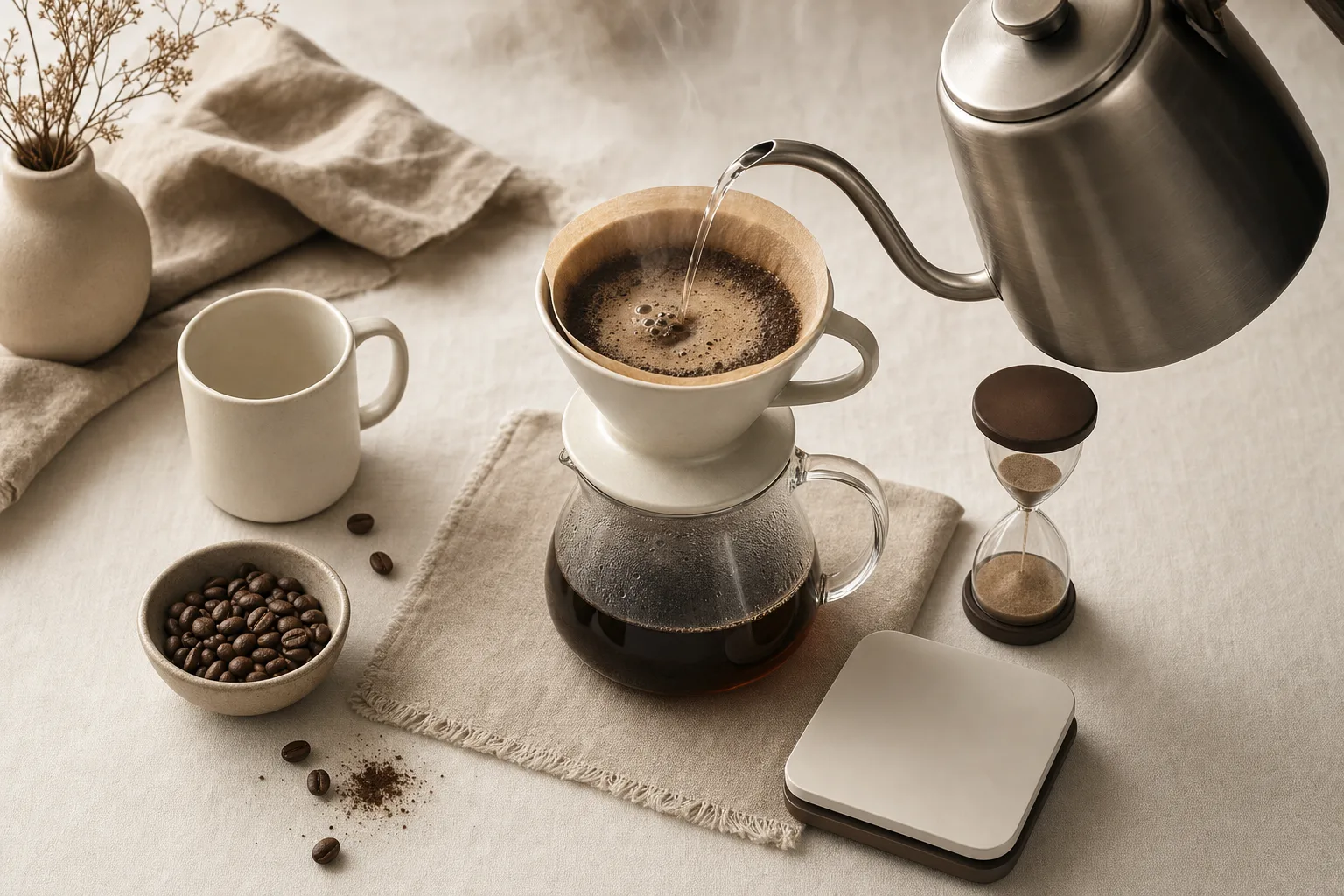
You do not need a gooseneck kettle for pour over coffee, but you may want one if your regular kettle pours like a garden hose. It helps most with V60-style recipes, small pulse pours, and gentle water placement over the coffee bed.
The useful part is flow control. Rogue Wave Coffee notes that repeated pours should have similar timing and connects controlled flow with preserving the coffee bed and promoting even extraction.
What you'll need
You need coffee, a pour-over brewer, hot water, a timer, and ideally a scale. The gooseneck kettle is the optional item here, not the foundation. If your current kettle can pour slowly without splashing or surging, start there.
- Pour-over brewer — cone and flat-bottom brewers have different tolerance for pour technique; see our guide to pour-over coffee maker styles if you are still choosing.
- Coffee and grinder — use the same grind setting while judging your pour.
- Timer — pulse recipes only make sense if you can repeat the timing.
- Scale — weigh your dose and water so the cup is not a guessing game.
- Kettle — regular is fine; gooseneck is the control upgrade.
Our Top Picks
Step-by-step decision
Decide in this order: check whether your pour is messy, fix the repeatability basics, then choose whether to upgrade. Buying the kettle first feels fun, but it can hide the real problem if your recipe changes every morning.
Step 1: Assess your pouring
Brew one normal cup and watch the stream. If water glugs out, digs a hole in the grounds, or pushes coffee to the paper wall, your kettle is making the job harder than it needs to be.
Manual-pour brewers care because your hand controls where the water lands. RoastRanker draws a useful line here: pouring control matters less in immersion brewers or machine-controlled brewing because water delivery is not directly shaping the coffee bed.
Step 2: Prioritize the basics
Fix your dose, water amount, and timing before blaming the spout. A cheap regular kettle plus a coffee scale for repeatable doses and pours will usually teach you more than a fancy kettle used with random scoops.
Think of it like baking. A precise oven does not save cookies if you eyeball the flour. In coffee terms, weigh the grounds, weigh the water, start a timer, and repeat the same recipe twice.
Step 3: Choose your upgrade path
Keep your current kettle if the stream is steady enough and your coffee tastes good. Upgrade only if you keep missing pour targets, want repeatable pulses, or brew V60-style coffee often enough that the clumsy pour annoys you.
If you have decided controlled pouring is worth the upgrade, compare our researched gooseneck kettle picks. The Cosori is the practical single example here because the verified listing shows a 0.8 L capacity, 1,200 W power, five presets, one-hour hold, 3.5 lb weight, and 304 stainless-steel interior, lid, and spout.
Common mistakes
The biggest mistake is treating the kettle like a flavor button. A gooseneck can make your pouring calmer and more repeatable, but it cannot fix stale beans, a wildly uneven grind, or a recipe that changes cup by cup.
- Buying before measuring — If you do not weigh water, you cannot tell whether the kettle helped.
- Pouring from too high — Even a gooseneck can churn the bed if the stream falls from way above the dripper.
- Assuming every brewer needs one — Immersion-style brewers are more forgiving because the water sits with the coffee instead of relying on your pour pattern.
Troubleshooting without buying first
If your coffee tastes off, make one small change before shopping. A gooseneck helps only when the symptom points to rough water delivery, not when the real issue is grind size, coffee age, or inconsistent measuring.
The bed has craters after brewing
Lower the kettle closer to the brewer and pour more slowly. If your regular kettle still dumps water in waves, a gooseneck may make the stream easier to place and pace.
Two cups taste different with the same recipe
Check the scale and timer first. If the dose and water weight match but your pour speed swings all over the place, then a gooseneck starts to make sense.
Your coffee tastes hollow or muddy
Do not assume the kettle is the cause. Keep the kettle and recipe steady, then review the grind and coffee freshness one variable at a time. That is a clearer way to learn whether pour control is actually the problem.
Frequently asked questions
Is a gooseneck kettle worth it?
Yes—if you brew pour over often and your regular kettle makes slow, steady pours difficult, a gooseneck is a worthwhile control upgrade. It is less worthwhile when dose, grind, water amount, and timing still change from cup to cup.
Why use a gooseneck kettle for pour over coffee?
Use one for easier control of where and how quickly water reaches the coffee bed. That advantage matters most with bloom-and-pulse recipes or careful water placement; a simple, forgiving routine can work well with a regular kettle.
Why is a gooseneck kettle better?
It is better for pour control, not automatically for flavor. Its narrow spout can make a gentle, repeatable stream easier to manage, but the benefit depends on your brewer and recipe; grind, dose, and water amount still matter first.
Do you need a gooseneck kettle for V60?
No, a gooseneck kettle is not required for a V60. It can be especially useful when you want to repeat gentle circles and pulse pours, while a regular kettle remains enough for brewers who can pour steadily and are happy with their results.
Can you make pour over coffee without a gooseneck kettle?
Yes, you can make pour over coffee without a gooseneck kettle. Keep the kettle close to the dripper, pour slowly, and repeat the same weighed recipe. Consider an upgrade only if inconsistent flow—not basic measurement—is holding you back.