 Coffee Gear Picks
Espresso Back to Back Shots Inconsistent? Fixes (2026)
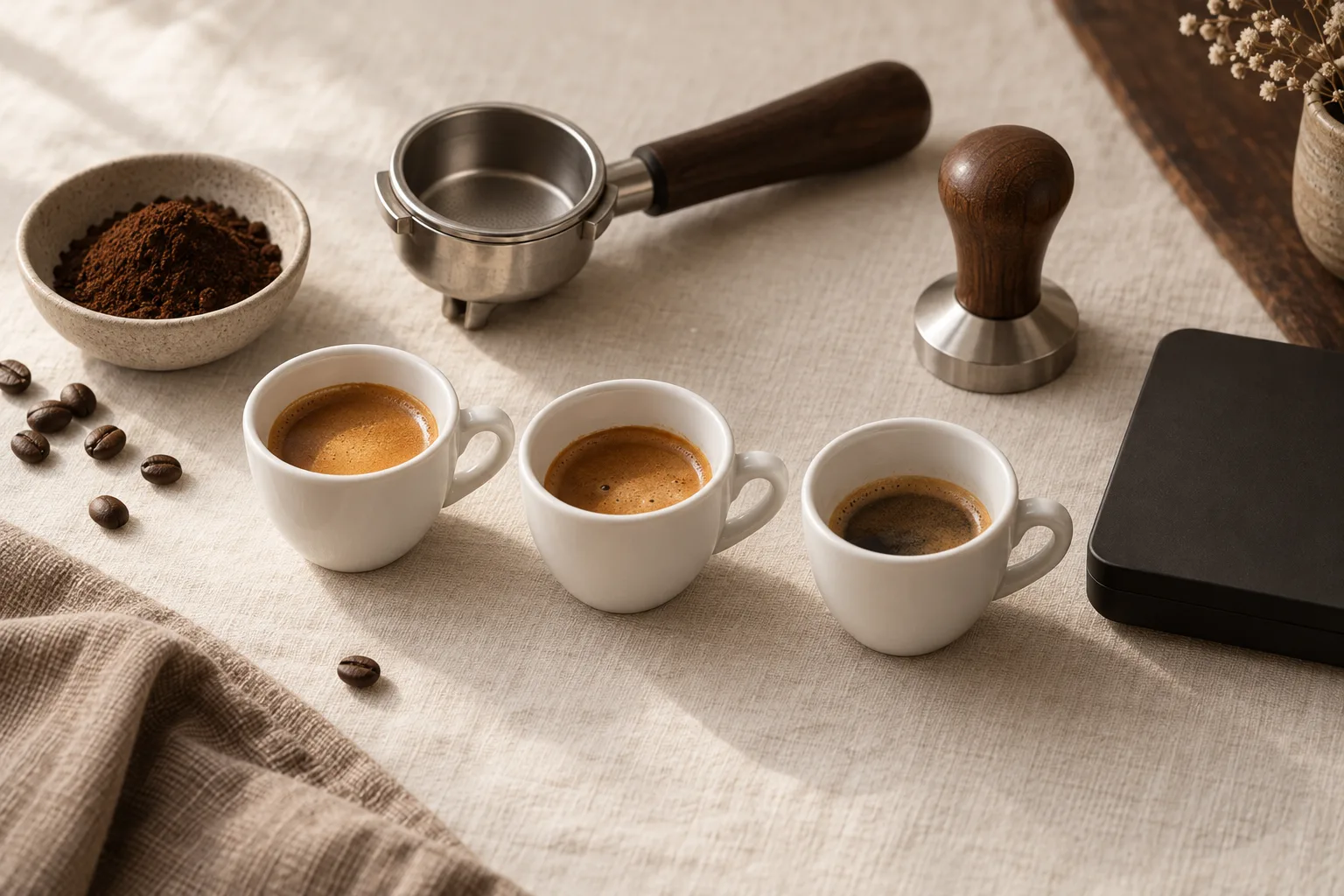
Inconsistent back-to-back espresso shots call for checking dose, grinder output, how you load and tamp the grounds, then heat recovery. Record what changes before touching several settings or buying another machine.
Find why the next shot changes
Check the coffee first, then the machine
- Weigh grounds and espresso
- Note shot order and taste
- Check grinder output
- Repeat loading and tamping
- Compare with and without steaming
- Follow the machine manual
Change one thing at a time so you know which correction helped.
Why are espresso back-to-back shots inconsistent?
Back-to-back shots become inconsistent when the coffee dose, grounds, basket preparation, or brewing conditions change between pulls. Start with weighed doses and drink weights. Then check whether the change follows an idle grinder, hurried tamping, or steaming. A faster second shot alone does not identify a failing machine.
A true quad-shot mode is not the same workflow as pulling two traditional doubles. Our Best Espresso Machine for Quad Shots (2026) compares both approaches for high-volume home espresso, helping you decide whether hardware throughput is actually the problem.
What you'll need
Use a scale, the same beans and basket, and a grinder capable of espresso-fine adjustments. You need to measure what actually reaches the basket and cup, not trust a programmed dose. Keep the machine manual nearby because warm-up and steam-to-brew instructions belong to your model, not a generic recipe.
- Scale: weighs dry grounds and finished espresso.
- Timer and notes: track shot order, pauses, steaming, and flavor.
- Dry cloth: prepares the emptied basket consistently.
How do you isolate the cause?
Pull three shots with one fixed recipe, check the coffee inputs, then compare brewing with and without steaming. Change one thing at a time. If you alter grind, dose, and pauses together, you cannot tell what helped. Keep flavor notes too: sharp, watery, sweet, or drying tells you more than the timer alone.
1. Record a brew-only sequence
Warm up as the manual directs, including the portafilter where required. Use your usual dose and target drink weight for all three shots, stopping by weight when controls allow. Record actual dose, yield (espresso weight), time, pause, and taste. This follows Clive Coffee’s espresso troubleshooting guide, which treats dose, yield, grind, and taste together.
2. Check what comes out of the grinder
Weigh each delivered dose before blaming temperature. Retention means grounds left inside the grinder; an adjustment can leave old-setting grounds mixed into the next dose. Follow your grinder’s instructions for clearing these, then repeat. Distribute the grounds evenly and tamp level each time, as Clive Coffee recommends for avoiding channeling, where water finds shortcuts through the coffee.
3. Repeat with your steaming routine
Compare the brew-only sequence with your normal milk drinks. A change that appears only after steaming points you toward recovery instructions, not an immediate grind adjustment. A single boiler shares heating duties; dual boilers have separate brew and steam circuits. Follow your model’s readiness cues rather than guessing a waiting time.
For heat exchangers, Whole Latte Love’s heat-exchanger temperature guidance explains why cooling flushes can matter after idle periods. Do not apply one flush length to every machine. Our Best Espresso Machine Heat Exchanger Picks (2026) covers options for brewing and steaming in sequence, including the temperature-management trade-off.
Which clues can mislead you?
A wet spent puck, matching timers, or a changing pressure gauge is not a complete diagnosis. Read these alongside dose, yield, flow, and flavor. Clive Coffee’s troubleshooting approach uses several clues rather than one number. Also taste shots at similar drinking temperatures so a cooler first cup does not skew your comparison.
What should you fix for each symptom?
Match the symptom to one likely change and make the safest check first. These are starting points, not proof: Clive Coffee links fast and slow flow to grind, dose, and preparation. Use your three-shot notes to choose one correction, then repeat the sequence before moving to another cause.
Second shot gushes or slows sharply
Likely change: dose or grounds after a grind adjustment. Check: weigh delivered grounds. Correction: restore the fixed dose and clear retained grounds as the grinder manual directs.
Flow sputters; flavor turns sour and bitter
Likely change: uneven loading or a tilted tamp. Check: inspect the basket before brewing. Correction: repeat an even distribution and level tamp rather than pressing harder.
Weights match, but flavor changes after steaming
Likely change: brewing readiness. Check: compare against brew-only results. Correction: follow the manual’s return-to-brew procedure, including any required cooling or refilling.
When should you seek service or consider different hardware?
Seek service when drift persists after repeatable preparation and manual-approved cleaning, especially with leaks, errors, or abnormal water flow. Stop using a machine with electrical symptoms. Consider different hardware only when correct operation works but the required pauses make repeated drinks too slow for your morning.
Follow the manufacturer’s cleaning and descaling instructions; do not open a hot, pressurized machine. Our Best Espresso Machine Dual Boiler (2026) explains when separate brew and steam circuits are worth considering for repeated drinks. The Rancilio Silvia Pro X illustrates that layout, not a guarantee against poor dosing.
Frequently asked questions
Why is my second espresso shot faster?
Check the actual dose and how evenly you loaded the basket first. Clive Coffee names dose, grind, and uneven water flow as troubleshooting factors. If these stay steady and the change follows steaming, check the machine’s return-to-brewing instructions next.
Should I change the grind after every shot?
No. During diagnosis, keep the grind fixed across the sequence so you can see whether shot order matters. Once shots repeat reliably, adjust the grind to improve flavor. Otherwise, each adjustment hides the original problem.
How long should I wait between espresso shots?
Use your machine’s manual rather than a universal waiting time. Warm-up, brewing readiness, and returning from steam mode differ by machine. Record your pause between shots so you can compare a rushed sequence with the manufacturer’s recommended workflow.
Do matching shot times mean matching espresso?
No. Matching times can hide different doses or drink weights. Compare those weights along with taste, visible flow, and shot order. Two shots that finish together can still taste like sharp lemon juice and drying cocoa.