 Coffee Gear Picks

Breville Barista Express Impress Review (2026)
The Breville Barista Express Impress is worth considering if you want fresh-ground espresso without learning every dosing and tamping step at once. Skip it for a busy household making several milk drinks in succession.
| Price band | $$ |
|---|---|
| Weight and dimensions | 23.7 pounds; 12.5 x 14.5 x 16.5 inches |
| Exterior | Brushed stainless steel finish, as described by Breville; not every component is steel |
| Key feature | Intelligent dosing, assisted tamping, and 25 grind settings |
| Best for | Guided fresh-bean espresso and manual milk drinks for beginner-to-intermediate home baristas |
Making a larger drink? Our Best Espresso Machine for Quad Shots (2026) separates a guided quad-shot style from two traditional back-to-back doubles.
Verdict: Worth considering for guided dosing and tamping, but not for sustained back-to-back milk drinks.
Best for: Beginner-to-intermediate home baristas who want fresh-bean espresso with manual shot and milk control.
Our rating: 4/5
Pros
- ✓ Integrated conical burr grinder with 25 grind settings
- ✓ Dose correction helps you fill the basket
- ✓ Lever-assisted tamping removes a tricky preparation step
- ✓ Manual steam wand keeps milk texture in your hands
Cons
- ✗ Cannot brew espresso and steam milk simultaneously
- ✗ 54 mm accessories do not fit a traditional 58 mm setup
- ✗ Preset shot volume still needs attention
- ✗ Integrated grinder is less appealing if you already own a good espresso grinder
Verdict in detail
Buy the Impress if the preparation steps are what put you off espresso. Its appeal is not making every decision for you. It handles part of the fiddly work while leaving room to learn. WIRED’s review captures that balance between accessibility and the control experienced users might miss.
The useful surprise is where Breville stops helping. You still decide whether the coffee tastes right and how you want your milk. That makes this a better fit for someone who wants a hobby with training wheels than someone who wants a single-button latte. Already own a strong grinder? I would lean toward a separate machine rather than buying another grinder inside this one.
Our editorial score is a research-based buyer-fit judgment, not a measured performance result. We compared Breville’s features and operating instructions with Serious Eats, WIRED, and TechRadar. Preparation help earns the recommendation; limited drink throughput and a smaller accessory format keep it from being an easy recommendation for every espresso household.
Specifications
| Model | |
|---|---|
| Price band | $$ |
| Dimensions | 12.5 x 14.5 x 16.5 inches |
| Weight | |
| Exterior finish | Brushed stainless steel exterior; mixed-material components |
| Grinder | Integrated steel conical burrs; 25 grind-size settings |
| Dosing | Intelligent dosing with automatic dose correction |
| Assisted tamp | 10 kg / 22 pounds of pressure with a 7-degree twist |
| Water tank | |
| Portafilter | |
| Milk system | Manual steam wand |
| Warranty | |
| Manufacturer reference | Breville BES876 product details and instruction manual |
Performance and everyday ownership
The Impress helps most before brewing: measuring the grounds and pressing them into the basket. It does not remove the need to adjust the grind, watch your shot, or learn milk texture. Serious Eats’ review highlights the smoother preparation workflow alongside preset-volume and brewing-to-steaming tradeoffs.
Dosing and tamping: what the assistance actually does
Breville’s system guides how much ground coffee goes into the basket, then helps you tamp it. Tamping means pressing loose grounds into the compact coffee bed that water flows through. According to Breville’s product page and manual, the lever applies a set force and finishes with a small twist. You do not need to judge tamp pressure with your wrist.
Dose correction is useful when the first grind leaves the basket short. Follow the machine’s indicator and the manual’s correction procedure rather than guessing at an extra scoop. The important limit is that a correctly filled basket is not a promise of delicious espresso. Serious Eats describes how grind adjustment still matters. Think of this as help packing the coffee neatly, not a chef tasting it for you.
Extraction: watch the cup, not just the button
Extraction is how much flavor the water pulls from the grounds. The Impress gives you shot buttons, but Serious Eats reported variability in preset shot volumes. For a buyer who wants repeatable recipes, that is a reason to add a scale under the cup. Check how much espresso comes out rather than assuming each button press makes an identical drink.
Breville’s manual explains grind adjustment and manual shot control, so there is room to take over as you learn. Use the preset as a starting point, then watch the flow and taste the result. Do not change the grind, dose, and stopping point all at once. Keeping a simple note of your setting and cup weight helps you connect a change with what happened, instead of chasing yesterday’s good shot from memory.
Grinder workflow: convenient, with a ceiling on control
The integrated grinder saves you from choosing a separate grinder before you have made your first espresso. TechRadar identifies steel conical burrs and 25 settings, and compares the adjustment range with the older Barista Express. That is a real convenience for an all-in-one purchase. It is not proof that every bean will land perfectly on one of those steps.
For someone who likes changing beans and fine-tuning every recipe, I would favor a separate grinder. You can upgrade it without replacing the machine, and choose how its adjustment works. For buyers who want everything together, Best Espresso Machine Built In Grinder (2026): 6 Picks compares other all-in-one options. Use it to shop by workflow, not simply by which machine lists the most grind settings.
Milk steaming: you supply the technique
The manual wand is for people who want to learn milk texture, not hand the job over. Serious Eats discusses the wand’s performance and learning demands; Breville describes it as a manual microfoam system. Microfoam means tiny bubbles mixed into the milk, giving it a glossy, paint-like texture. It is different from a cap of stiff bubbles sitting on top.
Expect to learn where to hold the pitcher and when to stop adding air. The machine assists coffee preparation, but that assistance does not extend to pitcher placement or your pour. Follow Breville’s wand instructions before experimenting with latte art. I would choose this setup if practicing milk sounds satisfying. If you want the machine to froth unattended while you make breakfast, a hands-free milk system is the more sensible match.
Back-to-back shots: separate espresso from milk throughput
Two doubles in one cup are possible, but they require two separate preparations and brews. Empty the used grounds, prepare the next basket, and brew again. Do not confuse that with pulling four traditional shots from one oversized basket. The Impress has no listed dedicated quad-shot preset, and assisted tamping does not make the basket bigger.
Milk drinks add the more important bottleneck. Serious Eats describes the change between brew and steam temperature modes; the machine cannot extract espresso and steam milk together. For an occasional large drink, I would accept those separate tasks. For several lattes every morning, I would not. Brewing two doubles without milk and making two complete lattes are different demands, even when both use the same amount of espresso.
Learning curve: fewer preparation decisions, not no decisions
WIRED’s accessibility-versus-control discussion is the right lens for the Impress. You get help with one part of the process, then learn the rest yourself. There is still a portafilter to move, a basket to empty, and a steam wand to use. Coming from pods, you should expect a more involved morning rather than the same routine with fresher beans.
My advice is to learn one drink before building a menu. Start with the basket and procedure Breville recommends for your coffee, then get comfortable with the controls. Add milk practice after the espresso routine feels familiar. This keeps a disappointing latte from becoming three puzzles at once: the coffee, the milk, and the pour. Experienced users who enjoy full control over preparation should consider whether the assistance solves a problem they actually have.
Counter fit and accessories: measure before ordering
The listed dimensions are only the starting point for planning your coffee corner. Allow access for filling beans and water, moving the portafilter, and using the wand. Measure the space below your cupboards rather than comparing countertop width alone. A machine can fit in a gap yet be awkward to operate there, especially if you must pull it forward whenever you refill it.
The 54 mm portafilter, confirmed by TechRadar, also affects future shopping. Match replacement baskets and tools to the BES876 rather than buying a generic 58 mm accessory bundle. A smaller diameter does not by itself tell you whether the espresso tastes good. It does mean that tools from a traditional 58 mm setup will not automatically fit, so check compatibility before adding accessories to your order.
Maintenance: the helper still needs cleaning
Assisted tamping does not turn this into a low-maintenance appliance. Breville’s instruction manual covers basket and wand care, grinder cleaning, cleaning cycles, and descaling. Descaling removes minerals left behind by water; a cleaning cycle tackles coffee residue. They are different jobs. Follow the specified procedure and cleaning products rather than treating one routine as a substitute for the other.
Build the small jobs into the drink routine: discard the used grounds, clean the basket, and wipe and purge the wand as instructed. Purging means briefly releasing steam to clear the tip. Leave time for emptying the drip tray, too. Before buying, read the manual’s maintenance section and picture yourself doing those tasks on a weekday. The convenience here is help preparing coffee, not freedom from looking after an espresso machine.
Alternatives worth considering
Choose the Ninja Luxe Café Premier for a listed quad-shot style and hands-free frothing. Choose the Rancilio Silvia Pro X for a separate-grinder, dual-boiler setup. Choose the Breville Dynamic Duo if you want simultaneous brewing and steaming with a grinder included. Each addresses a different reason to pass on the Impress.
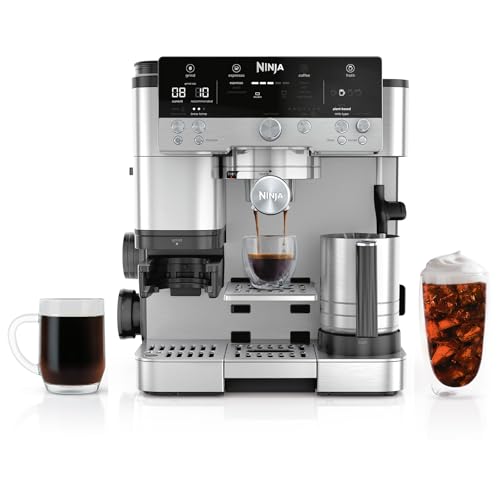
The Ninja Luxe Café Premier is the more direct choice when “quad shot” means selecting a guided larger espresso style. Its listed double and quad modes distinguish it from preparing two doubles on the Impress. The Rancilio Silvia Pro X takes the enthusiast route with separate brew and steam boilers. It needs a standalone grinder, so browse Best Burr Grinder for Espresso (2026): 7 Top Picks for options with more dialing control. That route makes most sense if you enjoy learning the whole process.
The Breville Dynamic Duo pairs a dual-boiler machine with a Smart Grinder Pro and a 58 mm portafilter. Its manufacturer-listed simultaneous extraction and steaming addresses the Impress’s milk-drink workflow limit, but the two-piece setup asks for more counter space. If you want to stay with Breville without deciding on this package yet, Best Espresso Machine Breville Makes (2026) covers the broader model selection rather than repeating this review.
Frequently asked questions
Is the Breville Barista Express Impress worth it?
Yes, if you want help dosing and tamping while keeping manual control over espresso and milk. Breville’s assisted preparation system is its main attraction. Our research-based recommendation is to buy it for an approachable daily routine, not for simultaneous brewing and steaming or serving several milk drinks quickly.
Does the Barista Express Impress make quad shots?
It makes a traditional quad drink by brewing two doubles separately, not through a dedicated quad-shot preset. You must empty, reload, and tamp the basket between extractions. The Ninja Luxe Café Premier offers a listed quad-shot espresso style, which is a different workflow rather than an identical basket recipe.
Can it brew espresso and steam milk at the same time?
No, the Barista Express Impress switches between brewing and steaming rather than doing both together. Serious Eats describes the temperature-mode change in its review. That is manageable for one latte, but households making several milk drinks should consider a dual-boiler machine such as the Rancilio Silvia Pro X.
Does assisted tamping mean I do not need to dial in the grinder?
No, you still need to adjust the grind to suit your beans and the taste of your shot. Breville’s system helps with basket filling and tamping, not every brewing decision. A correct dose can still flow too slowly or too quickly, so preparation guidance does not replace tasting and adjustment.
What size portafilter does the BES876 use?
The BES876 uses a 54 mm portafilter, as reported by TechRadar and specified by Breville. Buy baskets and tools made for that size and check model compatibility. Accessories intended for traditional 58 mm machines will not simply transfer over, which matters if you already own espresso gear.
Is the Barista Express Impress fully automatic?
No, it is a semi-automatic espresso machine with assisted dosing and tamping. You still move and lock in the portafilter, choose the grind, and steam milk yourself. WIRED frames its appeal around accessibility without removing all involvement, so expect a learning curve rather than pod-machine simplicity.
Does assisted tamping make cleaning automatic?
No, you still need to clean the basket, steam wand, drip tray, grinder, and brewing system. Breville’s instruction manual separates regular cleaning from descaling, which removes mineral buildup. Follow the manual’s routines and prompts; the dose and tamping assistance does not take care of maintenance for you.