 Coffee Gear Picks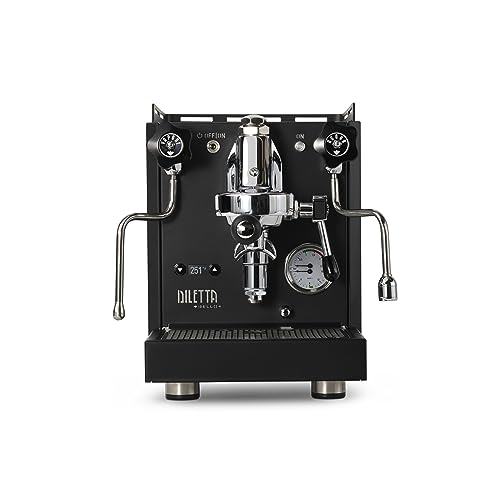
Best Espresso Machine Heat Exchanger Picks (2026)
The best espresso machine heat exchanger pick for most home baristas is the Diletta Bello+, because it keeps the classic E61 HX feel while adding PID temperature control, a shot timer, and programmable preinfusion.
HX machines are for people who want to brew and steam at the same time, with that classic prosumer workflow, without jumping straight to dual-boiler pricing and complexity. The trade-off is that you’re signing up for a little temperature management (and a grinder that can keep up).
Best Heat Exchanger Espresso Machines for Home
Ranked by temperature control, milk workflow, counter footprint, and daily ease
Overall control
E61 feel with modern guardrails
- PID temperature control
- Shot timer
- Programmable preinfusion
- 11-inch width
Top Pick Diletta Bello+
$$
Best HX pick for most homes
Check Price on Amazon Compact style
Small counter, big Rocket energy
- 10.7-inch width
- Selectable boiler pressure
- Refreshed case design
- 2.5L capacity
Top Pick Rocket Appartamento TCA
$$
Best compact style pick
Check Price on Amazon Manual value
Classic lever workflow without the extras
- Manual E61 controls
- Stainless build
- 3L capacity
- Lower price band
Top Pick Diletta Bello Espresso Machine
$
Best bare-knuckle HX value
Check Price on Amazon Milk drinks
Built for lattes and cappuccinos
- Pour-over reservoir
- Semi-automatic operation
- Included milk frother
- 3L capacity
Top Pick Nuova Simonelli Oscar II
$$
Best milk-heavy workflow
Check Price on AmazonWhich HX espresso machine should you buy?
Buy the Diletta Bello+ if you want the best mix of control and classic E61 workflow. Choose the Rocket Appartamento TCA for compact style, the Diletta Bello Espresso Machine for manual value, the Nuova Simonelli Oscar II for milk drinks, the Rocket Espresso Appartamento 2.0, Black for classic Rocket E61 charm, or the Nuova Simonelli Musica Pour Over Espresso Machine for entertaining.
Quick picks
Our Top Picks


How do the best heat exchanger espresso machines compare?
The main split is control versus simplicity. The Diletta Bello+ is the most “set your routine and repeat it” HX pick here, Rocket’s Appartamento models are the compact E61 style plays, and Nuova Simonelli’s Oscar II and Musica lean harder into milk-drink throughput than chrome-and-lever romance.
| Product | Best for | Price band | Key spec | Verdict |
|---|---|---|---|---|
| Diletta Bello+ | Home baristas who want HX steaming with PID control | $$ | Best overall control pick. | |
| Rocket Appartamento TCA | Small counters and style-focused espresso setups | $$ | E61 group head and hybrid PID with four brew-temperature settings | Best compact style pick. |
| Diletta Bello Espresso Machine | Buyers who want a classic manual E61 HX machine | $ | Manual E61 heat exchanger controls | Best manual value. |
| Nuova Simonelli Oscar II | Latte and cappuccino drinkers who prioritize steam workflow | $$ | Tamper, Portafilter, Milk Frother, Shot Baskets | Best for latte-heavy homes. |
| Rocket Espresso Appartamento 2.0, Black | Buyers who want the classic compact Rocket Appartamento format | $$ | Deeper drip tray, longer steam wand, RGB status light | Best classic E61 format. |
| Nuova Simonelli Musica Pour Over Espresso Machine | Entertaining and milk-heavy households that want programmable controls | $$$ | Programmable buttons, cup warmer, 58mm portafilter | Best premium entertaining pick. |
How did we evaluate heat exchanger espresso machines?
We evaluated these HX machines on the stuff you actually feel in day-to-day use: how manageable the brew temperature is, how confidently they steam for milk drinks, how much counter space they take, and whether the controls help you repeat good shots (or just add more knobs to worry about).
Temperature management mattered most because many HX designs can run hotter after sitting idle, which is why cooling-flush habits and control systems matter. Clive Coffee discusses HX temperature behavior and the role of cooling flushes, while Whole Latte Love breaks down heat exchanger vs. dual boiler architecture. We also weighed steam workflow, reservoir capacity, footprint, manual versus programmable controls, included accessories, and brand support.
Which heat exchanger espresso machine gives the best control?
The Diletta Bello+ gives the best control because it adds modern guardrails to a classic HX/E61 workflow. PID control and a shot timer help you repeat a good result, and programmable preinfusion can make the start of the shot feel less “all-or-nothing.”
Bello+ is the one I’d steer most upgrade-minded home baristas toward if they want the E61 ritual but don’t want to “fly blind.” Preinfusion gently wets the puck before full pressure, which can reduce early channeling and make dialing in feel less twitchy, especially when you’re swapping beans.
The honest downside: it’s still a prosumer machine, and it won’t rescue a weak grinder. If your grinder can’t make tiny, repeatable changes, you’ll still bounce between sour and bitter shots. Plan your budget like a system: grinder, water care, and fresh beans.
Pros
- ✓ PID, shot timer, and preinfusion add real daily control
- ✓ Compact 11-inch width for a prosumer HX machine
- ✓ Classic E61 feel with stainless steel build
Cons
- ✗ Still expensive once you add a capable grinder
- ✗ Not as temperature-precise as a true dual boiler
Which compact heat exchanger espresso machine is best?
The Rocket Appartamento TCA is the best compact HX machine if you want a narrow footprint and Rocket’s signature look. Its selectable boiler-pressure settings give you a simple way to nudge the machine warmer or cooler without turning the experience into a science project.
The Appartamento TCA is a “heart pick” in the best sense: it’s compact, it looks fantastic, and it’s built around a straightforward E61-style routine. If you want a machine you’ll be happy to leave on the counter (and you don’t mind the warm-up time), this one is easy to justify.
The trade-off is feature-per-dollar. If you’re chasing the most control for the money, the Bello+ is the harder-to-beat option. Choose the Rocket when design, footprint, and a simpler control set are the point.
Pros
- ✓ Slim 10.7-inch width suits smaller counters
- ✓ Selectable boiler pressure adds useful control
- ✓ Refreshed Rocket design has strong visual appeal
Cons
- ✗ Not the strongest feature-per-dollar pick
- ✗ Still needs the warm-up patience of a prosumer HX machine
Which manual heat exchanger espresso machine is the best value?
The Diletta Bello Espresso Machine is the best manual value because it delivers the core E61 heat exchanger experience without charging you for extra electronics. It’s the right choice if you want to learn your machine’s rhythm and keep the workflow tactile and simple.
Think of this as the “old-school” pick in the Diletta lineup: you’re listening, watching, and adjusting based on taste. If you enjoy the craft side of espresso: learning dose and grind changes, watching the flow, and building consistency over time: this is a satisfying way to get there.
You’re giving up convenience features like PID control, a built-in shot timer, and programmable preinfusion. That’s fine if you want the classic experience; it’s frustrating if you want repeatability with fewer variables. If you want guardrails, step up to the Bello+.
Pros
- ✓ Classic manual E61 HX workflow
- ✓ Stainless steel build and 3L capacity
- ✓ Lower price band than the more controlled Bello+
Cons
- ✗ No PID or shot timer package
- ✗ More dependent on user routine and cooling flush habits
Which heat exchanger machine is best for milk drinks?
The Nuova Simonelli Oscar II is the best pick here for milk-drink workflow because it prioritizes speed and steaming practicality over the traditional E61 aesthetic. If your household is mostly cappuccinos and lattes, this “get drinks moving” approach can be exactly what you want.
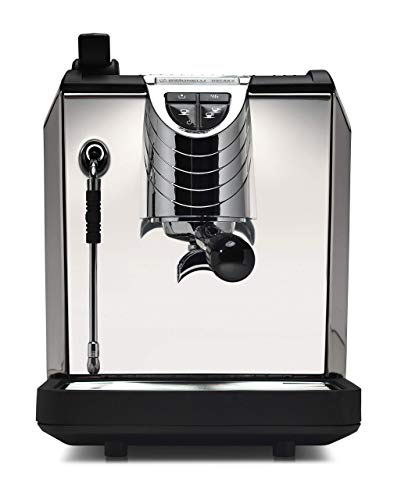
The Oscar II is often chosen for its straightforward milk routine: brew, steam, repeat. It also comes with a useful starter set (portafilter, tamper, milk frother, and baskets), which can reduce the “oh, I still need to buy…” list after checkout.
Skip it if you specifically want the E61 lever look and feel: this is a different vibe. Also, Amazon listings for this model have been known to show inconsistent weight details, so don’t treat weight as a deciding spec unless you confirm it from a manufacturer/retailer source.
Pros
- ✓ Strong fit for lattes and cappuccinos
- ✓ 3L pour-over reservoir
- ✓ Useful included accessories for new setups
Cons
- ✗ Less classic E61 prosumer appeal
- ✗ Listing weight details are not worth relying on
Which heat exchanger espresso machine is best for classic E61 buyers?
The Rocket Espresso Appartamento 2.0, Black is the best classic E61 choice if you want the familiar compact Appartamento format with traditional mechanical controls. It’s the “give me the classic Rocket experience” pick, not the “most updated feature set” pick.

The Appartamento 2.0 suits a compact counter and a traditional manual workflow. It’s also a sensible choice if you prefer fewer electronics and you’re comfortable learning the small habits that make HX ownership smoother.
If you’re torn between Rocket models, the Appartamento TCA is the more modern option thanks to its updated control approach. The Amazon listing also mentions a 3-year warranty, which is reassuring at this price tier.
Pros
- ✓ Classic compact Rocket Appartamento format
- ✓ E61 group and mechanical controls
- ✓ 3-year warranty noted on Amazon listing
Cons
- ✗ TCA adds newer controls and design updates
- ✗ Heavy for a compact-looking machine
Which premium heat exchanger espresso machine is best for entertaining?
The Nuova Simonelli Musica Pour Over Espresso Machine is the best premium entertaining pick because it pairs HX capability with programmable buttons and a cup warmer: features that matter when you’re making multiple drinks for guests. It’s built for repeat rounds, not just a single careful morning shot.

The Musica leans a bit more “appliance” than the E61 machines on this list, and that can be a real advantage for hosting. Programmable buttons help keep drinks moving, and a cup warmer is genuinely useful when you’re pulling shots back to back.
The downside is obvious: it’s expensive and physically substantial. Buy it because your workflow is milk-heavy and guest-heavy, not simply because it’s the priciest option.
Pros
- ✓ Programmable buttons help with repeat drinks
- ✓ Cup warmer and 58mm portafilter suit entertaining
- ✓ HX layout supports brewing and steaming workflow
Cons
- ✗ Highest price band in this group
- ✗ Larger and heavier than compact E61 options
Should you choose a heat exchanger or dual boiler espresso machine?
Choose a heat exchanger machine if you want strong steaming, the ability to brew and steam at the same time, and a simpler prosumer layout. Choose a dual boiler if straight-espresso repeatability and tighter brew-temperature control matter more than value, simplicity, or classic HX workflow.
Whole Latte Love explains that dual boilers use separate boilers for brew water and steam, while heat exchangers use one steam boiler with a brew-water path through it. Clive Coffee also flags temperature management as the main HX trade-off. In plain English: HX is usually a lovely cappuccino machine; dual boiler is the more temperature-obsessed straight-shot tool.
Frequently asked questions
What is a heat exchanger espresso machine?
A heat exchanger espresso machine uses one main boiler for steam and routes brew water through a separate tube or path inside that boiler. That lets you brew espresso and steam milk at the same time, which is why HX machines are popular for lattes and cappuccinos.
Are heat exchanger espresso machines better than dual boilers?
Not automatically. HX machines are often simpler and excellent for milk drinks, while dual boilers are typically better when you want tighter brew-temperature control for repeated straight shots. If you mostly make milk drinks, HX can be a great fit.
Do HX espresso machines need a cooling flush?
Often, yes, especially traditional E61 HX machines. After the machine sits idle, the water in the heat exchanger can run hotter than ideal, so a short cooling flush helps bring brew temperature back into a usable range. Some newer designs reduce the need, but it’s still a common routine.
Is an E61 heat exchanger machine worth it?
An E61 HX machine is worth it if you like the manual lever ritual, heavy build, and classic prosumer feel, and you don’t mind warm-up time and a bit of temperature management. Skip it if you want fast heat-up or automatic drink buttons.
What grinder do I need for an HX espresso machine?
You need an espresso-capable burr grinder with fine, repeatable adjustments. A weak grinder will make even a great HX machine taste sour, bitter, or thin. Budget for the grinder and fresh beans before you spend everything on the machine.
How long does a heat exchanger espresso machine take to heat up?
Many prosumer HX machines need roughly 20–30 minutes to fully warm the group (especially E61 designs with lots of metal mass). Many owners use a smart plug so the machine is ready before breakfast. Boiler pressure alone doesn’t mean the group is fully heat-soaked.
Is the Diletta Bello+ better than the Rocket Appartamento TCA?
For control and repeatability, the Diletta Bello+ has the edge thanks to PID temperature control, a shot timer, and programmable preinfusion. The Rocket Appartamento TCA is the better choice if you want Rocket’s compact styling and simpler controls. Pick based on features vs. aesthetics.
What other espresso guides should you read next?
Read grinder and dialing-in guides before you order an HX machine, because the machine is only half the espresso setup. A great grinder turns the whole rig from frustrating to sweet and repeatable.
- Best Burr Grinder for Espresso: start here if your grinder is not ready for a prosumer machine.
- Burr Grinder Settings for Espresso: learn how grind changes affect sour, bitter, and balanced shots.
- Best Hand Grinder for Espresso Under $100: useful if your machine budget ate most of your cash.
- Best Espresso Machine Under $200: a reality-check guide if HX prices feel a little spicy.