 Coffee Gear Picks
Best AeroPress Grind (2026): 8 Grinders for Better Cups
The best AeroPress grind is usually medium-fine — about the texture of table salt — and the best grinder is the one that helps you hit that spot without a lot of morning guesswork. For most people, that is the Baratza Encore ESP because it is easy to dial, easy to live with, and flexible enough if you branch out later.
8 AeroPress-Friendly Grinders Worth Buying in 2026
Start at medium-fine, then pick the grinder that makes that sweet spot easy to repeat
Overall
Best all-around fit for most kitchens
- Easy to dial for medium-fine
- Covers AeroPress to espresso
- Good long-term support
- Strong everyday value
Top Pick Baratza Encore ESP
$$
The easiest smart buy
Check Price on Amazon Value
Best low-fuss electric option
- Simple timer workflow
- Friendly learning curve
- Works well for daily AeroPress
- Budget electric pick
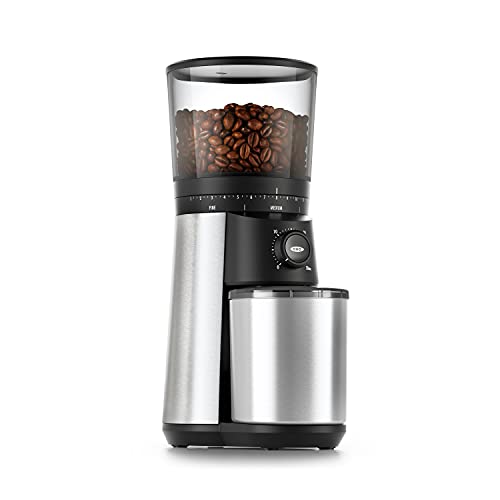
Top Pick OXO Brew Conical Burr Grinder
$
Easy weekday cups
Check Price on Amazon Manual
Best hand-grinder precision
- Excellent click repeatability
- Travel friendly
- Quiet for early mornings
- Strong cup quality
Top Pick 1Zpresso K-Ultra
$$$
Portable precision
Check Price on Amazon Clarity
Best for cleaner, lighter cups
- Flat burr flavor separation
- Low static workflow
- Great for lighter roasts
- Filter-focused design
Top Pick Fellow Ode Gen 2
$$$
Cleanest cup profile
Check Price on AmazonQuick answer: Buy the Baratza Encore ESP if you want the safest all-around pick. Go with the OXO Brew Conical Burr Grinder if you want a simpler electric grinder for daily AeroPress cups. If you want the best manual precision, the 1Zpresso K-Ultra is the one I would grab, while Fellow Ode Gen 2 is the clean-cup splurge for lighter roasts and clarity lovers.
Quick picks
Our Top Picks

Comparison table
| Grinder | Burr Type | Adjustment Style | Workflow Speed | Best AeroPress Use Case | Tradeoff | Value Tier | |
|---|---|---|---|---|---|---|---|
| Baratza Encore ESP | Conical burr | Stepped with fine espresso zone | Fast electric | Most AeroPress brewers | Not the quietest option | $$ | Check Price |
| OXO Brew Conical Burr Grinder | Conical burr | Simple stepped dial | Fast electric | Easy weekday brewing | Less precise at the fine end | $ | Check Price |
| 1Zpresso K-Ultra | Conical burr | External numbered dial | Manual but quick | Travel and fine tuning | You still have to crank it | $$$ | Check Price |
| TIMEMORE Chestnut C2 | Conical burr | Internal clicks | Manual and moderate | First real grinder upgrade | Not the fastest for bigger doses | $ | Check Price |
| KINGrinder K6 | Conical burr | External click dial | Manual and steady | People who change recipes often | Heavier than most travel grinders | $$ | Check Price |
| Baratza Encore | Conical burr | Classic stepped dial | Fast electric | Classic set-it-and-brew use | Less fine control than ESP | $$ | Check Price |
| Fellow Ode Gen 2 | Flat burr | Filter-focused stepped dial | Fast electric | People chasing cleaner cups | Not built for espresso | $$$ | Check Price |
How we evaluate AeroPress grinders
We researched and compared these grinders for one very practical job: making it easy to land on a sweet, repeatable AeroPress cup. That means grind consistency came first, but not in a nerdy, spreadsheet-only way. If a grinder sprays grounds everywhere, traps stale coffee, or makes you hate dialing it in, it is a worse real-life pick even if the specs look fancy.
We also cared about repeatability, workflow speed, and how forgiving each grinder feels when you change beans. AeroPress can swing from syrupy and rich to bright and tea-like depending on recipe, so the best grinders here are the ones that help you move a click or two and actually taste the difference.
- Particle consistency: More even grounds usually means a sweeter cup with less muddy bitterness.
- Adjustment repeatability: If you cannot find the same setting tomorrow, the grinder is fighting you.
- Retention and static: Old grounds and clingy mess make good coffee harder than it needs to be.
- Workflow fit: Some grinders are great on a slow Sunday and annoying on a rushed Tuesday.
- Value: We looked for grinders that earn their price instead of just looking premium on the counter.
Detailed reviews
1) Baratza Encore ESP — best overall for most AeroPress brewers
Encore ESP is the easiest recommendation here because it lands in the sweet spot between control, ease, and long-term usefulness. For AeroPress, that matters more than chasing some mythical perfect click number. You want a grinder that lets you start at medium-fine, nudge finer if the cup tastes lemony and thin, then back off if the press gets too stubborn. This one makes that process feel obvious instead of annoying.
It is also the grinder I would pick for someone who may end up brewing more than AeroPress later. Skip this if you only want a tiny travel setup or you care a lot about low noise. But for most people, this is the smart buy because it keeps morning coffee simple and leaves room to grow.
Pros
- ✓ Easy to dial around the AeroPress sweet spot.
- ✓ Flexible enough if you branch into espresso later.
- ✓ Baratza parts and support are a real long-term advantage.
Cons
- ✗ Noisy compared with hand grinders.
- ✗ Larger counter footprint than compact travel options.
Check Baratza Encore ESP Price on Amazon
2) OXO Brew Conical Burr Grinder — best value electric for easy weekday cups
OXO Brew is the kind of grinder that makes sense the second you start using it. It is not trying to impress coffee forum people. It is trying to help you grind beans before work without making a mess or demanding a ten-minute learning curve. For AeroPress, that is honestly a pretty strong selling point. If your goal is sweeter cups than a blade grinder can give you, this gets you there without drama.
The trade-off is precision at the fine end. You can still dial AeroPress well, but it is not the pick for someone who loves tiny recipe changes. Skip this if you want maximum adjustment finesse or plan to hop into espresso soon. For everyone else, it is a sensible, low-fuss electric option.
Pros
- ✓ Very approachable if this is your first burr grinder.
- ✓ Fast daily workflow with little hassle.
- ✓ Good value for AeroPress and other filter methods.
Cons
- ✗ Not as precise as the best manual or crossover grinders.
- ✗ Can throw a little static in dry kitchens.
Check OXO Brew Conical Burr Grinder Price on Amazon
3) 1Zpresso K-Ultra — best manual precision for AeroPress
K-Ultra is for the person who wants a hand grinder that feels deliberate, not cheap. The adjustment dial is one of the big reasons it works so well for AeroPress. You can keep a starting point for a medium roast, move a little finer for a brighter bean, then come back later without guessing. That is a big deal when AeroPress recipes are sensitive, but still forgiving enough that small changes matter.
The flavor payoff is excellent, and it travels beautifully. The obvious downside is that your arm is still doing the work. Skip this if you brew several cups in a row or want one-button convenience. If you grind one or two doses at a time and care about clean, controlled cups, this is a lovely manual pick.
Pros
- ✓ Excellent adjustment repeatability.
- ✓ Strong cup clarity and low retention.
- ✓ Portable and quiet for travel or office use.
Cons
- ✗ Manual grinding gets old if you brew a lot.
- ✗ Costs more than entry-level hand grinders.
Check 1Zpresso K-Ultra Price on Amazon
4) TIMEMORE Chestnut C2 — best budget manual if you are upgrading from pre-ground

Chestnut C2 still makes a lot of sense for AeroPress beginners because the jump from pre-ground coffee or a blade grinder to a real burr grinder is huge. Your cup usually gets sweeter, cleaner, and easier to tweak right away. That alone makes it a meaningful upgrade if you are trying to figure out what AeroPress can actually do without spending a lot.
It is not the last manual grinder you will ever need, and that is fine. Skip this if you already know you love fine recipe tuning and want something more exact from day one. But if you want a practical entry point that teaches you what grind changes taste like, C2 is a very solid place to start.
Pros
- ✓ Affordable path into real burr grinding.
- ✓ Portable and easy to stash anywhere.
- ✓ Makes the difference between good and bad grind obvious fast.
Cons
- ✗ Not as refined as better premium hand grinders.
- ✗ Manual effort adds up with larger brews.
Check TIMEMORE Chestnut C2 Price on Amazon
5) KINGrinder K6 — best for recipe tinkerers who like click-by-click control

KINGrinder K6 is the pick for the person who enjoys adjusting recipes instead of dreading it. AeroPress rewards that mindset because small grind changes can shift the cup from bright and juicy to round and chocolatey pretty quickly. K6 gives you enough control to chase that sweet spot without feeling vague, and that makes it especially fun if you like experimenting with dose, steep time, or paper versus metal filters.
What holds it back from the top spot is convenience. It is still a manual grinder, and it is heavier than the travel-first options. Skip this if you want the lightest hand grinder possible. If you care more about control than convenience, K6 is one of the most compelling enthusiast-friendly AeroPress grinders here.
Pros
- ✓ Very good click precision for the money.
- ✓ Excellent fit for recipe experimentation.
- ✓ Strong grind range for AeroPress and beyond.
Cons
- ✗ Heavier than many hand grinders.
- ✗ Less convenient than electric options for fast mornings.
Check KINGrinder K6 Price on Amazon
6) Baratza Encore — best simple starter if you just want decent coffee fast

The classic Encore is not flashy, and that is part of its charm. If your AeroPress routine is straightforward and you mostly want a grinder that works without much thought, this one still has a place. It handles the general medium-fine neighborhood well enough for many users, and Baratza’s support reputation makes it easier to trust as a long-term kitchen tool.
The problem is simple: the ESP exists. Skip this if the ESP is within reach, because the extra fine-end control is worth it for AeroPress alone, never mind future espresso curiosity. Still, if you find the regular Encore at a better deal and want a dependable electric starter, it remains a reasonable choice.
Pros
- ✓ Straightforward workflow with very little learning curve.
- ✓ Dependable brand support and repairability.
- ✓ A fine choice for simple daily AeroPress use.
Cons
- ✗ Outclassed by the ESP for grind precision.
- ✗ Not the best value if both Baratza models are close in price.
Check Baratza Encore Price on Amazon
7) Fellow Ode Gen 2 — best splurge for cleaner, lighter AeroPress cups

Ode Gen 2 is the grinder for people who want their AeroPress cups to taste more separated and a little more polished, especially with lighter roasts. If you like cups where citrus, florals, or tea-like notes pop instead of blending into one darker blur, this is the grinder here that leans hardest in that direction. It feels more like a flavor-shaping upgrade than a simple convenience upgrade.
That said, it is a filter-first splurge. Skip this if you want one grinder that also handles espresso well or if your favorite AeroPress style is heavy, dark, and low-effort. But if AeroPress is your clarity brewer and you do not mind paying for a cleaner cup, Ode Gen 2 is the luxury pick I like most.
Pros
- ✓ Great fit for clean, bright AeroPress cups.
- ✓ Low-mess workflow for an electric grinder.
- ✓ Feels premium in both flavor and daily use.
Cons
- ✗ Expensive if AeroPress is your only brew method.
- ✗ Filter-focused design limits crossover value for espresso.
AeroPress grind adjustment cheat sheet
Most people get stuck because they chase a universal setting instead of reading the cup in front of them. AeroPress does not work like that. Start at medium-fine, keep your dose and water steady, and then make one small change based on what you taste or feel.
Fix the cup you actually got
Use one small change at a time so your adjustments make sense
Sour or thin
- Go a little finer
- Or steep 15-20 seconds longer
- Keep everything else the same
Bitter or drying
- Go a little coarser
- Or shorten contact time
- Press a bit sooner and gentler
Press feels too hard
- Grind a touch coarser
- Check if you stirred too aggressively
- Try a gentler press
Outcome
Small changes get you to the sweet spot faster than wild jumps ever will
Use grind, brew time, and press speed together
Grind size is the main lever, but it is not the only one. If a cup is close but not perfect, you do not always need to move the grinder. You can also hold the grind steady and tweak contact time. A longer steep usually pushes flavor deeper and sweeter. A shorter steep can keep a darker roast from getting woody and harsh.
Press speed matters too. Slam the plunger down and the cup can taste rougher and muddier. A slow, steady press feels boring, but boring is good here. That is how you get repeatable cups instead of accidental ones.
Default brew starting point for most AeroPress recipes
If you want a simple baseline, start with a medium-fine grind, around 15 to 17 grams of coffee, water just off the boil for lighter roasts or a little cooler for darker ones, and a total contact time around 90 seconds to 2 minutes. Then taste before you change anything. That first cup tells you whether to move finer, coarser, longer, or shorter.
If you are still sorting out ratio and temperature, our best AeroPress coffee ratio guide, best AeroPress brew temp guide, and best AeroPress brew time guide make the next step a lot easier.
Frequently asked questions
What is the best grind for AeroPress?
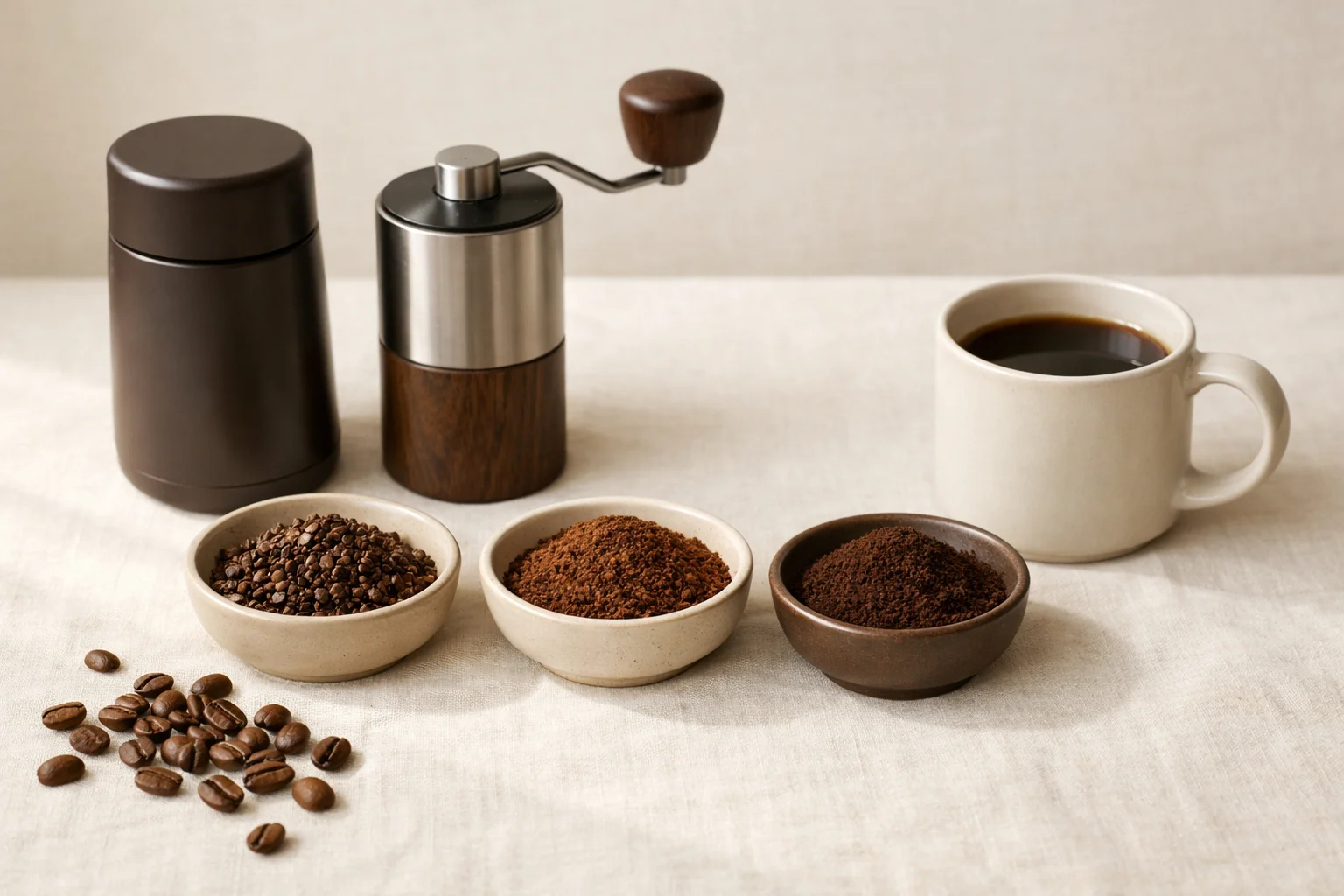
For most recipes, start at medium-fine. Think table salt, not espresso powder. If the cup tastes sour, go a little finer or steep a bit longer. If it tastes bitter or the press gets too hard, back off a click or two.
Can I use espresso grind for AeroPress?
You can, but it is rarely the easiest starting point. Espresso-fine coffee can make the press feel like a brick and push the cup toward bitterness. Most people get better results starting a little coarser, then moving finer only if the cup tastes thin or sharp.
Is a hand grinder good enough for AeroPress every day?
Yes, if you usually brew one or two cups and do not mind a little arm work. A good manual grinder can make excellent AeroPress coffee. If you brew half-asleep before work or for more than one person, electric is usually easier to stick with.
Does the inverted AeroPress method need a different grind size?
Usually not by much. Inverted brewing gives you more control over contact time, so many people keep the same medium-fine starting point and adjust from there. If you steep longer, you may end up going one click coarser to keep the cup from turning harsh.
Whole bean or pre-ground for AeroPress?
Whole bean wins if you care about flavor and consistency. Pre-ground coffee can still work, but it goes stale faster and locks you into one grind size. AeroPress is forgiving, but it still tastes better when you can nudge the grind based on what is in your cup.