 Coffee Gear Picks
Best Coffee Grind Size (2026): Chart by Method
The best coffee grind size starts with your brewer: espresso is fine, pour over usually medium-fine, drip medium, and French press and cold brew coarse. AeroPress spans a wider range, with medium-fine a useful starting point.
Find your grind in three steps
Use your brewer as the starting point, then let taste guide you
- Match your brewing method
- Record the grinder setting
- Keep your recipe steady
- Note taste and brew time
- Move one small step
- Save the sweeter result
A repeatable setting for your beans, not somebody else’s grinder
Quick answer: grind-size chart by method
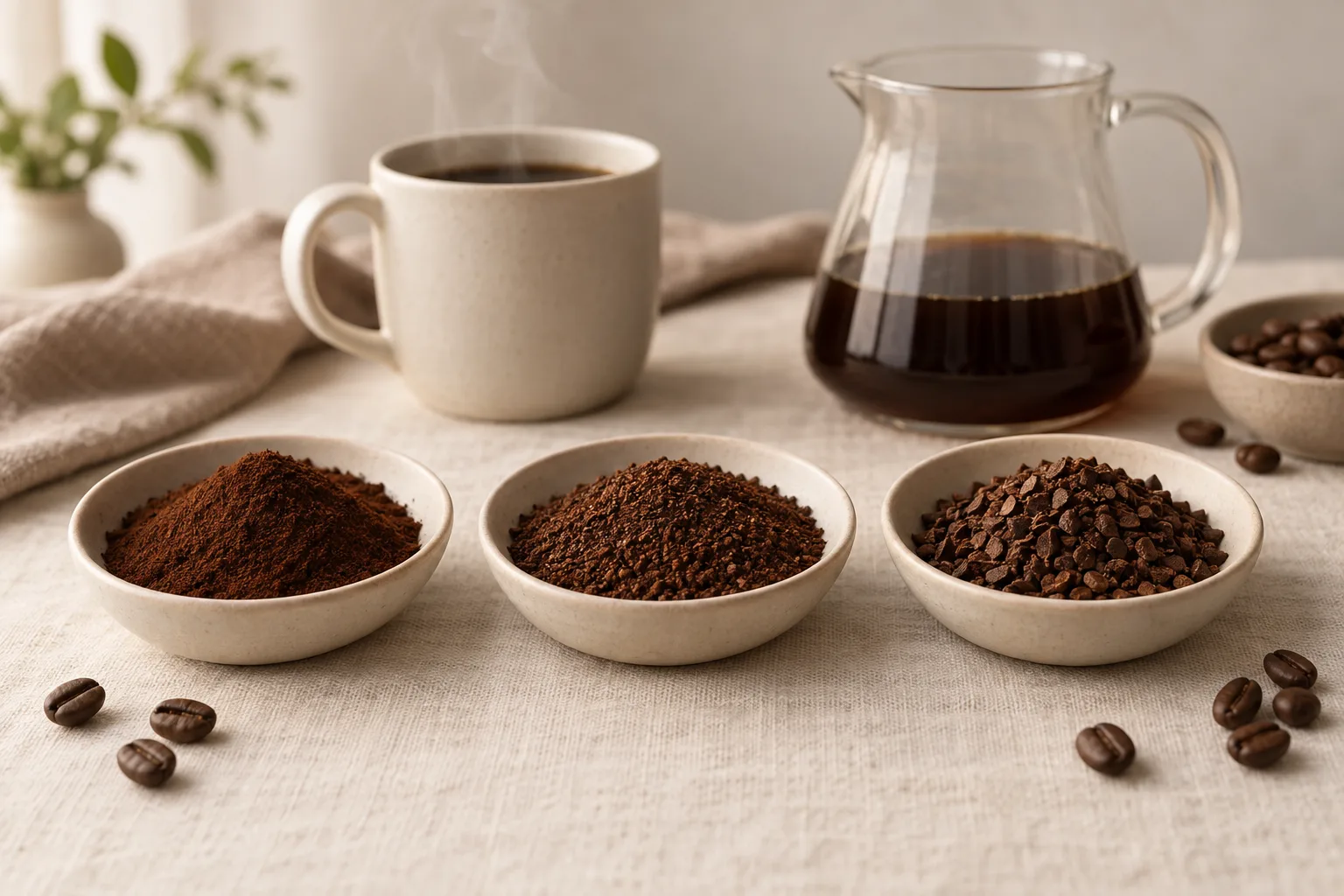
Choose the texture below, then adjust for your recipe and taste. These are starting points, not promises: a longer steep, different filter, or larger batch can change what works. Texture comparisons help you spot a big mismatch; they cannot tell you the exact setting.
| Method | Start here | Texture cue |
|---|---|---|
| Espresso | Fine | Finer than table salt, not flour |
| Pour over | Medium-fine | Fine sand |
| Drip | Medium | Ordinary sand |
| AeroPress | Medium-fine; recipe-dependent | Fine sand |
| French press | Coarse | Coarse sea salt |
| Cold brew | Coarse | Chunky salt |
These broad choices follow Trade Coffee’s “The Complete Guide to Coffee Grind Size”. For AeroPress, “What grind size should I use?” from AeroPress recommends medium-fine. Need method-specific equipment? Best AeroPress Coffee Grinder (2026): 8 Picks is a focused shortlist.
For coarse consistency and fewer tiny particles, see Best Coffee Grinder for French Press (2026): 7 Top Picks.
What you’ll need
You need an adjustable grinder, your usual brewer, and a way to repeat the recipe. A scale and timer make comparisons easier. Don’t buy a new grinder before checking whether your current one can make small, repeatable changes in the range your brewer needs.
- One bag of beans for comparison
- Your brewer and its usual filter
- A scale, timer, and somewhere to record settings
For travel or hand grinding, Best Manual Coffee Grinder Under 100 (2026): Top 7 Picks covers budget options with repeatable adjustment, without an electric grinder.
Step-by-step: dial in your grind
Start with the chart, brew your usual recipe, and change only the grind on the next attempt. Keep dose, water amount, temperature, filter, and stirring steady. Brew time is something to record, not chase at all costs; the sweeter, more balanced cup wins.
1. Set a starting grind
Use your grinder’s brewer recommendation, then check the texture. Coffee Chronicler’s “The Grind Size Chart” explains why settings vary by model and bean. Micron values are working ranges, not a universal home-grinder standard. Don’t copy somebody’s dial number blindly.
2. Brew and taste after it cools a little
Record the setting, recipe, brew time, and one taste note: sharp, sweet, bitter, or drying. Extraction means how much flavor water pulls from coffee. As Trade Coffee explains, finer grounds generally offer more surface area and slow flow; coarser grounds generally do the opposite.
3. Move one small step and repeat
Try finer for a sharp, thin cup that drains fast; try coarser for a drying cup that drains slowly. These are clues, not laws. For pour-over adjustments, Best Coffee Grinder for Pour Over (2026) covers grinders that make medium-fine changes easier to repeat.
Common mistakes
Don’t treat the chart as a finish line or blame every unpleasant cup on grind size. Roast, bean age, and recipe matter too. Coffee Chronicler notes that beans can change the setting you need, so revisit your saved number when you open a different bag.
- Changing everything: a new ratio and grind together leave you guessing which helped.
- Confusing strength with extraction: watery coffee may need more coffee, not finer grounds.
- Forcing the press: stop if an AeroPress or French press resists unusually hard.
Troubleshooting: match the symptom to the fix
Use taste together with flow to choose your next change. Trade Coffee’s extraction guidance makes finer or coarser a sensible first experiment, but grind alone cannot fix a bad ratio, blocked filter, or uneven espresso bed. If a small change fails, check the recipe before going further.
Sharp and fast, or bitter and slow
Try one step finer for sharp, fast-flowing coffee; one step coarser for bitter, slow-flowing coffee. With espresso, also check how evenly you load and tamp the grounds. Water can find shortcuts through an uneven bed, giving misleading results.
Muddy French press or stalled pour over
Try slightly coarser and less stirring. Fines, the dust-like particles mixed into your grounds, can pass through mesh or clog paper. Some French press sediment is normal; a floury grind is not the goal.
Frequently asked questions
What is the best coffee grind size for beginners?
The best beginner grind size is the starting point recommended for your brewer. For a basic drip machine, start at medium. Use the same beans and recipe for each comparison, then make small changes until the coffee tastes pleasantly sweet rather than sharp or drying.
What grind size is best for drip coffee?
Medium grind is the best starting point for drip coffee. Think ordinary sand, not flour or chunky salt. Follow your machine’s instructions first, since basket shape and batch size can shift the sweet spot; try slightly coarser if the basket drains poorly.
What grind size should I use for French press?
Start with coarse grounds for a standard French press recipe. They should look chunky, like coarse sea salt, rather than dusty. If the cup tastes thin, try a little finer while keeping steep time steady; some sediment is normal with a metal mesh filter.
Is espresso coffee fine or coarse?
Espresso uses finely ground coffee, not coarse grounds. The goal is enough resistance for a controlled shot, without stopping the flow. Follow your basket and grinder instructions, especially with pressurized baskets, which are more forgiving and may call for a different setting.
What grind size is best for pour over?
Medium-fine grind is a useful starting point for pour over. Think fine sand, with visible grains rather than powder. Larger batches and some flat-bottom brewers may need medium grounds; judge the next adjustment by both the taste and how smoothly the brewer drains.
What grind size should I use for AeroPress?
Medium-fine is the manufacturer’s recommended starting point for AeroPress. Your recipe can shift that choice because steep time, stirring, and filters all affect the result. If pressing feels unusually difficult, do not force it; try a slightly coarser grind for the next brew.
Can I use one grind size for every brewing method?
One grind size will not suit every brewing method well. Medium can cover some drip and immersion recipes, but it is not a reliable espresso setting. Save separate settings for each brewer, then revisit them when you change beans or your recipe.