 Coffee Gear Picks
Best Manual Coffee Grinder Under 100 (2026): Top 7 Picks
If you want better cups without spending electric-grinder money, the best manual coffee grinder under 100 can deliver serious value. We compared seven current options by burr quality, grind consistency, grind speed, espresso range, cleanup effort, and day-to-day workflow friction.
4 Manual Coffee Grinders Under $100 Worth Your Money
Ranked by burr quality, grind speed, and practical daily value for home brewers
Budget
Best value below $50
- Steel burr quality
- Under $50 entry price
- Simple maintenance
- Good filter grind range
Top Pick KINGrinder P2
$
Low-cost starter pick
Check Price on Amazon Overall
Best all-around manual grinder
- Excellent grind consistency
- Broad brew range
- Sturdy body construction
- Espresso-capable control
Top Pick KINGrinder K6
$$
Top manual pick
Check Price on Amazon Beginner
Easiest grinder to learn
- Simple adjustment system
- Reliable filter consistency
- Low cleanup burden
- Forgiving daily workflow
Top Pick Timemore Chestnut C2
$
Beginner-friendly starter
Check Price on Amazon Travel
Best lightweight travel pick
- Ultra-light body
- Compact travel size
- Easy disassembly
- Affordable backup grinder
Top Pick Hario Mini-Slim Plus
$
Portable travel grinder
Check Price on AmazonQuick answer: For most buyers, the KINGrinder K6 is the best manual coffee grinder under $100 because it balances grind consistency, espresso range, and long-term durability. If you need a tighter budget, the KINGrinder P2 gives the strongest value under $50, while the Timemore Chestnut C2 remains the easiest beginner-friendly pick for filter-first brewing.
Quick picks
Our Top Picks
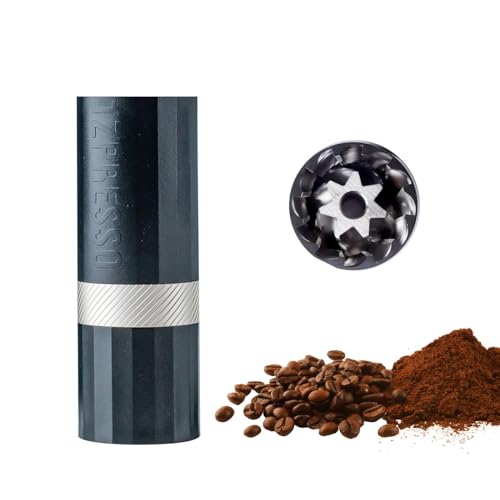

Comparison table
| Product | Best For | Price band | Burr Material | Adjustment Style | Capacity | Espresso Use | |
|---|---|---|---|---|---|---|---|
| KINGrinder K6 | Best overall performance under $100 | $ | Steel | Fine stepped control | 30g | Yes, with patient dial-in | Check Price |
| 1Zpresso Q Air | Best espresso-focused budget pick | $ | Steel | Stepped click adjustment | 20g | Yes, especially single dosing | Check Price |
| Timemore Chestnut C2 | Best starter hand grinder | $ | Steel | Internal stepped | 25g | Pressurized basket only | Check Price |
| Normcore V2 Hand Grinder | Best ergonomics and grip comfort | $ | Steel | Stepped ring | 22g | Limited but possible | Check Price |
| KINGrinder P2 | Best value below $50 | $ | Steel | Internal stepped | 20g | Not ideal for non-pressurized shots | Check Price |
| Hario Mini-Slim Plus | Best lightweight travel option | $ | Ceramic | Internal stepped | 24g | No | Check Price |
| Porlex Mini II | Best compact stainless travel body | $ | Ceramic | Internal stepped | 20g | No | Check Price |
How we evaluate
We researched current listings, compared manufacturer specs, and analyzed user-reported workflow patterns to score each grinder on six factors: grind consistency, burr quality, adjustment usability, grind speed, cleanup burden, and value. For this list, we weighted espresso-fine range more heavily than on filter-only pages because many buyers under $100 want one grinder for both pour-over and occasional espresso.
This roundup is based on researched comparisons rather than direct bench measurements. We prioritize consistency signals that matter in daily use: does the adjustment system repeat reliably, does the burr set produce manageable fines, and how much effort is required for a normal 18g dose? Those practical factors usually matter more than marketing claims about burr shape or coatings.
When two grinders are close in cup quality, we break ties on friction: how fast you can switch brew methods, how messy the workflow gets, and how likely a beginner can get repeatable results in the first week.
Individual product reviews
1) KINGrinder K6 — Best overall manual coffee grinder under 100
Best for: Home brewers who want one grinder that can handle everything from French press to espresso-style dialing without immediately hitting upgrade limits.
K6 is the most balanced pick in this price class. It offers strong burr consistency, stable adjustment behavior, and enough capacity for two-cup doses without feeling bulky. In practical terms, it gives cleaner cups than most entry electric grinders and avoids the sluggish grind time that often makes manual brewing feel like a chore. If your goal is one purchase that stays useful as your brewing skills improve, this is the safest recommendation.
Pros
- ✓ Excellent grind consistency for the sub-$100 bracket.
- ✓ Broad useful range from pour-over to espresso-fine grinding.
- ✓ Solid body and handle geometry keep effort manageable.
Cons
- ✗ Priced near the top of this budget cap.
- ✗ Heavier than minimalist travel hand grinders.
Check KINGrinder K6 Price on Amazon
2) 1Zpresso Q Air — Best budget pick for espresso-curious buyers
Best for: Anyone who wants a compact hand grinder with better-than-average espresso control at a mid-budget price.
Q Air sits in a sweet spot between true beginner grinders and higher-priced enthusiast options. The workflow is straightforward once you log your settings, and grind speed is fast enough for daily single-cup routines. While it still needs patience for non-pressurized espresso, it gives more realistic dial-in control than most low-cost manual grinders. If you split time between AeroPress, pour-over, and occasional shots, this model makes that mixed workflow easier.
Pros
- ✓ Strong value for espresso-capable grinding under $100.
- ✓ Travel-friendly size with dependable consistency.
- ✓ Good balance of grind speed and effort per dose.
Cons
- ✗ Smaller capacity than larger-body competitors.
- ✗ Stepped adjustment still takes practice for tight espresso dialing.
Check 1Zpresso Q Air Price on Amazon
3) Timemore Chestnut C2 — Best beginner manual burr grinder
Best for: First-time buyers moving up from blade grinders who mainly brew pour-over, French press, or drip-style methods.
Chestnut C2 remains one of the easiest recommendations for beginners because it keeps the workflow simple and consistent. You get a clear quality upgrade from cheap blade grinders, low maintenance effort, and enough range for most filter methods. Espresso performance is limited for non-pressurized baskets, but for daily filter coffee it is still a strong value play and one of the most forgiving grinders at this price.
Pros
- ✓ Reliable grind quality for filter coffee at an accessible price.
- ✓ Easy to clean and easy to learn for new users.
- ✓ Good daily durability for routine home use.
Cons
- ✗ Less suitable for serious espresso workflows.
- ✗ Internal adjustment is slower when switching brew methods often.
Check Timemore Chestnut C2 Price on Amazon
4) Normcore V2 Hand Grinder — Best ergonomics for comfort
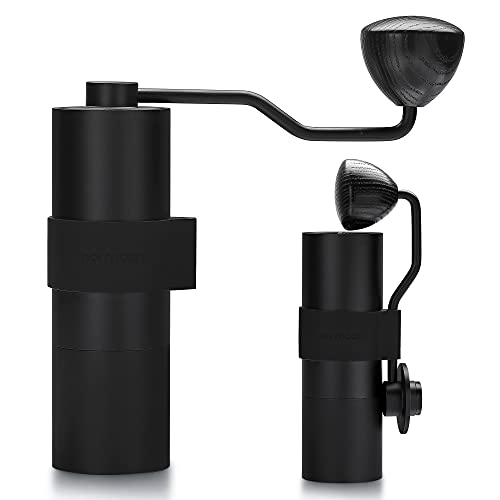
Best for: Buyers who care about grip comfort, smooth crank feel, and cleaner handling during repeated daily use.
Normcore V2 stands out for handling comfort. The body shape and crank action are easy on the wrist, especially if you grind multiple doses per day. It does not lead this list for absolute grind precision, but it does offer a pleasant workflow that many people value more than small theoretical gains in uniformity. For home brewers who prioritize comfort and consistency over chasing espresso edge cases, it is a practical option in the middle of the price band.
Pros
- ✓ Comfortable grip and controlled crank motion.
- ✓ Solid build quality with dependable day-to-day operation.
- ✓ Good all-around option for mixed filter brewing.
Cons
- ✗ Value is weaker when discounted competitors are available.
- ✗ Espresso-fine adjustment is serviceable but not class-leading.
Check Normcore V2 Price on Amazon
5) KINGrinder P2 — Best low-cost option below $50

Best for: Tight budgets where the goal is better grind quality than pre-ground coffee or blade grinders without crossing $50.
P2 is the value anchor in this roundup. It is not the most refined grinder here, but it delivers a meaningful quality step up over typical entry-level alternatives. For pour-over and French press users on strict budgets, it gives enough consistency to improve flavor clarity without adding much complexity. It is less suitable for espresso dialing, but as a starter manual grinder it is hard to beat on pure cost-to-performance.
Pros
- ✓ Strong value for buyers under a strict $50 cap.
- ✓ Simple workflow with low maintenance requirements.
- ✓ Good option for travel and occasional brewing kits.
Cons
- ✗ Less precise than the top picks in this list.
- ✗ Limited headroom for advanced espresso use.
Check KINGrinder P2 Price on Amazon
6) Hario Mini-Slim Plus — Best ultra-light budget travel pick

Best for: Casual brewers who want a very low-cost, lightweight grinder for travel or backup use.
Hario Mini-Slim Plus is easy to throw in a travel bag and remains a familiar entry option for manual brewing. The ceramic burr design trades speed and precision for affordability and low weight, so it is best treated as a portable filter grinder rather than a precision espresso tool. For occasional use, office setups, or backup kits, it still offers enough performance to beat pre-ground coffee freshness.
Pros
- ✓ Very affordable and widely available.
- ✓ Lightweight form factor works well for travel kits.
- ✓ Simple to disassemble for routine cleaning.
Cons
- ✗ Slower grind speed than steel-burr competitors.
- ✗ Wider particle spread limits cup consistency at finer settings.
Check Hario Mini-Slim Plus Price on Amazon
7) Porlex Mini II — Best compact stainless travel body

Best for: Travelers who want a compact stainless grinder with durable construction and simple filter-focused use.
Porlex Mini II is built for portability and durability. Its compact stainless body is easy to pack, and performance is acceptable for coarse-to-medium filter ranges. It is not the strongest value for pure in-home cup quality at this price, but it makes sense for users who prioritize build material, compact storage, and predictable travel performance over speed.
Pros
- ✓ Compact stainless body packs well for travel.
- ✓ Durable construction with straightforward maintenance.
- ✓ Consistent enough for moderate filter brewing.
Cons
- ✗ Grinding can feel slower than top steel-burr picks.
- ✗ Price can overlap with better-performing non-travel options.
Frequently asked questions
Is a manual grinder under $100 better than a cheap electric grinder?
For grind consistency at this budget, manual burr grinders are often stronger. Electric grinders can still win on speed and convenience, but sub-$100 electric options usually compromise more on burr quality.
Can I make real espresso with a hand grinder under $100?
Some models can produce espresso-fine grounds with enough control for non-pressurized baskets, but dialing shots is slower and less forgiving than premium espresso-focused grinders.
How long should a manual grinder take for one 18g dose?
Most good steel-burr hand grinders need roughly 30 to 55 seconds for filter coffee and 40 to 75 seconds for espresso-fine grinding, depending on burr geometry and roast level.
How often should I clean a manual coffee grinder?
Brush out loose grounds every few days and deep-clean burrs every 3 to 5 weeks. Clean sooner if you use darker, oilier beans.