 Coffee Gear Picks
Best Burr Coffee Grinder Under 200 (2026): 5 Honest Picks
The best burr coffee grinder under 200 for most people is the Baratza Encore ESP. It gives you real room to grow, tastes better than the usual budget picks, and does not feel like a headache every time you change brew methods.
If you only brew drip, there is no need to pay for espresso-focused complexity. If espresso is your thing, though, picking the wrong grinder will drive you nuts fast. We researched and compared six strong options so you can spend your money once, then get back to making coffee that actually tastes like the beans you bought.
Best Burr Coffee Grinder Under 200: Quick Picks
Pick by the kind of morning you actually have: budget filter coffee, one-grinder-for-everything, espresso dialing, or quiet manual precision
Budget
Best value for everyday drip and pour over
- Easy timer-based workflow
- Consistent filter grind
- Simple weekly cleanup
- Lowest price band here
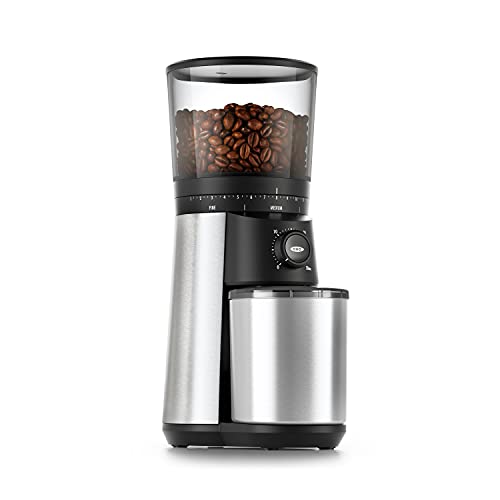
Top Pick OXO Brew Conical Burr Grinder
$
The easy first upgrade
Check Price on Amazon Overall
Best one-grinder household pick
- Good from espresso to press
- Predictable setting changes
- Strong repair reputation
- Worth stretching the budget
Top Pick Baratza Encore ESP
$$$
The safest smart buy
Check Price on Amazon Espresso
Best under-200 option for shot tuning
- Stepless adjustment
- Single-dose workflow
- Low-retention design
- Built for dialing shots
Top Pick Turin SK40
$$$
Better control for espresso lovers
Check Price on Amazon Manual
Best grind quality per dollar
- Serious grind quality
- Travel friendly
- No motor noise
- Wide usable range
Top Pick KINGrinder K6
$$
Manual, but seriously good
Check Price on AmazonQuick answer: Buy the Baratza Encore ESP if you want one grinder that can handle almost everything. Buy the OXO Brew if you want the cheapest good upgrade from a blade grinder. Buy the Turin SK40 if espresso is your main game. Buy the KINGrinder K6 if you want the best grind quality per dollar and do not mind using your arm a little.
Quick picks
Our Top Picks

Comparison table
| Product | Best for | Burr type | Brew range | Capacity | Adjustment style | Cleanup | Price band | Espresso? | |
|---|---|---|---|---|---|---|---|---|---|
| Baratza Encore ESP | One grinder for drip, pour over, and entry-level espresso | 40mm hardened steel conical burrs | Espresso to French press | 8 oz hopper / 5 oz bin | Stepped with espresso-focused fine range | Moderate, with easy upper burr access | $$$ | Yes | Check Price |
| OXO Brew Conical Burr Grinder | Affordable daily drip, batch brew, and pour over | 40mm stainless steel conical burrs | Fine to coarse brew settings | 12 oz hopper | Stepped grind dial with one-touch timer | Easy, with removable top burr | $ | Limited | Check Price |
| Turin SK40 | Espresso dialing with a single-dose, low-retention workflow | Conical burr | Espresso-focused | Single-dose workflow | Stepless collar | Low-retention design with tilted body and bellows | $$$ | Yes | Check Price |
| Capresso Infinity Plus | Straightforward drip and pour over brewing | Steel conical burrs | Drip, pour over, and French press | 8.8 oz bean container | 16-step grind settings | Easy | $$ | No | Check Price |
| KINGrinder K6 Manual Grinder | Best grind quality per dollar if you do not mind hand grinding | Stainless steel conical burr set | Espresso to French press | About 25 to 35g per dose | External click adjustment | Easy, with very low retention | $$ | Yes | Check Price |
How we evaluate
We looked at these grinders the way real people use them: half-awake, before work, usually while trying not to make a mess. So we did not just look at the shiny headline specs. We focused on what actually changes your cup and your routine. Does the grinder make clean, even grounds? Does it swing wildly when you make small setting changes? Does it spray coffee dust all over the counter like a tiny brown fireworks show? That stuff matters.
Grind consistency came first. When the grounds come out uneven, your coffee tastes muddy, sharp, hollow, or just plain confused. Good burr grinders break beans into more even pieces, which means the brew tastes sweeter and more balanced. Think of it like chopping vegetables with a sharp knife instead of smashing them with a rock. Same ingredient, very different result.
After that, we looked at range and control. Some grinders are clearly built for drip and pour over. Others can go fine enough for espresso and still stay usable. That difference is huge. If you buy a filter-first grinder and expect it to dial espresso, your shot will jump from sour to bitter with nowhere comfortable in the middle. It feels like trying to park a truck using only full left and full right turns.
We also paid close attention to retention, which is just the old grounds stuck inside the grinder after each use. A little retention is normal. Too much means stale coffee sneaks into your next cup, and you start every morning with a weird mix of yesterday and today. Not great. Static matters too, because nobody enjoys brushing grounds off the counter, the grinder base, and somehow their own shirt.
Then there is cleanup and long-term ownership. Some grinders are easy to open, brush out, and put back together without losing your setting. Others make a five-minute job feel like assembling flat-pack furniture in the dark. Under $200, that difference matters. A grinder that is slightly less flashy but easier to live with often ends up being the better buy.
Last thing: we did not force one winner for every kind of brewer. That is lazy. The best grinder for pour over is not always the best grinder for espresso, and the best electric grinder is not always the best value. So the picks below are split by real use case, not just by whoever had the prettiest product page.
Individual product reviews
1) Baratza Encore ESP — Best Overall
Best for: People who want one grinder that can handle weekday drip, weekend pour over, and a first real step into espresso.
This is the one I would point most people toward without much hesitation. Encore ESP hits the sweet spot between capability and sanity. It has a fine adjustment zone built for espresso, but it still feels easy enough for normal home brewing. You are not buying a specialist tool that punishes you every time you switch methods.
That matters because a lot of sub-$200 grinders make a big promise and then give you a clumsy workflow. Encore ESP does not feel like that. The grind changes are predictable, the brand has a good reputation for parts support, and the whole thing feels like a grinder you can keep for years instead of replacing the second your coffee hobby gets serious.
It is not silent, and it is not the cleanest single-dose setup in this guide. But it is balanced in a way cheaper grinders usually are not. If you want the lowest-risk buy in this category, this is it.
Pros
- ✓ Legit espresso range without giving up filter brewing ease.
- ✓ Predictable setting changes that make dialing less frustrating.
- ✓ Good long-term support and easy-to-find replacement parts.
Cons
- ✗ You will hear it. This is not a quiet grinder.
- ✗ Not as tidy as a dedicated low-retention single-dose setup.
2) OXO Brew Conical Burr Grinder — Best Budget
Best for: Anyone upgrading from a blade grinder who mostly makes drip coffee, batch brew, or pour over.
If your coffee routine is simple and you want it to taste way better without spending close to $200, OXO makes a lot of sense. It is easy to understand, easy to repeat, and easy to live with. Set the grind, use the timer, brew your coffee, move on with your day. No drama.
The big win here is value. The jump from a blade grinder to this is not subtle. Cups get cleaner. Bitterness drops. You can finally make grind adjustments that mean something. It is the kind of upgrade that makes people say, “Oh, so that is what my beans were supposed to taste like.”
The downside is espresso. It might go fine, but fine enough is not the same as controllable. If you know espresso is in your future, skip this and spend higher. If not, this is one of the easiest budget recommendations on the page.
Pros
- ✓ Great value if you brew drip, batch coffee, or pour over.
- ✓ Simple timer workflow is easy for beginners to repeat.
- ✓ Weekly cleaning is quick and not annoying.
Cons
- ✗ Not the right pick for serious espresso dialing.
- ✗ Static can get a little messy in dry kitchens.
3) Turin SK40 — Best for Espresso Under $200
Best for: Espresso-first buyers who care more about dialing shots than filling a big hopper and walking away.
This is the pick for people who are tired of hearing “good enough for espresso” from grinders that clearly are not. The Turin SK40 pairs 40mm stainless steel conical burrs with stepless adjustment, which means you can make tiny grind changes instead of hopping between big preset steps and hoping one of them lands in the sweet spot. For espresso, that is a big deal.
The single-dose setup also keeps things fresher if you like changing beans often. You weigh out the beans for each brew, grind them, and switch coffees without emptying a full hopper first. The forward-tilted body and included rubber bellows are designed to clear grounds out of the grinding chamber, so less stale coffee sneaks into the next shot. The workflow is slower than hopper grinding, but it gives you more control.
It is not the best pick for households that just want fast drip coffee at 6 a.m. It is more involved, since you weigh and load every dose by hand. Coarser settings do cover pour over and French press, but espresso is where the stepless control earns its keep. If your idea of a good morning includes chasing thick crema and a shot that pours like warm honey instead of thin tea, this is one of the smartest espresso-first buys you can still find under this cap.
Pros
- ✓ Stepless adjustment makes espresso dialing much easier.
- ✓ Tilted body and bellows help keep retention low in a single-dose workflow.
- ✓ Ships with a dosing cup, bellows, and metal hopper, so there is little extra to buy.
Cons
- ✗ Slower and more involved than hopper-style grinders.
- ✗ Coarse settings handle filter coffee, but it is less of a standout there than for espresso.
4) Capresso Infinity Plus — Best for Filter Coffee

Best for: People who want a no-fuss grinder for drip, batch brew, and regular morning coffee.
Capresso Infinity Plus is not flashy, and honestly that is part of the appeal. It is straightforward. It grinds for common filter methods, it is easy to understand, and it does not try to pretend it is some espresso monster. Sometimes a grinder wins by staying in its lane and doing the boring stuff well.
If your goal is better batch coffee without extra fuss, Capresso still deserves a look. It is the kind of machine that suits people who want to turn a dial, press the button, and get on with breakfast. That simplicity is worth a lot, especially if the rest of your kitchen is already busy.
Just be honest about your plans. If you think you will end up chasing espresso shots soon, this is probably not your final grinder. For filter coffee only, though, it stays practical and easy to recommend.
Pros
- ✓ Simple, easy routine for everyday filter brewing.
- ✓ Low maintenance and easy to clean.
- ✓ Usually sits in a comfortable mid-budget spot.
Cons
- ✗ Not the grinder to buy for serious espresso goals.
- ✗ Feels more basic than newer all-purpose competitors.
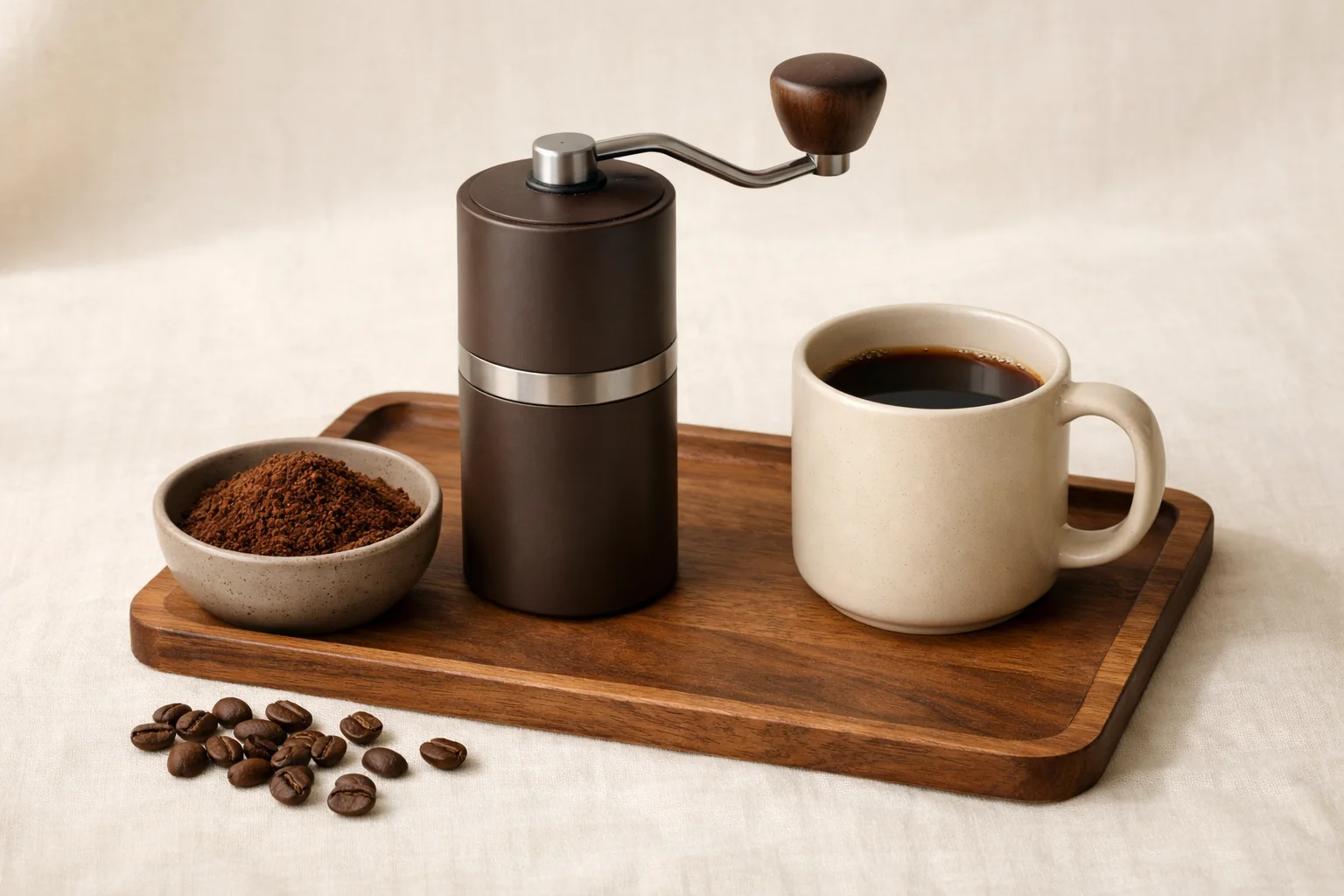
5) KINGrinder K6 — Best Manual Value

Best for: Coffee nerds on a budget, travelers, and anyone who cares more about grind quality than convenience.
This grinder is proof that electric convenience is not everything. If you are willing to crank by hand, the K6 gives you a lot of performance for the money. The grind quality can be excellent, the retention stays low, and it travels far better than any countertop grinder in this guide.
There is also something satisfying about manual grinding when you are making one careful cup. It slows the ritual down in a good way. Not every morning needs that, of course. Some mornings you just want caffeine now. But if you mostly brew one or two doses and want the best value in the group, this is where I would look.
The obvious catch is effort. Fine espresso grinding can feel like arm day in miniature. If you need to make coffee for a whole house, go electric. If you want maximum quality per dollar, the K6 is hard to ignore.
Pros
- ✓ Excellent grind quality for the price.
- ✓ Very low retention and quiet operation.
- ✓ Useful range from espresso to coarse brew methods.
Cons
- ✗ Manual grinding gets tiring at finer settings.
- ✗ Not practical for big batch brewing or rushed mornings.
Who should skip this guide?
If you know you are headed deep into espresso and you can stretch your budget, skip this whole category and save longer. Under $200 can get you good results, but it will not buy you the same speed, low retention, or easy micro-control you get when you step up a tier. That does not make these grinders bad. It just means they live in the value lane, not the luxury lane.
You should also skip this guide if you only make coffee once in a while and are happy with pre-ground beans. A burr grinder improves freshness and flavor, but it also adds another piece of gear to clean and think about. If you are not chasing better cups, it may feel like unnecessary clutter.
Common mistakes people make shopping in this price range
Buying the cheapest burr grinder and assuming they are all basically the same
They are not. Two grinders can both say “burr” on the box and still behave very differently. One will give you sweeter cups and easier mornings. The other will give you static, uneven grounds, and a weird amount of regret. Burrs are the starting point, not the whole story.
Paying for espresso dreams when you only drink drip coffee
This happens all the time. Someone sees “espresso capable” and thinks more capability must mean more value. But if you mostly brew batch coffee, a simpler filter-focused grinder can be easier to use and just as satisfying. Buy for the coffee you actually make, not the coffee version of you that lives only in your imagination.
Ignoring the mess factor
A grinder can look great in a product photo and still leave a dusting of grounds across your counter every single day. Static and retention sound boring until you are wiping coffee off the machine base before your first sip. Then they become very important, very fast.
Forgetting that better grinding still needs a decent recipe
A burr grinder helps a lot, but it does not rescue random brewing habits. If your ratio changes every day, your water is all over the place, and your timing is a guess, the grinder cannot save you alone. It is a strong upgrade, not a magic wand.
Simple grinder care routine
A tiny bit of maintenance keeps your cups cleaner and your workflow less annoying
Step 1 After brewing
- Tap out the last grounds
- Wipe stray coffee from the bin
- Leave oily beans sitting as little as possible
Step 2 Weekly
- Brush the chute
- Clean around the burr entry
- Check for static buildup
Step 3 Monthly
- Remove the top burr if your grinder allows it
- Brush out old grounds
- Reassemble carefully before brewing
Result
Cleaner flavor, less stale retention, and fewer messy mornings
Frequently asked questions
What is the best burr coffee grinder under 200 for most people?
For most people, the Baratza Encore ESP is the easiest recommendation because it handles filter coffee well and gives you enough fine control to start making real espresso.
Can you get a good espresso grinder for under $200?
Yes, but you need to choose carefully. A single-dose grinder with stepless adjustment, like the Turin SK40, or one with a dedicated fine range, like the Baratza Encore ESP, makes far more sense for espresso than a broad-step grinder built mainly for filter coffee.
Is a manual grinder better than an electric one at this price?
Sometimes, yes. A good manual grinder can give you cleaner, more precise grinding for the money, but it is slower and less convenient when you are making multiple cups.
How often should you clean a burr grinder?
Give it a quick brush-out every week and a deeper clean every month or so. Old grounds build up fast, and stale coffee oils can make your next cup taste flat.