 Coffee Gear Picks
Best Coffee Maker with Grinder (2026): 7 Top Picks
If you want fresher coffee without turning your counter into a gadget graveyard, a coffee maker with grinder can be a smart move. The good ones make mornings feel easy. The bad ones are loud, messy, and weirdly annoying to clean. I compared seven strong options so you can skip the regret and buy the one that actually fits your routine.
Best Coffee Maker with Grinder
7 picks compared for flavor, cleanup, and how smooth your morning actually feels
Budget
Best value for everyday full-pot brewing
- Blade grinder keeps price down
- 12-cup carafe for family use
- Works with whole beans or pre-ground
- Simple timer for weekday mornings
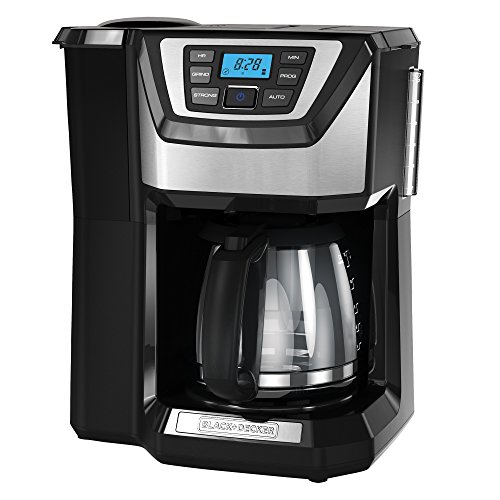
Top Pick BLACK+DECKER Mill & Brew
$
Cheap, easy, and good enough for most homes
Check Price on Amazon Overall
Best mix of taste and flexibility
- Burr grinder for cleaner flavor
- Single cup or full carafe
- Adjustable strength and grind
- Feels more premium day to day
Top Pick Breville Grind Control
$$$
The one I would pick for most kitchens
Check Price on Amazon Single-Serve
Best for one mug and out the door
- Bean-to-cup single servings
- Compact footprint
- Several cup sizes
- Bypass for pre-ground coffee
Top Pick Horavie Single-Serve Grind & Brew
$$
Best for solo coffee drinkers
Check Price on Amazon Premium
Best if your house wants more drink options
- Conical burr grinder
- Hot, iced, and different cup sizes
- One-touch bean-to-cup flow
- Better for mixed drink habits
Top Pick De'Longhi TrueBrew
$$$
Most flexible machine in the bunch
Check Price on AmazonQuick answer: If you want the best overall pick, go with the Breville Grind Control. If you want the cheapest solid option, grab the BLACK+DECKER Mill & Brew. If you mostly brew one mug at a time, the Horavie Single-Serve Grind & Brew makes the most sense. And if your house bounces between hot coffee, iced coffee, and different cup sizes, De'Longhi TrueBrew is the most flexible choice here.
Quick picks
Our Top Picks

Comparison table
| Product | Best for | Grinder | Brew format | Capacity | |
|---|---|---|---|---|---|
| Breville Grind Control | Overall quality | Burr | Single cup + carafe | 12-cup | Check Price |
| BLACK+DECKER Mill & Brew | Lowest cost | Blade | Carafe | 12-cup | Check Price |
| Cuisinart DGB-550BKP1 | Easy value | Blade | Carafe | 12-cup | Check Price |
| Café Specialty Grind & Brew | Premium drip workflow | Burr | Single-serve + thermal carafe | 10-cup | Check Price |
| Horavie Single-Serve Grind & Brew | One-cup speed | Blade (in brew basket) | Single-serve | 6 cup sizes | Check Price |
| De'Longhi TrueBrew | Drink variety | Conical burr | Single cup + carafe + iced | 8 oz to 24 oz | Check Price |
| Ninja Luxe Café Premier | Espresso + drip hybrid | Integrated burr | Espresso + drip + cold brew | Multi-size | Check Price |
How we evaluate coffee makers with grinders
I did not rank these by whichever machine had the flashiest feature list. That is how people end up with a coffee maker that looks great on day one and becomes a pain by week three. For this roundup, I looked at current Amazon listings, maker specs, and the kinds of ownership complaints that show up again and again after the honeymoon period ends.
The first thing that matters is grinder quality. A burr grinder crushes beans more evenly, which usually gives you a cleaner, sweeter cup. A blade grinder is more like hacking beans into random chunks. It still works, but the flavor can swing around more from one brew to the next. If you are upgrading from stale pre-ground coffee, either will feel like a step up. If you care about flavor, burr still wins.
Then there is workflow. That just means what your morning feels like. Can you brew one mug fast? Can you make a full pot without extra fiddling? Can you use pre-ground coffee when you are out of beans? Those little details matter more than some fancy app feature you will forget about after a week.
Cleanup matters too. A lot. Some machines are fine until oils and stray grounds start sticking in the chute and hopper. Then the coffee tastes flat and the machine starts feeling like homework. The picks below score higher when they stay easy to live with, not just easy to admire in the product photos.
Last, I looked at value. If a premium machine costs a lot more, it should taste better, feel smoother, or save you real hassle. If it does not, I would rather point you toward something cheaper and more honest. If you want a tighter shortlist, start with our best grind and brew coffee maker under $200 guide.
Individual product reviews
1) Breville Grind Control — Best overall
This is the pick I would steer most people toward if they want one machine that actually feels like an upgrade. The burr grinder gives you a cleaner, more even cup than the usual cheap blade setups, and the machine is flexible enough for a solo mug on Monday and a full pot on Saturday.
It is not cheap. But it earns that price better than most all-in-one machines do. The whole experience feels more thought through, from the grind controls to the single-cup or carafe options. If you are the kind of person who notices when coffee tastes flat one day and rich the next, this one gives you a better shot at consistency.
Pros
- ✓ Burr grinder gives better flavor clarity than most built-in rivals
- ✓ Works for both single cups and full pots
- ✓ Useful controls without feeling overly fussy
Cons
- ✗ Costs a lot more than entry-level models
- ✗ Still needs regular brushing around the grinder path
If your coffee habit is a real daily ritual, this one makes the most sense. It is the best blend of convenience and cup quality in this group.
2) BLACK+DECKER 12-Cup Mill & Brew — Best budget
If your goal is simple (fresh-ground coffee, full pot, low price), this is the obvious budget pick. It uses a blade grinder, so do not expect the kind of flavor separation you get from a better burr setup. Still, for everyday house coffee, it gets the job done and keeps the routine dead simple.
The upside is value. The downside is that it sounds like a coffee maker with a blender stuffed inside. If you are up before everyone else, that matters. But if you just want fresh beans in the morning without spending premium money, this one is hard to beat.
Pros
- ✓ Low price for a true grind-and-brew machine
- ✓ Makes a full 12-cup pot
- ✓ Pre-ground mode gives you a useful backup
Cons
- ✗ Blade grinder is less consistent
- ✗ Grinding noise is not subtle
If you want to spend as little as possible and still skip stale pre-ground coffee, this is the move.
3) Cuisinart DGB-550BKP1 — Best low-fuss daily pick
This is a good fit for people who do not want to babysit a machine. Set the timer, load the beans, wake up, pour coffee. That is really the appeal here. It does not try to be fancy. It tries to be dependable.
Like the BLACK+DECKER, it is working with a blade grinder, so flavor precision is not the headline. But the workflow is straightforward, and that counts for a lot when your brain is still booting up in the morning.
Pros
- ✓ Easy routine for weekday brewing
- ✓ Programmable timer helps mornings feel smoother
- ✓ Good value for people who just want it to work
Cons
- ✗ Still a blade grinder
- ✗ Not much room for flavor tweaking
If you want a coffee maker that feels familiar and low drama, this is one of the safer buys in the category.
4) Café Specialty Grind & Brew — Best premium drip upgrade

This is for the person who wants their coffee machine to feel a little more like a nice kitchen appliance and a little less like a plastic box that screams at dawn. It has a burr grinder, a thermal carafe, single-serve options, and a more polished feature set than the cheaper machines here.
The catch is the price. You really have to want the nicer workflow and better grind system, because a cheaper machine will still make coffee. But if you brew a lot and care about both looks and function, this is a very appealing step up.
Pros
- ✓ Burr grinder with a stronger feature set
- ✓ Single-serve and thermal-carafe flexibility
- ✓ Feels more premium in everyday use
Cons
- ✗ Expensive
- ✗ More features means a bigger learning curve
This is the right pick when you want your machine to feel smoother, not just cheaper.
5) Horavie Single-Serve Grind & Brew — Best for one-cup mornings
If you mostly make one mug and get on with your day, this one makes more sense than a big 12-cup machine. It grinds whole beans right in the brew basket, takes ground coffee or K-Cup pods when you want a shortcut, and Horavie lists a fresh cup in about 2 minutes. The single-serve format also means less waste if you are the only coffee drinker in the house.
It is not the right tool for serving a whole family, and its blade grinder will not match a burr machine for evenness. But at under 5 inches wide, with six cup sizes from 6 to 16 oz, it is a really practical little machine for apartment kitchens, solo drinkers, and people who hate dumping half a carafe.
Pros
- ✓ Built for true one-cup routines
- ✓ Beans, grounds, or K-Cup pods in one machine
- ✓ Compact enough for smaller kitchens
Cons
- ✗ Not for big batch brewing
- ✗ Blade grinder is less even than a burr set
For single-cup drinkers, this is one of the smartest buys on the page. If that is your lane, also see our best single-serve coffee maker with grinder guide.
6) De'Longhi TrueBrew — Best for drink variety

This one is built for households that never agree on one style of coffee. One person wants hot coffee, another wants iced, somebody else wants a different size, and nobody wants to deal with pods. That is where TrueBrew makes a lot of sense.
The conical burr grinder helps with flavor consistency, and the machine does more than the usual grind-and-brew box. The trade-off is that it is not the simplest option here. If you love having choices, great. If you want one button and zero thinking, maybe not.
Pros
- ✓ Great range of cup sizes and drink styles
- ✓ Conical burr grinder gives cleaner results than blade machines
- ✓ Good pick for mixed-preference households
Cons
- ✗ Interface is less simple than basic drip brewers
- ✗ Takes more counter space than compact single-serve units
If your home has a lot of coffee personalities under one roof, this is the most flexible choice in the lineup.
7) Ninja Luxe Café Premier — Best hybrid for espresso and drip homes
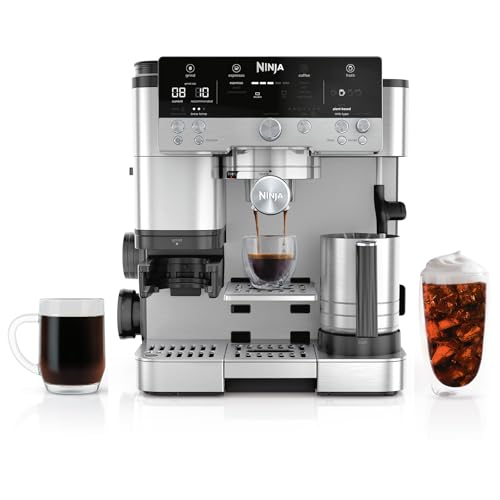
This is the wildcard pick. It is trying to do a lot: espresso-style drinks, drip coffee, and cold brew from one machine. For some people that sounds amazing. For others it sounds like way too much machine. Both reactions are fair.
If your house swings between espresso drinks and regular coffee, this can replace a pile of separate gear. If you just want a normal morning drip routine, it is more machine than you need. Simple as that.
Pros
- ✓ Handles multiple drink styles from one machine
- ✓ Integrated grinder supports a wider coffee routine
- ✓ Useful if your home wants drip and espresso from one footprint
Cons
- ✗ More cleanup than a plain drip machine
- ✗ Learning curve is much steeper
Buy this because you truly want the hybrid setup, not because you got seduced by the feature list. If budget espresso is your real goal, read our best espresso machine under $200 roundup first.
Which workflow fits you?
Pick the right grind-and-brew workflow
The best machine depends less on specs and more on how your morning actually runs
Full-pot households
- Need 10-12 cup capacity
- Want a timer the night before
- Care about easy basket cleanup
- Do not need espresso tricks
Solo drinkers
- Usually brew one mug
- Want less waste
- Need smaller footprint
- Care about quick bean-to-cup flow
Flavor-focused users
- Prefer burr grinders
- Notice muddy cups fast
- Will clean grinder parts more often
- Want more consistency
Mixed-preference homes
- Need hot and iced options
- Want multiple cup sizes
- Need more flexibility
- Can tolerate more setup
Outcome
A machine that matches your routine feels better every single morning.
If your house drinks full pots, start there. Do not overbuy a fancy hybrid machine just because it can make ten kinds of coffee. If you mostly brew one mug, a single-serve model will usually feel faster, cleaner, and less wasteful.
If flavor matters most, prioritize a burr grinder. That is the part that changes the cup most clearly. If budget matters most, accept the trade-off and buy a solid blade model instead of pretending you will care about tiny flavor differences every morning.
And if your home is full of people who all want different things, that is when a flexible machine like TrueBrew or the Ninja hybrid starts to make more sense. More options are only worth it when you will actually use them.
There is also the noise question, and it is more important than people admit. Some of these machines make a sharp, crunchy racket while grinding, especially the cheaper blade models. If you live in a small apartment or brew before everybody else wakes up, that can turn a perfectly good machine into something you start resenting. Burr machines are not silent, but many sound lower and less chaotic. Still loud. Just less like dropping silverware into a blender.
Think about how much control you actually want. Some people love tweaking strength, cup size, and grind settings until the cup tastes just right. Other people want to press a button and get coffee that tastes good enough every single morning. Neither approach is wrong. The mistake is buying a machine built for a tinkerer when you are really just trying to survive your 6:45 a.m. alarm.
Another thing people miss is heat retention in the carafe. A hot cup at 7 a.m. is nice. A hot second cup at 8:15 matters too. Thermal carafes usually hold up better without cooking the coffee on a hot plate. Hot plates keep things warm, but leave coffee sitting there long enough and the flavor starts tasting flat and a little burnt, like toast left in the toaster thirty seconds too long.
You should also think about how often you switch beans. If you like one dependable medium roast and drink it every day, almost any decent grind-and-brew machine can fit that habit. If you bounce between decaf, dark roast, and lighter beans, convenience starts to get trickier. Some machines make it easy to swap in pre-ground coffee. Others really want you to commit to whatever is already in the hopper. That sounds minor until you are half awake and realize your only option is full-caf at 9 p.m.
Counter space matters too. A machine can look compact in product photos, then feel huge once you need room to open the lid, pull out the carafe, and refill the water tank without smacking your cabinets. If your kitchen is tight, measure the height under your upper cabinets before you buy. That boring little step saves a lot of annoyance later.
And be honest about how picky you are about coffee texture. Blade-based machines can still make a pleasant, strong cup. But if you notice when one sip feels smooth and the next tastes a little muddy, you are probably the kind of person who should spend more for a burr grinder. That is the fork in the road. Convenience-first buyers can save money. Flavor-focused buyers should not pretend they will be happy with a rougher grind just because the price looks good.
Frequently asked questions
Are coffee makers with built-in grinders worth it?
Usually, yes. If you want fresher coffee with less countertop clutter, they make a lot of sense. The trade-off is that many cheaper models use blade grinders, so flavor will not be as even as a good separate burr grinder.
What is the best coffee maker with grinder for most people?
For most homes, the Breville Grind Control is the best all-around pick because it gives you better grind quality than basic blade machines while still handling both single cups and full pots.
Burr vs blade: which is better in a grind-and-brew machine?
Burr is better if you care about cleaner, more even flavor. Blade is cheaper and simpler, but it chops coffee into mixed sizes, which can make one cup taste muddy and the next taste flat.
Can I use pre-ground coffee in these machines?
Most of the good ones let you. That matters more than people think, because sometimes you run out of beans, need decaf at night, or just want a faster morning.
How often should I clean a coffee maker with grinder?
Give brew parts a quick rinse after each use, brush out grinder areas every few brews, and descale on a regular schedule. If you skip that, old oils and scale will make your coffee taste dull fast.