 Coffee Gear Picks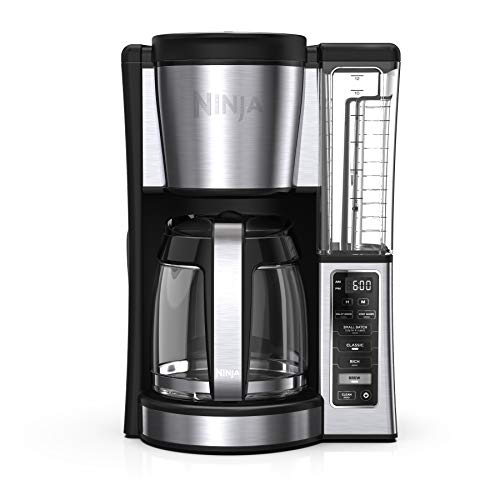
Best Drip Coffee Maker Under $100 (2026): 8 Smart Picks
The best drip coffee maker under 100 for most people is the Ninja CE251 because it balances dependable programming, solid extraction consistency, and easy day-to-day cleanup. We researched and compared eight budget-friendly models so you can choose a brewer that actually fits your routine instead of just chasing the lowest sticker price.
8 Drip Coffee Makers Under $100 Worth Buying
Ranked by brew consistency, programmability, cleanup effort, and daily value
Overall
Best all-around value and reliability
- Dependable delay brew
- Consistent cup quality
- Quick daily cleanup
- Mid-range pricing
Top Pick Ninja CE251 Programmable Brewer
$$
Reliable daily workhorse
Check Price on Amazon Budget
Best compact budget pick
- Auto-brew timer
- Compact footprint
- Beginner-friendly controls
- Lowest cost tier
Top Pick BLACK+DECKER CM1160B
$
Simple and affordable
Check Price on Amazon Programmable
Deepest scheduling controls
- Brew strength tuning
- 1-4 cup mode
- 14-cup capacity
- Feature-rich panel
Top Pick Cuisinart DCC-3200P1
$$
Max programmable value
Check Price on Amazon Thermal
Best heat retention under $100
- No hot plate needed
- Steady heat over time
- Good for slow mornings
- Solid build quality
Top Pick BLACK+DECKER CM2035B
$$
Thermal carafe value
Check Price on AmazonQuick answer: Choose Ninja CE251 for most households, Cuisinart DCC-3200P1 for deeper programming control, and BLACK+DECKER CM1160B for compact budget value. If you need a thermal carafe near this budget, BLACK+DECKER CM2035B is the most practical fit.
Quick picks
Our Top Picks


Comparison table
| Product | Best for | Capacity | Carafe | Programming | Cleanup effort | Price band | |
|---|---|---|---|---|---|---|---|
| Ninja Fresh Brew Coffee Maker CE251 | Overall value and reliability | 12 cups | Glass | Delay brew + 2 brew styles | Low | $$ | Check Price |
| Cuisinart DCC-3200P1 Perfectemp | Feature-rich programmability | 14 cups | Glass | Brew strength + 1-4 cup mode | Medium | $$ | Check Price |
| BLACK+DECKER CM1160B 12-Cup Digital Coffee Maker | Compact budget kitchens | 12 cups | Glass | Auto-brew + sneak-a-cup | Low | $ | Check Price |
| Hamilton Beach 2-Way 49980A | Single cup + full pot homes | 12 cups | Glass | Programmable carafe side | Medium | $$ | Check Price |
| Mr. Coffee 12-Cup Programmable | Lowest upfront cost | 12 cups | Glass | Brew now or later | Medium | $ | Check Price |
| BLACK+DECKER Thermal CM2035B | Thermal carafe under $100 | 12 cups | Thermal | Auto clean + no-drip pour | Medium | $$ | Check Price |
| Mueller 12-Cup Drip | Simple manual operation | 12 cups | Glass | Basic controls | Low | $ | Check Price |
| KRUPS Simply Brew 5-Cup | Small apartments and low volume | 5 cups | Glass | Pause and brew | Low | $ | Check Price |
How we evaluate
For this roundup, we compared each machine on five practical criteria: brew consistency, programmable reliability, cleanup burden, daily workflow fit, and overall value under $100. We give extra weight to routines that matter in real homes, including easy morning setup, refill cadence, and how annoying a machine becomes after the first month.
We did not run controlled lab tests for this roundup. Instead, we researched manufacturer specs, listing details, user-reported ownership patterns, and common failure points for this price range. That approach helps compare budget models fairly without pretending every product performs like a premium machine.
Because this keyword is specifically budget-focused, a machine can score well without luxury features. In this category, dependable timing, straightforward cleaning, and predictable brewing usually matter more than advanced extras. If a machine tries to do everything but adds workflow friction, it drops in rank quickly.
Individual product reviews
1) Ninja CE251 Programmable Brewer — Best Overall
Best for: Buyers who want the best drip coffee maker under 100 with low hassle and reliable daily scheduling. Price band: $$.
The Ninja CE251 wins because it delivers the strongest balance of consistency, convenience, and maintenance ease in this budget tier. The control panel is straightforward, the brew pause is useful without making a mess, and the removable reservoir helps with fast refills on busy mornings.
It is especially good for households where one person starts coffee early and others pour later. While it does not hold heat as long as thermal picks, it avoids many of the workflow annoyances that push people to replace cheaper brewers too soon.
Pros
- ✓ Consistent cup quality for a true sub-$100 machine.
- ✓ Simple controls with dependable delay brew behavior.
- ✓ Cleanup is quick thanks to a practical basket and reservoir design.
Cons
- ✗ Glass carafe loses heat faster than thermal options.
- ✗ Not the smallest footprint for compact counters.
2) Cuisinart DCC-3200P1 Perfectemp — Best Programmable Feature Set
Best for: Homes that want stronger scheduling controls and larger capacity while staying close to the $100 ceiling. Price band: $$.
If your top priority is programmable control, this model is hard to beat. It gives more flexibility than simpler competitors, including small-batch options and strength tuning that can better match different roast styles.
This machine lands best in larger households where one-size-fits-all brewing causes complaints. If you just want one button and done, there are easier picks. But for feature value near this price, Cuisinart stays near the top.
Pros
- ✓ Feature depth is excellent for this budget range.
- ✓ 14-cup capacity works well for multi-coffee households.
- ✓ Brew strength and small-batch modes improve flexibility.
Cons
- ✗ More settings can feel busy for first-time buyers.
- ✗ Cleanup is moderate due to extra parts and size.
3) BLACK+DECKER CM1160B 12-Cup Digital — Best Budget Compact Pick
Best for: Buyers who need low-cost programmability and a footprint that fits tighter kitchens. Price band: $.
The CM1160B makes sense for buyers who want dependable daily drip coffee without paying for extra complexity. It gives you auto-brew convenience plus a compact shape that works in apartments, guest kitchens, and shared spaces.
Compared with ultra-cheap non-programmable models, this one is usually worth the small price jump because timer convenience matters every weekday. For many people, that alone is enough to justify it.
Pros
- ✓ Strong feature-to-cost value in the under-$100 class.
- ✓ Compact body is easier to place in small kitchen layouts.
- ✓ Beginner-friendly controls reduce setup friction.
Cons
- ✗ Build feel is lighter than higher-tier alternatives.
- ✗ Carafe ergonomics are acceptable, not exceptional.
4) Hamilton Beach 2-Way 49980A — Best for Mixed Single-Cup + Carafe Homes

Best for: Families split between quick single cups and full-pot brewing. Price band: $$.
This model is a practical compromise when one person wants a fast solo cup and another prefers full-pot brewing. It avoids pod lock-in while still supporting flexible morning routines.
The trade-off is maintenance complexity: extra pathways and components can add cleaning burden. If your home rarely uses single-cup mode, a standard drip model is usually easier long-term.
Pros
- ✓ Dual-use format solves mixed household routines.
- ✓ Programmable carafe side still handles batch mornings well.
- ✓ Useful value if you would otherwise buy two machines.
Cons
- ✗ More parts means more cleanup steps.
- ✗ Workflow is less simple than single-purpose brewers.
5) Mr. Coffee 12-Cup Programmable — Best for Strict Upfront Budgets

Best for: Buyers who want automatic scheduling and the lowest practical entry cost. Price band: $.
This is the value pick when price is non-negotiable and you still want timer convenience. It covers fundamentals without trying to be premium, and that is the right expectation in this range.
If you can spend a bit more, higher-ranked models usually deliver better consistency and fewer maintenance annoyances. But for many budget-first buyers, this still gets the job done reliably enough.
Pros
- ✓ Usually one of the cheapest programmable options available.
- ✓ Easy control layout for first-time drip machine buyers.
- ✓ Widely stocked replacement parts and filters.
Cons
- ✗ Build quality is basic versus mid-tier alternatives.
- ✗ Long-term reliability can vary by usage intensity.
6) BLACK+DECKER Thermal CM2035B — Best Thermal Carafe Value

Best for: Homes that drink coffee over a longer window and need better passive heat retention. Price band: $$.
Thermal choices under $100 are limited, so this model fills an important niche. If you dislike reheated taste from prolonged hot-plate use, thermal can be a better everyday experience.
The trade-off is a slightly higher cleaning burden. If you prefer lowest-maintenance ownership, glass models still win. But for heat retention in this budget, this is one of the better fits.
Pros
- ✓ Thermal format helps preserve heat without a hot plate penalty.
- ✓ Solid value for buyers specifically seeking thermal under $100.
- ✓ Good fit for slower morning routines and staggered pours.
Cons
- ✗ Thermal carafe cleaning takes more effort than glass.
- ✗ Heavier pouring feel compared with lighter glass carafes.
7) Mueller 12-Cup Drip — Best No-Frills Simplicity
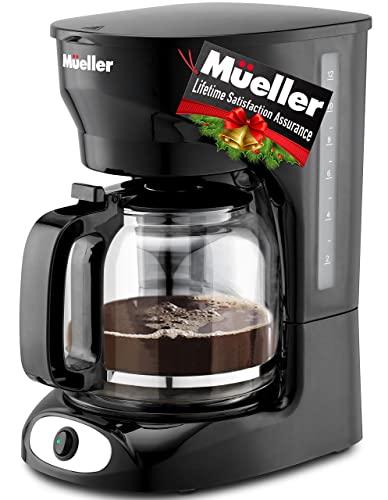
Best for: Buyers who want straightforward operation and minimal feature complexity. Price band: $.
Mueller is the practical pick for users who do not care about advanced scheduling and just want reliable drip output with simple controls. It is easy to explain to any household member, which matters more than people admit.
If timer-based convenience matters in your mornings, you will likely outgrow it. But for basic brewing and low-friction ownership, this is a reasonable under-$100 option.
Pros
- ✓ Simple manual operation with low learning curve.
- ✓ Low routine maintenance burden when used consistently.
- ✓ A practical option for secondary kitchens or guest spaces.
Cons
- ✗ Lacks richer programmable control options.
- ✗ Feature set is basic compared with similarly priced programmable models.
8) KRUPS Simply Brew 5-Cup — Best for Small-Batch Brewing

Best for: Apartment dwellers, couples, or anyone brewing smaller daily volumes. Price band: $.
This pick is for buyers who are tired of brewing oversized pots and wasting coffee. Small-batch brewing can improve consistency for low-volume use and makes daily cleanup faster.
If your household regularly needs multiple large mugs before work, skip this and choose a 12-cup model. But for compact living, it is one of the better practical fits in the category.
Pros
- ✓ Compact size is excellent for limited counter space.
- ✓ Fast small-batch workflow for one or two drinkers.
- ✓ Low annual upkeep cost compared with larger systems.
Cons
- ✗ 5-cup capacity is too small for larger households.
- ✗ Limited programmable depth compared with 12-cup competitors.
Workflow realism: what ownership feels like after week two
Most buying guides stop at feature lists, but day-to-day ownership is where budget machines either feel great or quietly become frustrating. Under $100, the gap is rarely about dramatic taste differences. It is usually about routine friction: how quickly the machine starts, how easy it is to refill half-awake, whether coffee drips while pouring, and how many surfaces collect stains after a normal week of use. If your schedule is tight, these small frictions matter more than one extra button on a control panel.
For weekday use, think in cycles. Cycle one: setup at night or early morning. Cycle two: brew and first pour. Cycle three: cleanup and reset for tomorrow. In cycle one, programmable clarity is critical: a machine with obvious controls gets used consistently, while a confusing panel gets ignored. In cycle two, reservoir access and carafe handling matter most. Wide reservoir openings and stable carafe lids reduce spill risk, especially before caffeine. In cycle three, removable baskets and easy-rinse surfaces save real time over a month.
Another ownership pattern is refill cadence. A 12-cup machine sounds generous, but in two-person homes it can still mean daily refill activity. That is normal. What you want is a machine that makes refill quick rather than awkward. Models with easier reservoir access and clear level markings usually feel better over time than models that require careful alignment every single day. If multiple people use the same machine, intuitive fill lines and predictable controls reduce user error and "who changed my settings" confusion.
Heat management is another practical trade-off. Glass carafes are cheaper and often easier to scrub, but heat retention declines faster after brewing. Thermal options keep temperature steadier longer, though they can be a little heavier to handle and slightly slower to deep-clean. If your household drinks quickly, glass usually gives stronger value under $100. If your first cup and second cup are an hour apart, thermal can improve the real experience enough to justify the trade-off.
Maintenance cadence decides long-term satisfaction in this category. A realistic baseline is daily rinse, weekly deep clean, and regular descaling. Machines that make this easy stay in service. Machines that feel annoying to clean often get neglected, and neglected machines start tasting stale no matter what beans you buy. This is why we rank cleanup burden explicitly: no budget machine is a good deal if ownership frustration pushes you to replace it prematurely.
Finally, check category fit. If you need built-in grinding, drip-only models are the wrong tool. Use our coffee maker with grinder roundup and compare trade-offs before buying. If you are debating single-cup convenience versus batch brewing, the drip vs single-serve comparison is the better decision framework. Choosing the correct machine category first saves more money than chasing tiny spec differences between similar drip brewers.
Frequently asked questions
What is the best drip coffee maker under $100 right now?
For most buyers, Ninja CE251 is the strongest all-around choice because it combines reliable programming, practical cleanup, and steady brew quality without breaking the budget ceiling.
Can I get a truly programmable drip coffee maker under $100?
Yes. Multiple models in this range include dependable delay-brew scheduling. The most practical options are Ninja CE251, BLACK+DECKER CM1160B, and often-discounted Cuisinart DCC-3200P1 units.
Is thermal carafe value realistic at this budget?
Yes, but options are fewer. Thermal picks under $100 are ideal for households that sip over longer windows and care more about passive heat retention than lowest upfront cost.
How often should I descale and deep-clean a budget drip machine?
A dependable schedule is every 4 to 6 weeks in normal water conditions, and every 3 to 4 weeks if your home has hard water. Daily rinse habits and weekly deep cleaning help maintain cup quality.