 Coffee Gear Picks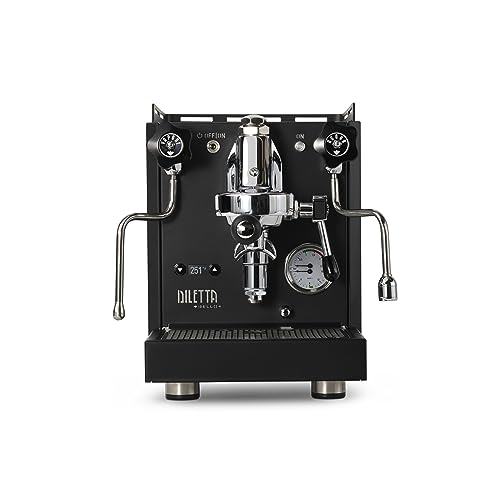
Best Espresso Machine E61 (2026): 6 Picks
The best espresso machine E61 pick for most serious home baristas is the Diletta Bello+ Espresso Machine, because it keeps the satisfying lever-and-chrome ritual while adding shot controls that make daily espresso more repeatable.
Which E61 espresso machine is best for most home baristas?
Top pick: Diletta Bello+ Espresso Machine: it gives most home baristas the best mix of E61 heat-exchanger workflow, PID temperature control, shot timer, programmable preinfusion, and manageable counter footprint.
- Price band: $$
- Boiler style:
- Capacity:
- Dimensions:
- Materials: Stainless steel case/frame/boiler
- Key feature: PID screen doubles as shot timer, with programmable preinfusion
All six picks here are prosumer-style machines. The shortlist is Diletta Bello+, Diletta Bello, Rocket Appartamento 2.0, Rocket Appartamento TCA, Diletta Alto with Flow Control, and Rocket R58 Tune. Also: budget for a serious grinder. A weak grinder next to a great E61 machine is the fastest way to get “random” espresso.
Best E61 Espresso Machines
6 prosumer picks compared by boiler style, controls, footprint, and upgrade path
Overall
Modern controls on the classic lever feel
- Heat exchanger
- PID screen
- Shot timer
- Programmable preinfusion
Top Pick Diletta Bello+
$$
Best daily E61 balance
Check Price on Amazon Value
Traditional E61 without extra screens
- Manual controls
- 3-liter reservoir
- Stainless build
- Heat exchanger
Top Pick Diletta Bello Espresso Machine
$
Classic and straightforward
Check Price on Amazon Compact
Rocket looks for tighter counters
- 10.5-inch width
- HX boiler
- Copper boiler
- Manual workflow
Top Pick Rocket Espresso Appartamento 2.0, Black
$$
Small-counter Rocket pick
Check Price on Amazon Upgrade
Dual boilers and flow control for tinkering
- Flow control
- Dual boiler
- PID
- Shot timer
Top Pick Diletta Alto with Flow Control
$$$
For recipe chasers
Check Price on AmazonWhich E61 espresso machines are the quick picks?
If you want one safe recommendation, choose the Diletta Bello+. Go with the Diletta Bello for a simpler, traditional value pick; the Rocket Appartamento 2.0 if width is your constraint; the Appartamento TCA for updated Rocket HX controls; the Diletta Alto for flow-control tinkering; and the Rocket R58 for dual-boiler Rocket fans.
- Best overall: Diletta Bello+
- Best value traditional E61: Diletta Bello Espresso Machine
- Best compact Rocket: Rocket Espresso Appartamento 2.0, Black
- Best updated Rocket HX: Rocket Appartamento TCA
- Best flow-control upgrade: Diletta Alto with Flow Control
- Best dual-boiler Rocket: Rocket Espresso R58 Tune
Quick picks
Our Top Picks


How do the best E61 espresso machines compare?
Think of this roundup as three lanes: classic heat exchangers, “smarter” heat exchangers with better temperature tools, and dual-boiler upgrades for people who want more control (or make lots of drinks back-to-back). Use the table to match the machine to your drink style and your counter space first: then obsess over the details.
| Product | Best for | Price band | Key spec | Verdict |
|---|---|---|---|---|
| Diletta Bello+ | Most home baristas who want modern controls on a classic E61-style workflow | $$ | Programmable up to 10 seconds | Best mix of classic E61 feel and modern shot controls. |
| Diletta Bello Espresso Machine | Buyers who want a traditional manual E61 heat-exchanger machine | $ | Heat exchanger espresso machine; 3 liters | The simple, stainless, traditional choice if you want value. |
| Rocket Espresso Appartamento 2.0, Black | Small counters and buyers who want the classic Rocket look | $$ | 1.8-liter heat-exchange boiler; 17 D x 10.5 W x 14.25 H inches (US listing) | Compact Rocket styling, but fewer temperature upgrades. |
| Rocket Appartamento TCA | Rocket buyers who want updated temperature control without a full dual boiler | $$ | 1.8-liter heat exchanger boiler | Better Rocket HX controls without jumping to a dual boiler. |
| Diletta Alto with Flow Control | Advanced users who want pressure and flow experimentation | $$$ | Dual boiler espresso machine with flow control; Group-mounted flow control, PID, shot timer, adjustable OPV | For pressure-play hobbyists, not casual beginners. |
| Rocket Espresso R58 Tune | Rocket fans who want dual boilers and plumbable rotary-pump performance | $$$ | E61 dual-boiler espresso machine; Programmable pre-infusion and auto-on scheduling | Big-ticket Rocket for plumbed-in, dual-boiler routines. |
How should you evaluate an E61 espresso machine?
Evaluate an E61 machine by matching its boiler design, temperature controls, workflow, footprint, serviceability, and price to your real routine. These machines are built for manual espresso, so the “best” choice is the one that fits your drinks and your kitchen without turning every morning into a project.
1) Boiler architecture (HX vs dual boiler). Heat exchangers use one main boiler for steam, with brew water heated as it passes through a heat-exchange path; dual boilers keep brew and steam water in separate boilers for more independent control. Whole Latte Love’s boiler overview and Clive Coffee’s guide both explain the trade-offs in plain language.
2) Temperature control (and how visible it is). A PID controller can make temperature management less guessy than relying on boiler pressure alone. Even more practical for most home users: a shot timer and a clear display so you can repeat what worked. For background on E61 group operation and the thermosyphon loop that circulates hot water through the group, Clive Coffee’s E61 explainer is a solid reference.
3) Workflow: brew + steam, recovery, and warm-up. E61 machines are not instant-on appliances. If you make milk drinks, prioritize steam power and how quickly the machine recovers between drinks. If you mostly drink straight espresso, prioritize the control scheme that helps you stay consistent shot to shot.
4) Footprint and weight. The “compact” E61 category is still big and heavy. Check width and depth, but also how you’ll fill the reservoir (top access can matter under cabinets) and whether you can realistically move the machine for cleaning.
5) Serviceability and upgrade path. One reason people buy E61 is the parts ecosystem: gaskets, screens, and valves are widely available. But water quality still matters: scale buildup can shorten the life of boilers and valves. Plan on a water strategy (filtering or recipe water) before you plan on mods.
6) Value. Paying more only makes sense if you will actually use the extra control. Flow control is a great example: it can be fun and useful, but it is not a shortcut around dialing in grind size, dose, yield, and brew time.
Which E61 espresso machine is best overall?
The Diletta Bello+ is best overall because it keeps the classic heat-exchanger E61 rhythm but adds the two modern conveniences most home baristas actually use: a PID display and a shot timer. It’s the easiest pick to live with day to day if you want manual espresso without feeling like you’re guessing.
Who should buy it: anyone upgrading from entry-level espresso who wants repeatability (timing + temperature visibility) without giving up the lever workflow. Who should skip it: buyers who want dual-boiler-level separation for brew-only temperature experiments, or anyone who needs truly fast heat-up. A retailer overview like Seattle Coffee Gear’s Diletta collection pages highlights the Bello+ as a heat-exchanger machine with PID and programmable preinfusion: exactly the feature set that makes it the safest “most people” pick.
Pros
- ✓ Modern PID and shot timer on a classic E61-style workflow
- ✓ Programmable preinfusion for a gentler puck start
- ✓ Reasonable width for a prosumer machine
Cons
- ✗ Still needs real warm-up time
- ✗ Less independent brew-temp control than a dual boiler
Which E61 espresso machine is best value?
The Diletta Bello is the best value pick if you want a traditional E61 heat-exchanger machine without paying extra for displays and advanced features. It’s for people who want to learn the classic routine and put the savings into a better grinder, scale, or water setup.
Who should buy it: milk-drink households that want strong steam and a simple, serviceable E61-style machine. Who should skip it: anyone who wants built-in timing feedback or programmable preinfusion controls. The standout strength is that it’s “less to chase”: you can focus on puck prep and grinder adjustments instead of menus. One honest downside: it’s a heavy countertop commitment, so measure your space and think about how you’ll refill the reservoir before you commit.
Pros
- ✓ Traditional manual E61 workflow
- ✓ Lower price band than the Bello+ in this lineup
- ✓ Solid stainless build and large reservoir capacity in the supplied specs
Cons
- ✗ Fewer built-in shot-feedback tools than the Bello+
- ✗ Heavy enough that you will not want to move it often
Which E61 espresso machine is best for small counters?
The Rocket Espresso Appartamento 2.0 is the best choice for small counters in this roundup because it keeps the compact Appartamento footprint: especially the narrow width: while still delivering the classic heat-exchanger workflow most latte and cappuccino drinkers want.
Who should buy it: buyers who want Rocket styling and an E61-style lever workflow but don’t have the width for bigger prosumer machines. Who should skip it: anyone shopping primarily for modern temperature tools: this is the “classic look” choice, not the “most adjustable” choice. One downside that surprises people: compact doesn’t mean light. The supplied listing weight is substantial, so plan where it will live. For product-line context, Rocket’s Appartamento page positions it as a compact home machine.
Pros
- ✓ Narrow width for tight espresso bars
- ✓ Iconic Rocket design
- ✓ Heat-exchanger workflow for brewing and steaming
Cons
- ✗ Deep and heavy despite being “compact”
- ✗ Fewer temperature-control upgrades than the Appartamento TCA
Which E61 espresso machine has the best Rocket temperature controls?
The Rocket Espresso Appartamento TCA is the best pick here if you want a Rocket heat-exchanger machine with more temperature adjustment than the older Appartamento models. It’s the “I want Rocket, but I also want more control” middle ground before stepping up to a dual boiler.

Who should buy it: Rocket fans who want an HX machine but don’t want to feel locked into one “default” temperature behavior. Who should skip it: buyers who know they want dual boilers, or anyone who wants to plumb in. The standout strength is the selectable boiler-pressure settings (listed in the supplied specs), which gives you a more adjustable day-to-day setup than the Appartamento 2.0. For the manufacturer framing, Rocket’s Appartamento TCA page describes the TCA temperature adjustment system.
Pros
- ✓ Selectable boiler-pressure settings for more tuning
- ✓ Hybrid PID design and standby mode in the supplied specs
- ✓ A more “modern” Rocket HX choice than the Appartamento 2.0
Cons
- ✗ Costs more than simpler HX machines
- ✗ Still not the independent control of a dual boiler
Which E61 espresso machine is best for flow control?
The Diletta Alto with Flow Control is the best flow-control pick because it pairs flow-control hardware with a dual-boiler platform and modern shot feedback (PID + timer). It’s for people who want to experiment with pressure/flow “recipes,” not for someone who just wants a reliable morning cappuccino.

Who should buy it: experienced home baristas who already dial in consistently and want another lever to pull: literally. Who should skip it: beginners and anyone who hates tinkering. The upside is flexibility: you can ease into preinfusion, slow the middle of the shot, or experiment with gentler extractions for tricky coffees. The downside is mental overhead: if your grind and puck prep aren’t stable, flow control just gives you more variables. For a grounded explanation of what it does (and doesn’t do), Clive Coffee’s flow-control explainer is a helpful reference.
Pros
- ✓ Flow control for advanced shot experiments
- ✓ Dual boiler + PID + shot timer + adjustable OPV in supplied specs
- ✓ Designed for 58mm prosumer accessories
Cons
- ✗ Overkill if you just want dependable milk drinks
- ✗ Needs serious counter depth
Which E61 espresso machine is best for dual-boiler Rocket fans?
The Rocket Espresso R58 Tune is the best dual-boiler Rocket option in this list for buyers who want the full feature set: separate brew and steam boilers, a rotary pump, and plumb-in capability. It’s the pick for people building a long-term home espresso corner.

Choose the R58 Tune for separate brew and steam boilers, a rotary pump, and optional direct-water installation. The current model uses a removable touchscreen PID and programmable pre-infusion. Allow space for access and maintenance, and plan water treatment before plumbing it in.
Pros
- ✓ Separate brew and steam boilers for more independent control
- ✓ Rotary pump with plumb-in potential
- ✓ High-end convenience features like auto-on and shot timer
Cons
- ✗ Highest price band in this roundup
- ✗ More machine (and upkeep) than many home users need
Frequently asked questions
What is the best E61 espresso machine for home use?
For most home users, the Diletta Bello+ is the best E61-style espresso machine in this roundup. It keeps a classic heat-exchanger workflow but adds a PID screen, shot timer, and programmable preinfusion for more repeatable daily shots.
Is an E61 espresso machine worth it?
It is worth it if you want a manual, café-style workflow, strong steaming, and a machine built to be serviced over time. It is usually not worth it if you want fast heat-up, push-button drinks, or a small appliance that disappears under cabinets.
Is a heat exchanger or dual boiler better for E61 espresso?
Heat exchangers are usually the better value if you make milk drinks and want strong steam with a simpler setup. Dual boilers are better if you want more independent control of brew and steam temperatures, entertain often, or like precision-focused espresso recipes.
How long does an E61 espresso machine take to warm up?
Plan on roughly 20–30 minutes for most E61 machines to fully heat-soak the group and portafilter. Exact warm-up time varies by model, room temperature, and whether the machine offers standby or auto-on features.
Do E61 espresso machines need flow control?
No. Flow control is an advanced add-on that lets you change how water moves through the puck, but it is not required for great espresso. It makes the most sense after you can already dial in grind size, dose, yield, and brew time consistently.
What grinder should I use with an E61 espresso machine?
Use an espresso-capable burr grinder with small, repeatable adjustments. If your grinder cannot make tiny changes, an E61 machine will feel inconsistent no matter how expensive it is: shots will swing sour, bitter, fast, or slow.
Is an E61 machine too advanced for beginners?
It can work for a patient beginner, but it is not the easiest first espresso path. You will need to learn warm-up timing, grind adjustment, dosing, tamping, and steaming. If you want convenience first, start with a simpler machine.
What related espresso guides should you read next?
Start with the grinder guides: an E61 machine only shines when the grounds are consistent. Then use the beginner espresso guide as a sanity check if you’re still deciding between a prosumer setup and something simpler.
- Best Burr Grinder for Espresso: the most important pairing for any E61 machine.
- Burr Grinder Settings for Espresso: what to change when shots run sour, bitter, fast, or slow.
- Best Espresso Machine Under $200: a reality check if prosumer prices feel too steep.
- Espresso guides: all our espresso buying and brewing help in one place.