 Coffee Gear Picks
Best Pour Over Ratio for Light Roast (2026)
The best pour over ratio for light roast is 1:16: use 20g coffee and 320g water. It is a dependable starting point for a clear, properly concentrated cup, then lets you change strength or extraction with purpose.
A Repeatable Light-Roast Pour Over
Start at 1:16, then change strength or extraction, not both at once
Step 1 Weigh
- Dose 20g coffee
- Set water to 320g
Step 2 Bloom
- Pour 60g water
- Wait 30–45 seconds
Step 3 Pour
- Use steady pulses
- Finish at 320g
Step 4 Taste
- Note sour, weak, or bitter
- Change one thing
Result
A bright, sweet cup with a clear path for making the next brew better
What is the best pour over ratio for light roast?
Use a 1:16 ratio: 20g of coffee to 320g of water. Start there because it keeps a light roast vivid without making the drink flimsy; if strength is wrong, change the water amount before changing dose or grind.
Kimbo Coffee USA’s light-roast guide recommends a 1:15–1:17 range, while Subterra Coffee’s published recipe starts at 1:15 and says 1:16 through 1:18 can work. Think of 1:16 as your home base, not a law.
What do you need for a light-roast pour over?
You need fresh beans, a cone dripper, paper filter, burr grinder, hot water, and a scale. Volume scoops cannot preserve a coffee-to-water ratio, so use a coffee scale built for pour over instead.
- 20g light-roast coffee: Grind just before brewing.
- 320g water at 93–96°C / 199–205°F: Kimbo Coffee USA recommends hotter water for light roasts.
- Cone dripper and rinsed paper filter: This recipe suits a V60-style cone; see our pour-over coffee maker recommendations if you need a brewer or want to adapt the recipe to another format.
- Burr grinder and scale: A burr grinder makes small grind changes repeatable.
Our Top Picks
How do you brew a 1:16 light-roast pour over?
Weigh 20g coffee, add 320g water at 93–96°C, and aim for roughly 2:45–3:30 total drawdown. Treat that time as a starting diagnostic window, then taste the cup; it is more useful than chasing a universal stopwatch number.
Step 1: Rinse, grind, and set the scale
Rinse the filter with hot water, discard that water, and add 20g of coffee. Start with a medium-fine grind. Coffee Bros. connects careful setup and ratio with clarity in its Perfect Pour Over Guide.
Step 2: Bloom with 60g water
Start the timer, pour 60g of water, and wet all the grounds. Wait 30–45 seconds, then continue with the controlled pours below. Keep this bloom amount and wait consistent while you dial in the recipe so you can identify what a later change actually did.
Step 3: Pour steadily to 320g
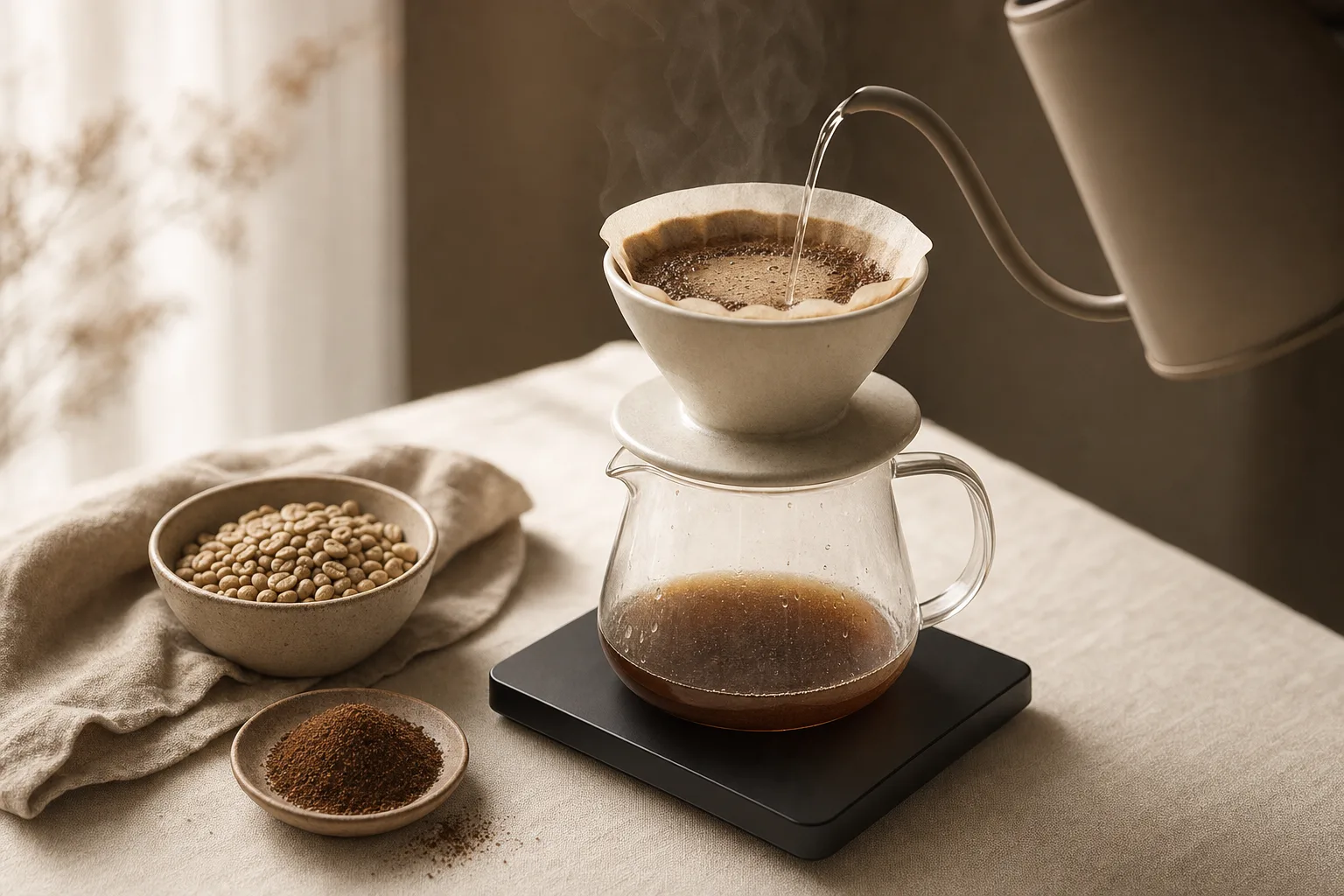
Add the remaining water in controlled pulses, keeping the bed wet without flooding the brewer. A thin, steady stream from a temperature-controlled gooseneck kettle makes hot-water control and even pouring easier. Finish at 320g total water.
Step 4: Let it drain, then taste before changing anything
Expect the last drips around 2:45–3:30. Coffee Bros.’ pour-over recipe likewise treats ratio and deliberate pouring as inputs to a clear cup. Taste once it is warm, not scalding, and write down one change for the next brew.
What should you avoid changing first?
Do not change dose, ratio, grind, temperature, and pouring all at once. A light roast can taste lively or aggressively sour, and changing everything turns the next cup into a guessing game instead of a useful comparison.
- Adding coffee to fix sourness: Keep the 20g dose and address extraction first.
- Using cooler water by habit: Kimbo Coffee USA specifically points light-roast brewers toward hotter water.
- Letting the water level crash between pours: Keep a gentle, steady rhythm so the next brew is comparable to the last.
How do you fix a sour, weak, or bitter light-roast pour over?
Match the adjustment to what you taste: change ratio for strength, and change grind, heat, or pouring for extraction. If a cup is sour, begin with extraction rather than immediately adding coffee; Kimbo Coffee USA’s hotter-water guidance offers one useful starting adjustment.
Sour or thin, with a fast drawdown
Grind a little finer, use water nearer 96°C / 205°F, or pour slower and steadier. Change one thing, then brew again. A burr grinder makes these small steps repeatable; see our pour-over grinder picks if your current grinder cannot make fine adjustments.
Weak but otherwise balanced
Use 20g coffee to 300g water, a 1:15 ratio. You are making the drink more concentrated, not trying to pull more flavor out of the grounds. Subterra Coffee’s published 1:15 recipe is a sensible reference point here.
Too intense but sweet and balanced
Use 20g coffee to 340g water, a 1:17 ratio. Keep the grind and water temperature the same first. If the cup tastes dry and bitter rather than simply strong, make a small grind adjustment instead of diluting blindly.
Frequently asked questions
What is the best pour over ratio for light roast coffee?
Start with 1:16: 20g of light-roast coffee to 320g water. It gives a clear, balanced starting cup without making a light roast taste thin. Kimbo Coffee USA places light-roast recipes in a 1:15–1:17 range, so move only after tasting your first cup.
Should I use more coffee for a light roast?
Not when the cup tastes sour. Address extraction first by grinding finer, using hotter water, or pouring more steadily. Use more coffee relative to water—such as 20g to 300g water—only when the cup is balanced but simply too weak.
What water temperature is best for light-roast pour over?
Use 93–96°C, or 199–205°F, as a practical starting range. Kimbo Coffee USA recommends hotter water for light roasts; this is a useful starting point when a light roast tastes sharp or lacks sweetness.
How long should a 20g light-roast pour over take?
Aim for about 2:45–3:30 from first pour to the last drips. Treat that as a diagnostic window, not a scorecard: if a fast brew also tastes sour or thin, try a slightly finer grind; if a slow brew tastes harsh, try slightly coarser.
Can I use a 1:17 ratio for light-roast coffee?
Yes. A 1:17 recipe is 20g coffee to 340g water and makes a less intense cup when the flavor is already well extracted. Subterra Coffee notes that 1:16, 1:17, and 1:18 can all work, alongside its published 1:15 starting recipe.