 Coffee Gear Picks
Best Pour Over Recipe Origami (2026)
The best pour over recipe Origami starting point is 20g coffee, 320g water, a conical paper filter, and a 2:45–3:30 total brew time. Top pick: use this 1:16 recipe first because it gives you a clean, balanced cup without juggling five changes at once.
- Coffee
- 20g
- Water
- 320g
- Ratio
- 1:16
- Water temperature
- 93–96°C / 199–205°F
- Grind
- Medium-fine, then adjust by taste and drawdown
- Filter
- Conical/V60-style paper for the primary method
- Bloom
- 60g for 40 seconds
- Pours
- To 160g, 240g, then 320g
- Total brew time
- About 2:45–3:30
Origami Pour-Over Recipe at a Glance
A repeatable 20g recipe for a clean, balanced cup
- Heat 320g+ water
- Rinse a conical paper filter
- Warm the server
- Weigh 20g coffee
- Grind medium-fine
- Level the bed
- Bloom with 60g
- Pour to 160g, 240g, then 320g
- Let the bed settle
- Aim for 2:45–3:30 total time
- Swirl the server
- Change one thing next brew
A steady Origami starting recipe you can repeat, taste, and adjust without chasing random fixes.
What is the best Origami pour-over recipe to start with?
Start with 20g coffee, 320g water, water at 93–96°C, and a medium-fine grind. Bloom with 60g for 40 seconds, then pour in stages to 160g, 240g, and 320g. Expect the brew to finish around 2:45–3:30, then adjust by taste.
This recipe takes a practical middle path between published Origami guides. Rogue Wave Coffee documents a 60g bloom and staged-pour approach, while Equator Coffees recommends 1:17 for a more delicate, clean cup. Here, 1:16 is a useful first dial: balanced enough to assess clearly before you make an adjustment.
What equipment do you need for this Origami recipe?
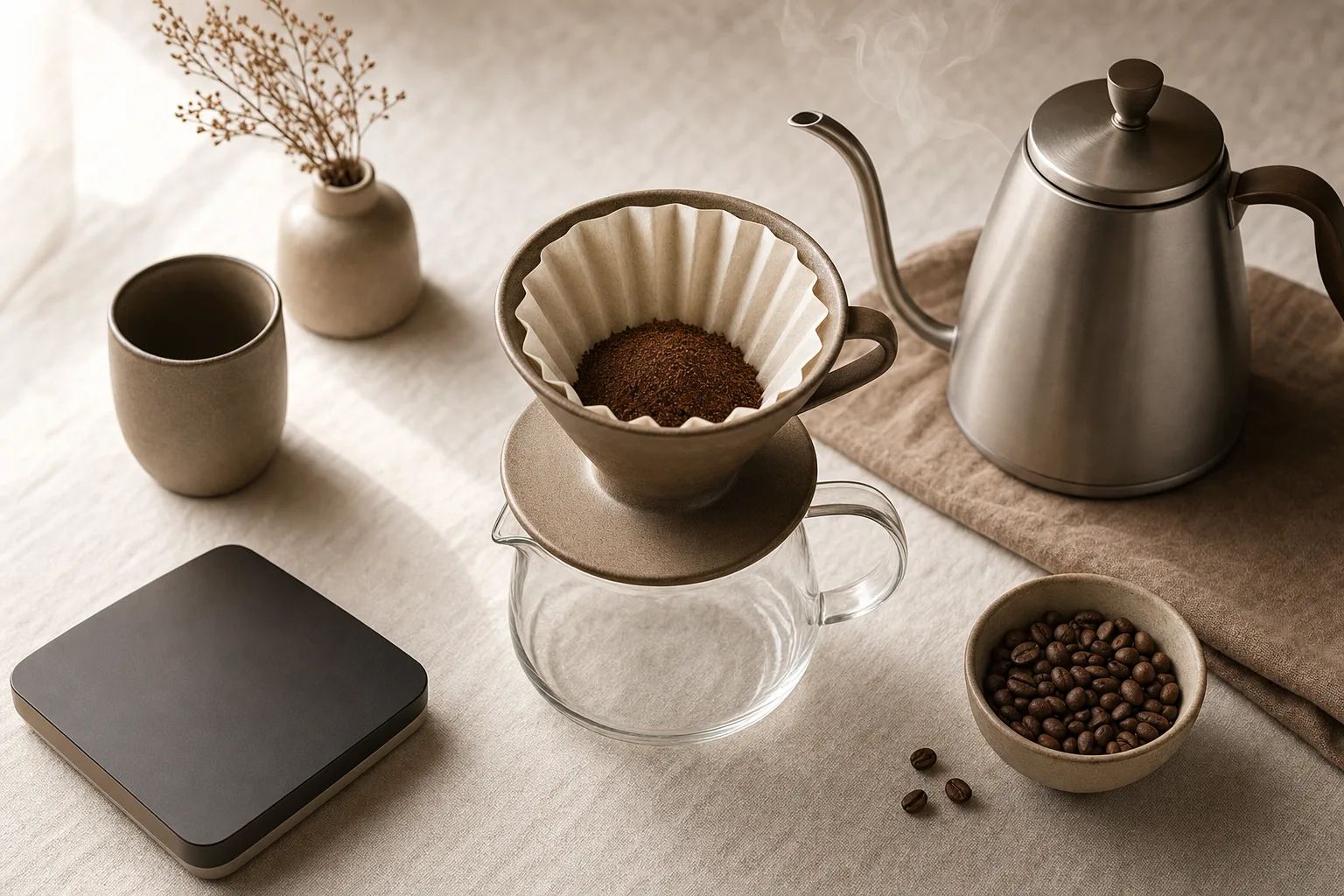
You need an Origami dripper, a conical paper filter, a burr grinder, a gooseneck kettle, a scale with a timer, and a mug or server. The Origami is one style of manual brewer; if you are still choosing one, see our pour-over coffee maker picks.
- Origami dripper: Use the matching holder and set it level before brewing.
- Conical paper filter: This recipe uses V60-style paper because it is easy to repeat.
- Burr grinder: Start medium-fine and change the setting in small increments.
- Gooseneck kettle: Controlled pouring helps keep the bed even; see our gooseneck-kettle recommendations.
- Scale with timer: A recipe in grams needs a coffee scale built for pour-over timing and dosing.
Perfect Daily Grind notes that the Origami has 20 ribs, which leave space behind conical paper. Slow Pour Supply also lists compatibility with conical and wave-style filters, and encourages exploring filter styles.
How do you brew this Origami recipe step by step?
Brew it in six moves: heat and rinse, weigh and grind, bloom, pour to 160g, pour to 240g and 320g, then drain and taste. Keep the first brew deliberately consistent. A repeatable baseline makes the next adjustment meaningful.
Step 1: Heat water and rinse the filter
Heat more than 320g of water to 93–96°C / 199–205°F. Put a conical paper filter in the Origami, rinse it well, and dump the rinse water. This warms the dripper and removes papery flavor before coffee hits the bed.
Step 2: Weigh 20g and grind medium-fine
Weigh 20g of coffee, then grind medium-fine. Use a burr grinder if you can, because it gives you more even particles than a blade grinder; if you are upgrading, start with our pour-over grinder guide. Add the grounds and gently shake the dripper to level the bed.
Step 3: Bloom with 60g for 40 seconds
Start your timer and pour 60g of water over the coffee, aiming to wet every dry patch. The bed should look glossy, not flooded. Wait until 0:40. Blooming gives trapped gas time to escape so the following pours can move through the coffee more evenly.
Step 4: Pour to 160g, then let it settle
From 0:40, pour in gentle circles until the scale reads 160g. Keep the kettle spout low and steady. If the coffee bed climbs high up the filter, pause sooner. You want steady movement without driving water forcefully into the grounds.
Step 5: Pour to 240g, then finish at 320g
When the water level drops a little, pour to 240g. Let it settle again, then finish at 320g. Try to finish pouring around 1:45–2:10. A small swirl after the final pour can flatten the bed, but skip it if it consistently makes your brew stall.
Step 6: Let it drain, swirl the server, and taste
Let the last water drain through and aim for a total time near 2:45–3:30. Swirl the server before sipping so the cup tastes even from top to bottom. If it is close, change only one thing next time: grind, ratio, temperature, or pour speed.
What common mistakes make Origami pour-over taste worse?
The usual mistakes are changing too many things at once, pouring too hard, ignoring filter fit, and chasing brew time instead of flavor. The Origami responds best to a steady, repeatable routine. Treat the first recipe as a baseline, not a fixed rule.
- Changing grind and ratio together — If the next cup tastes different, you will not know which change helped.
- Pouring from too high — A tall, splashy pour can disturb the bed and make the cup taste uneven.
- Skipping the rinse — Dry paper can add a papery edge, especially in a delicate coffee.
- Using wave filters without resetting expectations — They can work, but flow and bed shape may change. Dial them in separately.
How do you fix an Origami brew that tastes off?
Fix flavor by matching the symptom to one small change. Sour cups usually need finer grinding or hotter water. Bitter cups usually need a coarser grind or gentler pouring. Weak coffee may need a tighter ratio; if ratios are new to you, read our coffee brewing ratio guide.
If the cup tastes sour or thin
Grind one or two clicks finer and keep the same 20g dose and 320g water. If your water was below 93°C, raise it a little. Sour coffee often comes across as sharp without enough sweetness.
If the cup tastes bitter or dry
Grind a touch coarser, pour more gently, or lower the temperature toward 93°C. If the brew also ran long, the grind is the first thing to fix.
If the cup tastes weak but clean
Keep the grind the same and try 21g coffee to 320g water, or reduce water to 300g with the same 20g dose. Do not make every adjustment at once. Weak but clean usually means the cup needs more concentration rather than a completely different technique.
Frequently asked questions
What grind size should I use for an Origami dripper?
Start medium-fine, close to table salt, then adjust by taste and drain time. If the cup is sharp and drains fast, go finer. If it is dry, harsh, or drags past 3:30, go coarser next time.
Can I use wave filters instead of V60-style filters in the Origami?
Yes, the Origami can use conical and wave-style papers with the right fit. For this recipe, use a conical paper first because the pour targets are easier to repeat. Once it tastes good, explore wave filters for a different flow and cup feel.
Is 1:16 the only good ratio for Origami pour-over?
No. A 1:16 ratio is just a friendly starting point: 20g coffee to 320g water. If you want a lighter, more tea-like cup, try 1:17. If your coffee tastes thin, tighten the ratio before changing everything else.
Why does my Origami brew drain too fast?
Fast draining usually means the grind is too coarse, the pour is too aggressive, or the filter is not seated well. Grind a click or two finer, pour from a lower height, and make sure the rinsed paper hugs the dripper evenly.
What total brew time should I aim for with this recipe?
Aim for about 2:45 to 3:30 from the first bloom pour to the final drip. Do not worship the timer, though. A tasty cup at 2:40 beats a bitter cup forced to hit 3:15.