 Coffee Gear Picks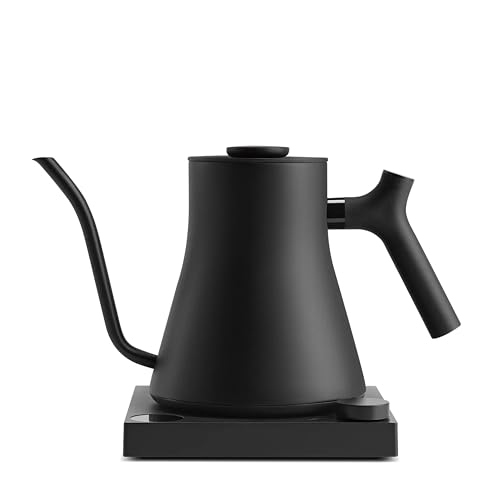
Gooseneck Kettle How to Use: Pour Over Guide (2026)
A gooseneck kettle helps you pour a thin, steady stream so the coffee bed gets wet evenly instead of getting blasted into a muddy crater. Start low, tilt gently, and use the scale to guide the total water, not the clock alone.
A steady first gooseneck-kettle routine
Five small moves for an evenly wet coffee bed
Step 1 Heat and set up
- Fill below the max mark
- Heat water
- Set or check temperature
Step 2 Rinse and dose
- Rinse filter
- Add coffee
- Tare scale
Step 3 Bloom the grounds
- Wet grounds evenly
- Wait 30–45 seconds
Step 4 Pour in controlled pulses
- Pour center-outward
- Keep a gentle stream
- Return to center
Step 5 Drain and reset
- Let coffee drain
- Discard grounds
- Empty kettle
Result
An evenly saturated coffee bed and a repeatable pour-over routine.
How do you use a gooseneck kettle for pour over?
Use a relaxed grip and a gentle tilt to send a thin stream over all the grounds, beginning near the center and moving outward without scraping the filter. A gooseneck gives you control over where water lands and how quickly it arrives, making a repeatable routine easier.
For a simple first recipe, use 20 g coffee and 320 g water. Bloom with about 40–60 g, wait 30–45 seconds, then add the rest in two or three calm pulses. Klatch Coffee identifies placement and flow control as the narrow spout’s main advantage.
What do you need before you start?
You need hot water, a dripper, a rinsed filter, coffee, and a scale; the scale is what keeps a good cup from becoming a lucky one. Timing can help, but water weight tells you exactly what went into the brewer.
Set these out first
- A gooseneck kettle filled below its maximum mark
- A dripper, paper filter, mug or server
- Fresh coffee and a grind setting appropriate to your dripper
- A scale and a starting recipe, such as 20 g coffee to 320 g water
If you are still choosing gear, our pour-over coffee maker picks can help you match a dripper to your routine. Pick up a coffee scale for pour-over recipes before chasing fancy pour patterns—the total water weight is the repeatable part.
Our Top Picks
What is the easiest gooseneck-kettle pouring method?
The easiest method is a short bloom followed by two or three slow pulses, keeping the spout low and the stream gentle. It is forgiving because you are aiming for even wetting, not drawing perfect circles over the grounds.
1. Heat water and settle your grip
Fill only to the marked maximum or below it, then heat the water. The Fellow Stagg EKG Pro Amazon listing specifies a 0.9 L capacity and a maximum-fill warning; following your own kettle’s fill mark gives you room to pour without sloshing hot water.
Start around 195–205°F. For technique, Podium Coffee Club suggests a relaxed grip, gentle tilt, and a starting spout height of about 1–2 inches above the bed. Treat that height as a starting line, not a law. If the kettle is new, Death Wish Coffee recommends washing a stovetop model before first use and avoiding abrasive cleaners.
2. Rinse the filter, dose coffee, and tare the scale
Set the dripper over your mug or server, rinse the paper filter with hot water, and discard that rinse water. Add 20 g of coffee, give the brewer one small shake to level the bed, and tare the scale to zero.
A level bed gives water fewer easy escape routes down one side. If your dripper is new to you, begin with the maker’s suggested grind, then adjust later only if the cup tells you to.
3. Bloom until every dry patch disappears
Pour 40–60 g of water slowly over the grounds, using a small center-outward spiral, then stop for 30–45 seconds. You want the coffee to puff, with no pale dry islands around the edge.
If water races through before you finish blooming, do not panic. You are learning how your grind and dripper behave; keep the next brew the same and make one small grind change afterward.
4. Add water in calm, controlled pulses
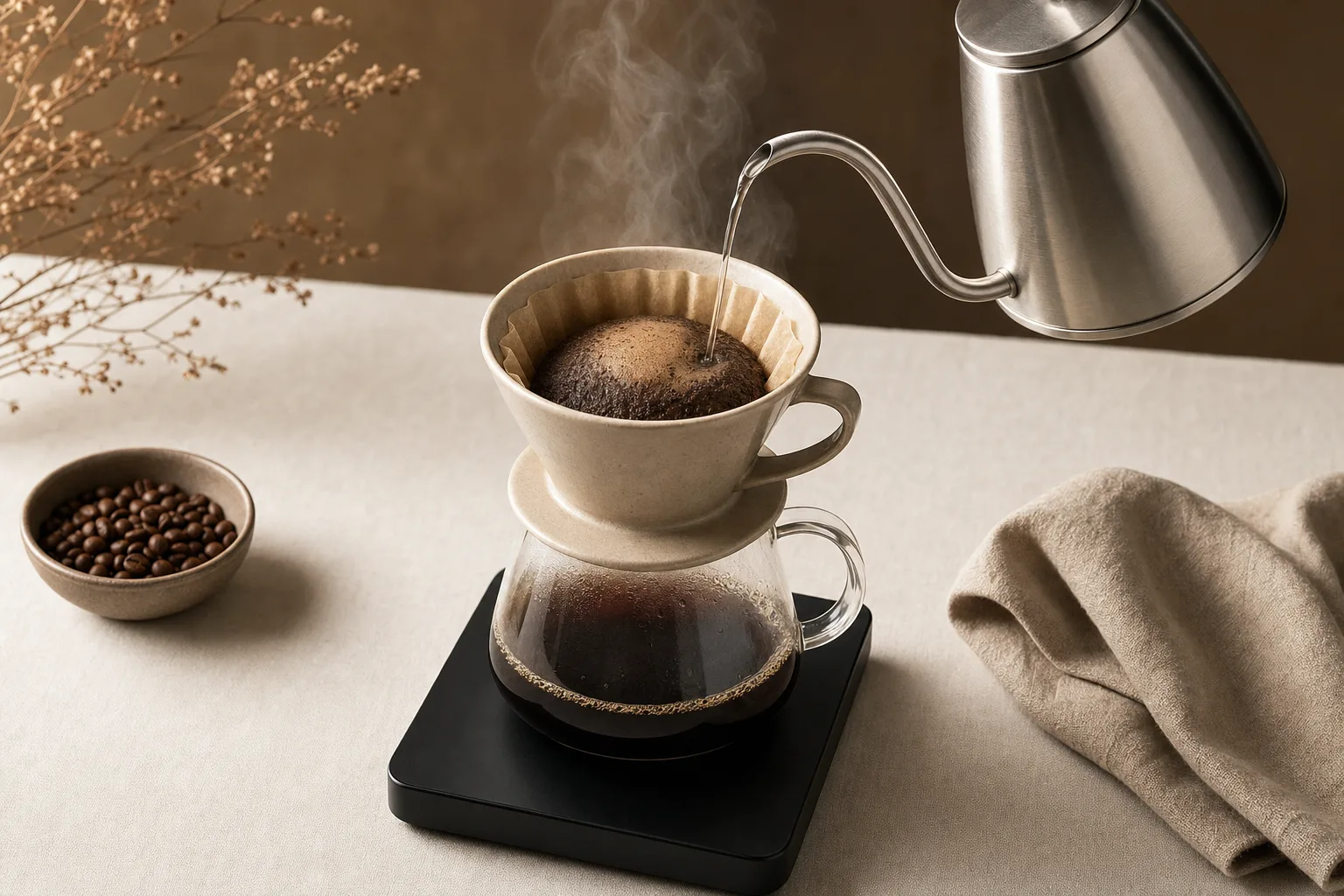
Pour from the center outward in slow circles, then return to the center before you reach the paper wall. Keep the stream gentle and continuous until the scale reaches about 180 g, pause briefly, then repeat until you reach 320 g.
Do not whip your wrist around. A fast, high stream can punch holes in the bed and send water down the sides. The long, narrow spout is there to let you steer, not to make the pour look dramatic.
5. Let it drain, taste, and reset
Let the final water drain through without another swirl unless your brewer’s instructions call for one. When drawdown slows to drips, serve the coffee and note whether it tastes bright, thin, bitter, or balanced.
Once the kettle is cool enough to handle, empty leftover water and let it dry. That simple habit limits standing water; descale later if mineral film appears inside.
If you want a kettle that makes temperature and flow control less fiddly, see our gooseneck kettle picks for pour over. The featured Fellow is an optional tool because its Amazon listing includes to-the-degree control and an integrated brew timer.
What mistakes make a gooseneck pour uneven?
The usual culprits are pouring too high, rushing the stream, and washing water down the paper filter instead of through the coffee. Each creates an easy shortcut, leaving part of the bed under-brewed and another part harsh.
- Spout held too high: Lower it until the stream lands softly. Splashing is your cue that it is too high or too fast.
- Pouring on the filter wall: Keep most of the water over the coffee bed; water on bare paper bypasses the grounds.
- Changing everything at once: Keep the recipe and pour pattern steady. Change the grind or water temperature next time, not both.
How do you fix a pour over that tastes off?
Fix the symptom with one small next move, then brew the same recipe again. Sour and weak cups often need more contact with the coffee, while bitter and dry cups often need less; change one variable so you can tell what helped.
Weak or sour coffee
Grind a little finer or slow your stream slightly so water spends longer with the grounds. Also check the total water: using a coffee scale for pour-over recipes stops an accidental extra splash from turning a rich cup watery.
Bitter, dry coffee
Grind a touch coarser, pour a little more gently, or start a few degrees cooler. Keep your coffee dose and final water weight unchanged while you make that one adjustment.
A deep crater or muddy, lopsided bed
Lower the spout and reduce the tilt. Start closer to the center, use smaller circles, and avoid chasing grounds around the edge with a heavy stream.
Frequently asked questions
Do you need a gooseneck kettle for pour over coffee?
No. You can make pour over with another kettle, but a gooseneck’s narrow spout makes the stream and where it lands much easier to repeat than a wide-spout kettle. Think of it as a helpful steering wheel, not a requirement for good coffee.
How high should you hold a gooseneck kettle?
Start roughly 1–2 inches above the coffee bed, then adjust from there. Podium Coffee Club gives that range as a technique starting point; lower the spout if the stream splashes or digs a crater in the grounds.
What temperature should water be in a gooseneck kettle for coffee?
Use 195–205°F as a practical starting range. Lighter and darker roasts can respond differently, so keep your dose and pour steady, then change one thing at a time if the cup tastes off.
Can you use a gooseneck kettle on a stove?
Only a stovetop-rated model belongs on a burner. An electric-base kettle does not; follow the maker’s directions for your exact kettle and its recommended heat source.
How do you clean a gooseneck kettle?
Empty and dry it after brewing, then wash it only as the maker permits. Avoid abrasive cleaners, and descale when you see mineral film or white buildup inside the kettle.