 Coffee Gear Picks
Grind Size for Pour Over: Start Here (2026)
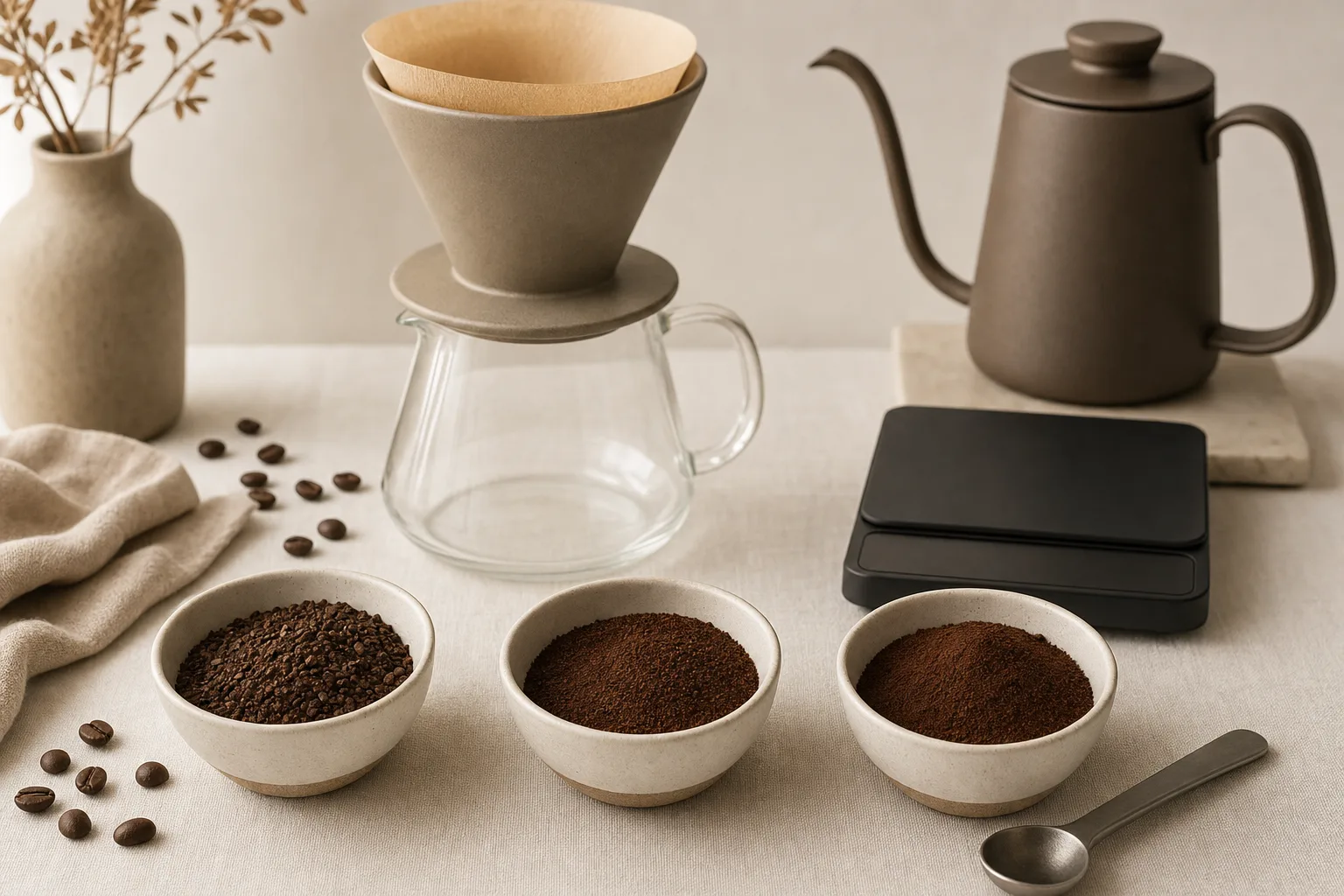
The best grind size for pour over is medium-fine: finer than regular drip, coarser than espresso, and close to table salt. Start there, brew one cup, then let taste and drawdown tell you where to move next.
Dial In Pour-Over Grind Size
Start with one sane setting, then adjust by taste and drawdown
- Start medium-fine
- Keep recipe simple
- Use the same beans
- Weigh coffee
- Weigh water
- Start your timer
- Bloom first
- Pour steadily
- Watch the drawdown
- Taste the cup
- Move one click
- Brew again
A pour-over grind that tastes balanced instead of sour, bitter, weak, or muddy.
Quick answer
Start with a medium-fine grind for pour over, then adjust one notch at a time. Stumptown Coffee Roasters recommends medium-fine for most pour-over methods and suggests going slightly finer when coffee tastes sour or weak.
Pour over is a gravity brew: water falls through the coffee bed instead of being pushed by pressure. Basic Barista explains that this makes grind size closely tied to flow, so small changes can alter both drawdown and what you taste in the cup.
- Baseline grind: medium-fine, like table salt.
- Baseline recipe: 20g coffee and 320g water, or any ratio you can repeat.
- Baseline target: a steady drawdown and a cup that does not taste sharp or ashy.
What you'll need
You need repeatable tools more than fancy tools: an adjustable burr grinder, a scale, a timer, beans, filtered water, and your brewer. An adjustable burr grinder makes changes repeatable; if yours jumps around too much, see our pour-over grinder picks.
- Adjustable burr grinder: burrs let you make deliberate setting changes; blade grinders produce irregular particles, as Stumptown notes.
- Scale: keep coffee and water fixed with a coffee scale for repeatable brews.
- Timer: use drawdown time as a clue, not a strict scorecard.
- Beans and filtered water: use the same coffee and water while you dial in so the comparison stays useful.
How to dial in grind size for pour over
Dial in pour-over grind by holding the recipe steady, brewing once, tasting honestly, and changing only the grind. Do not change dose, water, temperature, and pouring style all at once. That turns breakfast into a guessing game, and nobody needs that before coffee.
Step 1: Set a medium-fine baseline
Set your grinder so the coffee looks like table salt: small, even grains, not powdery flour and not chunky beach sand. If your grinder has numbers, ignore anyone else’s exact click count. Their burrs, beans, and brewer are not sitting on your counter.
Step 2: Measure the same recipe every time
Pick one recipe and keep it locked for a few brews. A 20g coffee to 320g water setup is easy math and gives you a clear baseline. Start your timer when water first touches the grounds.
Step 3: Brew and observe the drawdown
Pour steadily and watch how the bed drains. If water rushes through like it found a trap door, the grind may be too coarse. If it sits there sulking and the filter clogs, the grind may be too fine or dusty.
Step 4: Adjust one increment at a time
If the cup tastes sour, sharp, or weak, go one step finer. If it tastes bitter, dry, smoky, or muddy, go one step coarser. Brew again with the same recipe. Stop when the cup tastes balanced to you.
Common mistakes
The biggest mistake is changing too many things at once. If you grind finer, pour harder, use hotter water, and switch beans, you will not know what helped. Keep the morning boring until the cup tastes good, then play around.
- Chasing exact grinder clicks — use other people’s settings as rough clues, not gospel.
- Ignoring fines — powdery dust can clog filters and make the cup taste muddy.
- Changing recipe and grind together — fix one thing, brew again, then judge.
- Calling time the winner — taste matters more than hitting a perfect stopwatch number.
Troubleshooting
Troubleshoot by symptom first: sour usually points finer, bitter usually points coarser, and muddy often points to too many fines or a clogged filter. Coffee ad Astra explains that very fine grinding can increase clumping, filter clogging, and muddier cups.
Sour, sharp, or weak
Move one step finer and brew the same recipe again. If it still tastes thin, check that you used enough coffee and did not pour so fast that the water sprinted through the bed.
Bitter, dry, or harsh
Move one step coarser. If the brew also took much longer than usual, the filter may have clogged from fines.
Muddy and slow
Go coarser and pour more gently. If the bed looks silty, like wet cocoa powder, your grinder may be making too many fines for that brewer and filter combo.
Good flavor, but inconsistent
Keep the grind where it is and tighten up the rest: same dose, same water amount, same pour pattern. Inconsistent cups often come from a wandering recipe, not a bad grind setting.
How brewer shape and pouring change the grind
Brewer shape changes how fast water moves, so your grind may need a small shift between a cone, flat-bottom brewer, and thick-filter brewer. Cone and flat-bottom geometry changes flow; if you are shopping, read our guide to choosing a pour-over coffee maker.
As a loose starting point, V60-style cone brewers often like medium-fine, flat-bottom brewers can sit around medium-fine to medium, and Chemex-style thick filters often need slightly coarser grounds. Treat those as starting lanes, not commandments carved into a café wall.
Your pour matters too. A hard pour can disturb the bed and change drawdown, while a steadier stream is easier to repeat. If your kettle splashes like a garden hose, consider a gooseneck kettle for more controlled pours.
Frequently asked questions
What grind size is best for pour over?
Start medium-fine, close to table salt. Brew one cup, taste it, then adjust one notch at a time instead of chasing a universal grinder number.
Is pour-over grind finer than drip coffee?
Usually, yes. Pour over often starts a little finer than basic drip coffee because you control the pour and brew smaller batches, but the brewer and filter still matter.
Should V60 be finer than Chemex?
Most people start V60 finer than Chemex. Chemex filters are thicker and the brewer drains more slowly, so going too fine can make the cup drag and taste heavy.
Why does my pour over taste sour?
A sour pour over often needs a slightly finer grind, a steadier pour, or enough brew time. Change the grind first while keeping dose and water the same.
Why does my pour over taste bitter?
A bitter pour over often means the grind is too fine or the brew ran too long. Move coarser one step and keep the rest of the recipe fixed.
How do I know if my grind is too fine?
The bed drains slowly, the filter may clog, and the cup can taste dry, harsh, or muddy. If that happens, go coarser one increment and compare.