 Coffee Gear Picks
How to Adjust Coffee Grinder Settings (2026)
Grinder numbers are not universal. This guide shows you how to adjust coffee grinder settings with a simple loop: change a little, brew the same recipe, time it, taste it, and write down what worked.
How to Adjust Coffee Grinder Settings
A five-step loop for finding your grinder’s sweet spot
- Pick a brew-method starting point
- Set one repeatable recipe
- Move one small click or mark
- Run the grinder only if your manual says to
- Keep dose and water the same
- Brew as usual
- Record brew or shot time
- Note fast, slow, or normal flow
- Taste before changing again
- Save the setting when it works
A repeatable grinder setting you can return to after changing beans or brew methods
What is the quickest way to adjust coffee grinder settings?
Change one thing at a time: set a starting point, keep your dose and recipe the same, brew, time it, taste it, then move the grinder a small notch. Settings are relative, so your grinder’s “10” may be another grinder’s “24.” The cup, not the number, is the judge.
Bancroft Roasters gives a useful first read: when a brew is running markedly long, move coarser; when it is running markedly short, move finer. Taste tells you whether that adjustment actually helped.
What do you need before changing grinder settings?
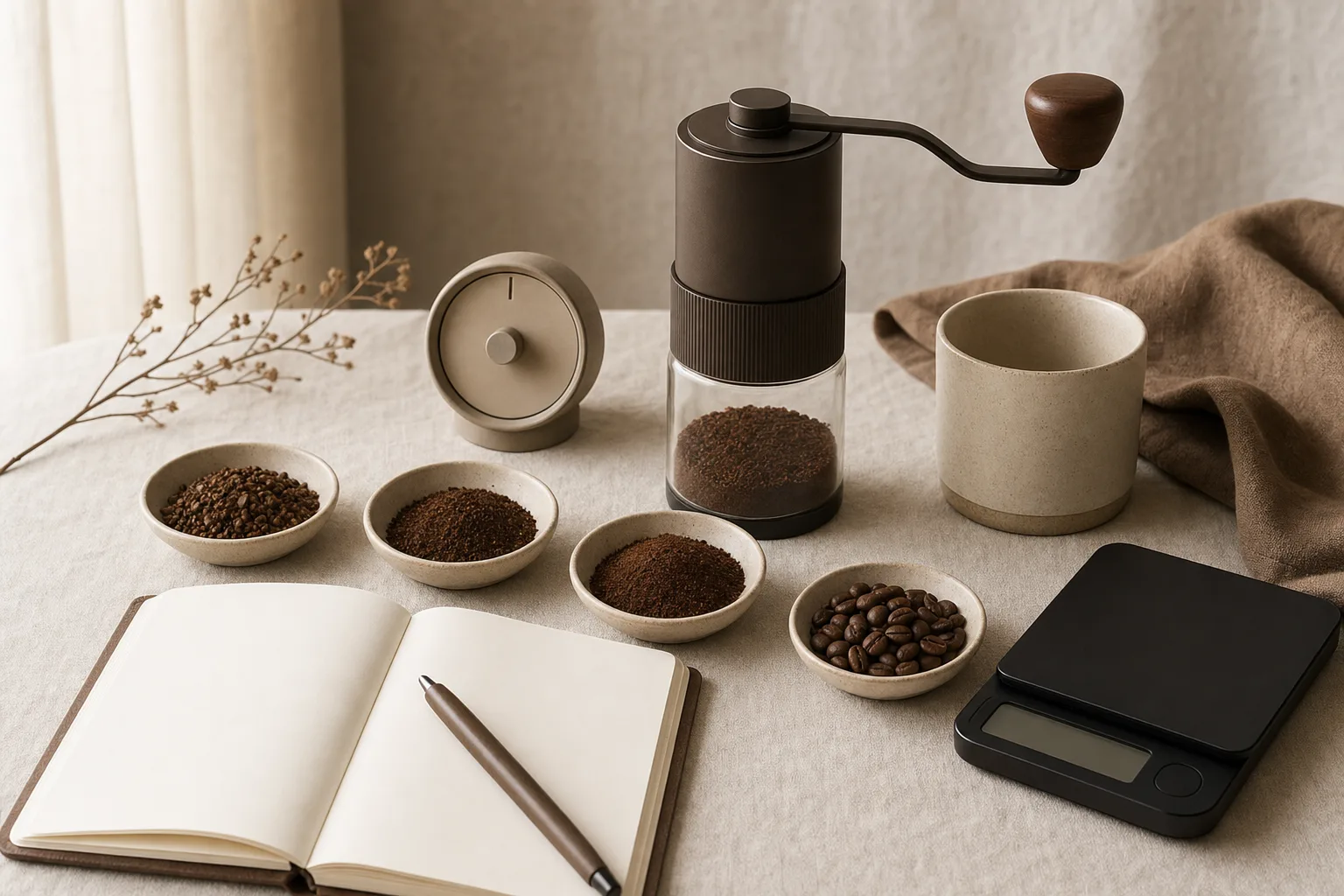
You need fresh beans, an adjustable grinder, your brewer, a timer, a scale, and somewhere to write settings down. The scale matters because a changing dose can mimic a grind problem. Keep the recipe steady so the grinder is the only variable you are changing.
Before you adjust
- Coffee beans you plan to keep using for a few brews
- An electric burr grinder or adjustable manual grinder
- Your normal brewer: espresso machine, drip brewer, pour over, or French press
- Timer for shot time or total brew time
- Scale for the same coffee dose each round
- Notes app or notebook for settings and taste notes
A consistent dose is what lets you diagnose grind changes instead of guessing. If your scoop changes every brew, use our coffee scale picks for espresso and pour over to find a scale that makes this part easy.
How do you adjust coffee grinder settings step by step?
Adjust grinder settings by starting in the right neighborhood for your brew method, then moving in small steps based on time and taste. Keep the coffee dose, water amount, temperature, and brew recipe steady. Write down each setting so a good cup is easy to find again.
Step 1: Start near the right texture
Set the grinder by texture before worrying about dial numbers. Espresso is fine, drip and pour over generally begin around medium, and French press begins coarser. These are starting neighborhoods, not universal settings: burr geometry and each manufacturer’s scale change what any number means.
Step 2: Move the setting a little, not a lot
Make one small click, notch, or tiny dial movement at a time. Espresso Parts recommends small changes for espresso, where a large adjustment can quickly shift a shot from slow flow to a fast gush.
If beans are loaded in the burrs, follow your grinder manual. Espresso Parts notes that some grinders are adjusted while running when beans are in the burrs, but that is an operational instruction for compatible machines, not a blanket rule for every grinder.
Step 3: Brew without changing the recipe
Brew the same dose with the same water amount and method. Do not switch beans, change water temperature, and alter your pouring pattern in the same round. Changing several variables at once makes it impossible to tell whether the grind change helped.
Step 4: Time it and taste it
Write down the grind setting, dose, brew time, and one plain taste note: sour, sweet, bitter, thin, dry, or balanced. Alexander Mills recommends using taste to locate the fine-to-astringent boundary, then backing off slightly rather than simply chasing a number.
Step 5: Save the setting that tastes best
When the cup tastes balanced, save the grinder number or reference mark with the bean name and recipe. Include the dose and brew time. A saved setting is a starting point for the next bag, not a guarantee that every coffee will need the same adjustment.
What mistakes make grinder changes confusing?
The biggest mistake is changing several things at once, then blaming the grinder. A new dose, different bean, hotter water, and new grind setting all pull the cup in different directions. Keep the recipe deliberately boring while you dial in; that makes the useful signal easier to see.
- Chasing someone else’s number — grinder scales differ by brand, burr wear, and assembly. Use published numbers only as rough clues.
- Skipping notes — a good cup you cannot repeat is difficult to learn from.
- Jumping too far — large moves make it harder to find the tasty middle.
- Ignoring old beans — stale coffee can taste flat regardless of careful burr adjustment.
When should you grind finer or coarser?
Grind finer when coffee runs too fast or tastes thin and sour. Grind coarser when it runs too slowly or tastes harsh and dry. Brew time gives you the first clue, but taste confirms the move. If the signals disagree, make a smaller adjustment and prioritize the cup.
Finer or coarser?
Match the symptom to the next small move
- Move one small step finer
- Keep the dose and recipe the same
- Brew again and compare
- Move one small step coarser
- Watch for easier flow
- Stop before the cup turns weak
- Back off slightly coarser
- Look for more sweetness
- Save the better setting
Make one move, brew again, then decide. Do not stack three fixes at once.
Espresso stalls or no grounds come out
If an espresso grinder stops dispensing, the grind may be too fine, the chute may be packed, or beans may be wedged near the burrs. Clive Coffee recommends checking for a blockage and moving coarser as appropriate; consult your grinder manual before clearing or disassembling any part.
How should settings change by brew method?
Use brew-method ranges as texture clues, not exact numbers. Espresso starts fine, drip and pour over around medium, and French press coarse. Your grinder’s dial may count up, down, click, or slide, so begin with the brew method, then let flow and taste establish the useful setting.
Espresso
Espresso needs fine, controllable adjustment because the coffee puck creates pressure. Too coarse and the shot can gush pale and sour; too fine and flow can slow dramatically. If your grinder cannot make small moves in this range, see our burr grinder picks for espresso.
Drip and pour over
Start around medium, then use total brew time as a first clue. A noticeably fast drawdown can call for a finer adjustment; a very slow drawdown can call for a coarser one. Keep your filter, dose, and pouring routine consistent while you compare brews.
French press
Start coarse to limit sediment passing through the mesh filter. If the coffee tastes hollow, try a little finer next time. If it is gritty or harsh, go coarser; if you are shopping for a grinder with a useful coarse range, see grinders that suit French press brewing.
Frequently asked questions
Which way do I turn my coffee grinder for finer grounds?
It depends on the grinder. Some dials go finer clockwise, others go finer counterclockwise, and manual grinders can feel backward at first. Check the arrow or manual, then confirm by grinding a small amount and comparing the texture.
Should I adjust my grinder while it is running?
Only if your grinder manual allows it. With beans in the burrs, some espresso-grinder makers and barista guides advise adjusting while the grinder runs to prevent beans binding between burrs. That operational advice is not universal, so follow your model’s instructions.
Why did my grinder setting change when I bought new beans?
Beans vary in roast level, age, and density, which can change resistance and flow. Keep your recipe steady, make one small grind adjustment, and taste again. A number that worked for one coffee is a useful reference, not a permanent setting.
What grind setting should I use for espresso?
Start at the fine end of your grinder’s usable range, then adjust by shot flow and flavor. If the shot chokes or runs painfully slowly, go a little coarser. If it races out thin and sour, go a little finer.
Can I use the same grinder setting for drip and pour over?
Sometimes, but do not assume it. Drip baskets, cone brewers, and flat-bottom pour overs drain at different speeds. Start around medium, then use brew time and taste to make a small finer or coarser adjustment.