 Coffee Gear Picks
How to Clean an Espresso Machine Delonghi (2026)
To clean a De'Longhi espresso machine, handle daily coffee and milk residue first, then descale only through the program for your exact model. The safe routine is simple: empty, rinse, flush, purge, wipe, and follow the manual when the descale prompt appears.
How to Clean a De'Longhi Espresso Machine
A safe daily routine first, then model-specific descaling when your machine asks for it
Step 1 Empty and rinse
- Remove puck and empty tray
- Rinse basket and portafilter
Step 2 Flush and wipe
- Rinse coffee path
- Wipe surfaces and drip area
Step 3 Purge milk parts
- Wipe and purge wand
- Run milk clean if your model has it
Step 4 Descale when prompted
- Use the correct program
- Rinse exactly as your manual says
Result
A cleaner coffee path, milk system, and water circuit without model-specific guesswork.
Quick answer
Clean coffee residue daily, clean milk parts after every milk drink, and descale only when your model tells you to or your manual says so. Coffee cleaning removes oils and grounds; descaling removes mineral deposits inside the water path. Mixing those jobs up is how machines get neglected.
De'Longhi's maintenance guide says regular care helps preserve brew quality. Its Dedica and Dedica Arte FAQ also points owners to De'Longhi descaler and notes that water hardness affects descale timing.
What you'll need
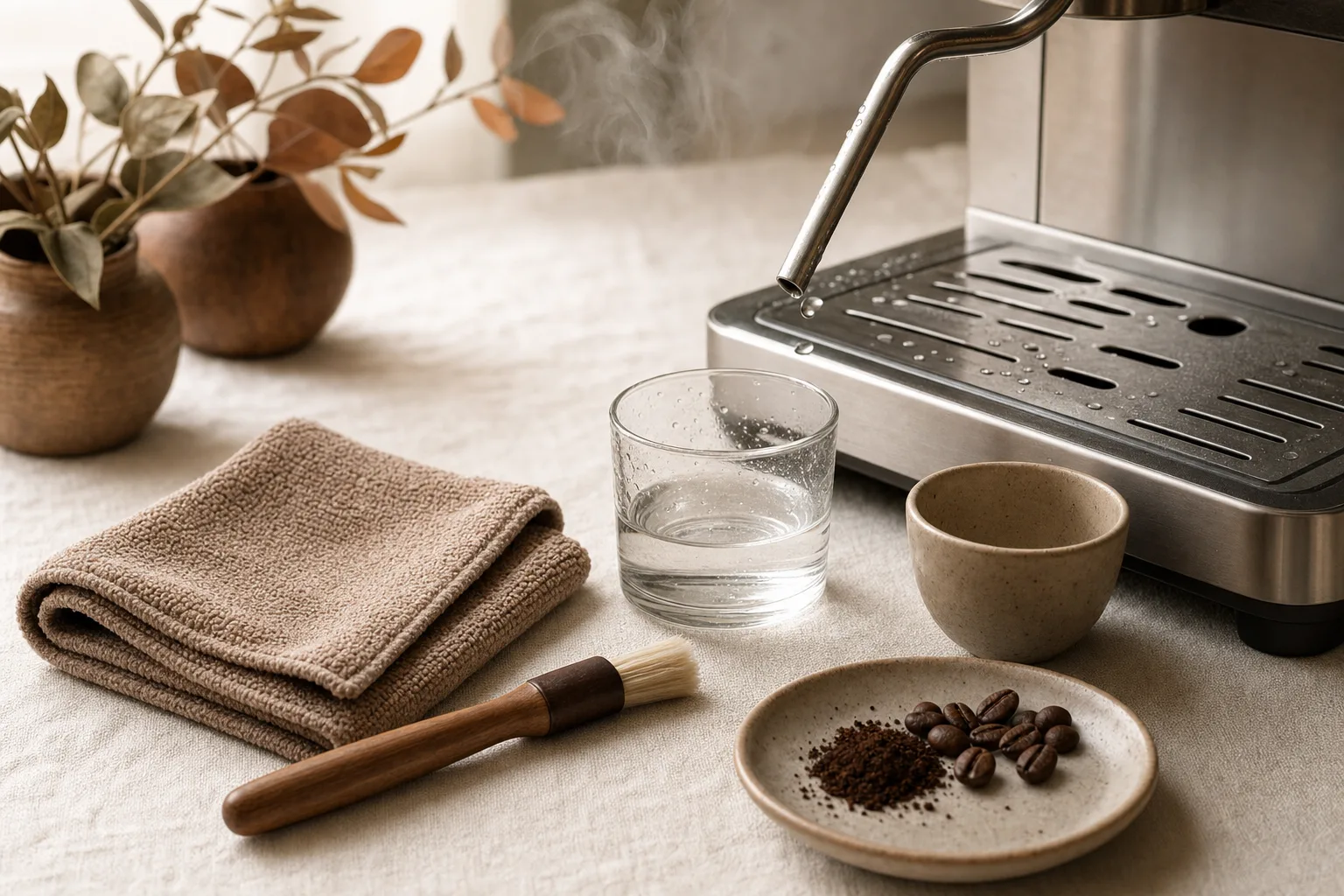
You need clean water, a soft cloth, a small soft brush, a catch container, and a descaler your De'Longhi manual allows. If your machine has a milk carafe or automatic milk circuit, a compatible milk-system cleaner can help remove milk film.
- Clean water for rinsing and refilling the tank
- Soft cloth for the exterior, tray, wand, and cup area
- Small soft brush for dry coffee grounds around baskets and edges
- Catch container for flushes, wand purges, and descale rinse water
- De'Longhi-compatible descaler for the programmed descale cycle
- Optional milk-system cleaner for carafes, frothers, and milk circuits
Do not open the casing, remove unspecified parts, or put pieces in the dishwasher unless your exact manual says so. De'Longhi's fully automatic cleaning FAQ directs owners to their model instructions for removable brewing units and cleaning programs.
Our Top Picks

Step-by-step: how to clean a De'Longhi espresso machine
Clean in this order: empty wet residue, rinse coffee parts, flush the coffee path, purge milk parts, then descale only through your model's cycle. It separates everyday cleanup from the machine's internal scale-removal program.
1. Empty and rinse the removable coffee parts
Remove the used puck or empty the grounds container. Empty the drip tray, then rinse the portafilter, filter basket, tray, and any removable parts your manual names. Wipe the cup platform and front panel before coffee oils dry on them.
On bean-to-cup models, remove and rinse the brew group only if your manual tells you to, and check which family yours belongs to in our De'Longhi round-up. Fully automatic machines have different internal parts and cleaning prompts from manual models such as the Dedica.
2. Flush and wipe the coffee path
Run a water-only flush or rinse cycle your model allows, with a cup or container under the spouts. For a manual portafilter machine, this clears loose grounds from the shower area. For a fully automatic machine, use the rinse routine shown in the manual.
Wipe around the group area with a soft cloth once it is cool enough to touch safely. Avoid sharp tools, which can damage a gasket or screen. Removable brew groups and dishwasher-safe trays are the features that decide how long this takes, and they are what mark out the easiest machines to keep clean.
3. Purge and clean the milk system
If you use a manual steam wand, wipe it with a damp cloth immediately after steaming, then purge briefly into a catch container. This removes milk before it dries in or around the tip.
If your machine has LatteCrema or another automatic milk setup, run the milk-clean program specified for that model. Automatic machines generally handle this themselves on a prompt, which is much of their appeal. Home Outlet Direct likewise distinguishes manual steam-wand care from automatic milk-system care; treat them as separate routines.
4. Descale when prompted, using the model-specific cycle
When the descale light or screen prompt appears, check the manual for your exact model. A Dedica-style machine, La Specialista, Magnifica, and Dinamica may not share the same button sequence. Follow the reservoir fill level, descaler dose, start command, pauses, and rinse steps exactly.
De'Longhi warns in its Dedica FAQ that unsuitable descaler or incorrect descaling may cause faults not covered by the guarantee. Use the approved descaler and complete the full cycle rather than substituting a generic shortcut.
Common mistakes
The common errors are treating every De'Longhi like the same machine, using an unsuitable cleaner, skipping milk cleanup, and ignoring the machine's own prompts. If the routine is putting you off the brand rather than the model, machines built for low maintenance ask for noticeably less. The manual is the authority for programmed cycles and removable parts.
Using one button sequence for every model
Do not copy a random forum sequence unless it matches your model number. De'Longhi model families vary substantially, so follow the instructions for your own machine.
Descaling with whatever is under the sink
Do not default to vinegar or generic acids unless your manual explicitly permits them. Use De'Longhi-compatible descaler and the correct rinse cycle.
Letting milk dry inside the wand or carafe
Milk residue can clog a wand or milk path and affect flavor. Purge the wand or run the milk-clean program immediately after use.
Troubleshooting
Match the symptom to the likely cause before replacing parts. Weak flow can involve scale or a clogged coffee outlet; milk odors point to milk residue; poor flavor may come from coffee or grinding rather than the machine.
Water flow is weak or the machine drips slowly
Check that the tank is seated, rinse the basket or spouts, and descale if the machine is prompting you. If flow or reliability problems persist after correct maintenance, compare your machine against our affordable espresso-machine picks before spending money on repairs.
Coffee tastes bitter, sour, or stale after cleaning
Cleanliness is only one piece. Stale grounds and grind inconsistency can be separate from machine cleanliness, so check the beans, dose, and a capable espresso burr grinder if the cup still tastes rough.
The descale light stays on
Run the rinse stage exactly as the manual describes. Many machines do not clear the descale warning until the full rinse volume and final confirmation step are complete.
Milk foam is thin or sputtery
Clean the wand tip or milk-carafe parts named in your manual. Dried milk in an air opening can reduce airflow and produce larger, weaker bubbles.
Frequently asked questions
Can I clean every De'Longhi espresso machine the same way?
No. The daily wipe-and-rinse routine is broadly safe, but programmed cleaning and descaling steps are model-specific. A Dedica, La Specialista, and Magnifica-style fully automatic machine can use different buttons, parts, and prompts.
How often should I descale a De'Longhi espresso machine?
Do not use one fixed calendar rule for every home. Water hardness, drink volume, filters, and your machine's prompt all matter. Follow your exact manual, especially if the descale light or screen message appears.
Can I use vinegar to descale a De'Longhi machine?
Do not use vinegar as the default. De'Longhi points owners to De'Longhi descaler and warns that unsuitable descaler or incorrect descaling may cause faults not covered by the guarantee.
Why does my De'Longhi still taste bad after cleaning?
Machine residue is only one cause. Stale grounds, old beans, inconsistent grind, and water quality can all make espresso taste flat, sour, or bitter even after the machine is clean.
Should milk parts go in the dishwasher?
Only if your exact model manual says that part is dishwasher safe. Otherwise, rinse and clean removable milk parts by hand, and never open the machine casing or remove parts the manual does not name.
What is the difference between cleaning and descaling?
Cleaning removes coffee oils, milk film, and wet grounds. Descaling removes mineral deposits from the water circuit. You usually need both, but they solve different problems.