 Coffee Gear Picks

How to Make Coffee Less Bitter (2026)
Make coffee less bitter by trying a slightly coarser grind or shorter brew first. Keep everything else the same so you can tell what actually helped.
Fix the cup, one change at a time
Start with your recipe, not a shopping list
Step 1 Establish a baseline
- Record coffee and water
- Note time and taste
Step 2 Adjust extraction
- Go slightly coarser
- Or shorten contact time
Step 3 Verify heat and ratio
- Check water temperature
- Measure your dose
Step 4 Taste and lock it in
- Compare cooled sips
- Save the better recipe
Result
A repeatable recipe with less harshness, without changing everything at once
Quick answer
For a harsh, drying cup, go one small grind step coarser or shorten contact time on your next brew. Then check heat and dose if bitterness remains. The Kitchn connects overly fine grounds and excessive heat with bitterness, but smoky beans and old coffee oils need different fixes.
What you'll need
Use your current brewer and coffee before buying anything. A scale and timer make changes easier to repeat, but a consistent scoop and measured water will do for now. Add a thermometer or temperature-controlled kettle only when your brewer does not control the heat itself.
- Coffee and your usual brewer
- A consistent burr grinder, if available
- A 0.1g scale or repeatable measuring method
- Fresh drinking water
- A timer and somewhere to jot down your recipe
- Thermometer or temperature-controlled kettle when needed
Our Top Picks
Step-by-step: fix the next brew
Record one recipe, reduce extraction first, then check temperature and ratio separately. Extraction means how much flavor water pulls from the grounds. Perfect Daily Grind's extraction guide explains how taking too much can produce bitterness. Your goal is less harshness without losing sweetness and body.
1. Record a small starting recipe
For pour-over or French press, try 20g coffee and 320g water (1:16) as a comparison recipe. Keep your usual pour-over technique. For a simple press brew, start around four minutes. For automatic drip, stay above the machine's minimum batch size. Espresso needs its own dose-and-output recipe, not this one.
2. Go coarser or shorten contact time
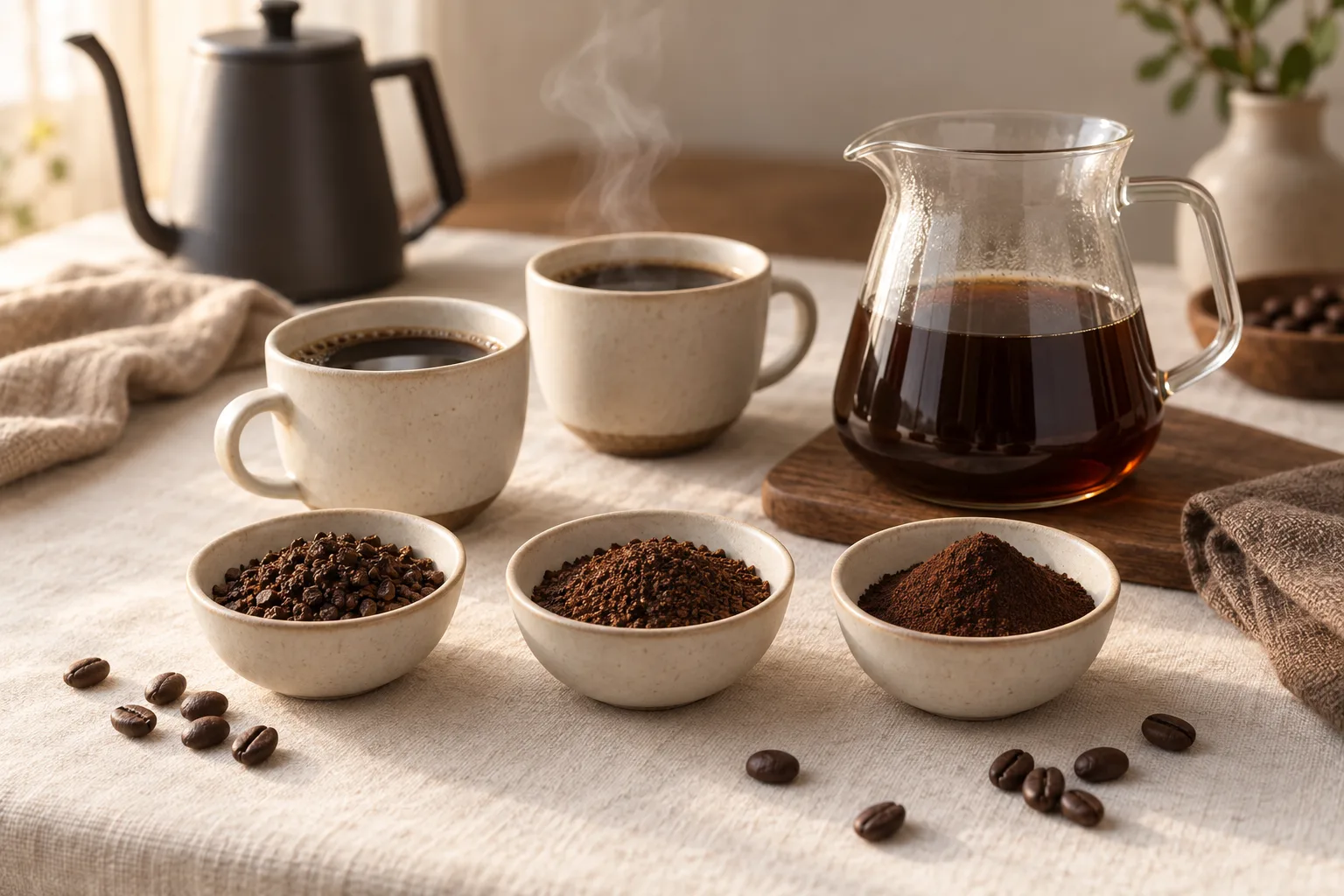
Move one small grinder step coarser. Perfect Daily Grind's grind-size guide explains that fine grounds expose more surface to water and extract faster. Powdery particles, called fines, can also make the cup uneven.
- Drip or pour-over: Try 1–2 small steps coarser while keeping dose and pouring steady. Our Best Coffee Grinder for Pour Over (2026) offers a focused shortlist for consistent filter grounds and cleaner cups.
- French press: Try coarser grounds, or shorten your four-minute steep by 30 seconds on a separate brew. For coarse consistency and fewer fines, see the deeper comparison in Best Coffee Grinder for French Press (2026): 7 Top Picks.
- Espresso: Try one small coarser adjustment at the same dose and output. Alternatively, stop 2–4g earlier at the same grind. These are small experiments, not universal targets.
3. Check heat, then ratio
For manually heated brews, use roughly 195–205°F (90–96°C), the range discussed by Perfect Daily Grind. If you're at the hot end, try dropping 2°C. A kettle wait is only a rough substitute for measuring. Room temperature and water volume change how fast it cools.
Keep ratio changes separate. Bean & Bean and SFBay Coffee discuss experiments around 1:15–1:18. At 20g coffee, that's 300–360g water. Don't automatically add more brewing water to bitterness. Dilution after brewing and extra extraction are different things.
4. Taste and save the better recipe
Compare both cups at a similar drinking temperature. Write down whether the new cup feels sweeter, less mouth-drying, or simply weaker. If it turns thin and sour, back off halfway toward the old setting. Save the recipe you prefer before making another change.
Common mistakes
Don't treat every intense cup as over-extracted. Driftaway Coffee separates strength, brewing choices, and roast flavor in its troubleshooting advice. If a little water makes the drink pleasant, strength may be the issue. A smoky finish calls for checking beans instead of endlessly adjusting grind.
- Changing everything: New beans plus new grind plus cooler water leaves you guessing which helped.
- Adding milk before diagnosing: Taste a plain sip first so you have something useful to compare.
- Judging only a scorching sip: Let each comparison cup cool to a comfortable temperature.
Still bitter? Match the symptom
If modest recipe changes don't help, check roast, freshness, water, and cleanliness before replacing equipment. Driftaway Coffee includes water and roast in its diagnosis, while Bean & Bean flags stale beans and dirty gear. Focus on the taste you actually notice: smoky, stale, or newly harsh after sitting.
Smoky or burnt even with shorter brewing
Try fresh medium-roast beans instead of a very dark roast. Martha Stewart's expert-backed guide recommends checking roast level. Brewing changes won't turn a smoky roast into a fruity one.
Stale, oily, or odd-tasting from an automatic brewer
Clean the basket, carafe, and reusable filter. Descale as the maker directs. Taste the drinking water, too. If separate grinding is the hassle, Best Coffee Maker with Grinder (2026): 7 Top Picks compares options for fresher grounds without a separate grinder. Clean first, shop second.
Fine fresh, unpleasant after sitting
Compare a fresh serving with one left on the warming plate. Try brewing only what you'll drink or transferring it to a clean insulated carafe rather than changing an otherwise pleasant recipe.
Frequently asked questions
How can I rescue coffee that is already brewed?
Try a little hot water if the cup is too strong, or add milk if you enjoy it. Bean & Bean includes dilution and additions among its fixes, but these change the finished drink rather than repair the brewing recipe.
Does salt make coffee less bitter?
Bean & Bean suggests a tiny pinch as a masking trick. Keep it tiny and taste before adding more. Fixing the next brew is a better long-term move than seasoning every cup.
Should I use colder water for bitter coffee?
Try a small temperature drop if your grind and brew time already look sensible. Perfect Daily Grind gives roughly 195–205°F (90–96°C) as a starting range. Very cool water can leave you with a sour, thin cup instead.
Do I need a new grinder?
No, not if yours already gives you consistent grounds and useful adjustments. Spend nothing until you have checked the brewer for old oils, measured your recipe, and compared a slightly coarser brew.