 Coffee Gear Picks
How to Protect Cabinets From Espresso Machine Steam (2026)
Protect your cabinets by following the machine manual and giving steam an open path. A mat and a quick wipe cannot rescue a cramped coffee station.
Give steam somewhere to go
Placement first, accessories second
- Check the current manual
- Measure operating access
- Keep vents clear
- Leave room for the pitcher
- Supervise a normal steam cycle
- Check the cabinet underside
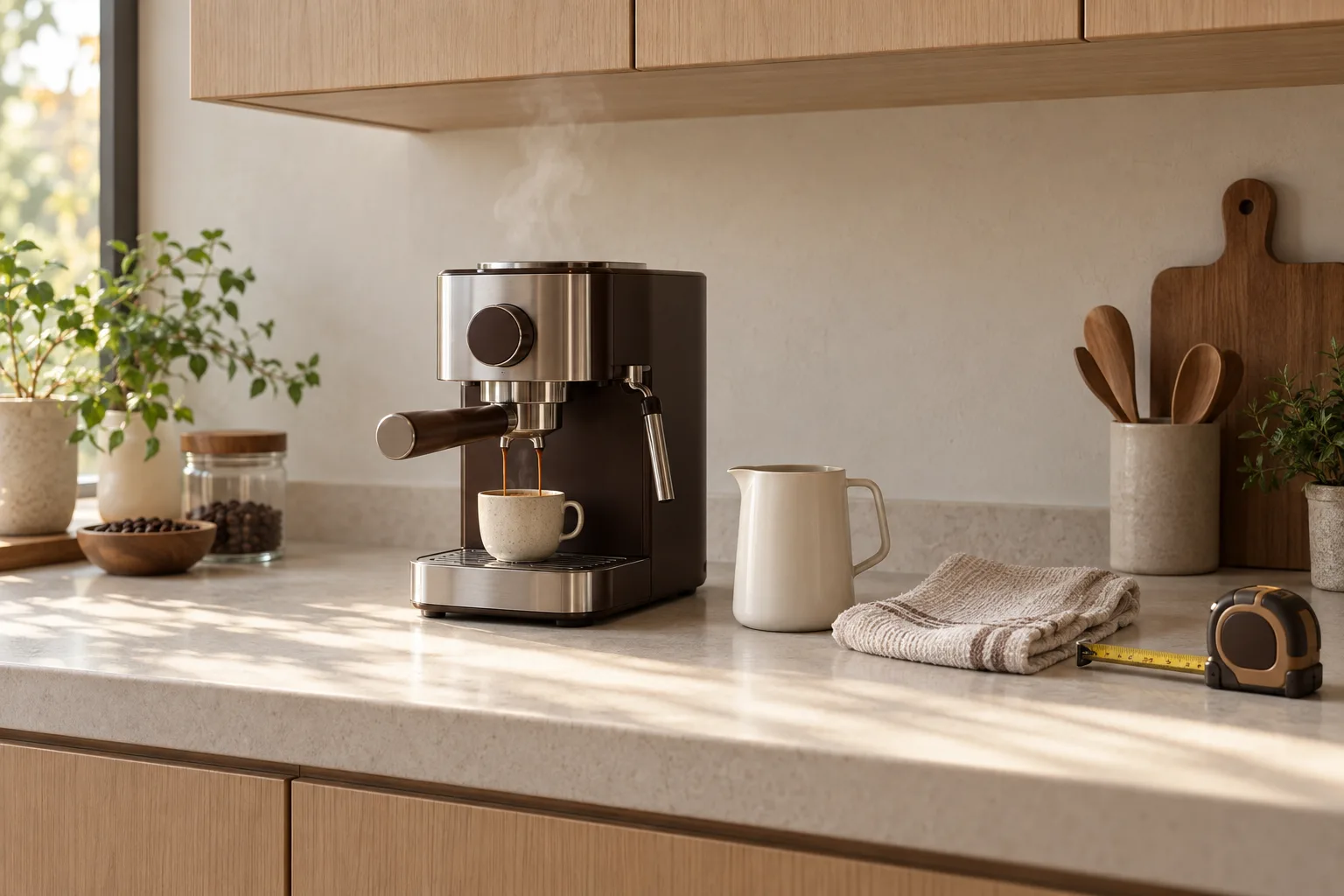
A usable coffee station without trapped steam against the cabinet
What protects cabinets from espresso machine steam?
Manual-approved placement and an unobstructed steam path come first. Keep the machine's vents clear, leave room to work the wand, and move to an open counter if steam gathers overhead. Drying and accessories are backup measures, not permission to squeeze a machine into a tight nook.
Meraki's “Where to Put an Espresso Machine in Your Kitchen” stresses that there is no universal clearance rule and access matters. Footprint, finish, tank access, and wand clearance belong together. For a broader design-led look at counter fit and daily workflow before buying, see Best Espresso Machine Design (2026): 7 Picks.
What should you gather before changing the setup?
Gather the current model manual, a tape measure, a soft dry cloth, and your cabinet care instructions. You need measurements and a way to spot moisture, not a basket of gadgets. Start with the machine cool and unplugged before moving it or checking access around the back.
- Manual: check operating position, vents, steam instructions, and stated gaps.
- Tape measure: measure the niche and the room needed to use it.
- Cloth: dry accessible cabinet surfaces once steaming stops.
An optional counter mat catches drips, not overhead steam. Best Espresso Machine Mat (2026) offers practical options for reducing counter mess.
How do you check and improve under-cabinet placement?
Read the manual, measure working space, choose a clear operating spot, then observe a normal steam cycle. Only do the cycle after the placement meets the manual. A dry cabinet afterward is useful feedback, but it does not override the manufacturer's rules or prove long-term safety.
1. Read the current model manual
Find the clearance and ventilation warnings before measuring. For the featured example, use Breville's Bambino Plus product and support page to locate instructions. Check automatic wand purging too: steam released during cleanup needs room, just like milk steaming.
2. Measure the space you actually use
Measure from the counter to the lowest cabinet trim and from the machine's highest point upward. Listed height is not safe operating clearance. Clive Coffee's “How Much Counter Space do you Need for an Espresso Machine?” highlights rear gaps, wand movement, and portafilter access.
- Lift out the water tank; open any hopper lid.
- Turn the portafilter, the handled basket holding your coffee grounds.
- Check cabinet-door swing and wand travel with a pitcher.
- Leave the manual's rear gap; check vents, outlet access, and cord routing.
If the niche is too tight, compare Best Espresso Machine Compact Picks (2026) after checking actual height and operating access.
3. Choose a clear operating spot
Prefer an open counter, with the full base supported on a level surface. Construction How recommends open placement and ventilation. Kitchen airflow helps, but it does not make a blocked machine vent acceptable.
4. Supervise one normal steam cycle
Follow the manual's steaming and purge instructions. Keep your hands and face away from the plume. If steam collects against the cabinet or droplets appear, stop safely using the controls. Let the machine cool before relocating it; do not keep steaming to see how wet it gets.
5. Dry and monitor the area
Once steam stops, inspect the underside and cabinet seams. Dry accessible moisture as the cabinet care guide allows. Check again during your usual back-to-back drinks: one short cycle may miss condensation that appears during a longer morning routine.
Should you add a shield or steam diverter?
Treat shields and diverters as optional extras, not your first fix. Construction How discusses heat shields, and Big Time Kitchen mentions steam-diverter accessories. Neither establishes a safety standard for your espresso machine. Confirm compatibility with the manufacturer before fitting anything near a steam outlet.
Skip foil, adhesive films, and homemade metal shields unless qualified guidance and the manual support them. Do not cover vents or redirect steam toward sockets. For cleaner prep and easier cleanup tools, browse Best Espresso Machine Accessories (2026); cabinet protection still starts with placement.
What should you do if condensation or damage appears?
Stop using that location if the cabinet becomes damp, peels, swells, or changes color. Drying removes surface moisture but does not repair damage or establish the cause. Move the coffee routine to a manual-approved open spot, and ask the cabinet maker about material-specific care or repairs.
Droplets bead underneath, like a cold glass
Dry the surface and reconsider the steam path. If droplets return, stop operating there rather than relying on wiping after every drink.
A seam lifts or the finish changes
Photograph the area and contact the cabinet supplier. Avoid sanding, sealing, or covering it before getting advice; the repair depends on the material and finish.
The manual gives no overhead guidance
Ask the machine manufacturer about your proposed placement. A retailer's dimensions are not a substitute for operating instructions.
Frequently asked questions
How much clearance does an espresso machine need below cabinets?
Use the current model manual, not a universal inch rule. Listed height describes the body, not the room needed to refill the tank or move the wand. If the manual is unclear about overhead placement, ask the manufacturer before using that niche.
Does an espresso machine mat protect upper cabinets?
No. A mat catches counter drips; it does not stop steam reaching the cabinet above. It can help keep cleanup simple once placement is sorted, but it cannot replace the required gaps, clear vents, or an unobstructed steam path.
Can I pull the machine forward before making coffee?
Only if the manual permits that operating position and the whole base stays supported. Move it while cool, with enough cord slack and no spills. Never drag a hot machine mid-cycle or trade cabinet clearance for a machine perched on the counter edge.
Is the Breville Bambino Plus automatically safe under cabinets?
No. Its compact listed dimensions make planning easier, but they do not certify an under-cabinet location. Check the current Breville manual, tank access, wand movement, and automatic purge instructions. The cabinet must stay out of the steam path during normal use and cleanup.