 Coffee Gear Picks
Why Does My Espresso Machine Water Taste Like Plastic? (2026 Fixes)
Check the source water, tank, and rinse history before blaming plastic parts. Follow the manual’s flushing routine first, then use warranty support if the taste stays.
If rinsing does not solve it and you want to minimize plastic contact, Best Espresso Machine No Plastic (2026 Picks) compares verified low-plastic and metal-heavy options.
Find the source before adding cleaner
Compare plain water, rinse as instructed, then decide what needs attention
- Check fresh source water
- Inspect the removable tank
- Follow your machine manual
- Complete all rinse stages
- Compare cooled plain water
- Contact support if it persists
A clearer diagnosis without guessing at chemicals or replacing the machine too soon
What should you check first?
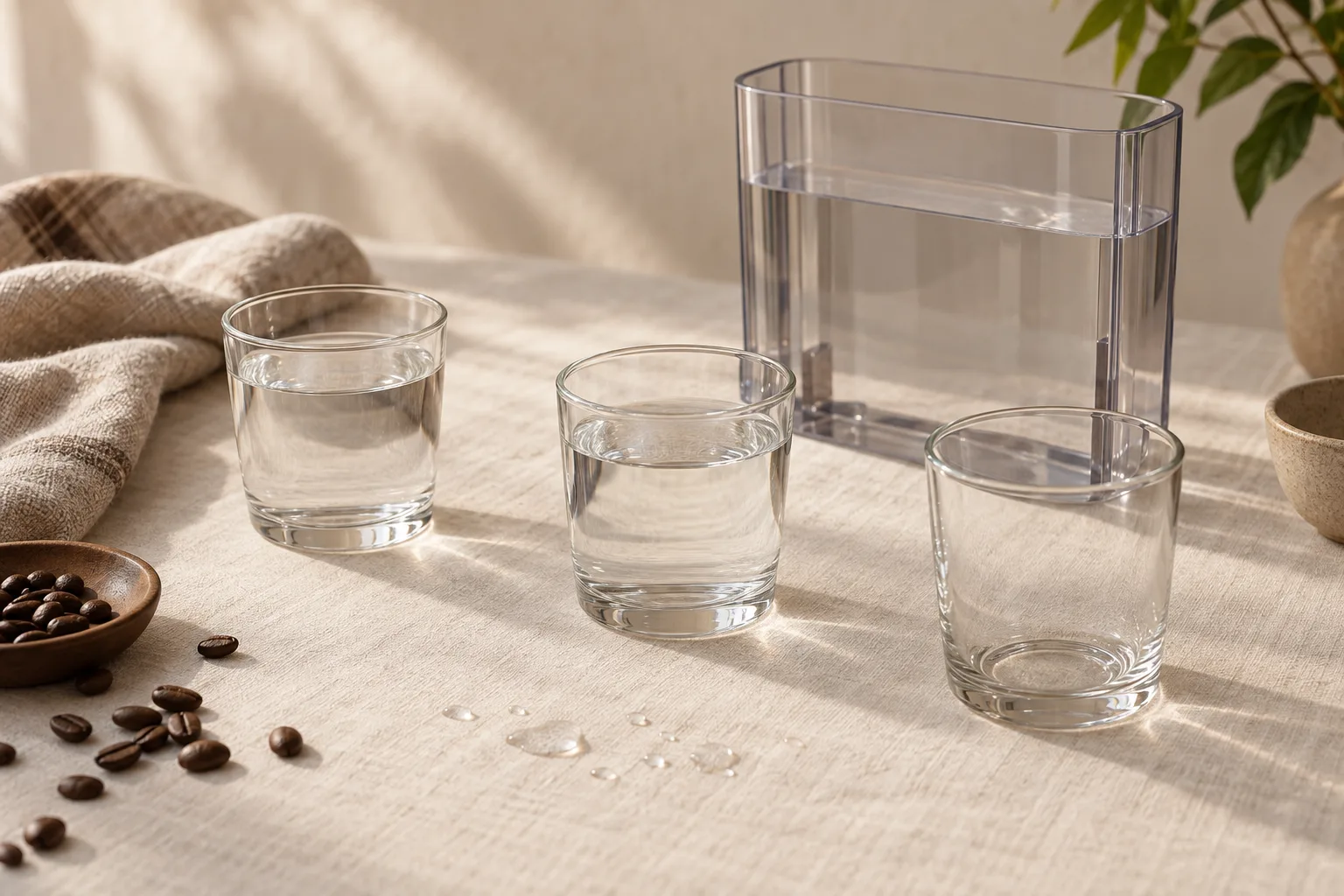
Start with plain water, not espresso: coffee can hide the clue you need. Compare fresh source water, water held in the removable tank, and cooled water from the machine. A plastic-like smell alone cannot identify the material responsible or establish whether the water is suitable to drink.
What do you need before starting?
Gather your model’s manual, fresh drinking water, and clean glass cups. Start without adding chemicals. Let the machine cool and unplug it before removing parts, following the manual. If you see damaged parts or notice a burning smell, skip the water comparison and contact the manufacturer.
- Manual: first-use, tank-cleaning, and rinse instructions.
- Glass cups: clean, odor-free containers for comparison.
- Soft cloth: for accessible surfaces only.
How do you narrow down the source?
Work from the water supply toward the machine, changing one thing at a time. Check the empty tank, follow the approved rinse routine, then compare the result. Keep notes on when the smell appears, especially after standing overnight or after cleaning. Those details give support something useful to investigate.
1. Compare source water and tank water
Smell fresh water in a clean glass and the empty, cool reservoir separately. If source water already tastes odd, investigate your supply or filter first. If only tank water smells like a new lunchbox, clean the removable tank using your manual’s method. Do not pour boiling water into it unless specifically allowed.
2. Complete the approved cleaning and rinse routine
Run the first-use flush or cleaning rinse exactly as your model requires, including each specified outlet. Breville’s cleaning guidance covers water-tank care and blank shots, meaning running water without coffee. It is useful context, not a substitute for your machine’s instructions.
Use only approved chemicals at the stated dose. For routine maintenance, Best Espresso Machine Cleaner (2026): 7 Picks is a researched starting point. Confirm compatibility in your manual before choosing one.
3. Recheck cooled plain water
Collect plain water in a clean glass after the rinse and let it cool. Smell it first; only taste a small amount if it looks normal and there are no warning signs. If the taste remains, stop brewing and contact support with your model, cleaning history, and comparison notes.
Which cleaning shortcuts should you avoid?
Avoid stronger mixtures, improvised solvents, and repeated descaling just to chase an odor. Cleaner and descaler serve different jobs: cleaning removes coffee residue; descaling removes mineral buildup. Neither should be treated as a universal odor cure. Your model’s instructions should decide which treatment, if any, belongs in the machine.
- No solvent experiments: do not use vodka, rubbing alcohol, or other solvents.
- No automatic vinegar fix: use vinegar only if your manufacturer permits it.
- No masking: stronger coffee does not resolve odd-tasting plain water.
What does your symptom tell you to do?
Use timing to choose your next move, not to declare the cause. A taste that began after descaling calls for checking the rinse stages. A tank-only odor points you toward the removable part. A persistent taste after correct rinsing, or any visible damage, calls for manufacturer help rather than more chemicals.
Sour or sharp water after descaling
Check whether you completed the full clean-water rinse. De’Longhi’s EC201 guidance specifies two tanks for that model; do not copy that amount to other machines. Best Espresso Machine Descaler (2026): 7 Safe Picks covers mineral-removal options and compatibility considerations.
Burning smell, damaged tank, or particles
Stop using the machine. Switch it off and unplug it if you can do so safely. Do not taste the water or open the casing. Photograph visible damage and ask the manufacturer about service, a replacement part, or warranty coverage.
Frequently asked questions
Are any espresso machines completely plastic-free?
Do not assume a whole machine is plastic-free from a metal body or brew chamber. Handles, accessories, and seals need separate checks. The Flair 49 PRO Amazon listing makes a narrower claim: no plastics in the brew path, not every part of the machine.
What espresso machine has no plastic in the brew path?
The Flair 49 PRO is our material-conscious benchmark because its Amazon listing explicitly says no plastics in the brew path. It names stainless steel brewing components. That claim does not diagnose your current machine or mean you should replace it before rinsing and contacting support.
Is the Flair 49 PRO plastic-free?
Its Amazon listing says no plastics in the brew path, which is not the same as completely plastic-free construction. Amazon specifications list aluminum, while its bullets name a stainless steel cylinder, valve plunger, and stem. Keep the claim tied to those stated parts.
Are electric espresso machines plastic-free?
Do not treat an electric machine as plastic-free just because its exterior is stainless steel. Ask the manufacturer about the reservoir, hoses, fittings, and brewing parts. A materials list for the outer case does not establish what touches hot water inside.
How do I remove plastic taste from an espresso machine?
Compare fresh source water with water from the tank and machine first. Clean removable parts and complete the rinse routine in your model’s manual. If the taste remains, contact the manufacturer rather than increasing cleaner strength or experimenting with household solvents.
Does filtered water fix plastic taste in espresso machine water?
Filtered water is worth checking when your source water already tastes odd, but it is not a guaranteed fix. It will not repair a damaged part or replace a required cleaning rinse. Use water that meets your machine manufacturer’s guidance, and compare one change at a time.