 Coffee Gear Picks
Best Espresso Machine No Plastic (2026 Picks)
The best espresso machine no plastic pick for most people is the Flair 49 PRO because its listing makes the rare, clear claim buyers actually want: no plastics in the brew path.
Top pick: Flair 49 PRO. It is the best espresso machine no plastic pick for most buyers because Amazon listing data verifies “no plastics in the brew path,” a stainless steel cylinder, valve plunger and stem, and a built-in pressure gauge for 5–9 bar espresso.
- Price band: $$
- Weight/dimensions: Amazon lists 13.5 in D x 7.5 in W x 11 in H
- Materials: aluminum body with stainless steel brew-path components per Amazon listing
- Key feature: no plastics in the brew path + integrated pressure gauge
Best No-Plastic and Low-Plastic Espresso Picks
Ranked by brew-path claims, metal construction, workflow, pressure control, and honest material caveats
Overall
Strongest brew-path claim
- No plastics in brew path
- Manual lever control
- Pressure gauge
- Stainless brew parts
Top Pick Flair 49 PRO
$$
Best verified match
Check Price on Amazon Budget
Stainless stovetop entry
- 18/10 stainless steel
- No pump or plug
- Works on induction
- Lowest buy-in
Top Pick Bialetti Venus 6-Cup
$
Best low-cost stainless brewer
Check Price on Amazon Classic Lever
Old-school espresso ritual
- Electric boiler
- Lever pressure
- Chrome look
- Milk drink capable
Top Pick La Pavoni Europiccola
$$$
Best classic splurge
Check Price on Amazon Electric
Convenience with caveats
- Semi-auto workflow
- 9-bar pressure
- Repairable reputation
- Some plastic listed
Top Pick Gaggia Classic Evo Pro
$$
Best practical electric
Check Price on AmazonQuick answer: Buy the Flair 49 PRO if your main goal is minimizing hot-water contact with plastic. Pick the Bialetti Venus if you want the cheapest stainless route and can live with moka-style coffee, the La Pavoni Europiccola if you want a classic lever ritual, or the Gaggia Classic Evo Pro, Thunder Black if electric convenience matters more than a strict brew-path claim.
Quick picks
Our Top Picks

Which no-plastic espresso machines are worth comparing?
“No plastic” is rarely literal. The better comparison is: how much plastic touches hot water, how clear the material claim is, and how much morning effort you can tolerate. Manual levers usually win on material clarity. Electric machines win on convenience, but they need honest caveats.
| Product | Best for | Price band | Key spec | Verdict |
|---|---|---|---|---|
| Flair 49 PRO Check current price | Most buyers who want no plastic in the brew path | $$ | No plastics in brew path; stainless brew-path components | Best match if brew-path plastic is your line in the sand. |
| Bialetti Venus 6-Cup Check current price | Budget stovetop brewing with an 18/10 stainless steel body | $ | 18/10 stainless steel body; stovetop moka brewing | Cheapest stainless route, but moka-style coffee, not lever espresso. |
| La Pavoni Europiccola Check current price | Classic lever espresso and milk drinks | $$$ | Stainless steel body; 0.8 L electric boiler | Iconic lever ritual for patient buyers with a bigger budget. |
| SUPERKOP Manual Espresso Machine Check current price | Countertop manual 58mm espresso workflow | $$$ | Manual 58mm portafilter workflow; polycarbonate water cup | Premium manual feel, but it’s not a no-plastic brew-path pick. |
| Bellman CX25P Espresso & Steamer Check current price | Stainless stovetop espresso-style drinks and steaming milk | $$ | Stainless stovetop body; pressure gauge and steam wand | Great for stovetop milk drinks, not classic pump espresso. |
| Gaggia Classic Evo Pro Check current price | Buyers who want electric convenience with metal-heavy build | $$ | 9 bars; brass, plastic, and stainless steel materials | Most practical electric choice here, but definitely not plastic-free. |
| Flair 2GO Check current price | Travel espresso with a collapsible manual lever design | $$ | Collapsible aluminum and stainless manual frame | Best when you want manual espresso that folds down for travel. |
How should you evaluate an espresso machine with less plastic?
Prioritize the brew path: the parts hot water touches before it becomes espresso. A metal case looks nice, but a stainless or brass brew chamber matters more than a plastic side panel. For specs here, we leaned on Amazon listing data and explicit material claims rather than guesswork.
Manual lever machines get a boost because they skip many plastic-heavy parts: pumps, long tubes, electronic controls, and big reservoirs. Tom’s Coffee Corner makes the same broad point in its plastic-free espresso coverage: manual options are simply easier to verify than electric ones.
We also separated “no plastic in the brew path” from “mostly metal.” That difference is the line between a strong listing claim and a hopeful inference. Buyer concern articles like Ivy & Fields show why people care about materials, but this guide avoids health promises and sticks to contact points.
Which espresso machine should you buy for your kitchen?
Pick based on your tolerance for ritual. The Flair models reward careful, slow espresso. Bialetti Venus is the low-cost stovetop route. La Pavoni and SUPERKOP feel more like countertop hobbies. Bellman is for stovetop milk drinks. Gaggia is the practical electric choice for people who accept some plastic in exchange for easier mornings.
1) Flair 49 PRO — Best Overall
The Flair 49 PRO is the cleanest recommendation because the material claim is unusually direct. You’re not squinting at product photos or guessing what lives inside a boiler. The listing says no plastics in the brew path, and that’s the line most readers of this page are trying to draw.
The tradeoff is the full manual dance. You need a kettle, a good grinder, some preheating, and the patience to pull pressure by hand. If that sounds cozy, you’ll probably love it. If you want sleepy push-button coffee, skip it.
Pros
- ✓ Strongest verified brew-path plastic claim
- ✓ Pressure gauge helps you see what your hands are doing
- ✓ Compact compared with electric machines
Cons
- ✗ Needs a kettle and espresso-capable grinder
- ✗ Slower workflow than semi-automatic machines
2) Bialetti Venus 6-Cup — Best Budget
The Bialetti Venus is the sensible cheaper pick if you care more about stainless contact surfaces than about pulling true espresso. Bialetti’s listing says it is made from 18/10 stainless steel and works on all hob types, induction included. You fill the base with water, add ground coffee, and take it off the heat once it starts to gurgle. No pump, no plug, and very few hidden parts.
The honest positioning is “stainless stovetop coffee,” not “plastic-free espresso machine.” A moka pot makes strong, concentrated espresso-style coffee rather than a lever or pump shot, and the listing doesn’t name its gasket or handle materials. Bialetti also says to rinse it with plain water only, with no detergent or dishwasher. It suits buyers who want to reduce plastic contact on a tight budget.
Pros
- ✓ Lowest-cost stainless option here
- ✓ 18/10 stainless steel body listed
- ✓ Works on all hob types, including induction
Cons
- ✗ Moka-style coffee, not lever or pump espresso
- ✗ Gasket and handle materials are not listed
3) La Pavoni Europiccola — Best Classic Lever
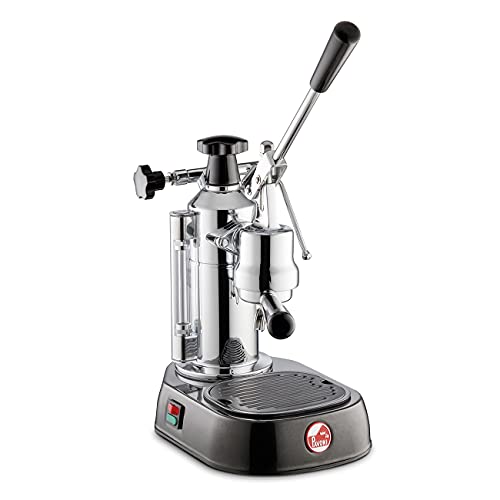
La Pavoni is for the person who wants espresso to feel like a morning ceremony. It has that old-world lever look: more brass-band café than plastic appliance. New York Magazine’s Strategist notes that lever espresso machines come from an older era, before today’s plastic-heavy brewer designs took over.
It’s also expensive and less forgiving. Heat management, lever feel, and grind quality all matter. Beginners can learn it, but it’s not the machine to buy for fast weekday cappuccinos while packing lunches.
Pros
- ✓ Classic lever workflow with real counter presence
- ✓ Electric boiler supports espresso and milk drinks
- ✓ Appeals to buyers who want repairable, old-school gear
Cons
- ✗ Pricey
- ✗ Less beginner-friendly than modern semi-automatic machines
4) SUPERKOP Manual Espresso Machine — Best Premium Manual

SUPERKOP is the premium manual pick for people who want a more standard portafilter routine without an electric pump. The 58mm workflow feels closer to café gear, so baskets, tampers, and puck prep feel familiar if you’ve used traditional espresso equipment.
Material caveat: the listing calls out a polycarbonate water cup. That doesn’t make it a bad machine, but it does move it out of the “no plastic in the brew path” category. If your goal is to avoid hot-water contact with plastic as much as possible, the Flair 49 PRO is the safer recommendation.
Pros
- ✓ Manual workflow with a standard-style 58mm portafilter
- ✓ Substantial countertop presence
- ✓ No electric pump or reservoir routine
Cons
- ✗ Polycarbonate water cup caveat
- ✗ Premium price for a pump-free manual machine
5) Bellman CX25P Espresso & Steamer — Best for Milk Drinks

The Bellman is the oddball, but a useful one. It’s a stovetop espresso-and-steamer setup, so think steam pressure and milk foam rather than a pump machine pulling a café-style shot. For camping, tiny kitchens, and cappuccino-ish drinks, it can be a smart fit.
Its stainless construction is the draw, and the steam wand is the fun part. Just don’t buy it expecting the same thick, syrupy shot profile as a dialed-in lever or semi-auto. It’s espresso-adjacent, not a one-to-one replacement for a pump machine.
Pros
- ✓ Stainless stovetop design
- ✓ Steam wand makes it useful for milk drinks
- ✓ No electric pump or countertop electronics
Cons
- ✗ Not pump-style espresso
- ✗ Stovetop routine requires attention
6) Gaggia Classic Evo Pro — Best Electric Low-Plastic Option

The Gaggia Classic Evo Pro, Thunder Black is here for practical people. You get a semi-automatic workflow, a real steam wand, and a familiar home-espresso rhythm: grind, tamp, lock in, pull a shot. It’s the least fussy daily driver on this list.
It’s not plastic-free. Amazon lists brass, plastic, and stainless steel in the materials, so the honest pitch is metal-heavy electric convenience. If you want to minimize plastic but still need a machine someone else can use half-awake, this is the compromise.
Pros
- ✓ Easier daily workflow than manual levers
- ✓ Good fit for milk drinks
- ✓ Practical option if you accept some plastic
Cons
- ✗ Not plastic-free
- ✗ Reservoir and internal parts are harder to verify than manual machines
7) Flair 2GO — Best Travel

Flair 2GO is the pick for people who want their espresso habit to fit in a bag. It folds down, stays manual, and avoids the big reservoir-and-pump setup that makes compact electric machines harder to evaluate for materials.
Travel espresso magnifies every little annoyance: you still need hot water, fresh beans, a grinder, and cleanup space. If your “travel” means a hotel desk and five rushed minutes, this may feel like too much. If it means slow cabin mornings, it’s a great little ritual.
Pros
- ✓ Collapsible frame for packing
- ✓ Manual 9-bar design
- ✓ Aluminum and stainless construction listed
Cons
- ✗ Still needs a grinder and kettle
- ✗ Small-batch workflow only
Frequently asked questions
Are any espresso machines completely plastic-free?
Almost none are truly 100% plastic-free. Even metal-heavy machines may use silicone seals, rubber gaskets, plastic handles, reservoirs, or accessories. The most meaningful claim to look for is “no plastic in the brew path,” which focuses on the hot water and coffee contact points.
What espresso machine has no plastic in the brew path?
The Flair 49 PRO is the clearest pick in this roundup because its Amazon listing says “no plastics in the brew path.” It also lists stainless steel brew-path components and includes a pressure gauge, which makes it easier to buy with confidence than most electric machines.
Is the Flair 49 PRO plastic-free?
It’s best described as having no plastics in the brew path, not as a guaranteed plastic-free object. The listing names an aluminum body and stainless steel brew-path components, but seals, accessories, or non-brew-contact parts may still use other materials.
Are electric espresso machines plastic-free?
Most electric espresso machines are not plastic-free. They often include plastic reservoirs, internal hoses, fittings, drip trays, or knobs. If you want push-button convenience, choose a metal-heavy, repairable machine like the Gaggia Classic Evo Pro, Thunder Black, but treat it as a compromise, not a plastic-free solution.
Is stainless steel better than plastic for espresso machines?
For buyers trying to minimize hot-water contact with plastic, stainless steel is a common preference because it’s durable and easy to clean. But “stainless on the outside” doesn’t guarantee anything. Prioritize the brew chamber, portafilter/basket, and any hot-water fittings.
Do silicone gaskets count as plastic in espresso machines?
Silicone isn’t the same as hard plastic, but it’s still a non-metal material. Most espresso makers need seals to hold pressure. If you want to minimize plastic contact, focus first on the main brew path components (where the hot water sits and flows).
Can a manual espresso machine make real espresso?
Yes. A manual espresso maker can produce real espresso when it reaches espresso-style pressure and you use an espresso-fine grind. The tradeoff is effort: you provide hot water, preheat parts, and control pressure by hand instead of relying on a pump.
What grinder do I need for a no-plastic espresso machine?
You still need an espresso-capable burr grinder with fine adjustment. Manual levers are especially unforgiving with coarse, uneven grounds. Start with our burr grinder for espresso guide, then use the espresso settings guide to dial in your first shots.
What should you read next?
If you’re buying a manual lever, read the grinder guides next, because grind quality decides whether the shot tastes syrupy or sour and thin. If you’re leaning toward convenience and can accept more plastic, read the budget espresso guide.
- Best Burr Grinder for Espresso: the grinder upgrade that matters most for manual and semi-auto espresso.
- Best Hand Grinder for Espresso Under $100: a lower-cost way to feed a Flair-style setup.
- Burr Grinder Settings for Espresso: practical starting points when your first shots gush or choke.
- Best Espresso Machine Under $200: better if budget and convenience matter more than minimizing plastic contact.