 Coffee Gear Picks
Why Is My Espresso Machine Mat Wet? Fixes (2026)
Your espresso machine mat is wet from a spill or tray overflow, steam condensation, water trapped in an absorbent mat, or a machine leak. Dry everything first, then find where fresh water starts. The mat can contain a small spill, but it cannot repair a reservoir, gasket, hose, valve, or drip-tray problem.
Find the first wet point
Check outside the machine, not inside its case
- Switch off and cool
- Dry mat and counter
- Empty and reseat tray
- Inspect removable tank
- Watch one function at a time
- Stop if water reaches the base
- Clean approved accessible parts
- Contact service for persistent leaks
- Dry and recheck
- Replace the mat only after fixing leaks
- Keep water from electricity
- Never open the case
Separate leftover spills from water that keeps returning
Quick answer: normal moisture or a leak?
Small droplets after steaming or water inside the tray after a rinse can be normal. A growing puddle underneath, water appearing while the machine is idle, or a tray that fills unusually fast is not something to ignore. Philips support explains that automatic rinses can drain into the tray, while Saeco support recommends help for unusually rapid or overnight filling.
After fixing the source, Best Espresso Machine Mat (2026): 6 Picks compares waterproof silicone, absorbent, large-format, and tamping options for a replacement.
What you'll need
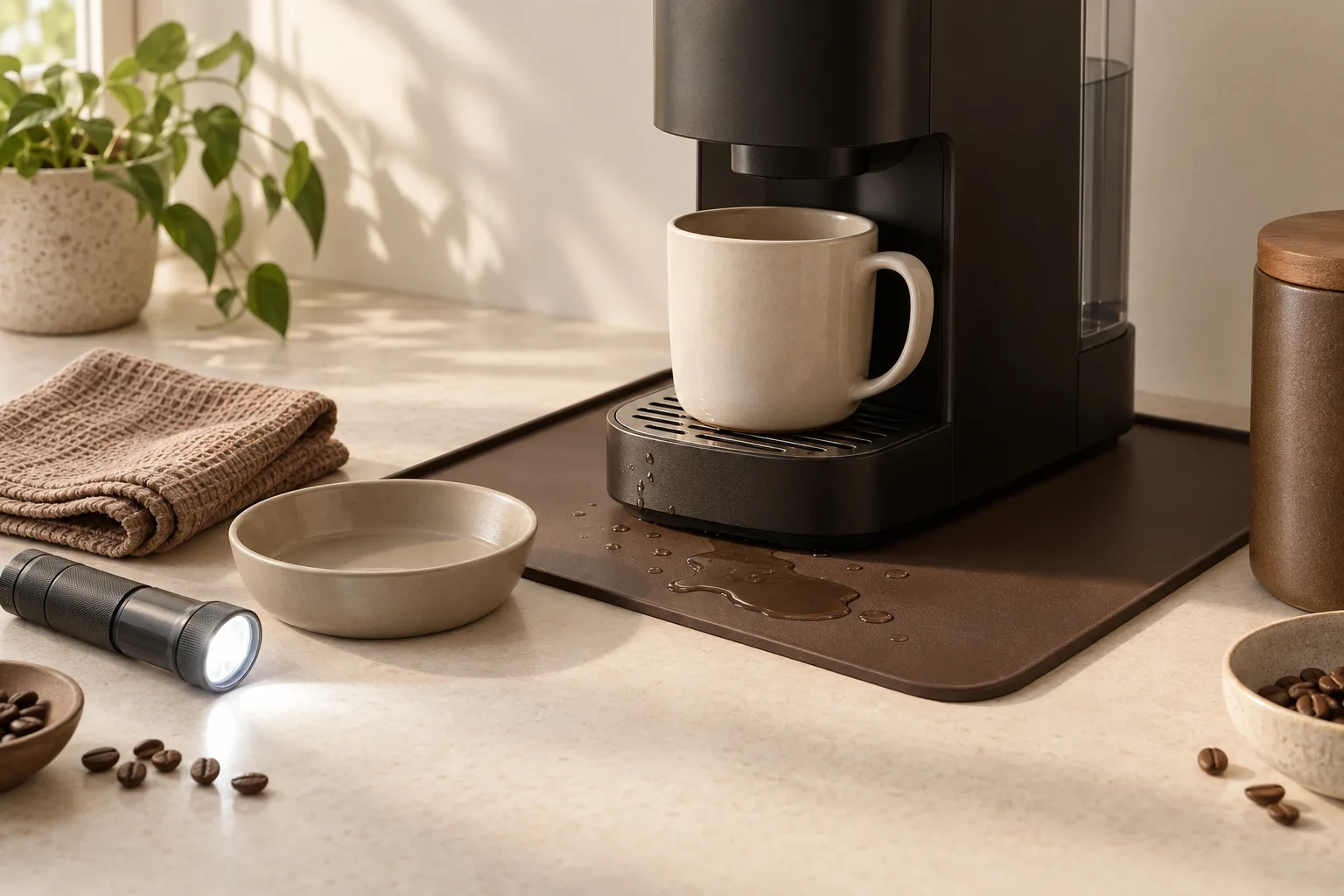
Gather a dry towel, flashlight, shallow container, and the machine manual. These help you spot fresh droplets and catch normal outlet water without taking anything apart. Keep cleaner or descaler aside unless the manufacturer directs its use. Neither belongs in the machine just because the mat is wet.
- Dry towel for the counter and mat
- Flashlight for edges and seams
- Shallow container for normal outlet water
- Manual and approved maintenance products only when directed
How do you trace water safely?
Start with the machine off and cool. Check the removable tray and tank before running anything. If the area is dry and there is no electrical hazard, observe one normal function at a time. Stop as soon as fresh water comes from beneath the case.
1. Dry both sides of the mat
Switch off, unplug when safe, and let the machine cool. Move it only as the manual permits. Dry the counter and both mat surfaces, and let an absorbent mat dry fully. Check nearby sink splashes and tank-filling spills before blaming the machine.
2. Empty the tray and inspect the tank
Empty, clean, and reseat the drip tray. Inspect the removable reservoir for cracks and spills around its seat without pressing valves or forcing parts. Paper Espresso identifies tray, tank, and seal checks as useful starting points.
3. Watch one function at a time
With dry electrical connections and no unexplained base leak, watch startup, a brief normal brew, then steaming separately. Catch outlet water in the container without blocking drainage. My Home Espresso recommends isolating functions so you identify the first source, not merely the final puddle.
4. Clean only accessible parts
Switch off and cool again. Follow the manual to remove coffee residue from the portafilter and group head. Coffee Delight includes residue and gasket checks. Our Best Espresso Machine Cleaner (2026): 7 Picks covers researched routine-cleaning options, not internal leak repairs.
If the manual calls for mineral-buildup maintenance, Best Espresso Machine Descaler (2026): 7 Safe Picks offers product options. Your manual still decides compatibility and procedure.
5. Escalate water that keeps returning
Stop using the machine if water returns beneath the case or no removable part explains it. Photograph the first wet point and note which function preceded it. Contact the manufacturer or a qualified repair service rather than opening the case.
Common mistakes that hide the source
A bigger mat can hide a puddle without solving it. Do not judge the source from where water collects because it may have travelled from another edge. Start from a dry surface and avoid changing several things together, or you will lose the clue that explains what happened.
- Water disappears into the mat: absorbency can mask fresh drips.
- The tray will not slide out: check whether the mat rim obstructs it.
- A corner pad misses machine drips: tamping mats protect preparation areas, not the whole machine footprint.
Which wet-mat symptom matches yours?
Match timing and the first wet point, not just puddle size. Droplets after steam suggest a different source from water around the reservoir or beneath an idle machine. Treat these as clues, not proof. Recurring unexplained water is a reason to stop and ask for service.
- Wet near the tray after startup: check for rinse-water overflow and tray fit.
- Droplets after steaming: dry and watch. Mad Labs Repair distinguishes condensation from continuous dripping.
- Wet around the tank: check filling spills, seating, and visible cracks.
- Water around the coffee handle: clean approved accessible surfaces and ask support about a worn sealing ring.
- Fresh water beneath the case while idle: stop using it and contact service.
Once resolved, dry the mat underneath after spills. Best Espresso Machine Accessories (2026) provides a broader checklist for a cleaner, more manageable espresso station, not a cure for leaks.
Frequently asked questions
Is water in the drip tray normal?
Yes, some water can be normal. Philips support says automatic rinsing can send water into the tray during startup, shutdown, brewing, or milk-frothing routines. Water escaping onto the mat is a separate issue, so check the tray level, fit, and condition.
Why does my espresso machine mat stay wet overnight?
An absorbent mat may still hold yesterday’s spill, so remove it and dry it fully before judging the machine. If fresh water appears while the machine is idle, stop using the machine and contact support. Saeco identifies unusually rapid or overnight tray filling as a reason to seek help.
Can steam condensation make the mat wet?
Yes, condensation after steaming can leave small droplets. Mad Labs Repair distinguishes that from continuous dripping. Dry the area and watch whether the wet patch returns after steaming stops. A growing puddle or steady drip needs a different explanation and should not be ignored.
Will a waterproof silicone mat fix a leaking machine?
No. A waterproof mat can help contain a small spill, but it cannot repair a leaking tank, gasket, hose, or valve. Trace persistent water first. A raised edge is useful countertop protection, not a reason to keep using a machine that leaks.
Should I descale a machine that wets the mat?
Only descale when your manufacturer directs it, using an approved product and procedure. Mineral buildup may call for maintenance, but water on a mat does not prove scale is the cause. Descaler cannot repair a cracked tank or failed internal hose.
Is a wet mat the same problem as a wet espresso puck?
No. A wet puck is the soggy cake of used coffee inside the portafilter, the handle that holds your grounds. A wet machine mat means water has reached the countertop area. Follow the water source rather than changing your grind to solve this symptom.