 Coffee Gear Picks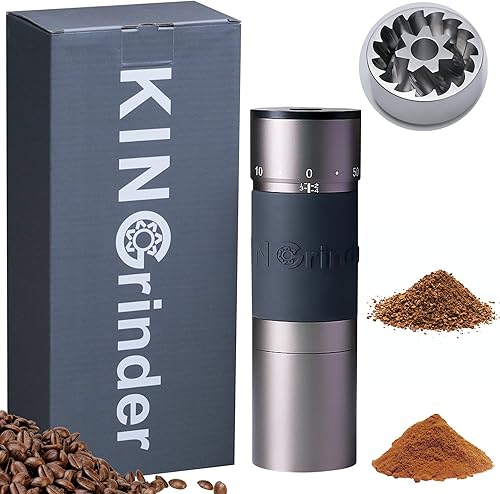
Best AeroPress Coffee Grinder (2026): 8 Picks
The best AeroPress coffee grinder should make your cup taste sweeter, cleaner, and easier to repeat without turning breakfast into a whole hobby project. We compared eight researched picks for consistency, adjustment control, portability, cleanup, and how well each one actually fits the way most people use an AeroPress.
8 AeroPress Grinders Worth Buying in 2026
Picked for sweeter cups, easier dial-in, and less morning hassle
Budget
Best cheap upgrade from pre-ground
- Steel conical burrs
- Beginner-friendly range
- Compact body
- Strong value
Top Pick TIMEMORE Chestnut C2
$
Starter pick that still makes sense
Check Price on Amazon Overall
Best all-around AeroPress grinder
- Broad brew range
- Easy repeatability
- Strong consistency
- Built to last
Top Pick KINGrinder K6
$$
The safest pick for most people
Check Price on Amazon Travel
Best for bags, desks, and hotel brews
- Fits small kits
- Quiet hand grinding
- Numbered dial
- Low mess
Top Pick 1Zpresso Q Air
$$
Best compact travel grinder
Check Price on Amazon Electric
Best if you want speed at home
- Fast weekday workflow
- Wide grind range
- Easy parts support
- Great home fit
Top Pick Baratza Encore ESP
$$
Best electric AeroPress pick
Check Price on AmazonQuick answer: KINGrinder K6 is the best AeroPress coffee grinder for most people because it gives you enough precision to tweak recipes without becoming annoying to live with. If you want the best cheap manual option, go with TIMEMORE Chestnut C2. If you want electric speed for home use, Baratza Encore ESP is the easiest recommendation.
Quick picks
Our Top Picks


Comparison table
| Grinder | Type | Burr material | Adjustment style | Capacity | Best for | Tradeoff | Value tier | |
|---|---|---|---|---|---|---|---|---|
| KINGrinder K6 | Manual | Stainless steel conical burr | External click dial | 30-35 g | Most AeroPress brewers who want repeatable cups | Heavier than tiny travel grinders | $$ | Check Price |
| TIMEMORE Chestnut C2 | Manual | Stainless steel conical burr | Internal stepped dial | 25 g | First real grinder upgrade for AeroPress | Less precise than premium hand grinders | $ | Check Price |
| 1Zpresso Q Air | Manual | Stainless steel conical burr | Numbered stepped dial | 20 g | Travel kits and one-cup AeroPress routines | Smaller catch cup means more refills for big brews | $$ | Check Price |
| Baratza Encore ESP | Electric | 40 mm hardened steel conical burr | Stepped with espresso zone | 8 oz hopper | Fast weekday AeroPress brewing at home | Takes more counter space than hand grinders | $$ | Check Price |
| Fellow Opus | Electric | 40 mm stainless steel conical burr | Stepped plus inner micro adjust | 3.5 oz dosing lid | Small kitchens that still want electric speed | Adjustment system takes a week to feel natural | $$ | Check Price |
| OXO Brew Conical Burr Grinder | Electric | Stainless steel conical burr | Stepped with micro positions | 12 oz hopper | People who brew AeroPress plus drip or French press | Bulk hopper design feels less tidy for single dosing | $$ | Check Price |
| Hario Mini-Slim Plus Manual Grinder | Manual | Ceramic conical burr | Internal stepped dial | 24 g | Ultra-cheap travel or office backup kits | Slow and less consistent than the better picks here | $ | Check Price |
| Porlex Mini II Manual Grinder | Manual | Ceramic conical burr | Internal stepped dial | 20 g | Travel brewers who care more about durability than speed | Price is harder to justify for the grind quality | $$ | Check Price |
How we evaluate AeroPress grinders
For AeroPress, the word best is really about repeatability. You want a grinder that can hit the same setting again tomorrow, not one that gives you one lucky cup and then disappears into chaos. We compared each model by grind consistency, ease of dial-in, travel fit, cleanup effort, and how much value you actually get for the money.
We also kept the brewer itself in mind. AeroPress is forgiving, which is good news for your wallet, but it still punishes muddy grind quality. When grounds are all over the place, the cup tastes like two coffees fighting in the same mug: one sour, one bitter. That is why burr quality and adjustment control matter more here than flashy marketing copy.
- Consistency: Does the grinder give you even enough particles for sweet, clean AeroPress cups?
- Repeatability: Can you come back to a setting without guessing where you were?
- Workflow: Is it quick to use, easy to clean, and low on daily annoyance?
- Portability: Does it make sense for travel, office use, or small kitchens?
- Value: Are you paying for better coffee, or just nicer packaging?
Everything here is based on researched product details, listing data, and side-by-side comparison of the kind of tradeoffs AeroPress brewers actually notice. No fake lab coats. No invented testing story.
Detailed reviews
1) KINGrinder K6 — Best overall AeroPress grinder
K6 is the one I would point most AeroPress owners toward first. It has the kind of adjustment control that lets you chase a brighter bypass recipe one day and a stronger mug the next without feeling lost. That matters with AeroPress because small grind changes show up fast in the cup. When the grinder is steady, the brewer suddenly feels a lot more predictable.
The downside is simple: it is not the cutest or lightest hand grinder in a travel bag. It feels more like a serious daily tool than a toss-it-in-your-backpack toy. Skip this if you want the smallest possible travel grinder or you hate hand grinding first thing in the morning.
Pros
- ✓ Excellent grind consistency for AeroPress recipe changes.
- ✓ External click dial is easier to repeat than hidden internal systems.
- ✓ Wide range works for classic, bypass, and concentrated brews.
Cons
- ✗ Heavier than compact travel grinders.
- ✗ Manual grinding still feels like work if you brew several cups back to back.
Check KINGrinder K6 Price on Amazon
2) TIMEMORE Chestnut C2 — Best budget manual pick
If you are moving up from pre-ground coffee or a cheap blade grinder, Chestnut C2 is the kind of upgrade that makes AeroPress suddenly make sense. Cups get cleaner. Bitterness drops. Your recipe notes finally mean something. It is not fancy, but it does the important stuff well enough that most casual brewers will feel the difference immediately.
What you give up is fine control. This is more of a "get me into the right neighborhood" grinder than a "let me obsess over tiny click changes" grinder. Skip this if you already know you love tweaking recipes and want sharper repeatability than entry-level internals can give.
Pros
- ✓ Terrific value for AeroPress beginners.
- ✓ Compact size works well in small kitchens and travel kits.
- ✓ Steel burrs are a real upgrade over cheap starter grinders.
Cons
- ✗ Adjustment system is less precise than better hand grinders.
- ✗ Grinding speed and feel are only average.
Check TIMEMORE Chestnut C2 Price on Amazon
3) 1Zpresso Q Air — Best travel grinder for AeroPress
Q Air makes a ton of sense for AeroPress because both products solve the same problem: good coffee when you do not want a giant setup. It is slim, easy to stash, and better organized than a lot of budget travel grinders. If your normal routine is one mug at a hotel desk, work kitchen, or campsite, this one feels built for that life.
The catch is capacity. It is perfect for a single cup, less fun when you are grinding for larger doses or brewing for two people. Skip this if your AeroPress routine is mostly at home and you would rather trade a little portability for a bigger, easier workflow.
Pros
- ✓ Travel-friendly size pairs naturally with AeroPress kits.
- ✓ Numbered stepped adjustment makes it easier to remember settings.
- ✓ Quiet manual workflow is great for office or hotel use.
Cons
- ✗ Small capacity is limiting for larger brews.
- ✗ Not the best value if it never leaves your kitchen.
Check 1Zpresso Q Air Price on Amazon
4) Baratza Encore ESP — Best electric home workflow
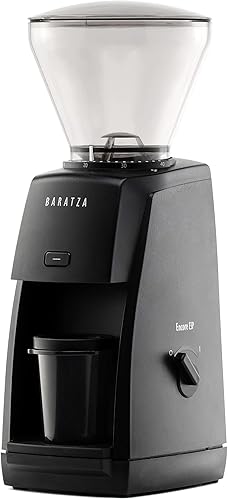
Encore ESP is the easiest electric pick to recommend if your AeroPress lives on the kitchen counter and gets used every morning. It is fast, familiar, and forgiving. You press a button, get your grounds, and move on with your day. For people who want less fuss and more coffee, that is a bigger advantage than coffee nerds sometimes admit.
It is also a little more grinder than some AeroPress-only brewers really need. If you mostly make one travel mug on weekends, it can feel like bringing a toaster oven on a camping trip. Skip this if you want a tiny footprint or you only brew occasional single cups.
Pros
- ✓ Fast and easy for weekday AeroPress routines.
- ✓ Broad grind range gives room to experiment.
- ✓ Better long-term support than many cheap electric grinders.
Cons
- ✗ Takes up more space than a manual grinder.
- ✗ Less appealing if portability matters.
Check Baratza Encore ESP Price on Amazon
5) Fellow Opus — Best compact electric alternative

Opus is for people who want electric convenience without the bulky, appliance-store look. It fits tighter counters well and still gives you enough range for AeroPress experimenting. If your kitchen is small and you hate visual clutter, this one has real appeal before you even grind the first dose.
That said, the adjustment logic is a little fiddly at first. It is not hard, but it is the kind of grinder that makes more sense after a few days instead of in the first five minutes. Skip this if you want a dead-simple interface with almost no learning curve.
Pros
- ✓ Compact electric body works well in small kitchens.
- ✓ Broad grind range makes AeroPress easy to tune.
- ✓ Cleaner-looking design than many competitors.
Cons
- ✗ Adjustment system is less intuitive than it should be.
- ✗ Not the cheapest path to electric convenience.
Check Fellow Opus Price on Amazon
6) OXO Brew Conical Burr Grinder — Best easy batch grinder

OXO Brew is a practical pick if your AeroPress is only one part of your coffee life. Maybe you also make drip on weekdays, French press on weekends, and you want one grinder to keep the whole thing simple. In that role, it does a nice job. It is approachable, roomy, and friendly for households that care more about consistency than hobby-grade tinkering.
The flip side is that it feels more like a general home grinder than an AeroPress specialist. Single-dosing one AeroPress brew can feel a bit clunky with the bigger hopper workflow. Skip this if you want a tighter, lower-retention setup built mainly around one cup at a time.
Pros
- ✓ Easy electric workflow for mixed brewing routines.
- ✓ Large hopper suits households brewing multiple styles.
- ✓ Good beginner fit if you want less manual effort.
Cons
- ✗ Less tidy for strict single-dose AeroPress use.
- ✗ Does not feel as precise as the best dedicated picks.
Check OXO Brew Conical Burr Grinder Price on Amazon
7) Hario Mini-Slim Plus — Best cheap backup grinder

Hario Mini-Slim Plus is not here because it beats the better grinders. It is here because sometimes you just need something light, cheap, and good enough to keep pre-ground coffee out of your AeroPress. As a backup grinder for work trips or office drawers, it still has a place.
You pay for that low price with slower grinding and looser consistency. It gets the job done, but it does not feel especially refined. Skip this if this will be your only grinder and you can afford to step up to the Chestnut C2 instead.
Pros
- ✓ Very affordable entry point for fresh grinding.
- ✓ Lightweight and easy to pack.
- ✓ Ceramic burrs keep it simple for casual travel use.
Cons
- ✗ Slower and less even than the stronger manual picks.
- ✗ Not ideal for people who want to fine-tune recipes often.
Check Hario Mini-Slim Plus Price on Amazon
8) Porlex Mini II — Best stainless steel travel body

Porlex Mini II makes sense when durability matters more than pure value. The stainless body feels ready for rougher travel, and that still appeals to people who throw an AeroPress into luggage, glove boxes, or camping bins. It is sturdy, compact, and familiar for minimalist travel setups.
The problem is simple: there are better cups per dollar elsewhere in this list. It is not bad, just harder to love once you compare it against newer options. Skip this if your main goal is the best grind quality for the money rather than the toughest little body.
Pros
- ✓ Compact stainless body is travel-friendly and durable.
- ✓ Simple manual workflow works well off-grid.
- ✓ Easy fit for compact AeroPress kits.
Cons
- ✗ Value is weaker than better-performing rivals.
- ✗ Ceramic burr workflow is not especially fast.
How to dial in AeroPress grind without wasting half a bag of coffee
AeroPress is forgiving, but it still rewards a steady routine. If your cup tastes random from one day to the next, the problem is usually not the brewer. It is usually the grind, the dose, or both. The easiest fix is to change one thing at a time and keep the rest boring.
AeroPress Dial-In Workflow
A simple three-step rhythm for finding the right grind without guessing
Step 1 Start
- Pick one coffee and one recipe
- Start at medium-fine
- Keep your dose and water the same
Step 2 Taste
- If the cup is sour, go finer
- If it is bitter, go coarser
- Change only one small step
Step 3 Lock it in
- Write down the setting
- Repeat the same brew next day
- Adjust again only if needed
Result
Sweeter cups, easier pressing, and fewer random bad brews
Classic AeroPress recipes like a medium-fine starting point
For most everyday AeroPress brews, start around medium-fine. Think slightly finer than table salt, not powdery like store-bought espresso grind. That range usually gives you enough resistance to build sweetness without making the press feel like arm wrestling first thing in the morning.
Bypass brews usually want a touch finer
If you brew a short concentrate and then dilute with hot water, you can usually nudge the grinder a little finer. That gives the cup more punch before you stretch it out. Go too far, though, and the flavor gets harsh fast. AeroPress does not hide over-extraction very well.
Long steeps and darker roasts often want a little coarser
Darker coffee extracts quickly, and longer steep times do the same thing. Put both together with a too-fine grind and the cup can taste like bitter toast crust. If your press feels heavy and the finish dries your mouth out, back off a click or two before blaming the beans.
Frequently asked questions
Is a manual or electric grinder better for AeroPress?
For one or two cups, a good manual grinder often gives the best grind quality per dollar and travels better. If you brew before work every day and just want speed, an electric grinder like the Baratza Encore ESP is the easier long-term choice.
What grind size is best for AeroPress?
Start around medium-fine, which should feel a bit finer than table salt but not powdery like espresso. If the cup tastes sour and thin, go a little finer. If it tastes bitter and drags during the press, go a little coarser.
Can I use an espresso setting for AeroPress?
Sometimes, but usually only for short concentrated AeroPress recipes. For classic AeroPress brews, true espresso-fine grind is often too tight and can make pressing hard and the cup harsh.
Is a budget grinder enough for daily AeroPress use?
Yes, if the budget grinder is still a real burr grinder. Something like the TIMEMORE Chestnut C2 is plenty good enough for daily AeroPress brewing, even if it does not feel as precise or as fast as a pricier pick.
Do premium burrs matter for AeroPress?
They matter most when you care about repeatability and cleaner flavor separation. AeroPress is forgiving, so you do not need to spend a fortune, but a better burr set usually means fewer muddy cups and fewer random bad brews.