 Coffee Gear Picks
Best AeroPress Recipe for Dark Roast (2026)
Dark roast can be syrupy and chocolatey in an AeroPress, not like a campfire ashtray. This standard-orientation recipe uses cooler water and a short steep to keep the bold body while leaving the harsh edge behind.
Dark Roast AeroPress in Five Moves
Cool water, a medium grind, and a quick press for a sweeter cup
Step 1 Heat water
- Measure 240 g water
- Bring it to 85 °C
Step 2 Rinse and set up
- Rinse one paper filter
- Zero the brewer on a scale
Step 3 Dose and grind
- Weigh 16 g coffee
- Grind medium
Step 4 Pour and steep
- Pour to 240 g
- Stir 3–4 times; wait 60–90 sec
Step 5 Press gently
- Press for 20–30 sec
- Stop at the hiss
Result
A smooth, sweet, full-bodied cup with no ashy bitterness
What is the best AeroPress recipe for dark roast?
Use 16 g of medium-ground dark roast with 240 g water at 85 °C (185 °F). Stir three or four times, steep for 60–90 seconds, then press gently for 20–30 seconds and stop at the hiss. It makes a sweet, full cup instead of an ashy, bitter one.
- Coffee: 16 g dark roast (15–18 g works).
- Grind: medium, a touch coarser than a light-roast AeroPress dose.
- Water: 240 g at 85 °C, for a 1:15 ratio. If it still tastes heavy, a slightly milder AeroPress ratio can help.
- Optional bypass: add 30–50 g hot water after pressing if the body feels too thick.
Why do dark roasts need a different AeroPress recipe?
Dark roasts are more porous and tend to break into fine bits, so water pulls flavour out of them fast, and can pull out harsh flavours fast too. Cooler 80–90 °C water, a medium grind, and a short steep hold bitterness back without making the cup thin.
James Hoffmann’s Ultimate AeroPress Recipe puts dark roasts at 85–90 °C, while this Coffee Stack Exchange dark-roast discussion suggests 85 °C for very dark beans. AeroPress’s official brew guidance also gives dark roasts an 80–85 °C lane. That is why this recipe starts at 85 °C, not a rolling boil.
The AeroPress’s paper filter leaves less sediment in the cup than a typical press-pot filter. If you are deciding between the two styles, see our AeroPress vs French Press guide.
What do you need to brew dark roast in an AeroPress?
You need an AeroPress, a burr grinder, a 0.1 g scale, and a kettle that can hold 85 °C. The paper filters come with the AeroPress Original; the rest is simply a way to keep your dose, water, and steep from wandering around every morning.
- AeroPress Original and paper micro-filter: one filter keeps the cup clean while the standard upright setup avoids an accidental spill.
- Filtered water: measure 240 g, not a vague mugful, so the 1:15 ratio stays put.
- Burr grinder: choose a hand grinder from our best manual coffee grinder under $100 picks, or use electric grinders from our best burr coffee grinder under $200 picks for quicker mornings.
- 0.1 g scale: weigh the 16 g dose with a 0.1 g coffee scale from our espresso and pour-over scale picks; small dose slips are obvious in a single cup.
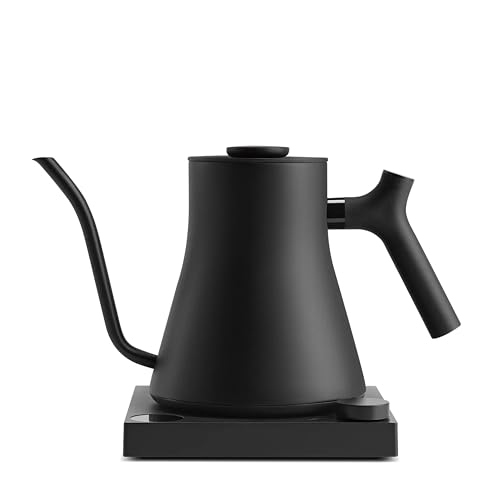
- Kettle, stirrer, and timer: a thermometer or temperature-control kettle makes 85 °C easy, while a spoon and phone timer do the rest.
Our Top Picks


What is the exact dark roast AeroPress recipe?
Heat 240 g water to 85 °C, brew 16 g medium-ground coffee upright, steep it for 60–90 seconds, and press slowly. Those five moves put the brakes on dark roast’s bitter side while keeping the cup round, bold, and satisfying.
Step 1: Heat 240 g water to 85 °C
Heat filtered water to 85 °C (185 °F), ideally with a thermometer or temperature-control kettle. With a basic kettle, boil the water and let it cool, but verify the temperature if you can; cooling time varies with the kettle, volume, and room.
Hoffmann’s dark-roast band is 85–90 °C, and the Stack Exchange thread’s advice for very dark beans is 85 °C. Starting cooler keeps smoky, charred notes from taking over.
Step 2: Rinse the filter and set up
Rinse one paper micro-filter with hot water, lock the filter cap on, and stand the AeroPress upright on your scale. Zero it with your mug underneath.
Rinsing preheats the brewer and wets the paper before brewing. It takes seconds, and it gives you a warm, clean setup for a small cup.
Step 3: Weigh 16 g and grind medium
Weigh 16 g of dark roast, then grind it medium: grains should look more like coarse sand than powder. A hand grinder from our best manual coffee grinder under $100 picks is a solid low-cost route; for speed, look at electric grinders from our best burr coffee grinder under $200 picks.
Use a 0.1 g coffee scale from our espresso and pour-over scale picks rather than scoops. Community dark-roast recipes on aeroprecipe.com commonly pair cooler water with a medium or coarser grind, giving the fast-extracting roast less chance to turn sharp.
Step 4: Pour, stir, and steep for 60–90 seconds
Pour to 240 g over about 15 seconds, stir three or four times, then put the plunger in the top just enough to stop drips. Start with a 75-second steep; use 60 seconds for an especially oily, very dark roast.
The short steep is your main guardrail. It gets roasted body into the water before the bitter finish becomes dominant.
Step 5: Press gently, then bypass to taste
Press with steady, light pressure for 20–30 seconds and stop as soon as you hear the hiss. Do not force the plunger through the final air pocket.
If the cup is delicious but too dense, add 30–50 g hot water after pressing. That bypass softens the body without extending the steep, which is a better trade for dark roast. For a bigger mug, see bypass recipes with exact dilution amounts.
Should you use the inverted method for dark roast?
No—use the standard upright orientation first. Inverted brewing can make a good dark-roast cup, but it adds a flip and makes it easier to overshoot the short contact time this recipe uses. Standard orientation is simpler, safer, and more repeatable for the recommended 60–90-second brew.
If you love the heavier feel of inverted coffee, keep the steep near 45 seconds and lower the water to 80 °C. The inverted “Hello Darkness, My Old Friend” aeroprecipe shows the method can work; treat it as a richer variation, not the easy default.
Which common mistakes make dark roast AeroPress taste bad?
Most bad dark-roast AeroPress cups come from extracting too much, too fast. Keep the water cooler, grounds medium, and press calm; each choice steers the cup away from ash, bite, and a drying finish.
- Using boiling water — 100 °C water can push dark roast toward ash. Start at 85 °C and drop to 80 °C if the roast is very dark.
- Grinding too fine — powdery grounds give water too much surface to grab. Go one step coarser when bitterness arrives early.
- Over-stirring — extra agitation can make an already fast brew extract more quickly. Stir only three or four times, then leave it alone.
- Steeping past 90 seconds — longer is not stronger in a good way here. Add a small bypass instead if you want a bigger drink.
- Forcing the plunger — a hard press makes the final part of the brew harder to repeat and can leave the cup rough. Press slowly and stop at the hiss.
- Skipping the scale — a little extra coffee can turn a balanced recipe into a bruiser. Keep the 16 g dose consistent.
Why is my dark roast AeroPress bitter or sour?
Bitter or ashy coffee needs less extraction; sour or hollow coffee needs a little more. Change only one thing for the next brew, otherwise you will not know whether water temperature, grind, or time actually fixed the problem.
Bitter, ashy, or burnt
Drop the water to 80 °C, grind one step coarser, or shorten the steep toward 60 seconds. The 80–85 °C dark-roast recipes collected on aeroprecipe.com are a useful reminder that cooler water is not a compromise here—it is the point.
Sour or hollow
Raise the water to 88–90 °C, grind one step finer, or make sure you stir right after the pour. Pick one adjustment, then taste again; dark roast can move from thin to bitter in a surprisingly small change.
Dry, puckery finish or weak cup
A dry finish calls for a coarser grind and gentler press. A weak, bland cup usually means the dose was short: confirm 16 g first, then add less bypass water rather than stretching the steep.

Frequently asked questions
What water temperature should I use for dark roast in an AeroPress?
Use 80–90 °C (176–194 °F); 85 °C is a reliable starting point for most dark roasts. James Hoffmann’s Ultimate AeroPress Recipe recommends 85–90 °C, while a Coffee Stack Exchange dark-roast discussion suggests 85 °C for very dark beans. Boiling water often makes the cup taste ashy.
What grind size should I use for dark roast in an AeroPress?
Use a medium grind, visibly coarser than the medium-fine grind many light-roast AeroPress recipes call for. Hoffmann, the Stack Exchange discussion, and dark-roast recipes on aeroprecipe.com point toward medium grounds with cooler 80–85 °C water. Go finer only when the cup tastes sour.
How many grams of coffee for a dark roast AeroPress?
Use 15–18 g per cup; this recipe starts with 16 g and 240 g water, a 1:15 ratio. Dark-roast community recipes on aeroprecipe.com run from 15 g to 18 g, with the bigger dose often paired with a coarser grind.
Why does my dark roast AeroPress taste bitter?
Your water is probably too hot, the grind is too fine, or the steep is too long. Drop to 80 °C, move one grind step coarser, and keep the steep between 60 and 90 seconds. Change one thing per brew so you know what fixed it.
How long should dark roast steep in an AeroPress?
Steep for 60–90 seconds after a quick stir, then press for 20–30 seconds. Dark-roast recipes collected by aeroprecipe.com commonly use short steeps, helping limit the bitter finish that can emerge with more contact time. Keep the whole brew under about two and a half minutes.
Should I use the inverted method for dark roast?
Standard orientation is the better starting point for dark roast. Inverted brewing can work, but it adds a flip and makes it easier to overshoot the short contact time this recipe uses. Aeroprecipe’s inverted “Hello Darkness, My Old Friend” recipe shows it can work; use cooler water and a shorter steep.