 Coffee Gear Picks
Best Espresso Machine 2026: 8 Home Picks
The Breville Bambino Plus is the best espresso machine for most homes in 2026 because it is compact, quick to heat, and much easier to live with than a bulky hobby machine.
Best Espresso Machine Picks for 2026
Shortlisted by counter space, milk workflow, grinder setup, heat-up speed, and learning curve
Overall
Best fit for most home kitchens
- Compact body
- Fast heat-up
- Automatic milk
- Semi-automatic control
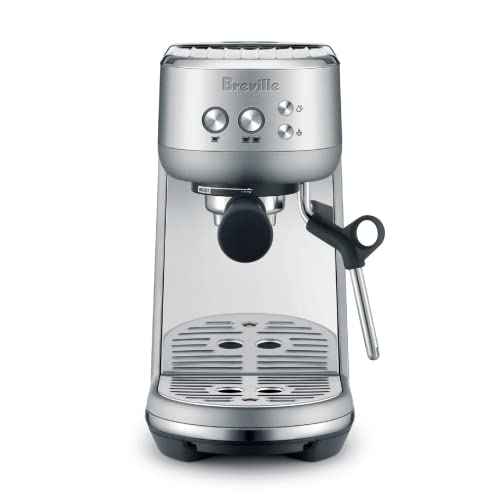
Top Pick Breville Bambino Plus
$$
Easy daily espresso without a giant machine
Check Price on Amazon Budget
Lowest-cost way into pump espresso
- Manual workflow
- 15-bar pump
- Simple controls
- Low entry price
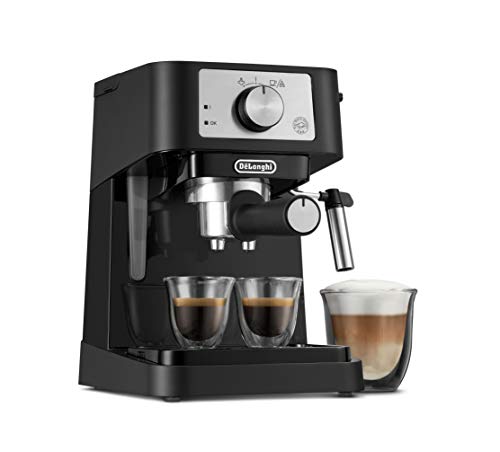
Top Pick De'Longhi Stilosa
$
Good for occasional lattes
Check Price on Amazon With Grinder
Beans-to-shot in one footprint
- Built-in burr grinder
- PID control
- Manual steam wand
- Classic workflow
Top Pick Breville Barista Express
$$
A proven all-in-one starter setup
Check Price on Amazon Automatic
One-touch drinks for busy mornings
- Built-in grinder
- One-touch recipes
- Milk system
- Less technique
Top Pick De’Longhi Magnifica Evo
$$$
Convenience over tinkering
Check Price on AmazonQuick answer: Buy the Breville Bambino Plus if you want the safest everyday pick. Choose the De'Longhi Stilosa for the cheapest real start, the Breville Bambino for a narrow counter, the Breville Barista Express if you want a built-in grinder, and the De'Longhi Magnifica Evo if you want push-button milk drinks.
Quick picks
Our Top Picks
Which espresso machines are worth comparing first?
The eight machines below cover the real buying paths: compact semi-automatic, budget manual, built-in grinder, guided all-in-one, and fully automatic. Start with your morning routine, not the fanciest spec. A fast compact machine beats a huge one if it actually fits under your cabinets.
| Product | Best for | Price band | Key spec | Verdict |
|---|---|---|---|---|
| Breville Bambino Plus | Most home espresso beginners and small kitchens | $$ | ThermoJet reaches extraction temperature in 3 seconds | Small, fast, and forgiving. |
| De'Longhi Stilosa | Occasional espresso and milk drinks on a tight budget | $ | Manual | Cheap entry point, real trade-offs. |
| Breville Bambino | Small counters and buyers who already own a grinder | $$ | Compact footprint with PID and fast heat-up | Tiny footprint, real espresso. |
| Breville Barista Express | Classic all-in-one home espresso setups | $$ | Integrated precision conical burr grinder | Classic bean-to-cup setup. |
| Breville Barista Pro | Faster all-in-one workflow with integrated grinding | $$$ | Integrated conical burr grinder and fast guided workflow | Faster workflow, higher spend. |
| Gaggia Classic Evo Pro | Manual espresso learners who want a serviceable machine | $$ | Commercial steam wand and three-way solenoid valve; no built-in PID claimed | Best learning platform. |
| Ninja Luxe Café Premier | Households that want espresso, drip coffee, cold brew, and guided workflow | $$ | Integrated conical burr grinder with 25 settings | Guided drinks without guessing. |
| De’Longhi Magnifica Evo | One-touch espresso, cappuccino, latte macchiato, and iced coffee | $$$ | 7 one-touch recipes with LatteCrema milk system | Push-button milk drinks. |
How should you evaluate a home espresso machine?
A home espresso machine should make your mornings smoother, not turn your counter into a science fair. For this roundup, we compared manufacturer specifications, current Amazon listing data, long-running editorial reviews, and practical buyer fit. The big factors were heat-up speed, brewing control, milk workflow, footprint, cleaning burden, and grinder needs.
Temperature consistency matters because espresso is tiny and intense; one wobbly shot can taste sharp, bitter, or hollow. Serious Eats also puts heavy weight on shot quality, milk steaming, ease of use, and cleanup in its espresso machine coverage. For semi-automatic machines, grinder choice matters just as much as the machine, a point Wirecutter stresses in its beginner espresso setup guide.
Which espresso machine should you buy for your routine?
The right pick depends on how much control you want before caffeine hits your bloodstream. The Bambino Plus is the safest default. Budget buyers should accept more fiddling with the Stilosa. Built-in grinder buyers should look at the Barista Express or Barista Pro, while convenience-first households should jump to Ninja or De'Longhi automatic machines.
1) Breville Bambino Plus — Best Overall
This is the machine I would point most friends toward first. It gives you real ground-coffee espresso without asking you to babysit a boiler for half the morning. Breville's Amazon listing names ThermoJet 3-second heat-up, PID temperature control, and automatic milk frothing as key features.
The catch is the missing grinder. You need a separate espresso-capable burr grinder, so budget for that from the start. Skip it if you want one-touch drinks or if you hate the idea of learning grind size, dose, and tamping.
Pros
- ✓ Very compact for a real espresso setup
- ✓ Fast heat-up suits weekday mornings
- ✓ Automatic milk texturing helps beginners
Cons
- ✗ No built-in grinder
- ✗ Still requires espresso-fine grinding and some learning
2) De'Longhi Stilosa — Best Budget
The Stilosa is for people who want to spend as little as possible and still pull a small, crema-topped shot. It is not fancy. That is the point. De'Longhi's Amazon listing describes a manual machine with a 15-bar pump, plus a basic milk frothing path for cappuccinos.
Be honest with yourself here: this is not the machine for chasing syrupy café shots every morning. It is better for occasional espresso, milk drinks, and learning the rhythm before upgrading. If your budget can stretch, the Bambino machines are easier to live with.
Pros
- ✓ Low entry price
- ✓ Small enough for apartment kitchens
- ✓ Good starter for occasional milk drinks
Cons
- ✗ More plastic than pricier picks
- ✗ Less forgiving than the Bambino Plus
3) Breville Bambino — Best Compact
The regular Bambino is the cleanest choice if your counter is already crowded with a kettle, grinder, toaster, and one mysterious appliance nobody uses. Breville's Amazon listing keeps the fast ThermoJet heat-up and PID temperature control, but this model trims the milk automation from the Plus.
That makes it better for someone who already owns a grinder and does not mind learning manual steaming. Skip it if lattes are your main drink and you want foam that feels smooth like melted ice cream without much practice.
Pros
- ✓ Narrow footprint
- ✓ Fast warm-up
- ✓ Good match for a separate grinder setup
Cons
- ✗ No automatic milk texturing
- ✗ Not as beginner-friendly for cappuccinos
4) Breville Barista Express — Best Espresso Machine With Grinder

The Barista Express is the old reliable all-in-one pick. Breville's Amazon listing includes an integrated conical burr grinder, PID temperature control, low-pressure pre-infusion, and a manual microfoam steam wand. In plain English: it grinds beans, helps wet the puck gently, and lets you steam milk by hand.
It is best if you want one machine to anchor your espresso corner. The downside is upgrade path. If you later crave a better grinder, you still have the built-in one taking up space. Skip it if you already own a strong espresso grinder.
Pros
- ✓ Built-in burr grinder simplifies shopping
- ✓ Good classic learning workflow
- ✓ Manual steam wand gives milk control
Cons
- ✗ Larger than Bambino machines
- ✗ Grinder is less flexible than a separate upgrade
5) Breville Barista Pro — Best Upgrade With Grinder
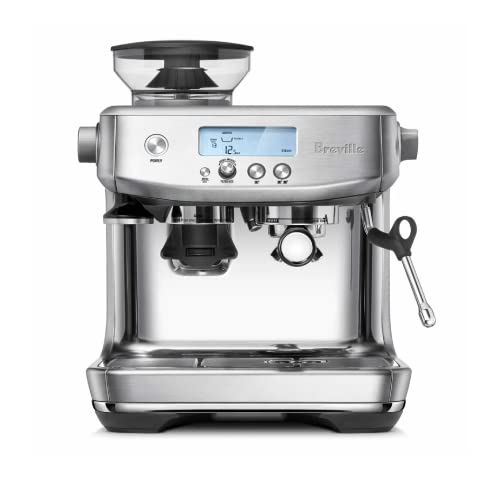
The Barista Pro is the better splurge if you like the Barista Express idea but want a faster, slicker workflow. Breville's Amazon listing calls out a ThermoJet heating system and fast transition from espresso to steam, which matters when you make back-to-back milk drinks.
This is still a manual-leaning machine. You grind, dose, tamp, and adjust. That is fun if you like improving your shot until it tastes thick and sweet. It is annoying if you just want to press one button and walk away.
Pros
- ✓ Faster workflow than older all-in-ones
- ✓ Built-in grinder keeps setup tidy
- ✓ Good for daily milk drinks
Cons
- ✗ Higher price
- ✗ Still requires manual espresso habits
6) Gaggia Classic Evo Pro — Best for Learning Manual Espresso

The Gaggia Classic Evo Pro, Thunder Black is for the person who wants to learn espresso the old-school way. Gaggia's Amazon listing includes a 9-bar pump, solid steel housing, and a 58mm commercial-style portafilter. Those details matter if you want accessories and habits that feel closer to café gear.
It is not the easiest beginner pick. You will need a good grinder, patience, and a willingness to make a few sour sink shots while you learn. Skip it if you want automatic milk or a soft landing.
Pros
- ✓ Great platform for learning fundamentals
- ✓ 58mm portafilter opens accessory options
- ✓ Solid steel housing
Cons
- ✗ Less forgiving for beginners
- ✗ Needs a capable separate grinder
7) Ninja Luxe Café Premier — Best Guided All-in-One
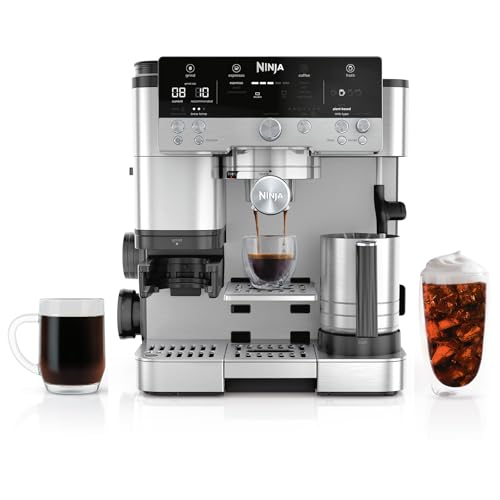
The Ninja Luxe Café Premier is the oddball here in a useful way. Ninja's Amazon listing describes a 3-in-1 setup with conical burr grinder, Barista Assist Technology, grind recommendations, weight-based dosing, and hands-free frothing.
That makes it appealing for households where one person wants espresso and another wants drip or cold brew. The trade-off is identity. If you want a pure traditional espresso machine, this may feel like a multi-tool instead of a chef's knife.
Pros
- ✓ Guided workflow helps reduce guessing
- ✓ Built-in grinder and dosing assistance
- ✓ Covers more than espresso
Cons
- ✗ Not a traditional espresso-only machine
- ✗ Bigger countertop presence
8) De’Longhi Magnifica Evo — Best Fully Automatic

The Magnifica Evo is the convenience pick. De'Longhi's Amazon listing lists a built-in conical burr grinder with 13 grind settings, 7 one-touch recipes, and the LatteCrema System. That is the appeal: fewer loose parts, fewer steps, fewer reasons to skip your morning cappuccino.
Fully automatic machines trade control for ease. Your drink may not have the same syrupy punch as a carefully dialed semi-automatic shot, but it will happen with much less effort. Skip it if you want to learn espresso technique.
Pros
- ✓ One-touch recipes are easy for households
- ✓ Built-in grinder
- ✓ Good fit for milk drink convenience
Cons
- ✗ Less control than semi-automatic machines
- ✗ Higher price and more internal parts to maintain
Frequently asked questions
What is the best espresso machine for beginners?
The Breville Bambino Plus is the best espresso machine for most beginners because it heats quickly, keeps the workflow simple, and can texture milk automatically. You still need a grinder and fresh beans, but the machine removes a lot of early frustration.
Is a more expensive espresso machine always better?
No. A more expensive machine is better only if it solves your real problem: faster steaming, a built-in grinder, stronger temperature control, or one-touch drinks. If you mostly make one cappuccino each morning, a compact semi-automatic machine can beat a flashy oversized one.
Should I buy an espresso machine with a built-in grinder?
Buy one with a built-in grinder if you want a cleaner counter and simpler shopping list. Buy a separate grinder if you want more upgrade room. Semi-automatic espresso is very grinder-sensitive, so the grinder should never be an afterthought.
Is a semi-automatic or automatic espresso machine better?
A semi-automatic machine is better if you want control over grind, dose, tamping, and shot taste. A fully automatic machine is better if you want coffee-shop-style drinks with less fuss. Choose control for flavor learning, convenience for busy households.
How many bars should an espresso machine have?
Nine bars at the coffee puck is the classic espresso target, but marketing numbers can be misleading. Many budget machines advertise 15 bars because that is pump pressure, not necessarily brewing pressure. Focus on shot taste, temperature control, and grind quality first.
Can a budget espresso machine make real espresso?
Yes, a budget pump machine can make real espresso, especially with fresh beans and a capable grinder. The catch is consistency. Cheaper machines usually give you less temperature stability, weaker steaming, and more fiddly shot prep, so they reward patience.
Do I need a separate grinder for a Breville Bambino Plus?
Yes, the Breville Bambino Plus does not include a grinder, so you need a separate espresso-capable burr grinder. Pre-ground coffee can work in a pinch, but it goes stale fast and limits your control over shot speed and flavor.
What is the best espresso machine for lattes and cappuccinos?
The Breville Bambino Plus is the easiest latte and cappuccino pick for most homes because it has automatic milk texturing in a compact body. If you want one-touch milk drinks with less technique, the De'Longhi Magnifica Evo is the better convenience pick.
What should you read next before buying?
The next best guide depends on what part of espresso still feels fuzzy. If you are choosing a semi-automatic machine, read about grinders before you buy. If you are still comparing price tiers, start with the budget espresso guide or the main espresso hub.
- Best burr grinder for espresso — the most important companion purchase for semi-automatic machines.
- Best hand grinder for espresso under $100 — useful if your machine budget is already stretched.
- Burr grinder settings for espresso — a plain-English guide to dialing in shots.
- Best espresso machine under $200 — better if you are shopping at the lowest price point.
- Espresso guides — the hub for machines, grinders, and beginner setup help.