 Coffee Gear Picks
Best Espresso Machine Italian (2026): 8 Picks
The best espresso machine italian pick for most homes is the Gaggia Classic Evo Pro, Thunder Black because it gives you a real semi-automatic workflow, a 58mm portafilter, and a repair-friendly, long-lived design without jumping into prosumer pricing.
This guide compares Italian-made machines plus Italian-brand machines available to U.S. home buyers. That distinction matters: brands like Gaggia, Rancilio, Rocket, La Pavoni, and De’Longhi all carry Italian espresso DNA, but you should only call a specific model made in Italy when the current product listing or manufacturer states it.
Top pick: Gaggia Classic Evo Pro, Thunder Black: it gives most home users the best mix of Italian-made heritage, 58mm semi-automatic workflow, repairability, and price.
- Price band: $$
- Weight: 20 lb
- Materials: Brass, plastic, stainless steel
- Key feature: 9-bar extraction with 58mm commercial portafilter
Best Italian Espresso Machines for Home
Ranked by workflow, build, grinder needs, milk drink comfort, and long-term value
Overall
Real semi-auto espresso without prosumer sticker shock
- 58mm portafilter
- 9-bar extraction
- Compact steel body
- Repair-friendly classic
Top Pick Gaggia Classic Evo Pro
$$
Best balance for most homes
Check Price on Amazon All-in-one
Grinder, espresso, and cold extraction in one counter setup
- Built-in burr grinder
- 8 grind settings
- Semi-auto workflow
- Cold drink mode
Top Pick De’Longhi La Specialista Arte Evo
$$
Fewer extra tools to buy
Check Price on Amazon Automatic
Push-button espresso when you do not want a barista routine
- One-touch recipes
- Built-in grinder
- Milk system
- Simple weekday drinks
Top Pick De’Longhi Magnifica Evo
$$
Easiest daily workflow
Check Price on Amazon Premium
A serious heat-exchanger machine for milk drink households
- Heat exchanger boiler
- E61-style group
- Heavy copper build
- Prosumer footprint
Top Pick Rocket Espresso Appartamento 2.0, Black
$$$
Cafe-style home station
Check Price on AmazonQuick answer: Buy the Gaggia Classic Evo Pro, Thunder Black for the best balance of hands-on control and long-term value. Choose the De’Longhi La Specialista Arte Evo if you want a built-in grinder, the De’Longhi Magnifica Evo if you want push-button milk drinks, or the Rocket Espresso Appartamento 2.0 if you want a premium prosumer-style setup for frequent cappuccinos.
Quick picks
Our Top Picks


Which Italian espresso machine should you buy?
The right pick depends on how much work you want before the first sip. Semi-automatic machines give you the most control, super-automatics handle the fussy parts for you, and heat-exchanger or dual-boiler machines make the most sense when milk drinks happen daily.
| Product | Best for | Price band | Key spec | Verdict |
|---|---|---|---|---|
| Gaggia Classic Evo Pro | Best Overall | $$ | Commercial steam wand and three-way solenoid valve; no built-in PID claimed | Most home baristas who want Italian-made semi-automatic espresso |
| De’Longhi La Specialista Arte Evo | Best All-in-One | $$ | Cold Extraction Technology and built-in burr grinder | Buyers who want grinder, tamping tools, espresso, and cold brew in one machine |
| Rancilio Silvia | Best Classic Upgrade | $$ | Home baristas who want a durable classic single-boiler machine | |
| De’Longhi Magnifica Evo | Best Automatic | $$ | 7 one-touch recipes with LatteCrema milk system | Hands-off espresso, cappuccino, latte macchiato, and iced coffee |
| Gaggia Brera | Best Compact Automatic | $$ | Compact bean-to-cup espresso workflow | Small kitchens that need a compact super-automatic espresso machine |
| Rocket Espresso Appartamento 2.0, Black | Best Premium Italian-Made | $$$ | Deeper drip tray, longer steam wand, RGB status light | Serious home espresso setups with frequent milk drinks |
| Rancilio Silvia Pro X | Best Dual Boiler | $$$ | Home baristas who want separate brew and steam control | |
| La Pavoni Domus Bar | Best Traditional All-in-One | $$$ | Buyers who want a made-in-Italy espresso and grinder combo |
How we evaluate Italian espresso machines
We judge these machines by the cup they can produce and the routine they demand. The practical questions are: can it make balanced espresso consistently, does it steam milk without turning into a chore, and is the workflow one you will still enjoy a month from now?
Specs only matter when they change your day. A 58mm portafilter opens up more baskets and accessories, 9-bar brewing is the classic espresso pressure target, and boiler design affects how quickly you can move from espresso to steam. For boiler tradeoffs, Clive Coffee’s heat exchanger vs dual boiler guide is a clear reference. For model-level details (including country-of-origin), we rely on the current manufacturer and retailer listings.
Which models are worth a closer look?
These eight machines cover the useful range: classic single-boiler boxes, built-in-grinder hybrids, compact super-automatics, and serious prosumer machines. The goal is not “most expensive.” It is the machine that matches your patience, counter space, and milk-drink habit.
1) Gaggia Classic Evo Pro: Best Overall
The Classic Evo Pro is a smart first serious setup because it teaches the right habits: grind, dose, tamp, and manage milk. That “real espresso” routine is exactly what makes the shots more adjustable than what you get from pods or most bean-to-cup machines.
The honest downside is pace. Like most single-boiler machines, it is not built for rapid-fire cappuccinos. If you mostly drink straight espresso (or one milk drink at a time), it is a great fit: just plan on adding a capable grinder from our best burr grinder for espresso guide.
Pros
- ✓ Classic 58mm semi-automatic workflow
- ✓ Compact footprint for a real portafilter machine
- ✓ Strong long-term value with wide parts/accessory support
Cons
- ✗ Needs a separate espresso grinder
- ✗ Single boiler slows back-to-back milk drinks
2) De’Longhi La Specialista Arte Evo: Best All-in-One
The La Specialista Arte Evo is for buyers who want espresso gear, but not an espresso “project.” The built-in burr grinder keeps the setup contained, and the included tools make it easier to get from box to first drink without shopping for extra pieces.
The compromise is flexibility. Built-in grinders are convenient, but they can be limiting if you later want a higher-end grinder or you like switching beans constantly. If you want a single, tidy machine that still feels more involved than a super-automatic, this is the De’Longhi to buy.
Pros
- ✓ Built-in burr grinder keeps the setup simple
- ✓ Good fit for smaller kitchens
- ✓ Cold extraction adds drink variety
Cons
- ✗ Less upgrade-friendly than a separate grinder setup
- ✗ Takes more space than a basic single-boiler machine
3) Rancilio Silvia: Best Classic Upgrade
The Silvia is the classic step-up for people who want a machine that feels like a tool: simple controls, solid casework, and a long-running reputation. Compared with the Gaggia, it tends to appeal to buyers who already know they like the semi-auto routine and want something that feels more “serious.”
It is not as forgiving for beginners, especially if you are learning espresso and milk at the same time. If you want a softer learning curve, start with the Gaggia. If you want a sturdy classic you can grow into (and you are patient with the single-boiler pace), Silvia earns its spot.
Pros
- ✓ Sturdy steel case
- ✓ Classic home-barista reputation
- ✓ Good stepping stone before prosumer machines
Cons
- ✗ Steeper learning curve for beginners
- ✗ Single boiler requires patience for milk drinks
4) De’Longhi Magnifica Evo: Best Automatic

The Magnifica Evo is the “I want espresso drinks, not a new hobby” choice. It handles grinding, dosing, and brewing internally, so you can get consistent weekday cappuccinos without a tamper, knock box, or dial-in routine.
What you trade away is the ability to fine-tune flavor like you can on a semi-auto setup. If you love experimenting with dose and grind, you will feel boxed in. If you just want reliable drinks with minimal effort, the convenience is absolutely the feature.
Pros
- ✓ One-touch recipes are genuinely convenient
- ✓ Built-in grinder with many settings
- ✓ Milk system suits latte/cappuccino routines
Cons
- ✗ Less control than semi-automatic machines
- ✗ More internal parts to clean and maintain
5) Gaggia Brera: Best Compact Automatic
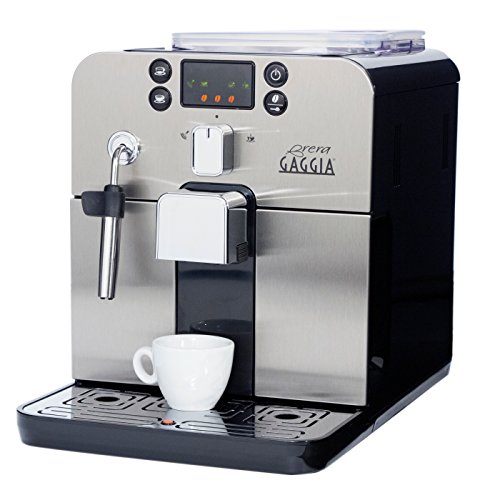
The Brera is the compact bean-to-cup option for tight counters. It is not trying to win espresso competitions; it is trying to make an espresso-style drink with minimal setup, minimal accessories, and minimal fuss.
The small footprint comes with smaller tanks and bins, so you refill and empty more often than on larger super-automatics. If you want the most hands-off workflow in the smallest space, it is a reasonable pick: just keep expectations aligned with its compact, convenience-first design.
Pros
- ✓ Compact super-automatic footprint
- ✓ Integrated grinder keeps the setup all-in-one
- ✓ Good fit for low-effort routines
Cons
- ✗ Smaller capacity means more refills/emptying
- ✗ Not for espresso hobbyists chasing fine control
6) Rocket Espresso Appartamento 2.0, Black: Best Premium Italian-Made

The Appartamento 2.0 is for buyers who want their kitchen to feel like a small espresso bar. It is heavy, premium-looking, and built around a heat-exchanger workflow that is more comfortable for milk-drink households than a single-boiler machine.
Two cautions: you need the counter space (and the budget), and you still need a strong grinder. If you mostly drink one straight espresso per day, it is hard to justify. If you make cappuccinos in pairs: or you regularly entertain: this is the “buy once, cry once” pick in the lineup.
Pros
- ✓ Heat exchanger suits back-to-back milk drinks
- ✓ Premium prosumer-style workflow
- ✓ Heavy build feels substantial
Cons
- ✗ Expensive and heavy
- ✗ Needs a strong separate grinder to shine
7) Rancilio Silvia Pro X: Best Dual Boiler

The Silvia Pro X is what happens when the classic Silvia grows up. Dual boilers keep brewing and steaming separate, so you are not juggling the machine like a traffic cop. The PID controls help hold temperature steady, which matters when you want repeatable shots.
This is overkill for casual espresso. It costs more, takes more counter space, and still demands a real grinder and careful puck prep. But if you want control without jumping to a huge commercial-looking machine, it is one of the most sensible premium upgrades here.
Pros
- ✓ Separate brew and steam boilers
- ✓ PID control and shot timer
- ✓ More repeatable than single-boiler classics
Cons
- ✗ Price climbs quickly
- ✗ Still requires skill and a separate grinder
8) La Pavoni Domus Bar: Best Traditional All-in-One

The Domus Bar has a specific appeal: traditional Italian espresso-machine personality with a grinder built into the body. La Pavoni is one of the most recognizable Italian espresso names, and this machine suits buyers who want the old-world look without building a separate grinder station.
The catch is value. At this price, many home baristas would rather buy a separate machine and grinder for easier upgrading later. Choose the Domus Bar because you love the combined format and the La Pavoni feel, not because it is the cheapest path to great espresso.
Pros
- ✓ Built-in conical burr grinder
- ✓ Traditional La Pavoni personality
- ✓ Large water capacity for the category
Cons
- ✗ Pricey for a combo setup
- ✗ Separate grinder and machine may age better
Frequently asked questions
What is the best Italian espresso machine for home?
For most homes, the Gaggia Classic Evo Pro, Thunder Black is the best Italian-style espresso machine in this list. It gives you a real semi-automatic workflow with a 58mm portafilter at a manageable price. If you want one-touch drinks, choose the De’Longhi Magnifica Evo.
Are Gaggia espresso machines made in Italy?
Some Gaggia machines are listed as made in Italy, but you should verify it on the specific product listing you are buying. Country of origin can vary by model and can change over time, even within the same brand.
Is Rancilio Silvia better than Gaggia Classic?
Rancilio Silvia is often the sturdier-feeling classic, while the Gaggia Classic Evo Pro, Thunder Black is usually the easier value pick. Silvia makes sense if you want a heavier, more “tool-like” machine and do not mind a steeper learning curve. Gaggia is friendlier for first serious setups.
Is De’Longhi an Italian espresso machine brand?
Yes. De’Longhi is an Italian coffee appliance brand, but not every De’Longhi machine is manufactured in Italy. Treat it as Italian-brand unless the current listing clearly states “Made in Italy.”
Do Italian espresso machines need a separate grinder?
Usually, yes. Semi-automatic machines like Gaggia Classic Evo Pro, Thunder Black, Rancilio Silvia, and Rocket Appartamento need an espresso-capable grinder. Exceptions include machines with built-in grinders like De’Longhi La Specialista Arte Evo, De’Longhi Magnifica Evo, Gaggia Brera, and La Pavoni Domus Bar.
Are Rocket espresso machines worth it for home?
Rocket machines can be worth it if you make frequent milk drinks and want a premium heat-exchanger workflow. They are heavy, expensive, and demand a strong grinder. If you only pull one straight espresso a day, a Gaggia or Rancilio is usually the more sensible buy.
What is the difference between an Italian-made and Italian-style espresso machine?
Italian-made means the machine is manufactured in Italy (when the seller or manufacturer explicitly says so). Italian-style means it follows the traditional espresso workflow: portafilter, pump/boiler brewing, and milk steaming: but it may be made elsewhere.
What should you read next?
Espresso gear works as a system, not a single shiny box. These guides help you finish the setup without wasting money on the wrong grinder, scale, or starter machine.
- Best Burr Grinder for Espresso: the most important pairing for Gaggia, Rancilio, and Rocket machines.
- Burr Grinder Settings for Espresso: how to fix sour, bitter, or gushing shots.
- Best Espresso Machine Under $200: cheaper starter options if these Italian picks feel too expensive.
- Best Coffee Scale for Espresso and Pour Over: small scales that make dosing less sloppy.