 Coffee Gear Picks
Coffee Extraction Ratio for Espresso: 1:2 Guide (2026)
A 1:2 espresso brew ratio means 18 g ground coffee producing 36 g liquid espresso by weight. It gives you a repeatable starting point instead of asking crema or cup height to do the measuring.
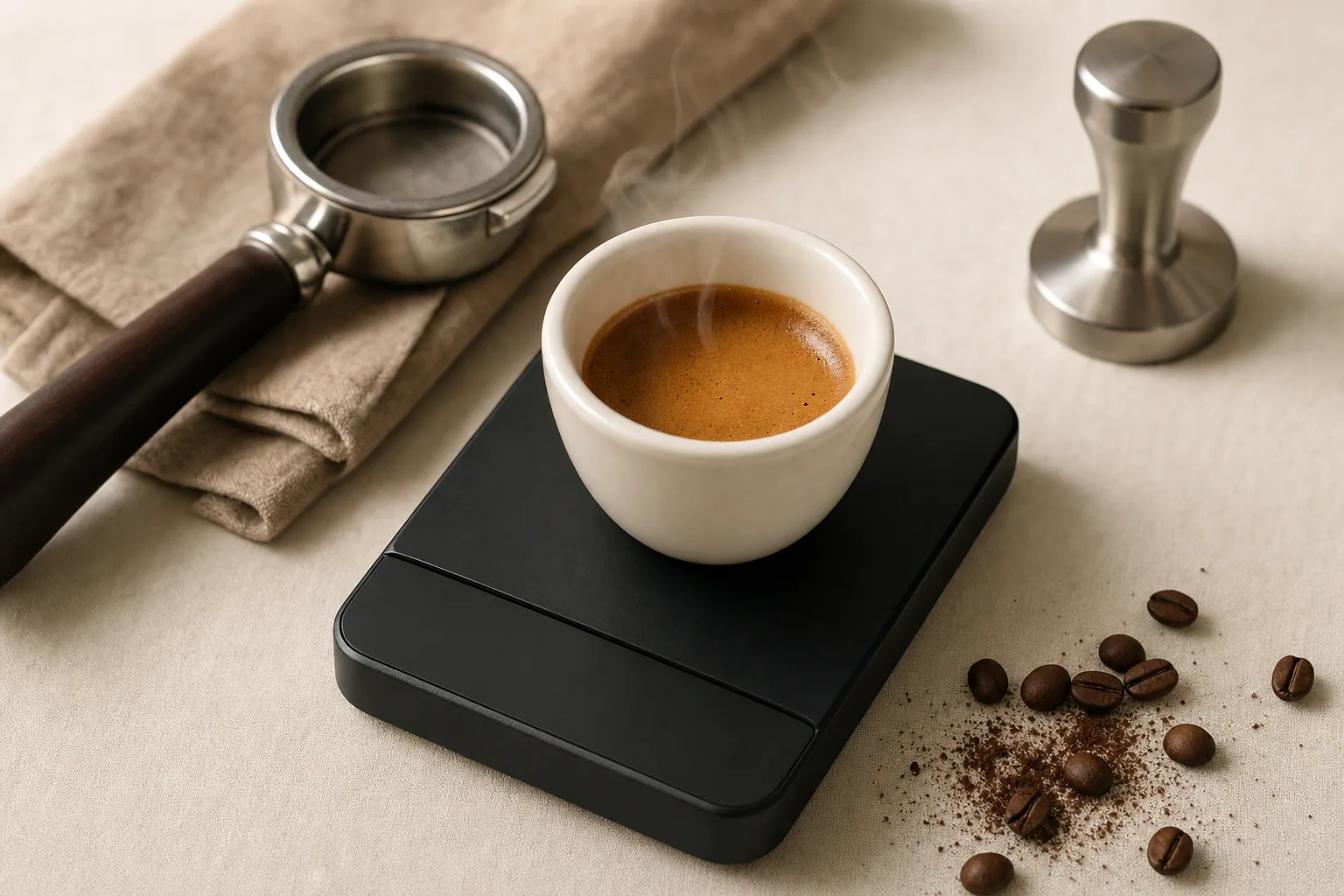
Top pick: Timemore Basic 2.0 Coffee Scale, Black. Its 0.1 g readability, timer, and 2 kg capacity make it a practical way to repeat dose and yield.
- Price band: $$
- Weight capacity: 2 kg
- Material: Acrylic
- Key feature: Integrated timer and flow-rate display
Think of 1:2 as a starting recipe, not a promise that every coffee will taste its best there.
Dial In an Espresso Ratio
Four small, repeatable moves from dry dose to a better-tasting shot
- Weigh 18 g dry coffee
- Keep the dose fixed
- Start espresso-fine
- Change one notch at a time
- Stop at 36 g out
- Note the shot time
- Taste after it cools
- Write down one change
A repeatable 1:2 starting shot and a clear next move when the flavor is off
What does a 1:2 espresso ratio mean?
A 1:2 ratio means twice as much beverage yield as dry coffee: 18 g in, 36 g out. Put the cup on a scale, start the shot, and stop at the target weight. Unlike the ratios in a general coffee brewing ratio guide, espresso tracks dry dose against the drink in your cup.
Clive Coffee describes 1:2 and about 25–30 seconds as a traditional starting point. La Marzocco Home likewise uses 18 g in and 36 g out, with a 25–35 second normale range. Start there, then judge the result by taste.
What do you need to make espresso ratios repeatable?
You need a machine that can pull a controlled shot, fresh coffee, and three practical tools: a capable grinder, a cup, and a fast scale. A scale with 0.1 g resolution and a timer turns “about right” into a recipe you can pull again tomorrow.
Set these out before you pull
- Espresso machine with enough shot control to stop near a target yield
- Fresh coffee and an espresso-capable burr grinder
- Scale accurate to 0.1 g with a timer
- Portafilter basket, tamper, and a cup that fits on the scale
For a scale that fits this job, see our espresso and pour-over scale picks. If your machine cannot repeat a dose and yield because it has very little control, our budget espresso machine picks can help you find a more workable starting setup.
How do you dial in a 1:2 espresso recipe?
Lock in 18 g dry coffee and aim for 36 g in the cup, then use grind size to bring the flow into a useful range. Keep the coffee, dose, tamp, and target yield the same while you make the first adjustment. That controlled comparison makes the result readable.
Step 1: Set a dry dose you can repeat
Weigh 18 g of whole beans, grind them, and weigh the grounds in the basket if your grinder leaves a lot behind. Distribute the grounds evenly and tamp with the same firm, level press each time. You are not chasing a magic tamp; you are removing a source of random results.
Step 2: Start at an espresso setting, then adjust the grinder first
Start in your grinder’s espresso range and pull one shot. If it rushes through well before your target yield and time, go finer; if it barely drips, go coarser. The first change should be grind, not ratio. Use this espresso grinder-setting guide for the practical details.
A blade grinder cannot make these small, useful moves. If your adjustment jumps from a gush to a choke, an espresso-capable burr grinder gives you the control to work between them.
Step 3: Stop the shot at 36 g of beverage yield
Tare the cup and scale, start the pump, and stop at 36 g. The stream often lightens near the end, but the scale, not its color, is the consistent stopping point. Record the time from pump start to your target yield, not simply the time the machine happens to run.
Step 4: Taste it, then log one next move
Stir the crema into the shot and let it cool briefly. Very hot espresso can obscure sweetness and exaggerate sharp edges. Note dose, yield, time, grind setting, and whether it tasted sour, bitter, dry, heavy, or thin.
Coffee Bros. places normale-style shots around 1:2 to 1:3, so it is reasonable to explore after your 1:2 pull is steady. Move one thing at a time.
What throws an espresso ratio recipe off?
The usual problem is changing dose, grind, yield, and shot time together, then having no way to tell what helped. Keep one recipe on paper and make a single small move per shot. A clean comparison is more useful than a dramatic guess.
- Stopping by looks: crema height does not reliably show the beverage yield. Stop by grams.
- Changing the dose to chase time: keep the dose steady first; adjust the grind to change flow.
- Calling a 30-second shot “correct”: time is a clue, not a flavor score. Taste the cup.
How should you adjust a sour, bitter, or oddly balanced shot?
Use taste as a clue, then make one controlled next adjustment instead of declaring the ratio broken. Sourness often accompanies a fast, thin shot; bitterness or dryness often accompanies a slow, heavy one. Those patterns make grind a sensible first variable, but the cup decides whether the change helped.
Pick your next adjustment
Keep the 18 g dose fixed and re-pull after one small change
- Try a slightly finer grind
- Keep the 36 g target first
- Try a slightly coarser grind
- Keep dose and yield steady
- Adjust yield a few grams shorter or longer
- Leave the grind alone for this pull
Taste, log, and make only one new move on the next shot
For a longer, less concentrated cup, try a few more grams of yield; for more concentration, stop a few grams earlier. Scott Rao argues that 2:1 is not a universal endpoint. The coffee may suit a different yield.
Frequently asked questions
What does a 1:2 espresso ratio mean?
A 1:2 espresso ratio means using one part dry ground coffee to two parts espresso beverage by mass. For example, 18 g of coffee producing 36 g in the cup is a 1:2 recipe. It describes dry dose : beverage yield, not water poured into the machine.
How long should a 1:2 espresso shot take?
Use roughly 25–35 seconds as a useful starting neighborhood, not a finish line. La Marzocco Home uses that range for a normale-style 18 g in, 36 g out recipe. If the flavor is good outside it, taste wins; write down what happened.
Should I change grind size or ratio first?
Change grind size first when the shot runs much too fast or slow. Keep the dose and target yield fixed so you can read the result. Once the flow is sensible, adjust yield a little longer or shorter to steer the flavor.
Is a double espresso always 18 g of coffee?
No. A double espresso has no single universal dry dose because basket capacity and the recipe both vary. An 18 g dose is common in a modern double basket, but your basket may suit a different amount. Use its comfortable fill level, then weigh the yield.
Can a longer espresso ratio taste less bitter?
It can change the balance, but it is not a guaranteed bitterness fix. A longer yield may make a heavy shot feel less concentrated, while it can also pull dry flavors from some coffees. Change only the yield, taste it, and compare it with your notes.