 Coffee Gear Picks
Grind Size for Delonghi Dedica (2026): Settings & Dial-In Guide
For the De'Longhi Dedica, start with coffee ground fine like table salt, then adjust one small step at a time. That tiny move is often the difference between a sharp, lemony gusher and a sweet, syrupy shot.
Dial In Your Dedica Grind
A five-move routine for a sweeter, steadier espresso shot
Step 1 Choose a basket
- Use stock pressurized or non-pressurized
- Keep that basket for the session
Step 2 Weigh the dose
- Use the same coffee amount
- Level and tamp evenly
Step 3 Set the grind
- Start at the reference setting
- Change one notch only
Step 4 Pull and time
- Watch the flow
- Aim near 25–30 seconds
Step 5 Taste and lock in
- Taste for sourness or bitterness
- Write down the winner
Step 6 Repeat once
- Make one targeted change
- Keep everything else fixed
Result
A repeatable Dedica setting that tastes sweet instead of thin, harsh, or muddy
What grind size does the De'Longhi Dedica need?
The Dedica is one of the slimmest machines on the market, and much of its appeal is footprint, which it shares with the rest of the compact machines we rate. The Dedica needs a fine espresso grind: think fine table salt, with a slight clump when pinched. Go finer than moka-pot coffee but stop well before flour. Grind descriptions are only a starting cue; flow and taste decide the setting in your own machine.
Baratza describes settings 1–20 as the Encore ESP’s espresso range; retailer specifications list its 40 mm burrs, 70 W motor, and 7 lb weight. De'Longhi lists 15-bar pressure for the EC685, while brewbase.blog and super-espresso identify the 51 mm portafilter. Super-espresso also reports roughly 7 g for the stock single basket and 12 g for the double. Those dual-wall baskets are forgiving with pre-ground coffee; a non-pressurized basket needs a more precise burr-grinder setting.
What grind setting should you start with on each grinder?
Settings differ across the range, so check which model you actually own against our De'Longhi round-up before copying a number. Start with the setting below, not the number a stranger swears by. Bean age, roast, grinder calibration, and basket change the answer; these references simply get you close enough to pull a useful first shot.
If you're shopping for your first espresso-capable grinder, our researched picks in our best burr grinder for espresso picks show the sensible options. Want a sub-$200 electric route? Start with our best burr coffee grinder under $200.
| Product | Starting setting | Why |
|---|---|---|
| Baratza Encore ESP | Around 20 in the espresso range | Settings 1–20 are Baratza’s espresso-focused range; 20 is a sensible first reference. |
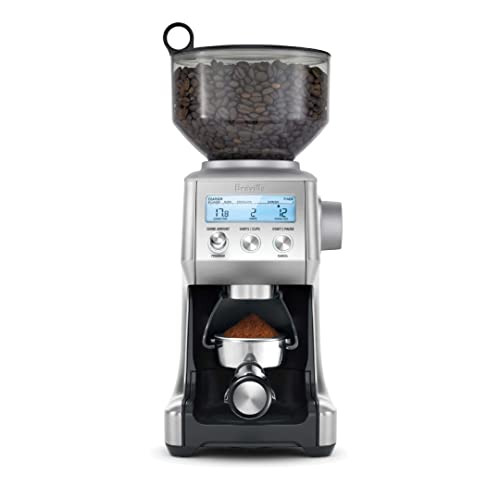
| Breville Smart Grinder Pro | 5–10 | A commonly used espresso neighborhood; use the shot, not the display, to choose the final number. |
| MiiCoffee DF54 | 15–25 on the stepless dial | An owner-reported neighborhood, not a transferable fixed number. |
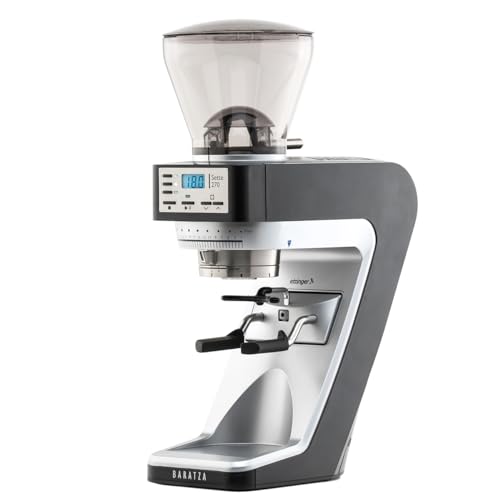
| Baratza Sette 270 | Macro 9; set micro to taste | The macro setting gets close while the stepless micro ring handles the final adjustment. |
| 1Zpresso J-Ultra | 1.5–2.2 rotations from zero | Its 8-micron clicks make small moves meaningful. |
| KINGrinder K6 Manual Coffee Grinder | 40–55 clicks | A practical owner-reported starting range; make one-click changes once close. |
Baratza’s dial-in guide treats a starting number as just that: a reference to adjust from. Breville’s Smart Grinder Pro has a 60-setting scale, while the DF54 and K6 ranges above are deliberately labeled owner-reported because calibration varies. 1Zpresso specifies 8 microns per J-Ultra click; KINGrinder’s K6 uses 16-micron clicks, so small adjustments matter on both hand grinders.
Our Top Picks



How do you dial in the grind on a Dedica, step by step?
Pick one basket, hold your dose steady, and let the shot’s flow and taste tell you where to move. The goal is not a magic grinder number; it is a drink you would happily make again tomorrow.
Step 1: Choose the basket before touching the grinder
Use the stock pressurized basket for pre-ground coffee or an easier start. If you fit a bottomless, non-pressurized basket, begin finer and expect to make more careful adjustments.
Step 2: Weigh the same dose every time
Fill the basket with the dose it is made for, level the grounds, and tamp with the same calm pressure. A 0.1 g scale (see our best coffee scale for espresso) makes dose consistency automatic instead of a daily guess.
Step 3: Grind at your starting point
Grind fresh coffee at the reference setting above. Fresh grounds should look like fine salt, not powder, and they should break apart with a light touch rather than forming hard pebbles.
Step 4: Pull the shot and watch the clock
With a bottomless basket, use roughly 25–30 seconds for a 1:2 shot as an initial target. The stock pressurized basket may run faster, but time still helps: a rushing pale stream asks for finer grounds; a near-stall asks for coarser ones.
Step 5: Taste, then change one thing
Taste before you fix anything. If it is sharp and thin, go one step finer; if it tastes burnt, dry, or harsh, go one step coarser. Keep the basket and dose unchanged so the next cup actually teaches you something.
What grind-size mistakes ruin Dedica espresso?
The usual Dedica mistakes are simple: chasing someone else’s number, changing several things at once, or expecting a blade grinder to act like an espresso grinder. Keep the routine boring and the coffee gets much better.
- Changing dose and grind together. You will not know which move fixed the cup. Keep the dose steady until the flow is close.
- Ignoring the basket. A pressurized basket can hide a sloppy grind; a non-pressurized basket exposes it immediately. Do not compare their shot times as if they are identical.
- Grinding by looks alone. Fine salt is a useful visual cue, but taste and flow get the final vote. Beans can look similar and still need different settings.
- Using stale pre-ground coffee for a bottomless basket. It may never build an even flow, no matter how hard you tamp. Fresh beans give you a fighting chance.
- Buying a cheap blade grinder to save money. It chops unevenly, which makes sour and bitter flavors show up together. A manual burr grinder is the better budget path; see our best hand grinder for espresso under $100.
Why is my Dedica shot sour, bitter, or dripping?
A sour fast shot needs a finer grind, while a bitter slow one needs a coarser grind. Change just one small step per shot; big swings turn a quick fix into a guessing game.
Sour, thin, and fast
Go finer one step. Water raced through the coffee and left the sweeter flavors behind, so the cup tastes like lemon peel instead of caramel.
Bitter, dry, or ashy
Go coarser one step. The water lingered too long and pulled harsh flavors along with the good stuff.
Almost nothing comes out
Go noticeably coarser, then check that you did not overfill the basket. A choked puck is too tight for the Dedica to push through comfortably.
The shot gushes out like dishwater
Go finer one step and make sure the dose is consistent. If it still gushes with a non-pressurized basket, the coffee may be too old to hold a stable puck.

Frequently asked questions
What grind size should I use for the De'Longhi Dedica?
A fine espresso grind, about the texture of fine table salt (roughly 200–400 microns). Use fine pre-ground "espresso" coffee with the stock pressurized baskets, and a truly fine dialed-in grind from a burr grinder if you switch to a non-pressurized basket.
Can I use pre-ground coffee with the Dedica?
Yes — the stock dual-wall (pressurized) baskets are designed for it. Ask your roaster for an espresso grind; it needs to be fine enough to build pressure but it does not need the precision of fresh-ground beans.
What number setting should my grinder be on for the Dedica?
It depends on the grinder. Popular starting points: Baratza Encore ESP around setting 20, Breville Smart Grinder Pro between 5 and 10, and 1Zpresso J-Ultra at roughly 1.5–2.2 rotations from zero. Always adjust by taste, one step at a time.
Does the De'Longhi Dedica need a special grinder?
It needs a burr grinder with a fine espresso range, not a blade grinder. The Dedica’s 51 mm portafilter and 15-bar pump reward an espresso-capable burr grinder; see our researched grinder picks for options at every price.
Do I need to use the pressurized basket?
Only if you use pre-ground coffee or want an easy, forgiving start. The pressurized basket accepts coarser, less uniform grind. For better shots, a non-pressurized basket plus fresh coffee and a fine dialed-in grind gives real espresso control.
Why is my Dedica espresso sour or bitter?
Sour, thin, fast shots mean the grind is too coarse — go finer one step. Bitter, ashy shots with a dark crema mean too fine — go coarser. Change only one variable (grind, dose, or basket) per shot.