 Coffee Gear Picks

Paper vs Metal Pour Over Filter (2026): Which to Choose?
Choose paper for a clearer cup and easier cleanup; choose metal if you want more body and a filter you can reuse. Neither is a universal upgrade, and fit matters before you buy.
Building around that choice? Best Pour Over Accessories (2026): 6 Worth Buying gives you a complete kettle, dripper, scale, and accessory shortlist without buying gear you do not need.
Paper and metal filters compared
Paper usually retains more coffee oils and fines, the tiny particles left by grinding. Metal allows more of both into your mug. Fellow’s “Paper vs. Metal” explainer connects that difference with cleaner paper-filter cups and fuller metal-filter cups with more sediment, not an automatic winner for flavor.
| Filter type | Best for | Relative spend | Key difference | Verdict |
|---|---|---|---|---|
| Paper | Clarity and quick cleanup | Lower initial commitment; repeat purchases | Retains more oils and fine particles | Start here for most pour-over routines |
| Metal | Fuller body and reuse | Larger initial commitment; cleaning and possible replacement | Lets more oils and particles through | Choose deliberately for texture, not as a universal upgrade |
Paper: clearer flavors, less grit
I’d reach for paper when the appeal is picking out citrus, berries, or tea-like flavors rather than a thick mouthfeel. Think clear apple juice versus cloudy juice: texture changes how the drink feels, even before you judge flavor. FireFortySix’s V60 comparison describes cleaner, brighter paper-filter results. That is one writer’s comparison, not proof that every bean tastes better through paper.
Metal: more texture, some sediment
Metal makes sense if a heavier mouthfeel is part of what you love about coffee. Fellow describes the extra oils and sediment; expect a different texture rather than simply “more flavor.” Mesh designs differ, so one reusable filter may leave more grit than another. If you hate the dusty last sip of a French press, I would not buy metal just to stop ordering papers.
What matters before you switch?
Check brewer fit first, then decide whether you will enjoy the cleaning routine. A reusable filter that sits badly is not a bargain. After switching, keep your coffee dose and water amount steady so you can judge the filter change before adjusting grind or pouring.
Match the brewer, not just the word “cone”
The Hario V60 Ceramic Dripper 02 listing specifies ceramic construction and size 02 paper filters, with a single large hole and spiral ridges. For a metal replacement, look for explicit V60 size 02 compatibility. Similar-looking cones can differ in angle, depth, and how they rest inside the dripper.
The Chemex Classic Series 6-Cup is a different fit example: borosilicate glass, six-cup capacity, and Chemex Bonded Filters. Do not assume generic cone papers fit it. If replacing the brewer is simpler, Best Pour Over Coffee Maker (2026): 6 Top Picks compares brewer shapes and the use cases each suits.
Expect to revisit grind and pouring
More fines can pass through metal, so a slightly coarser grind or gentler pour is a sensible starting adjustment if sediment bothers you. FireFortySix’s V60 comparison discusses grind and flow differences, but do not copy a setting as a universal recipe. The filter’s mesh, your beans, and your grinder all matter.
Change one thing at a time. Keep the dose, water amount, and temperature the same, then try a small grind change or less vigorous pouring. If you need better control over particle size, Best Coffee Grinder for Pour Over (2026) covers grinder options that make consistent grounds and dialing in easier. Do not keep going coarser if the coffee turns thin and sour.
Separate cleanup from cup character
Paper’s practical advantage comes after brewing: lift out the filter and grounds, then discard them or compost where the paper and local rules allow. Metal needs emptying, rinsing, and periodic deeper cleaning. JavaPresse’s paper-versus-metal guide highlights this trade-off between disposable convenience and reusable maintenance.
Before buying metal, read the care instructions. Check whether a dishwasher is allowed and how the maker recommends removing trapped grounds and oil. Empty the bulk of the grounds into an appropriate bin rather than washing them down the sink. If you already resent cleaning your brewer, another mesh surface will not make mornings easier.
Compare waste without a blanket green claim
Metal avoids using a new paper filter for every brew, which JavaPresse notes in its environmental discussion. That does not establish that metal is always greener. A fair comparison also counts manufacturing, cleaning water and energy, and how long you actually keep the filter. We do not have a full lifecycle comparison for your specific setup.
Choose a routine you can sustain. Buying a reusable filter and abandoning it after a week does not make useful reuse. Paper users can check local compost guidance; metal users can follow efficient cleaning instructions and avoid replacing a filter merely because a newer design appears.
Budget tiers: what are you paying for?
Staying with a working paper setup needs the least new gear; switching to metal trades repeat paper purchases for an upfront filter purchase. JavaPresse discusses that cost pattern, but there is no universal payback date. Your brewing frequency, paper choice, cleaning costs, and the reusable filter’s lifespan change the calculation.
| Budget tier | What you get | What to prioritize |
|---|---|---|
| $ · Keep your setup | Correctly sized paper filters for your existing brewer | Reliable supply and the right shape |
| $$ · Change the filter | A compatible reusable filter without replacing other gear | Mesh design, fit, and clear care instructions |
| $$$ · Upgrade the workflow | Room for better pouring or temperature-control gear alongside your chosen filter | Fixing a real daily frustration, not adding accessories |
Common mistakes to avoid
Do not judge a filter by one hot sip or a brew with several changes at once. Let the cup cool a little, and compare both flavor and the last sip. Those checks help separate a texture you dislike from a recipe that simply needs adjustment.
- Calling heavier coffee “stronger.” Oil and sediment change mouthfeel; they do not tell you how concentrated the dissolved coffee is. Keep your coffee-to-water ratio fixed for a fair comparison.
- Adding paper inside metal and expecting the same result. You have changed both filtering and flow again. Treat that combination as a separate recipe, not a clean material comparison.
- Comparing different batches of beans. Use the same coffee when deciding what you prefer. A roast change can swamp the subtler differences you are trying to notice.
- Buying for someone else’s tasting notes. “Bright” is not praise if you prefer a round, heavy cup. Your favorite texture matters more than a reviewer’s favorite texture.
Where to find the surrounding setup picks
Keep the brewer and gear you already like unless they prevent the workflow you want. Our complete pour-over accessories shortlist puts the filter choice in context, with drippers, a scale, and kettles for different routines. You do not need all six products to brew a good cup.
The Hario V60 Drip Scale helps you track dose, water, and timing during comparisons. The Fellow Stagg EKG Pro and Bonavita 1L Variable Temperature Kettle offer electric temperature control; the Hario V60 Buono Stovetop Kettle is the manual pouring option. Those are surrounding tools, not reasons to choose one filter material over another.
Check the paper-compatible Hario V60 setup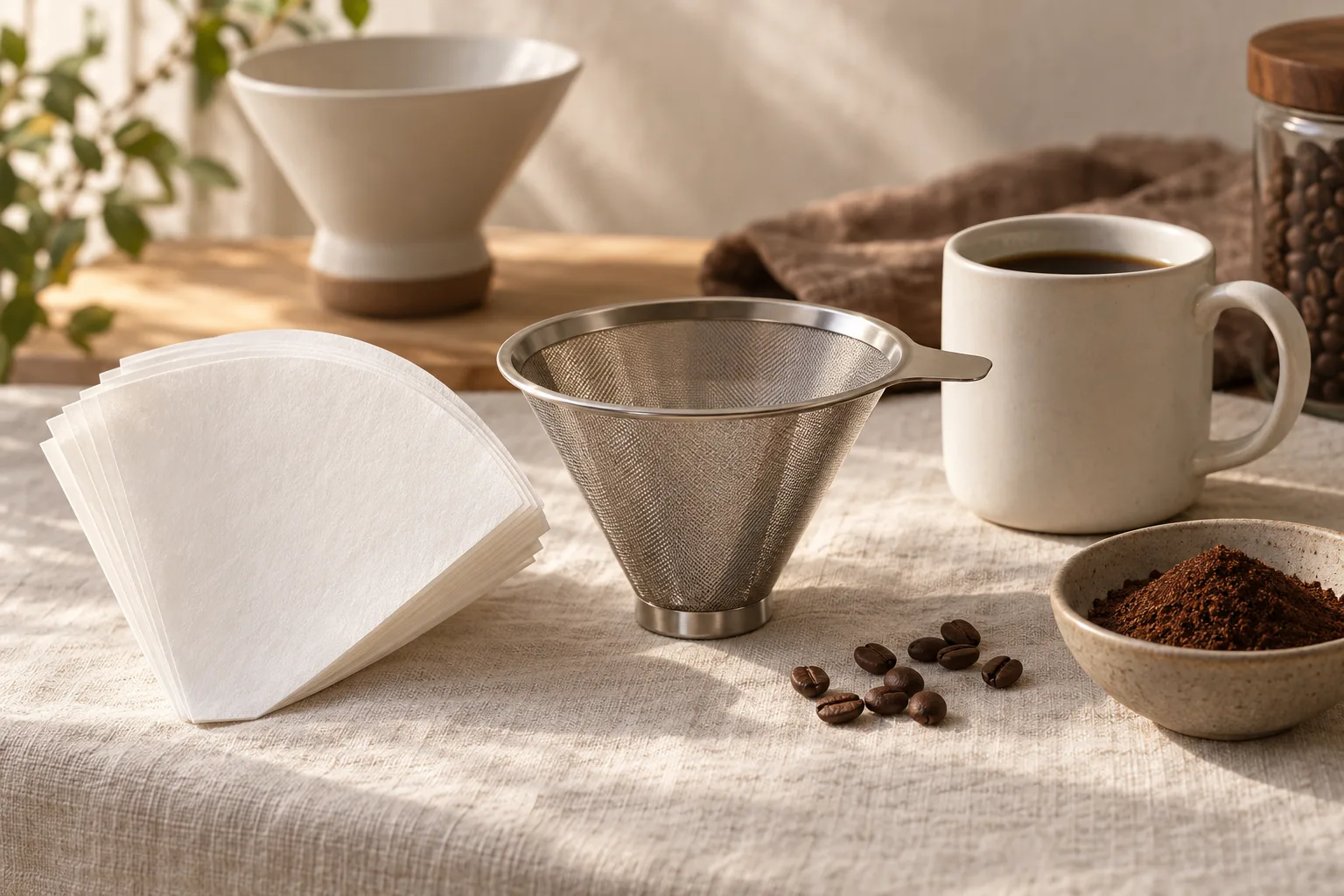
Frequently asked questions
Which is better, paper or metal for a pour-over coffee filter?
Paper is the better default if you want a clear cup and easy cleanup. Metal suits drinkers who prefer heavier body and reuse over less sediment. Roast, grind, and pouring technique still affect the result, so neither material guarantees delicious coffee on its own.
What is the difference between a metal vs paper coffee filter for pour over?
Paper retains more oils and fines, the tiny coffee particles that can muddy a cup. Metal lets more through, giving fuller body but less clarity. Paper is discarded after brewing; metal is reused after emptying and rinsing, with deeper cleaning needed according to its care instructions.
Are reusable pour-over filters better than paper filters?
Reusable filters are better for avoiding a disposable filter with every brew, but not automatically better for taste or convenience. Choose metal if you enjoy its texture and will maintain it. Check the exact brewer fit first, and consider whether regular cleaning suits your morning routine.
Do metal coffee filters make stronger coffee?
Metal can make coffee feel heavier and oilier, which may taste stronger, but that is not the same as a more concentrated brew. Dose and water ratio set the intended concentration; grind and brew time affect how much flavor you extract. Judge body and strength separately.
Can I use a metal filter in any pour-over coffee maker?
No. Compatibility depends on shape, size, support, and the filter geometry the brewer was designed around. A cone that drops into the opening may still sit incorrectly. Choose a reusable filter that explicitly names your brewer and size rather than assuming all cone filters are interchangeable.