 Coffee Gear Picks
Why Is My Espresso Pulling Too Fast? Fix It in 4 Steps (2026)
A fast espresso pull means your coffee bed is offering too little resistance to the machine's roughly 9 bar of pressure. The fix is almost always to grind finer, but dose and tamping also matter. Pulling faster than about 20-25 seconds for a 36g shot signals under-resistance, forcing water straight through before it can dissolve enough coffee solids.
Slow Down a Fast Espresso Shot
Check the clock, then change one thing at a time
Step 1 Diagnose
- Time from pump start
- Weigh the output
Step 2 Grind finer
- Move one micro-step
- Purge old grounds
Step 3 Verify dose
- Weigh 18-20g in
- Tamp level
Step 4 Keep clean
- Use fresh beans
- Clean the basket
Result
A slower, fuller shot with enough time to taste sweet instead of sharp
Quick answer
Grind finer first. Then weigh an 18-20g dose, tamp it level, and aim for roughly 36g out in 25-30 seconds. Fast shots often taste thin and sharp because water has rushed through the coffee before it can extract much sweetness.
What you'll need
You need a grinder that can reach a true espresso-fine setting, a scale that reads to 0.1g, fresh beans, and a clean basket. A timer matters just as much as taste here, because it shows whether your adjustment actually worked.
- An espresso-capable burr grinder, such as the Baratza Encore ESP or 1Zpresso J-Ultra.
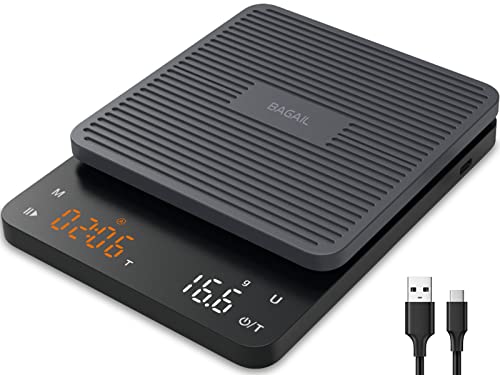
- A 0.1g scale with a timer, such as the Maestri House S2 or BAGAIL Coffee Scale.
- Whole beans roughly 7-21 days off roast.
- A clean portafilter basket and a freshly ground dose.
Our Top Picks


How do I confirm my espresso is pulling too fast?
Start the timer when you start the pump, then stop at your target output. For an 18g dose, begin with a target of about 36g in the cup in 25-30 seconds. If you reach that weight before roughly 20-25 seconds, the shot is running fast.
Use a scale under the cup every time. It takes the guesswork out of a stream that can look fine but still taste sour and watery. Browse our coffee scale picks if your kitchen scale cannot read tenths of a gram or fit under the portafilter.
Which grind setting slows a fast espresso shot?
Move your grinder one espresso micro-step finer, purge a few grams of retained grounds, and pull again with the same dose and output target. A finer grind produces more resistance, so water cannot take the easiest path through the puck. This is the most effective first correction.
The Encore ESP uses settings 1-20 for its espresso range, while the J-Ultra adjusts in 8-micron clicks. For more suitable machines, see our espresso grinder picks. On a tighter budget, an affordable espresso hand grinder gives you much more useful adjustment control than a blade grinder.
How do I get my dose and tamp right?
Weigh 18-20g into a standard double basket, distribute the grounds evenly, then tamp straight and level. Larger doses need a machine that can supply the water and heat to match, which is what separates machines built for quad shots from those that fade on the second double. Pull about twice that weight in espresso, roughly 36g from 18g in. An under-filled basket or lopsided tamp leaves weak spots where water can shoot through.
You do not need to chase a heroic tamp. The common 30-pound convention is a cue to press firmly and consistently, not a precise force you must measure. Keep the dose, output, and tamp routine steady while adjusting the grind, or you will not know what fixed the shot.
What else makes espresso pull fast?
Use reasonably fresh beans, fully warm up the machine, and clean the basket and shower screen. Coffee that is very old can be harder to dial in, while residue, a wet basket, or uneven grounds can encourage channeling.
Keep the machine at its normal brew setting while you correct the grind. Rinse the basket after every shot and backflush only as your machine manual specifies. If your entry-level machine cannot maintain consistent brewing conditions, compare our espresso machine picks before blaming every bad shot on the coffee.
Common mistakes
The fastest way to waste a bag of beans is changing several things at once. Keep the dose, output, tamp, and water routine steady while you adjust the grind.
- Changing grind and dose together: You will not know which change slowed the shot.
- Adding lots more coffee: A little extra dose can help, but stuffing the basket can choke the shot and muddy the flavor.
- Tamping harder every time: Flat and repeatable beats brute force.
- Using stale beans or a dirty portafilter: Both make the coffee bed less predictable.
- Pulling into a cold cup: The shot cools quickly and can taste flatter than it really is.
Troubleshooting
Match the symptom to one small fix, then pull another measured shot. A messy stream does not need a complete reset.
Spraying everywhere
This is usually channeling, where water punches through one weak spot. Level the grounds before tamping, check that the basket is dry, and grind a little finer.
Sour and fast
Grind finer. Sourness plus a quick time usually means the water did not stay with the coffee long enough to reach the sweeter, rounder flavors.
Fine on one side only
Your tamp is probably crooked, or the grounds are bunched to one side. Distribute the dose evenly and tamp with the portafilter basket level.

Frequently asked questions
Why is my espresso pulling too fast?
Usually the grind is too coarse or the dose is too low, so the coffee bed offers too little resistance. A thin, coarse bed lets water blast through in under about 20 seconds. Grind finer first, then verify your dose.
What is the right pull time for espresso?
Use 25-30 seconds from pump start as a useful starting point for about 36g out from an 18-20g double dose. Under 20-25 seconds is generally fast, so grind finer. If it takes more than 40 seconds, grind coarser or slightly lower the dose.
How do I make my espresso shot pull longer?
To slow a fast shot, grind finer. Finer particles pack together more tightly and make water work harder to pass through. Keep the dose in the 18-20g range, tamp level, and change only one thing before you pull again.
Why is my espresso shot squirting out of the portafilter?
Squirting usually means channeling: water found one weak path through the coffee instead of moving evenly through it. Level the grounds before tamping, tamp flat, and move the grinder a little finer if the shot is still racing.
Does water temperature make espresso flow too fast?
Temperature mainly changes extraction and taste, not the puck resistance that controls flow. Start by correcting grind and dose. Once those are stable, use your machine at its normal fully warmed-up setting, often near 200°F, and adjust temperature only if your machine allows it.
Is espresso pulling fast always under-extracted?
Usually, but taste is the deciding factor. A very quick shot commonly has too little contact time and tastes thin or sour. Add resistance by grinding finer, then judge the result at a consistent output weight rather than chasing time alone.