 Coffee Gear Picks
Best AeroPress Inverted Method (2026): Step-by-Step
The best AeroPress inverted method keeps all the brew water with the coffee until you decide to press, so you can set the immersion time precisely. This practical 15 g to 225 g recipe takes about two minutes; the only part that deserves extra attention is a calm, secure flip.
Inverted AeroPress in Four Moves
A short immersion brew with no early drip-through and a deliberate, controlled flip
Step 1 Set up
- Add 15 g coffee
- Set plunger at 4
- Use a stable counter
Step 2 Pour and stir
- Add 225 g water at 200°F
- Stir gently for 10 seconds
Step 3 Steep
- Attach rinsed filter cap
- Wait until 1:30
Step 4 Flip and press
- Grip cap and chamber
- Flip onto mug
- Press gently
Result
A full, sweet single cup with direct control over steep time.
What is the best AeroPress inverted method recipe?
Use 15 g of medium-fine coffee and 225 g of water at 200°F / 93°C. Steep for 1 minute 30 seconds, flip onto a sturdy mug, and press gently for about 30 seconds. The 1:15 ratio is a useful starting point for a rounded, full cup; other AeroPress ratios suit stronger or milder brews.
Top pick: AeroPress Original, the best brewer for the inverted method thanks to a long, leak-free flip window.
- Price band: $
- Capacity: 10 oz
- Filter type: Includes 50 paper micro-filters
- Weight: 6.4 oz
- Brewer type: Manual coffee press
What do you need for inverted AeroPress coffee?
You need an AeroPress, freshly ground coffee, hot water, a paper filter, a timer, and a wide, stable mug. For repeatable results, weigh the dose and water on a brew scale with 0.1 g resolution rather than measuring by scoop.
- Coffee: 15 g, ground medium-fine.
- Water: 225 g at 200°F / 93°C.
- Filter: One paper micro-filter, rinsed with hot water.
- Mug: Wide and stable enough to receive the brewer during the flip.
Our Top Picks


How do you brew inverted AeroPress coffee step-by-step?
Set the plunger around the number 4 mark, add 15 g of coffee, pour 225 g of 200°F water, steep for 1 minute 30 seconds, then flip and press slowly. Make this baseline recipe once before changing a single variable at a time.
1. Set the plunger and invert the brewer
Push the plunger into the chamber until the rubber seal is around the number 4 mark, then stand the brewer upside down on a dry, level counter. This gives the seal enough purchase to hold the water and leaves room for the coffee.
Keep the brewer away from an edge. The inverted method prevents early drainage, but it also means handling hot liquid when you turn it over.
2. Add 15 g of medium-fine coffee
Grind 15 g of coffee around table-salt texture and add it to the chamber. A capable manual coffee grinder makes small, useful adjustments possible; uneven grounds make it harder to tell whether time, temperature, or grind caused a change in flavor.
Start here rather than grinding espresso-fine. If the cup is sour, try a slightly finer setting next brew. If it is dry, bitter, or difficult to press, go coarser.
3. Pour 225 g of 200°F water and stir
Start your timer, pour in 225 g of water at 200°F / 93°C, and stir gently for 10 seconds. CoffeeGeek’s inverted-method guide points to roughly 200°F as an effective extraction temperature; it is a strong default for medium and light roasts, not a universal command.
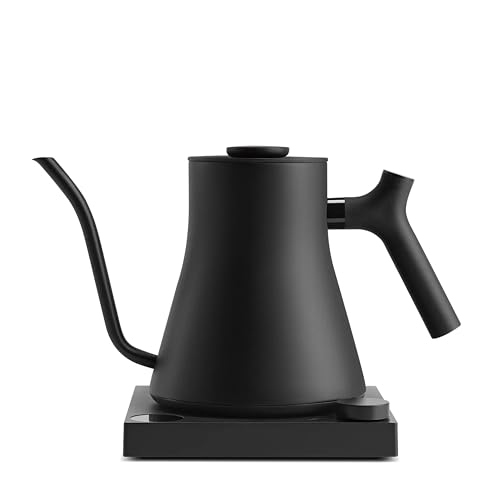
A gooseneck kettle makes a controlled, even pour easy. If a dark roast remains bitter, use water closer to 195°F / 90°C on the next attempt.
4. Rinse the filter, cap, and steep
Rinse a paper micro-filter with hot water, place it in the cap, screw the cap on securely, and let the coffee steep until 1:30. Rinsing removes paper taste and helps the filter sit flat; Sample Coffee Roasters includes this preparation step in its inverted AeroPress brew guide.
Do not over-stir or chase precision for its own sake. A short, consistent stir and a fixed steep make the recipe easier to adjust.
5. Flip onto the mug and press slowly
Grip the chamber and filter cap firmly, place the mug upside down over the cap, then turn the whole assembly over in one controlled motion. Set it down before pressing gently for about 30 seconds, stopping when the hiss begins.
CoffeeGeek also cautions that inversion adds a spill risk. Never force the final air through the bed, and do not use this method if the plunger, cap, or mug feels unstable. If you mainly flip to stop early drip-through, a no-drip cap, one of the AeroPress upgrades we recommend, gives you the same full steep without the flip.
What mistakes ruin an inverted AeroPress brew?
A plunger set too shallow, an overly fine grind, an unrinsed paper filter, and a rushed flip cause most disappointing cups. Fix the setup first, then adjust grind or temperature only after the brewer is secure.
- Plunger set too shallow: Seat the rubber seal around the number 4 mark so it has a stable hold.
- Pressing too hard: Press slowly and stop at the hiss; forcing the last air can add harshness and sediment.
- Changing everything at once: Keep dose and ratio fixed while you adjust either grind, time, or temperature.
Why is my inverted AeroPress leaking or weak?
Leaking usually means an insecure plunger seal; a weak cup usually means too little extraction or too much water for your taste. Check the physical setup before changing the recipe, then make one measured adjustment.
The brewer leaks or shifts before the flip
Discard the hot water safely and start again with the plunger seated farther into the chamber. Inspect a seal that slips repeatedly for wear. Do not attempt an inverted brew with a loose seal.
The coffee tastes sour or thin
Grind slightly finer or steep 15 seconds longer. For a light roast, keep the 200°F water baseline; lower temperatures can make under-extraction more noticeable.
The coffee tastes bitter or feels too heavy
Grind a little coarser, shorten the steep, or lower the water temperature for darker beans. Stop pressing at the hiss rather than squeezing the last liquid from the coffee bed.

Frequently asked questions
Is the inverted AeroPress method better than the standard method?
Neither method is universally better. Inverted brewing gives you a fixed immersion time and prevents early drip-through; the standard method skips the flip and is the more sensible choice when stability and simplicity matter most.
What grind size should I use for an inverted AeroPress?
Start medium-fine, roughly the texture of table salt. If the cup is sour or thin, move slightly finer or lengthen the steep. If it is bitter, dry, or very hard to press, move a little coarser.
How long should I steep an inverted AeroPress?
Start with 1 minute 30 seconds before flipping, then press for about 30 seconds. Treat that as a baseline rather than a rule: a light roast may need a little more contact time, while a dark roast can benefit from less.
Why is my inverted AeroPress leaking?
The plunger may not be inserted far enough to make a secure seal, or its rubber seal may be worn. Seat it around the number 4 mark before adding water. If it still slips or leaks, do not invert the brewer until the seal is replaced.
Can I use a metal filter with the inverted AeroPress method?
Yes. A metal filter lets more coffee oils and fine particles through, producing a heavier cup. Paper filters make a cleaner, lower-sediment brew and are the easier place to start with this recipe.