 Coffee Gear Picks
Best Espresso Machine Digital Picks (2026)
The best espresso machine digital pick for most homes is the Breville Barista Touch Impress because it turns grinding, tamping, extraction, and milk texture into a guided workflow without removing all control.
This guide compares touchscreen machines, PID-controlled compact machines, and fully automatic digital models by how useful their digital features are in real life, not just how modern they look.
Best Digital Espresso Machines for Home
8 picks ranked by guided workflow, temperature control, milk help, cleaning, and counter fit
Guided
The easiest semi-auto path to better shots
- Touchscreen recipes
- Assisted tamping
- Auto MilQ milk
- PID-style control
Top Pick Breville Barista Touch Impress
$$$
Best for most homes
Check Price on Amazon Hybrid
Espresso, drip, and cold brew in one box
- 3-in-1 brewing
- Weight-based dosing
- 25 grind settings
- Hands-free frothing
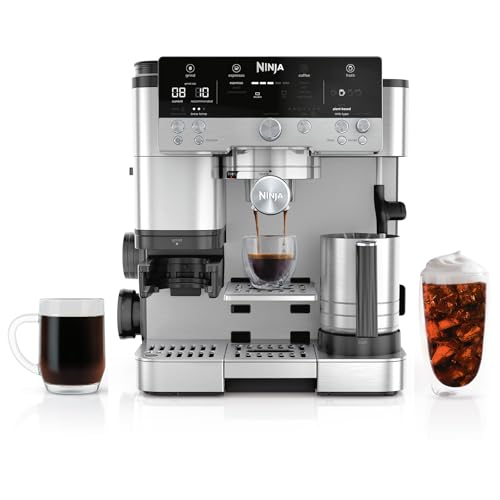
Top Pick Ninja Luxe Café Premier ES601
$$
Best value hybrid
Check Price on Amazon Compact
Digital temperature help without a big screen
- Small footprint
- PID temperature
- Fast heat-up
- Auto milk texture
Top Pick Breville Bambino Plus
$$
Best for small kitchens
Check Price on Amazon Profiles
One-touch drinks for shared households
- Color touch display
- 4 user profiles
- 18+ recipes
- 13 grinder settings
Top Pick De'Longhi Magnifica Plus
$$$
Best for families
Check Price on AmazonQuick answer: Buy Breville Barista Touch Impress if you want the strongest guided semi-automatic workflow. Buy Ninja Luxe Café Premier if you want espresso, drip, and cold brew in one digital-assisted machine. Buy Bambino Plus for compact PID control, or Magnifica Plus/Philips 3200 for push-button drinks with less manual technique.
Quick picks
Our Top Picks
Which digital espresso machines compare best?
The best digital espresso machines are the ones that make dose, temperature, milk texture, and cleaning more repeatable. Use this table to match the “digital” feature to the part of the workflow you actually want help with.
| Product | Best for | Price band | Key spec | Verdict |
|---|---|---|---|---|
| Breville Barista Touch Impress | Most homes that want guided espresso workflow | $$$ | Touchscreen, assisted tamping, 67.6 oz tank | Best overall digital pick |
| Ninja Luxe Café Premier ES601 | Households that want espresso, drip coffee, and cold brew in one machine | $$ | Built-in scale, 25 grind settings | Best value hybrid |
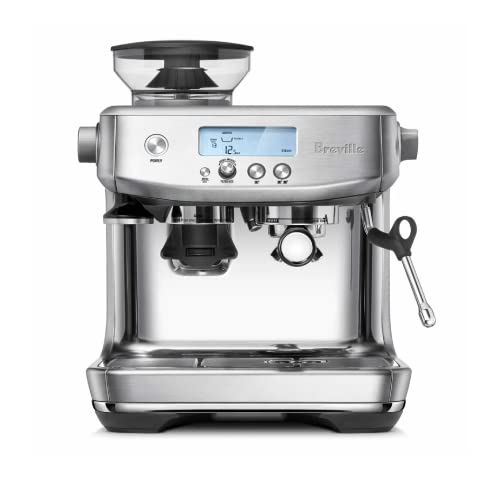
| Breville Barista Pro | Home baristas who want digital control without full automation | $$$ | Digital temperature control, integrated grinder | Best manual learner pick |
| Breville Bambino Plus | Small kitchens that already have or plan to buy a grinder | $$ | PID temperature control, 7.6 in deep | Best compact pick |
| De'Longhi La Specialista Touch | Guided dialing, preset drinks, and cold brew options | $$$ | Touchscreen, Bean Adapt, 10 presets | Best guided touchscreen alternative |
| Philips 3200 LatteGo | Push-button milk drinks with simpler milk cleanup | $$ | Touch display, LatteGo system | Easiest to clean |
| De'Longhi Magnifica Plus | Shared households with different drink preferences | $$$ | 3.5 in TFT touchscreen, 4 profiles | Best user profiles |
| KitchenAid KF7 Espresso Machine | Premium kitchens that prioritize build feel and one-touch milk drinks | $$$ | Metal-clad build, 2.2 L tank | Best premium appliance feel |
How did we evaluate digital espresso machines?
We prioritized digital features that reduce guesswork: stable brew temperature (PID or similar control), guidance that helps you adjust grind/dose, and milk/cleaning automation that removes daily friction. Screen size mattered far less than whether the machine helps you repeat a good shot tomorrow.
For specs and feature claims, we relied on manufacturer documentation and Amazon listings. For broader context on why temperature control and guided menus matter, we referenced expert coverage from Serious Eats and Wirecutter.
Which digital espresso machines are best for different homes?
Choose a guided semi-automatic if you want the espresso ritual with fewer mistakes, and a fully automatic if you want consistent milk drinks with minimal technique. The picks below are ranked by how much their digital features change day-to-day usability, not by how many menu screens they have.
1) Breville Barista Touch Impress — Best Overall
This is the best “digital-first” semi-automatic choice when you want help without giving up the core espresso workflow. The touchscreen guides drink selection and setup, while the assisted tamping system makes puck prep far more consistent than freehand tamp pressure.
The digital advantage shows up most with milk: Auto MilQ gives you selectable texture targets, which is especially useful if your household switches between dairy and oat. Breville’s Amazon listing also notes a ThermoJet 3-second heat-up and an assisted 22 lb tamping system.
Pros
- ✓ Best guided semi-automatic workflow here
- ✓ Assisted tamping reduces beginner mistakes
- ✓ Auto MilQ makes milk drinks less fussy
Cons
- ✗ Costs more than simpler Breville machines
- ✗ Large enough to dominate a small counter
2) Ninja Luxe Café Premier ES601 — Best Value Hybrid
This is the right kind of “digital” for households that need more than espresso. If you want drip coffee on weekdays, espresso on weekends, and cold brew in summer, the Ninja’s guided dosing and multi-mode design can replace multiple machines.
Ninja’s Amazon listing highlights Barista Assist Technology, weight-based dosing, 25 grind settings, hands-free frothing, and 3-in-1 brewing (espresso, drip, and rapid cold brew). Skip it if your goal is a classic semi-auto espresso learning path.
Pros
- ✓ Great for mixed coffee households
- ✓ Built-in scale helps dosing consistency
- ✓ Handles espresso, drip, and cold brew
Cons
- ✗ Less traditional espresso workflow
- ✗ Button interface is not as elegant as a touchscreen
3) Breville Barista Pro — Best for Manual Learners
This is the pick for learning espresso with a little digital stability, not full touchscreen coaching. You still do the barista steps, but the temperature control and integrated grinder make it easier to change one variable at a time and actually learn from the result.
Breville’s Amazon listing cites ThermoJet heat-up, digital temperature control within +/- 2°C, and an integrated precision conical burr grinder. The tradeoff is milk: it’s more manual than the Touch Impress, so texture and latte art are still practice-driven.
Pros
- ✓ Good bridge between beginner and hobbyist workflows
- ✓ Integrated grinder saves counter space
- ✓ Digital temperature control helps repeatability
Cons
- ✗ No full touchscreen recipe system
- ✗ Milk steaming takes more practice
4) Breville Bambino Plus — Best Compact

If you want digital control but not a big-screen appliance, this is the move. The Bambino Plus is “digital” in the way that matters: it uses temperature control to keep shots more consistent, while staying small enough for tight counters.
Breville’s Amazon listing notes the compact footprint, 3-second ThermoJet heat-up, and automatic milk frothing. The catch is the grinder: plan to pair it with an espresso-capable burr grinder (start with our espresso grinder guide).
Pros
- ✓ Tiny footprint for apartments
- ✓ PID-style control matters more than a screen
- ✓ Automatic milk frothing is beginner-friendly
Cons
- ✗ No integrated grinder
- ✗ Less guidance than touchscreen machines
5) De'Longhi La Specialista Touch — Best Guided Touchscreen Alternative

This is a strong touchscreen alternative if you want more guided presets (including iced/cold options) and help dialing in beans. The appeal isn’t the screen itself — it’s the way the interface tries to turn “espresso vibes” into repeatable settings.
De’Longhi’s Amazon listing lists touchscreen control, Bean Adapt guidance, 10 preset recipes, 15 grind settings, automatic milk frothing, and cold brew in under 5 minutes. It’s a good fit if your household rotates between hot lattes and iced drinks.
Pros
- ✓ Touchscreen guidance with useful presets
- ✓ Bean Adapt helps with dialing
- ✓ Cold brew option adds range
Cons
- ✗ Still a large countertop machine
- ✗ Newer model with less long-term owner history than older Breville picks
6) Philips 3200 LatteGo — Easiest Fully Automatic Cleaning
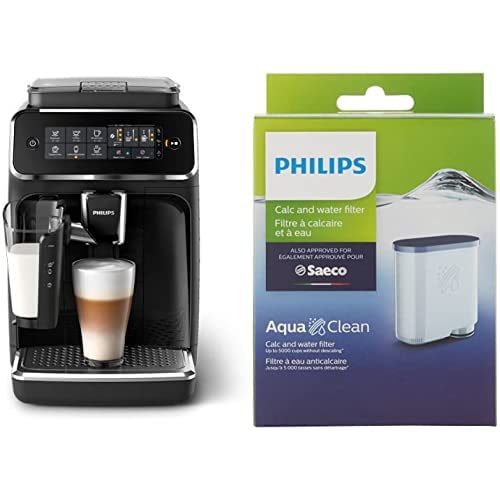
If your goal is push-button milk drinks and you don’t want to think about tamping or steaming, a fully automatic is the right category. The 3200’s digital value is that the interface is straightforward and the LatteGo milk system is designed to come apart quickly.
Philips’ Amazon listing highlights the touch display, five coffee varieties, the two-part LatteGo milk system, a ceramic grinder, and an AquaClean filter claim of up to 5,000 cups before descaling. Expect less control over classic espresso texture than with semi-automatics.
Pros
- ✓ Very simple milk cleanup
- ✓ One-touch drink workflow
- ✓ Good fit for non-hobbyists
Cons
- ✗ Less manual control over espresso
- ✗ Milk texture is convenience-first, not café-level
7) De'Longhi Magnifica Plus — Best for User Profiles

User profiles are the most underrated “digital” feature in a shared kitchen. If two people like different drink sizes, strengths, and milk ratios, profiles stop the daily reprogramming and make the machine feel genuinely personal.
De’Longhi’s Amazon listing lists 18+ one-touch recipes, four user profiles, a 3.5-inch TFT full-touch color display, 13 grinder settings, and a 60 oz tank. Buy it for speed and consistency, not for learning puck prep.
Pros
- ✓ Four profiles help shared households
- ✓ Big recipe menu
- ✓ Color display is easy to navigate
Cons
- ✗ Convenience-first espresso style
- ✗ Higher price than simpler automatics
8) KitchenAid KF7 Espresso Machine — Best Premium Appliance Feel

If you want a fully automatic that feels like a premium kitchen appliance, this is the one. The “digital” part is less about profiles and more about a clean, guided interface paired with an upscale, metal-forward build.
KitchenAid’s Amazon listing points to the removable bean hopper, 2.2 L tank, automatic milk delivery, and button-plus-touchscreen interface. Choose it if design, tidy refills, and easy daily drinks matter more than chasing the most manual control.
Pros
- ✓ Premium metal appliance feel
- ✓ Large 2.2 L tank
- ✓ Removable hopper makes bean changes easier
Cons
- ✗ Not for manual espresso hobbyists
- ✗ Large and heavy for small kitchens
Frequently asked questions
What is the best digital espresso machine for home use?
The Breville Barista Touch Impress is the best digital espresso machine for most homes because it guides grinding, tamping, brewing, and milk texture without making the process feel fake. Choose the Ninja Luxe Café Premier for hybrid value, or the Philips 3200 LatteGo for push-button convenience.
Is a touchscreen espresso machine better than a regular espresso machine?
A touchscreen espresso machine is better only when it improves the workflow. Good screens save recipes, guide setup, explain prompts, and reduce cleanup guesswork. Temperature control, grinder quality, and milk performance still matter more than a glossy display.
Do digital espresso machines make better espresso?
Digital controls can make espresso more repeatable, but they do not magically fix stale beans or a bad grind. The best machines help control temperature, dose, milk texture, and recipes so your good shots are easier to repeat tomorrow.
Do I still need a grinder with a digital espresso machine?
You need an espresso-capable burr grinder if the machine does not include one. The Breville Bambino Plus is the clearest example here: its PID temperature control is excellent for the size, but you should pair it with a proper grinder, not pre-ground coffee.
What is the difference between digital PID and a digital display?
Digital PID controls brew temperature; a digital display is just the screen or interface. A machine can have PID without a touchscreen, like the Bambino Plus. For flavor, steady temperature is more useful than a pretty menu.
Are fully automatic digital espresso machines worth it?
Fully automatic digital machines are worth it if you want easy milk drinks, shared profiles, and less technique every morning. Semi-automatic digital machines usually give more control, but Philips, De’Longhi, and KitchenAid models win when convenience matters most.
Which related espresso guides should you read next?
If you’re still building the setup, read the grinder and dialing-in guides next. Digital menus can reduce guesswork, but beans, grind size, and dose still decide whether your espresso tastes syrupy and sweet or thin and sharp.
- Best Burr Grinder for Espresso — for pairing Bambino Plus or other grinder-free machines.
- Burr Grinder Settings for Espresso — for dialing in shots without chasing random settings.
- Best Espresso Machine Under $200 — for simpler budget alternatives.
- Best Coffee Scale for Espresso and Pour Over — for dose consistency that digital menus can’t fake.