 Coffee Gear Picks
Best Espresso Machine Light Roast (2026): 7 Picks
The best espresso machine light roast pick for most home baristas is the Breville Dynamic Duo Dual Boiler because it gives you PID-controlled dual boilers, low-pressure pre-infusion, 9-bar extraction, and a real 58mm portafilter in one complete setup.
Top pick: Breville Dynamic Duo Dual Boiler — the best overall pick for most light-roast home baristas because it combines PID-controlled dual boilers, low-pressure pre-infusion, 9-bar extraction, and a 58mm portafilter in a complete home setup.
- Price band: $$$
- Weight: 20.41 kg / 45 lb / about 45 lb listed item weight
- Materials: Brushed stainless steel
- Key feature: PID-controlled dual boiler with heated group head
Light-roast espresso machine picks for 2026
Ranked by temperature control, pre-infusion, pressure feedback, grinder fit, and daily workflow
Overall
The most complete light-roast setup for most kitchens
- Dual boilers
- PID control
- Low-pressure pre-infusion
- Included grinder
Top Pick Breville Dynamic Duo Dual Boiler
$$$
Control plus a full starter setup
Check Price on Amazon Prosumer
Traditional dual-boiler feel without a huge footprint
- Brew and steam PIDs
- Soft pre-infusion
- Shot timer
- Stainless build
Top Pick Rancilio Silvia Pro X
$$$
Best if your grinder is already sorted
Check Price on Amazon Budget PID
Spend less on the machine and more on the grinder
- Compact body
- PID control
- Low-pressure pre-infusion
- Fast heat-up
Top Pick Breville Bambino
$
Small machine, smart budget move
Check Price on Amazon Manual
Feel the pressure curve instead of guessing at it
- Lever control
- Pressure gauge
- 5–9 bar zone
- No steam system
Top Pick Flair 49 PRO
$$
Best for slow, nerdy espresso mornings
Check Price on AmazonWhat is the best espresso machine for light roast coffee?
The Breville Dynamic Duo is the best espresso machine for light roast coffee for most people because it solves the two biggest problems at once: steady heat and a capable grinder. If you already own a strong grinder, the Rancilio Silvia Pro X is the cleaner prosumer upgrade.
Light roasts can taste sharp, thin, or lemony when the machine runs cool or the grind is sloppy. WIRED explains that lighter roasts often preserve more fruity and floral origin character. That is the fun part. It also means bad extraction has nowhere to hide.
Quick picks
Our Top Picks


Which light-roast espresso machines should you compare first?
Compare these seven machines first because they cover the real buying paths: complete dual-boiler setup, traditional prosumer machine, compact PID machine, all-in-one beginner unit, budget PID option, tinkerer platform, and manual lever control. Do not add a cheaper machine unless your grinder budget is already protected.
| Product | Best for | Price band | Key spec | Verdict |
|---|---|---|---|---|
| Breville Dynamic Duo Dual Boiler | Most light-roast home baristas wanting control and a complete setup | $$$ | PID-controlled dual boiler with heated group head | Best balance of control, steam power, and an included grinder for most homes. Check Price |
| Rancilio Silvia Pro X | Traditional dual-boiler workflow with repeatable light-roast shots | $$$ | A sturdier dual-boiler feel if you already own a serious grinder. Check Price | |
| Diletta Mio | Espresso-first drinkers who want PID control in a compact footprint | $$$ | Small footprint, real brew control, and fewer beginner extras. Check Price | |
| Breville Barista Pro | Beginners who want grinder and machine in one unit | $$ | Integrated conical burr grinder and fast guided workflow | The easiest one-box setup for learning light-roast espresso. Check Price |
| Breville Bambino | Small kitchens and buyers spending more of the budget on a grinder | $ | Compact footprint with PID and fast heat-up | Cheap, tiny, and best when paired with a strong grinder. Check Price |
| Gaggia Classic Evo Pro | Mod-minded buyers who want a 58mm platform on a lower budget | $$ | Commercial steam wand and three-way solenoid valve; no built-in PID claimed | A mod-friendly base, but less forgiving out of the box. Check Price |
| Flair 49 PRO | Espresso hobbyists who want pressure profiling without a pump machine | $$ | Maximum pressure feedback, zero steam, and a slower ritual. Check Price |
How did we evaluate espresso machines for light roasts?
We compared these machines by the things that make light roast espresso less cranky: repeatable brew temperature, pre-infusion, pressure feedback, grinder pairing, and workflow. Product specs come from Amazon and manufacturer listing data via HasData, while editorial judgment comes from owner reports, expert explainers, and community discussions.
Temperature came first. PID control means the machine uses an electronic controller to hold brew heat steadier, instead of wandering like a stovetop pan. Pre-infusion came next. Whole Latte Love notes that low-flow or low-pressure pre-infusion can help with high-density light roast single-origin shots by wetting the puck more gently before full pressure.
Grinder fit mattered just as much as the machine. In Home-Barista forum discussions, light-roast-focused setups often come back to grinder quality first, with machines like the Breville Dual Boiler regularly recommended because they offer control without jumping into giant commercial gear.
Which espresso machine is best overall for light roast: Breville Dynamic Duo?
The Breville Dynamic Duo is the safest overall buy if you want light-roast espresso without building a setup one part at a time. Its standout advantage is the mix of dual boilers, PID heat control, low-pressure pre-infusion, and an included grinder, which gives beginners fewer weak links.
If you keep buying bright, juicy beans and wondering why your shots taste like lemon peel, this is the kind of setup that helps you troubleshoot faster. The 58mm portafilter also puts you in the world of standard espresso accessories and baskets, not a weird proprietary size.
The downside is size and cost. It is a lot of stainless steel on the counter, and the Smart Grinder Pro is convenient rather than “buy once, cry once.” If you already own a better grinder, you may prefer spending the budget on a machine-only option.
Pros
- ✓ Complete machine-and-grinder setup
- ✓ PID dual boilers help repeatability
- ✓ Low-pressure pre-infusion suits dense light roasts
Cons
- ✗ Large and heavy on the counter
- ✗ Included grinder is convenient, not a forever upgrade
Which dual boiler is best if you want a traditional prosumer feel: Rancilio Silvia Pro X?
The Rancilio Silvia Pro X is the better pick if you want a compact dual boiler that feels more like classic espresso gear. It gives you adjustable brew and steam PIDs, soft pre-infusion, and a shot timer, but it assumes you already have (or will buy) a real espresso grinder.
Buy it if you like a straightforward workflow with fewer “appliance” touches. It makes sense for someone who already weighs doses, watches shot time, and wants the machine to deliver stable heat and steam without fuss.
Skip it if you want a guided screen or an integrated grinder. The Silvia Pro X is not trying to hold your hand. That is part of the appeal, but it can feel blunt (and expensive) if you are brand new.
Pros
- ✓ Dual boilers in a compact body
- ✓ Adjustable brew and steam PIDs
- ✓ Soft pre-infusion and shot timer
Cons
- ✗ No built-in grinder
- ✗ Less beginner-friendly than Breville all-in-one machines
Which compact PID machine makes sense for light roast: Diletta Mio?
The Diletta Mio makes sense if you mostly drink straight espresso and want PID brew control in a smaller body. Its light-roast edge is the combination of a pressure gauge, adjustable OPV, and 58mm group parts without paying for a full dual-boiler setup.
This is a nice fit for the espresso-first person who wants to see what the shot is doing. A pressure gauge is not magic, but it is like having a speedometer. When a shot races or stalls, you get a clue instead of just a disappointing cup.
The trade-off is a smaller online community than Breville, Rancilio, or Gaggia have built up. If you want the biggest pool of community tips, parts chatter, and “here’s how I fixed it” threads, the Silvia Pro X or Gaggia platform has a larger crowd behind it.
Pros
- ✓ PID brew boiler in a compact machine
- ✓ Pressure gauge helps diagnose shots
- ✓ Adjustable OPV for pressure tuning
Cons
- ✗ Smaller online community for tips and fixes than bigger brands
- ✗ Not as convenient for heavy milk-drink routines
Which all-in-one machine is easiest for light roast beginners: Breville Barista Pro?
The Breville Barista Pro is the easiest all-in-one choice for light-roast beginners because the grinder, PID control, pre-infusion, and fast heat-up live in one unit. It removes the “which grinder fits?” panic, which is a real win on day one.
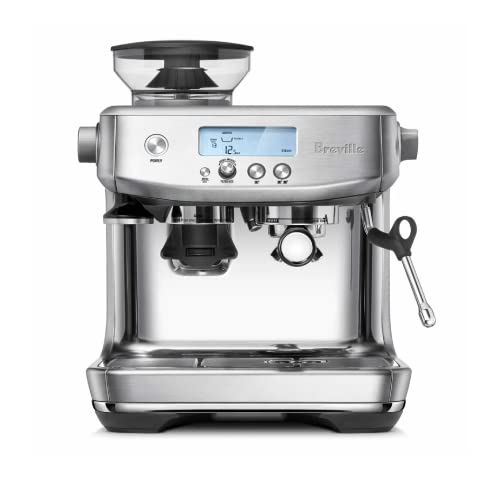
Choose this if you want to make better espresso before work without turning the kitchen into a hobby bench. The screen and built-in grinder make the workflow less intimidating, especially if you are coming from pods or a basic appliance machine.
The compromise is upgrade ceiling. Light roasts reward tiny grind changes, and built-in grinders can become the limiting part as your taste gets pickier. If you know you will obsess over single-origin shots, a separate grinder plus machine is the more future-proof route.
Pros
- ✓ Built-in grinder keeps setup simple
- ✓ PID and low-pressure pre-infusion
- ✓ Fast heat-up for weekday mornings
Cons
- ✗ Grinder can limit advanced light-roast dialing
- ✗ Less flexible than separate components
Which budget espresso machine can work for light roasts: Breville Bambino?
The Breville Bambino can work for light roasts when the budget is tight and the grinder is strong. Its appeal is simple: PID control, low-pressure pre-infusion, tiny footprint, and fast heat-up at a price that leaves money for better burrs.
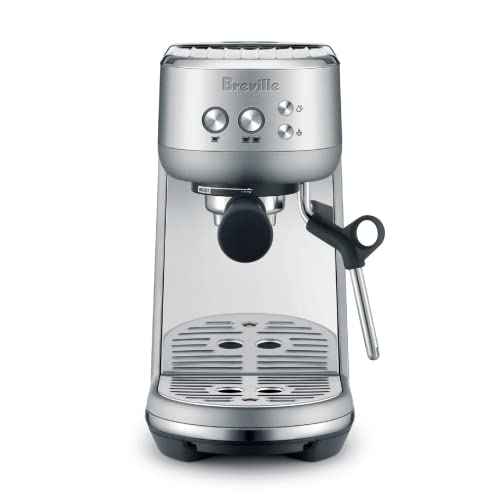
This is the smart “spend on the grinder” setup if your counter is cramped. Pair it with something from our best burr grinder for espresso guide and it becomes much more capable than the price suggests.
Do not buy it expecting prosumer control. You get convenience, not deep adjustment. For light roasts, that means you will rely more on grind, dose, and shot time tweaks because the machine gives you fewer knobs to turn.
Pros
- ✓ Very compact
- ✓ PID and low-pressure pre-infusion
- ✓ Leaves more budget for the grinder
Cons
- ✗ Limited control compared with dual boilers
- ✗ Small-machine workflow can feel cramped
Which budget machine is best for tinkerers: Gaggia Classic Evo Pro, Thunder Black?
The Gaggia Classic Evo Pro, Thunder Black is the budget pick for tinkerers who want a 58mm commercial-style platform and 9-bar extraction. It can work for light roasts, but it does not include built-in PID control, so temperature repeatability takes more attention.

Buy it if you like machines you can understand, maintain, and potentially modify later. The steel housing and standard portafilter size make it feel more serious than many entry-level appliances, and the ecosystem of baskets and parts is huge.
Skip it if you want easy light-roast repeatability out of the box. Without PID, brew temperature management is more manual. For a new buyer chasing bright, finicky shots, the Bambino is often easier and the Silvia Pro X is more controlled.
Pros
- ✓ 58mm commercial portafilter
- ✓ Steel housing and serviceable feel
- ✓ Good platform for mod-minded owners
Cons
- ✗ No built-in PID control
- ✗ Requires more skill for light-roast consistency
Which manual espresso maker gives the most pressure control: Flair 49 PRO?
The Flair 49 PRO gives the most pressure control because your hand is the pump. The built-in gauge shows the 5–9 bar espresso zone, so you can ease into pressure, back off, or hold steady in a way pump machines often hide.

This is for the hobbyist who enjoys the ritual: preheating, grinding, loading, pulling, watching pressure, and learning from every shot. With light roasts, that pressure feedback can be especially useful because you can “nudge” extraction instead of just hoping the pump does the right thing.
The downside is obvious. No steam. No push-button morning latte. If you want cappuccinos before school drop-off, buy a pump machine. If you want control, quiet, and a slower pace, the Flair is a satisfying rabbit hole.
Pros
- ✓ Direct lever pressure control
- ✓ Gauge shows 5–9 bar espresso zone
- ✓ No plastics in the brew path
Cons
- ✗ No steam for milk drinks
- ✗ Slower, more manual workflow
Frequently asked questions
What makes an espresso machine good for light roast coffee?
A good light-roast espresso machine gives you steady brew temperature, gentle pre-infusion, and some way to read or control pressure. Light roasts are less forgiving, so repeatability matters more than shiny extras.
Do light roasts need higher brew temperature for espresso?
Light roasts often benefit from a higher or more stable brew temperature, but they do not need one magic number. A PID-controlled machine helps because you can make small changes and repeat them instead of chasing sour shots blindly.
Is pre-infusion important for light roast espresso?
Pre-infusion is useful for light roast espresso because it wets the coffee bed before full pressure hits. That can reduce harsh channeling, especially with dense beans, but it still depends on grind, dose, and how evenly you prepare the basket.
Is the Breville Bambino good for light roast espresso?
The Breville Bambino can work for light roasts if you pair it with a capable espresso grinder. It has PID control and low-pressure pre-infusion, but it gives you less temperature and pressure control than the Breville Dynamic Duo or Rancilio Silvia Pro X.
Do I need a dual boiler for light roast espresso?
You do not need a dual boiler just to pull light-roast espresso. Dual boilers help most if you make milk drinks often or want stronger temperature stability during back-to-back drinks. Espresso-only users can be happy with a compact PID machine.
Is a manual lever machine better for light roasts?
A manual lever machine can be better for pressure control, but it is not automatically easier. The Flair 49 PRO lets you feel and watch pressure, which is great for learning, but you give up steam and add more steps to every shot.
What grinder should I pair with a light-roast espresso machine?
Pair it with a true espresso grinder that can make tiny, repeatable grind changes. Light roasts punish weak grinders fast. If the shot gushes one minute and chokes the next, the machine may not be the main problem.
Why does my light roast espresso taste sour?
Sour light-roast espresso usually means under-extraction: the water did not pull enough sweetness from the coffee. Try grinding finer, using a longer shot, raising brew temperature if your machine allows it, and checking that your dose is even in the basket.
What related espresso gear should readers consider next?
The next upgrades should be grinder, scale, and recipe control because those change your light-roast shots more than another shiny accessory. A better machine helps, but bad grind and sloppy dosing can still make expensive espresso taste thin and sour.
- Best burr grinder for espresso — start here if your shots run sour, fast, or wildly inconsistent.
- Burr grinder settings for espresso — a plain-English guide to dialing in without chasing your tail.
- Best hand grinder for espresso under $100 — useful if the Bambino eats most of your machine budget.
- Best coffee scale for espresso and pour-over — the easiest way to stop guessing dose and yield.