 Coffee Gear Picks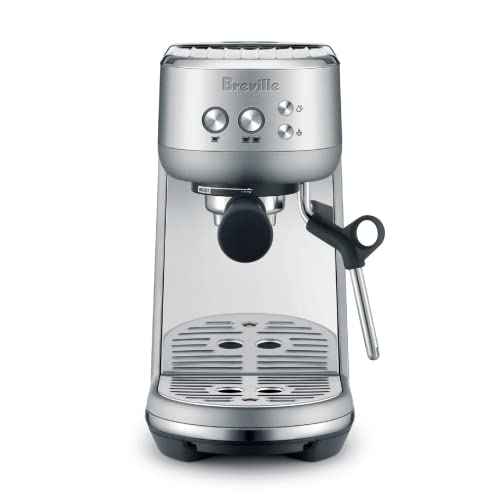
Best Espresso Machine No Pods (2026): 7 Real Picks
The best espresso machine no pods is the Breville Bambino Espresso Machine BES450BSS for most homes because it uses ground coffee, heats fast, and keeps the workflow simple.
Top pick: Breville Bambino Espresso Machine BES450BSS. It is the best no-pod espresso machine for most homes because it uses ground coffee, heats quickly, has a compact footprint, and leaves room to upgrade your grinder and technique.
- Price band: $$
- Weight: 10.9 lb
- Materials: Stainless steel exterior
- Key feature: 3-second ThermoJet heat-up with PID temperature control
Best no-pod espresso machines for 2026
Ground coffee, whole beans, assisted tamping, and manual lever paths, ranked for real kitchens (no capsule lock-in)
Overall
Fast, compact, and friendly for new espresso drinkers
- Ground coffee workflow
- Fast heat-up
- Compact footprint
- Room to upgrade grinder
Top Pick Breville Bambino Espresso Machine BES450BSS
$$
Best everyday starting point
Check Price on Amazon Budget
The cheap escape hatch from capsule machines
- Ground coffee input
- Pressure gauge
- Small counter size
- Lower upfront cost
Top Pick CASABREWS CM5418
$
Best low-cost pick
Check Price on Amazon All-in-one
Grinder, tamp help, milk help, and more automation
- Whole bean or ground coffee
- Built-in grinder
- Assisted tamping
- Hands-free frothing
Top Pick Ninja Luxe Café Premier ES601
$$$
Best assisted workflow
Check Price on Amazon Manual
Full lever control with no plug and no pods
- Manual pressure
- No electricity
- Folds for travel
- Needs kettle and grinder
Top Pick Flair 2GO
$$
Best hobbyist lever
Check Price on AmazonWhich no-pod espresso machine should most people buy?
Choose the Breville Bambino if you want a compact no-pod espresso machine that uses ground coffee and gives you a real espresso workflow without a giant learning curve. It is not fully automatic, but it is the most practical starting point for most homes.
Buy the CASABREWS CM5418 if the budget is tight, the De’Longhi Dedica if your counter is narrow, and the De’Longhi Magnifica Evo if you want push-button espresso from whole beans. If you are leaving pod machines and want help with grinding and milk, the Ninja Luxe Café Premier is the friendliest bridge.
Quick picks
Our Top Picks


Which specs matter most in a no-pod espresso machine?
Prioritize coffee input (ground vs whole bean), workflow (manual vs assisted vs push-button), grinder requirements, and counter footprint. A “20 bar” badge is less important than temperature stability, an easy milk routine, and a setup you’ll actually use every morning.
| Product | Best for | Price band | Key spec | Verdict |
|---|---|---|---|---|
| Breville Bambino Espresso Machine BES450BSS | Best Overall | $$ | ThermoJet heat-up system and PID temperature control | Best balance of size, speed, and real ground-coffee espresso. |
| CASABREWS CM5418 | Best Budget | $ | undefined pressure gauge system | Cheap way to escape pods, with a few rough edges. |
| De’Longhi Dedica EC680M | Best Slim Pick | $ | 13"D x 5.9"W x 12"H slim body | Best when counter width is the deal-breaker. |
| Gaggia RI9380/46 E24 | Best for Tinkerers | $$ | 58mm commercial stainless steel | Built for people who want to learn and upgrade. |
| Ninja Luxe Café Premier ES601 | Best All-in-One | $$$ | Built-in conical burr grinder with 25 settings | Closest assisted workflow without buying capsules. |
| De'Longhi Magnifica Evo ECAM29084SB | Best Bean-to-Cup | $$$ | Built-in conical burr grinder with 13 grind settings | Pod-like convenience, but with whole beans. |
| Flair 2GO | Best Manual Lever | $$ | Manual | Pure control, zero electricity, extra effort. |
How did we evaluate these no-pod espresso machines?
This roundup is based on manufacturer specs, named editorial guidance, and buyer-fit factors: coffee input (ground vs whole bean), heat-up time and temperature control, how fussy the grind/tamp process is, steam performance for milk, footprint, and how repairable or upgrade-friendly the platform is.
Semi-automatic machines give you more control than capsule machines because you choose the beans, grind, dose, and shot timing. Serious Eats and Wirecutter both make the same point: the grinder and the routine matter as much as the machine.
Which no-pod espresso machines are worth buying?
These seven picks cover the main “no pods” paths: compact semi-automatic, budget semi-automatic, slim-counter machines, an enthusiast platform, an assisted all-in-one, a push-button bean-to-cup option, and a fully manual lever.
1) Breville Bambino Espresso Machine BES450BSS — Best Overall
The Bambino is the easiest recommendation because it gives you the real espresso workflow (dose, tamp, brew) without demanding a huge amount of counter space or patience. It feels like a clean break from pods while still being beginner-friendly.
The big practical win is speed: Breville’s ThermoJet system is designed to get you brewing fast, so the machine doesn’t become a “weekend-only” hobby purchase. The main tradeoff is that your results depend heavily on grind quality. If you don’t already own an espresso-capable grinder, plan that into the budget.
Pros
- ✓ Uses ground coffee, not capsules
- ✓ Fast heat-up for busy mornings
- ✓ Small enough for tight kitchens
Cons
- ✗ Needs a capable grinder for best results
- ✗ Not as mod-friendly as the Gaggia platform
2) CASABREWS CM5418 — Best Budget
The CASABREWS CM5418 is the “stop buying pods” pick when you want the lowest buy-in and you’re okay learning by doing. You get a standard ground-coffee workflow and a pressure gauge that helps you spot obvious issues (like shots that gush too fast).
Where it lags the bigger brands is refinement: the included accessories and overall consistency tend to be more hit-or-miss, so it rewards patience and fresh coffee. If you pair it with stale pre-ground coffee, it’s easy to conclude the machine “can’t do espresso” when the real bottleneck is the grind.
Pros
- ✓ Low upfront cost
- ✓ Pressure gauge helps beginners learn faster
- ✓ Compact footprint
Cons
- ✗ Accessories feel basic
- ✗ Less consistent and forgiving than midrange picks
3) De’Longhi Dedica EC680M — Best Slim Pick
The Dedica is here for one reason: it’s slim enough to fit where many espresso machines simply won’t. If you’re working with a narrow counter run, that “skinny-body” design can be the difference between making espresso daily and giving up.
It’s a ground-coffee machine first. Some Dedica kits include an ESE-compatible option, but that’s not the point of this guide. Treat ESE as a backup plan; if you want the best results, use fresh espresso-ground coffee (or grind your own) and focus on dialing in dose and tamp.
Pros
- ✓ Very narrow footprint
- ✓ Works with ground coffee
- ✓ Good fit for apartments and small kitchens
Cons
- ✗ Tighter working space around the drip tray
- ✗ ESE compatibility can distract from the main ground-coffee workflow
4) Gaggia RI9380/46 E24 — Best for Tinkerers
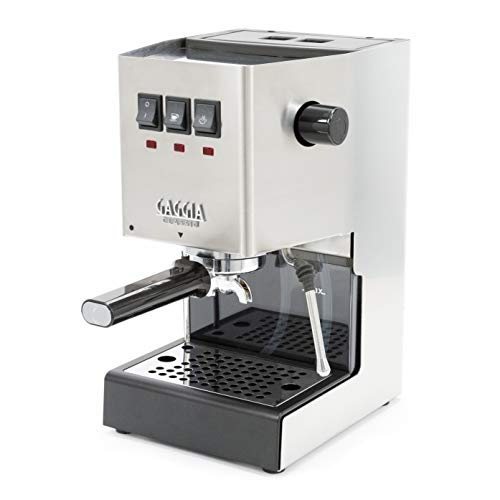
If you want a classic home-espresso platform with a long upgrade path, this Gaggia is the one in this list that makes the most sense. The 58mm commercial-style portafilter size is a big deal for accessory compatibility, and the overall layout is built for people who like to tweak.
The flip side: it’s less “plug in and win.” You’ll spend more time learning warm-up habits, dialing grind size, and practicing milk texture. If that sounds fun, you’ll grow into it. If it sounds like a chore before caffeine, the Bambino or Magnifica Evo is a better match.
Pros
- ✓ 58mm portafilter ecosystem
- ✓ Strong upgrade/accessory path
- ✓ Great pick for espresso learners
Cons
- ✗ Longer learning curve
- ✗ Not the easiest first machine for impatient mornings
5) Ninja Luxe Café Premier ES601 — Best All-in-One
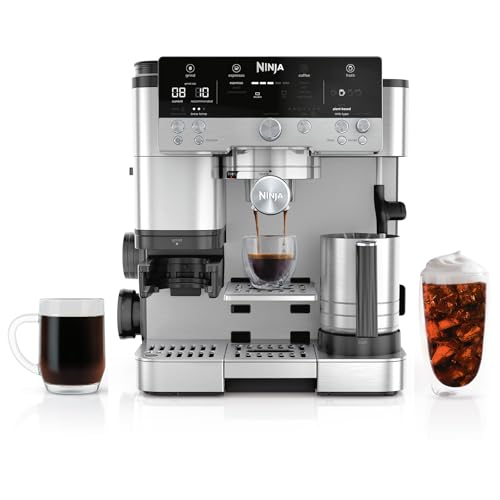
The Ninja Luxe Café Premier is the “I’m done with pods, but I still want help” option. It bundles the grinder, adds assisted tamping, and automates milk frothing: exactly the steps that tend to frustrate first-time espresso buyers.
The tradeoff is that it’s bigger and more feature-dense than a compact semi-automatic machine. If your kitchen is tight, measure depth (not just width). If you have the space, it can replace multiple countertop appliances and make the jump from capsules feel painless.
Pros
- ✓ Built-in grinder
- ✓ Assisted tamping reduces beginner errors
- ✓ Covers espresso plus other drink styles
Cons
- ✗ Larger footprint than compact semi-automatic machines
- ✗ More complexity than minimalist espresso buyers want
6) De'Longhi Magnifica Evo ECAM29084SB — Best Bean-to-Cup

The Magnifica Evo is the push-button answer for people who liked the convenience of pods but hated the ongoing capsule cost and waste. You fill the hopper with whole beans and let the machine grind and brew on demand, so the coffee is still fresher than a pre-filled capsule.
CoffeeGeek has described super-automatic machines as the most realistic “Nespresso killer” for convenience-first buyers. The tradeoff is control: you can tweak settings, but you’re not shaping shots the way you can on a semi-automatic machine.
Pros
- ✓ Uses whole beans, not capsules
- ✓ Push-button drink workflow
- ✓ Built-in grinder and milk system
Cons
- ✗ Higher upfront cost
- ✗ Less manual control over extraction and milk texture
7) Flair 2GO — Best Manual Lever

The Flair 2GO is for people who want espresso to feel hands-on and mechanical, in a good way. There’s no pump, no plug, and nothing resembling a capsule slot. You supply hot water, load grounds, and generate pressure yourself, with an integrated gauge showing how hard you are pressing.
When your grind and prep are right, it can produce dense, satisfying shots. But it won’t hide mistakes. You’ll need a kettle and a grinder, and you’ll want to embrace the slower ritual. If speed and convenience are the goal, a compact semi-automatic or bean-to-cup machine will fit better.
Pros
- ✓ No electricity required
- ✓ Full control over pressure, with a gauge
- ✓ Folds down to store or travel
Cons
- ✗ Needs separate kettle and grinder
- ✗ More prep work per drink
Frequently asked questions
What espresso machine does not use pods?
A semi-automatic espresso machine like the Breville Bambino, Gaggia, or CASABREWS CM5418 uses ground coffee in a portafilter (no capsules required). Bean-to-cup machines like the De’Longhi Magnifica Evo use whole beans in a hopper and grind internally, so they also skip pods entirely.
Can espresso machines use ground coffee instead of pods?
Yes. Most home espresso machines are designed for ground coffee in a portafilter basket. Some models (like the De’Longhi Dedica and some Gaggia configurations) may accept ESE pods as an option, but the main reason to buy them is still ground-coffee espresso.
Is the Breville Bambino pod free?
Yes. The Breville Bambino is a pod-free espresso machine that’s built around ground coffee. You dose and tamp espresso-fine grounds in the portafilter, then brew. It doesn’t use Nespresso-style capsules.
Do bean-to-cup espresso machines use pods?
No. Bean-to-cup (super-automatic) machines brew from whole beans, grinding and brewing at the push of a button. If you want the closest “pod-machine convenience” without buying capsules, a machine like the De’Longhi Magnifica Evo is usually the most direct swap.
Are no-pod espresso machines cheaper than pod machines?
Often, the machine costs more upfront, especially if you add a grinder for a semi-automatic setup. But coffee itself is usually cheaper per drink: whole beans and ground coffee cost less than capsules, and you can buy fresher coffee with more roast options.
Do I need a grinder for a no-pod espresso machine?
For semi-automatic and manual machines, a capable burr grinder matters a lot because espresso needs very fine, even grounds. Bean-to-cup machines include a grinder. With the Bambino or Flair, you’ll need a separate grinder (or buy espresso-ground coffee fresh).
What other espresso guides should you read next?
If you’re buying a semi-automatic or manual machine, read grinder and accessory guides next. The machine is only half the setup. A decent grinder and a basic scale can turn the same beans from sharp and thin into sweet, syrupy espresso.
- Best Burr Grinder for Espresso: the first upgrade most pod-free buyers should budget for.
- Burr Grinder Settings for Espresso: a plain-English way to dial in shots without guessing wildly.
- Best Coffee Scale for Espresso and Pour Over: small scales make dosing and shot timing much less random.