 Coffee Gear Picks
Best French Press Espresso (2026): Make It at Home
The best French press for espresso-style brewing is the Bodum Chambord, because its reusable stainless-steel mesh filter gives you the body and sweetness you need for a concentrated cup. You can make a thick, bold little drink without a machine, but it is not true espresso. Espresso is typically brewed at about 9 bars of pressure; for that, you need a real espresso machine under $200.
French Press Espresso-Style Coffee
A short, concentrated brew with a heavier dose and a gentle plunge
Step 1 Grind and dose
- Grind like table salt
- Weigh 18 g coffee
Step 2 Pour and steep
- Add 65 g water at 200°F
- Leave it alone for 4 min
Step 3 Plunge and pour
- Press slowly
- Serve in small cups
Result
A thick, bold espresso-style concentrate for sipping straight or adding milk
What is the quick French press espresso recipe?
For French press espresso-style coffee, use a fine-medium grind, 18 g coffee, and 55–70 g water, roughly a 1:3 to 1:4 ratio. Pour water near 200°F, steep for four minutes, press slowly, and serve in a small cup. It is rich and concentrated, but it is not true espresso.
Methodical Coffee recommends near-boiling water and a steep of roughly four minutes. Starting around 200°F is a useful way to avoid an aggressively hot brew while keeping that timing consistent.
What do you need for French press espresso-style coffee?
You need a press with a sound mesh filter, freshly ground beans, a burr grinder, a scale, and water just off the boil. A press travels well, which is usually the real reason people brew this way, though portable espresso makers now cover the same trip with actual pressure. That is a short list, but each piece helps a small, concentrated brew land closer to rich than thin or harsh.
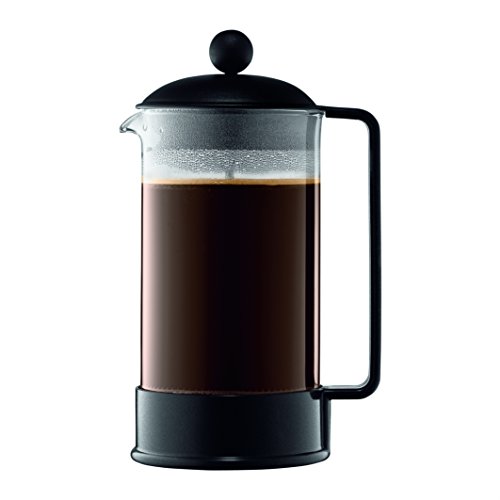
- French press: The Bodum Chambord's steel mesh lets oils through for the round, full-bodied texture this method needs.
- Burr grinder: A burr grinder is essential for this fine-medium grind. Our best French press grinder picks cover electric and manual options.
- 0.1 g digital scale: It lets you repeat the 18 g coffee and 55–70 g water dose instead of eyeballing a tiny batch.
- Fresh beans and hot water: Use beans you enjoy black and water just off the boil, about 200°F.
Our Top Picks


How do you make espresso-style coffee in a French press?
Make it by grinding a little finer than standard press coffee, using far more coffee per gram of water, then giving it a quiet four-minute steep. The aim is not a full mug. You are making a small, syrupy-tasting concentrate that stands up to a splash of milk.
Step 1: Grind and dose
Grind 18 g of beans to a fine-medium texture, like table salt. Put the grounds in the clean, dry press, then set out 55–70 g of water. Start at 65 g if you want a confident middle ground.
Do not use fluffy, powder-fine espresso grounds. They can jam the mesh and make the cup gritty. Lever and hand-pump devices are the honest middle ground here: manual espresso makers apply real pressure without electronics, and take the same fine grind a press cannot. A blade grinder creates too many powdery bits; if you want to push the grind even finer, see our espresso burr grinder picks.
Step 2: Add water and steep
Pour the water over all the grounds, put the lid on with the plunger raised, and leave it alone for four minutes. Skip stirring: it is unnecessary for this small brew and can make the final cup harder to pour cleanly.
The no-pressure limitation is real: a French press does not force water through a compact coffee puck at espresso pressure. If crema and real 9-bar extraction are what you are after, that gap closes only with a pump, and budget espresso machines now start well below what most people expect. Clive Coffee’s explanation of nine-bar espresso describes why that pressure became the standard. Here, the heavy ratio supplies intensity instead.
Step 3: Plunge slowly and serve
Press down with slow, even pressure. If it stops hard, do not force it; lift slightly and continue gently. Pour immediately into a small cup, because leaving the coffee sitting on the grounds keeps extracting and can add bitterness.
Drink it straight for a bold, dark cup, or add a little hot milk. Think of it as the gutsy base for a small milk drink, not a substitute for the springy crema on a café shot.
What mistakes make French press espresso taste bad?
The usual trouble comes from treating this like normal French press coffee: too-coarse grounds, too much water, or a rough plunge. Keep the dose heavy and the process gentle. Small batches have nowhere to hide, so one sloppy move shows up loudly in the cup.
- Weak and watery: Your grind is too coarse or the ratio is too loose; grind finer or use less water.
- Muddy cup: Stirring mid-steep or pressing fast can send fines through the mesh. Leave it alone, then plunge slowly.
- Bitter bite: Over-steeping or using very hot water can pull harsh flavors. Stop at four minutes and cool the water briefly.
- Plunger will not move: The press is overfilled or the grind is too fine. Make a smaller batch and back off one grind step.
How do you fix weak, bitter, or sludgy French press espresso?
Fix one thing at a time: weak coffee needs a finer grind or more coffee, bitterness needs less contact or slightly cooler water, and sludge needs a gentler plunge. Changing everything together turns the next cup into a mystery, so keep your ratio written down.
It tastes weak
Move one notch finer first. If the flavor is still thin, keep the 18 g dose and reduce water toward 55 g. That gives you more punch without an unnecessarily long steep.
It tastes bitter or scorched
Use water a touch cooler and stop at three to three-and-a-half minutes. Water at a rolling boil can make a small, dark brew taste sharp and dry, especially with darker beans.
It is sludgy
Some fine sediment is normal with a metal filter; that is part of the full-bodied feel. For less grit, grind slightly coarser, check that the mesh is seated flat, and press with the patience you would use closing a drawer quietly.
Frequently asked questions
Can a French press really make espresso?
No. A French press makes espresso-style coffee: dark, concentrated, and pleasantly heavy, but without true crema. Espresso is generally brewed at about 9 bars of pressure, while a press steeps and filters coffee. If crema and a pressure-driven shot matter to you, choose a real espresso machine under $200 instead.
Why does my French press espresso taste weak?
Weak French press espresso usually means too much water, too little coffee, or grounds that are too coarse. Start with 18 g coffee and 65 g water, then move the grind a notch finer. Keep the four-minute steep so you can tell which change helped.
How much coffee do I use for one shot in a French press?
Use 18 g of coffee with 55 to 70 g water for one generous espresso-style serving. That is about a 1:3 to 1:4 coffee-to-water ratio, much stronger than everyday French press coffee. A scale makes this repeatable instead of a daily guessing game.
Is French press espresso higher in caffeine than regular coffee?
Not automatically. Caffeine mostly follows how much coffee you use and how much of the drink you consume, not whether you call it espresso-style. This recipe uses a concentrated dose, so a small serving can feel punchy, but it is not inherently stronger than every regular coffee.
Do I need espresso-fine grind for French press espresso?
No. Go fine-medium, around the feel of table salt, rather than powdery espresso-fine. A true espresso grind can clog the mesh and leave a silty cup. If you want to edge finer without turning the plunge into a wrestling match, see our espresso burr grinder picks.
Can I add milk to French press espresso?
Absolutely. Pour the concentrate into a small cup, then add hot milk for a simple café au lait-style drink or frothed milk for something closer to a soft cappuccino. The coffee will be bold enough to show through, though it will not have espresso crema.
What's the best French press for this method?
The Bodum Chambord is the best French press for espresso-style brewing because its reusable stainless-steel mesh filter keeps the cup full-bodied and sweet. Its 1 L size is larger than one serving needs, so brew a small batch carefully and pour it out right after plunging.