 Coffee Gear Picks
Best Grind for AeroPress Espresso (2026)
Grind fine for an AeroPress espresso-style shot—about 200–500 microns is a useful reference—so a small dose produces a rich, concentrated cup. Hold the recipe steady and move the grinder one small step at a time; that is how you find a setting you can repeat.
Dial In an AeroPress Espresso-Style Shot
Keep the dose and water steady, then let one small grind change do the talking
Step 1 Dose
- Weigh 15 g coffee
- Use a small cup
Step 2 Grind
- Start fine
- Back off 1–3 clicks
Step 3 Pour
- Add 60–75 g water
- Wet all grounds
Step 4 Stir
- Stir 10 seconds
- Break dry pockets
Step 5 Steep
- Wait briefly
- Keep the recipe fixed
Step 6 Press
- Press gently
- Stop at the hiss
Step 7 Taste
- Look for sweetness
- Change one click
Result
A thick, concentrated AeroPress cup with a grind setting you can repeat tomorrow
What is the best grind for AeroPress espresso?
The best grind for AeroPress espresso is fine and espresso-adjacent: roughly 200–500 microns, or just coarser than the tightest espresso setting. It should create resistance during the press without making the plunger unsafe or immovable. That finer range is deliberately different from AeroPress’s official medium-fine recommendation for its standard recipe.
The 200–500-micron figure is a starting range, not a promise from every grinder: burrs create different particle distributions. An AeroPress reaches perhaps 1–2 bars by hand, so if you want real espresso pressure without electricity, a manual lever machine is the next step up. AeroPress’s own guidance places its normal brew between drip and espresso; the smaller water dose here is why it makes sense to begin nearer espresso.
How fine should you grind for an AeroPress espresso-style shot?
Grind fine enough that the bed offers a slow, smooth press after a short steep, finer than a standard AeroPress cup, but not powdery enough to choke the brewer. Think “near espresso,” then let taste and press force settle the exact setting. A 15 g coffee dose with 60–75 g water is a dependable starting recipe. Once the grind is set, five espresso-style AeroPress methods show how to use it, from straight shots to milk drinks.
Use a scale, fresh beans, and a burr grinder rather than trying to judge by appearance alone. Travel is where the AeroPress genuinely wins, though portable espresso makers now pack real pressure into a similar bag. If you prefer push-button convenience, see our espresso burr grinder picks; fine adjustment is much more useful here than a broad blade-grinder range.
Our Top Picks


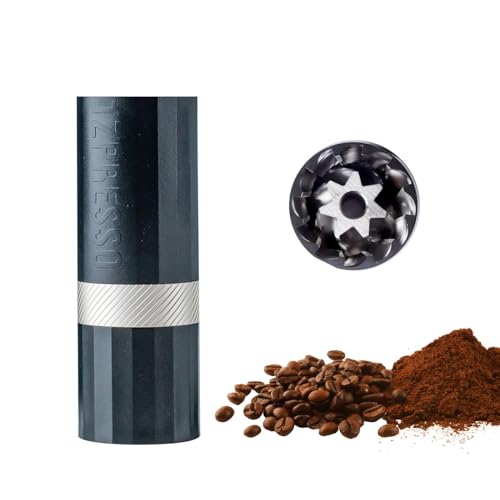
AeroPress espresso grind settings by grinder
Use your grinder’s espresso range as the starting point, then go one to three clicks coarser if the plunge is excessively hard. There is no honest universal click count: the zero point and distance moved per click vary by model. 1Zpresso, for example, specifies 8 microns per click for the J-Ultra, while KINGrinder specifies 16 microns per click for the K6.
For a Timemore-style stepped dial, online recipes often begin around 10–16 clicks; for a 1Zpresso dial, some begin around 45–50. Treat both only as rough, grinder-specific starting points, not settings to copy blindly. For better options in this category, browse the top hand grinders that hit AeroPress espresso-fine.
Step by step: dial in a fine AeroPress espresso grind
Start with 15 g of coffee and 60–75 g of hot water, then change only the grind between brews. Stir for about 10 seconds, steep for roughly 45 seconds, and press gently. This fixed recipe makes the result readable instead of turning every cup into a new experiment.
- If the cup is sour or thin: grind one click finer. The extra surface area helps the short brew extract more sweetness and body.
- If the press is very hard or the cup is harsh: grind one click coarser. Do not force the plunger; excessive pressure is not a flavor goal.
- When it tastes balanced: note the dose, water, and click setting. Revisit it only when the coffee changes.
What are the common AeroPress espresso grind mistakes?
The main mistakes are using the normal medium-fine AeroPress setting for a concentrate, grinding so fine that pressing becomes a fight, and changing dose, water, and grind all at once. The first makes a watery cup; the second can turn bitter and unpleasant. Make one small adjustment, taste, and keep notes.
Do not judge a setting by the grounds’ appearance alone. “Table salt” descriptions are useful shorthand, but burr style and coffee freshness change how a fine setting behaves. The press and the cup are more reliable indicators.
How do you fix an AeroPress espresso grind?
Sour and fast: grind one click finer. Bitter and hard to press: go one click coarser. Weak but not sour: keep the fine grind and reduce water slightly rather than immediately grinding finer. These symptom-first changes isolate the variable that is actually causing trouble.
A regular AeroPress recipe should be coarser than this concentrated approach. If your grinder excels at filter coffee but runs out of useful fine adjustment, it may be one of the pour-over-focused grinders better suited to the broader, coarser range. The official AeroPress guide is the better reference for that standard medium-fine style.

Frequently asked questions
What is the best grind for AeroPress espresso?
Use a fine, espresso-adjacent grind of roughly 200–500 microns as a practical reference, rather than the usual medium-fine AeroPress setting. Particle-size measurements vary by grinder, so the useful target is a concentrated cup that presses with firm but manageable resistance.
How fine should you grind for an AeroPress espresso-style shot?
Go fine to extra-fine, near espresso, then judge the press. A short steep should produce a slow, controlled plunge without feeling clogged. If it takes real force, move one or two clicks coarser; if it tastes thin and sour, go one click finer.
Can the AeroPress make real espresso?
No. An AeroPress makes an espresso-style concentrate, not machine espresso brewed at roughly nine bars of pressure. A fine grind and small water dose can still make a dense, punchy cup that works well black or as the coffee base in a milk drink.
Why is my AeroPress espresso sour?
Sourness usually points to under-extraction: the grind is too coarse, the contact time is too short, or both. Keep the dose and water fixed, grind one click finer, and brew again before changing temperature or ratio.
How many clicks for AeroPress espresso on a hand grinder?
There is no transferable click number. Zero points, burr geometry, and click size differ even among hand grinders. Start at your grinder’s espresso recommendation, then open one to three clicks for a more pressable AeroPress brew and record the setting that tastes balanced.
Is medium-fine fine enough for AeroPress espresso?
Usually not for a concentrated shot. AeroPress officially recommends medium-fine for its regular brew method; that is a sensible everyday baseline. For espresso-style brewing, go distinctly finer and use less water to preserve body and intensity.