 Coffee Gear Picks
Best Grind Size for Dark Roast Espresso (2026)
For dark roast espresso, grind fine but a little coarser than you would for medium or light beans. That tiny move keeps the shot from crawling out bitter and ashy, and gives you the thick, chocolatey cup dark roast does best.
Dial In Dark Roast Espresso
Make one small change at a time for a sweet, syrupy shot
Step 1 Start
- Use a moderately fine setting
- Dose 18g of fresh beans
Step 2 Weigh
- Aim for 36g out
- Keep the dose unchanged
Step 3 Adjust
- Move one setting only
- Go coarser for bitter shots
Step 4 Taste
- Look for chocolate-like sweetness
- Repeat only if needed
Result
A balanced dark roast shot without the burnt, ashy edge
What grind size should you use for dark roast espresso?
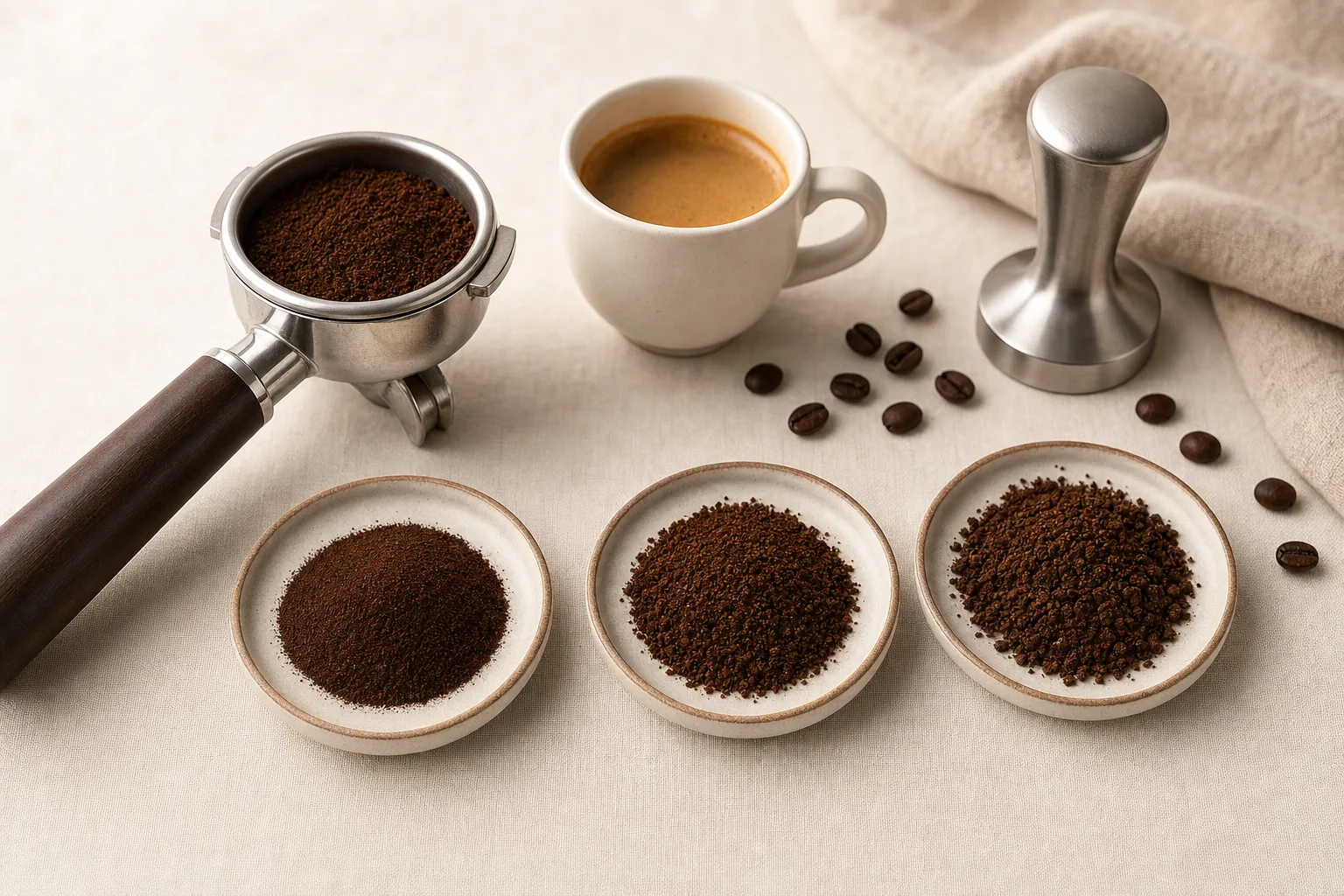
Use a fine grind—closer to fine sand than flour—but start slightly coarser than your medium-roast espresso setting. Dark beans extract easily, so an overly fine grind can choke the shot and turn pleasant dark chocolate notes into a dry, burnt bite.
Counter Culture Coffee’s grind-size guide puts darker roasts toward the coarser end of a grind range, and dark-roast owners make the same practical point in this Home-Barista discussion. Extraction—how much flavor water pulls from the grounds—happens fast here.
What do you need to dial in dark roast espresso?
Dark, oily roasts are the traditional espresso style, and Italian machines are generally built around exactly this profile. You need fresh beans, a scale, an espresso machine, and a burr grinder that can move in small increments. A blade grinder cannot make this repeatable; it leaves a mix of powder and pebbles, which makes one cup sour and bitter at once.
- Baratza Encore ESP: the sensible first choice for its espresso-focused settings; it leads our best burr grinder under $200 for dialing shots.
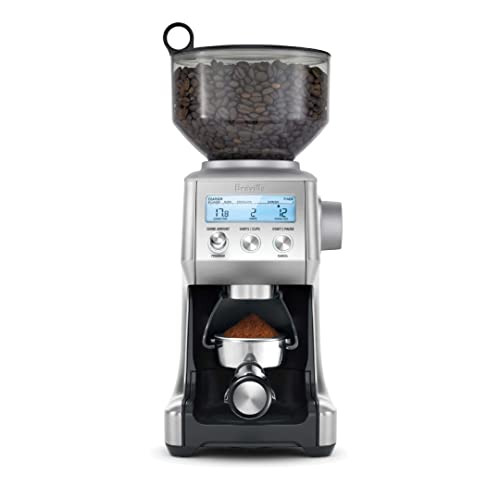
- Breville Smart Grinder Pro: handy if you switch among roast levels and want 60 settings plus timed dosing.
- Baratza Virtuoso+: a tidy upgrade for repeatable home doses, though it is less espresso-focused than the ESP.
- 1Zpresso J-Ultra: a strong manual option when you want very small adjustments and do not mind cranking.
- Eureka Mignon Notte: the precision pick for serious espresso drinkers; stepless adjustment means no click-sized limits.
If yours cannot make a small enough change, start with our researched espresso burr grinder picks. Pair it with a scale and one of these budget-friendly espresso machines that make dialing easier when you are building a first setup.
Our Top Picks


How do you dial in dark roast espresso step by step?
Start moderately fine, pull one measured shot, then change only the grinder until it tastes right. The useful reference is 18g in and 36g out in 25–30 seconds; Nucleus Coffee’s dialing-in guide uses that same time window as a practical starting point.
Step 1: Set a coarser-than-usual starting point
Put 18g of dark roast in the grinder and choose a moderately fine espresso setting, not the finest one. Dark roasts are also the most forgiving beans to learn on, which makes them a sensible pairing with a budget machine that offers less temperature control. Tamp the grounds level and with the same pressure each time. Keep everything else still so the grinder change tells you something real.
Step 2: Pull a 1:2 reference shot
Run the shot into a scale and stop at 36g out. Note the time from the first drip to the finish. If it lands around 25–30 seconds, taste it before touching anything; a dark roast can look great but still taste like charcoal when pushed too far.
Step 3: Move one setting, then pull again
If the shot races through in under 25 seconds and tastes thin or lemony, go one setting finer. If it drips slowly, stalls, or tastes bitter and dry, go one setting coarser. One notch is enough. Big jumps create more guesswork than progress.
Step 4: Use ratio and temperature for the last nudge
Once the grind is close, try a shorter 1:1.5 ratio for dark roast—18g in, roughly 27g out—for a rounder, heavier shot. Nucleus Coffee’s espresso guidance similarly places dark roast near 1:1.5 and medium roast near 1:2.
Set water to 88–92°C (190–198°F) if your machine lets you. Savor Suite’s roast guide recommends this cooler band for dark espresso; if your machine runs hotter and offers no temperature control, go a touch coarser instead.
How should medium roast espresso settings differ from dark roast?
Medium roast generally needs a finer grind and a slightly longer, more open 1:2 shot than dark roast. It is less developed, so it often needs more extraction; use your dark-roast setting as a reference, then move finer a little at a time.
- Using the same setting: medium roast may run too quickly and taste underdeveloped if you leave it at the dark-roast setting.
- Chasing crema: a very dark bean can make a handsome crema while hiding a harsh taste. Taste the espresso, not just the foam.
- Changing three things: do not alter dose, grind, temperature, and ratio together. You will not know which fix worked.
What should you change when dark roast espresso tastes off?
Let the flavor point to the adjustment: fast and sour means finer; slow, bitter, or choked means coarser. Keep the dose fixed for the next pull, because the goal is to make one clear change rather than chase your tail.
Diagnose your dark roast shot
Match the cup in front of you to one simple grinder move
Sour or weak
- Grind one step finer
- Aim for 25–30 seconds
Bitter or ashy
- Grind one step coarser
- Consider cooler water
Outcome
Make one move, pull again, and taste before changing anything else.
Frequently asked questions
Should dark roast espresso grind finer or coarser than light roast?
Grind dark roast slightly coarser than light roast, while staying firmly in the fine espresso range. Dark beans give up flavor more quickly, so a light-roast setting can slow the shot too much and bring out harsh, smoky bitterness.
Why is my dark roast espresso bitter?
A bitter, ashy dark roast shot is often running too slowly because the grind is too fine. Go one small step coarser and keep your dose the same. Also check temperature: dark roasts generally prefer cooler water than lighter beans.
What grind setting is espresso on a Baratza?
On the Baratza Encore ESP, start within its espresso-focused settings 1–20, then let shot time guide you. There is no magic number: burr wear, bean age, humidity, and basket size all move the best setting. Change only one small setting at a time.
Does dark roast need a different grind than medium roast?
Yes. For the same machine and dose, dark roast normally needs a slightly coarser grind than medium roast because it extracts faster. Start dark around a 1:1.5 ratio and medium near 1:2, then adjust by taste rather than chasing a label.
How fine should I grind dark roast beans for espresso?
Grind dark roast fine—closer to fine sand than flour—but not at your grinder’s finest stop. Begin moderately fine and aim for a controlled 25–30 second shot. If it chokes or tastes burnt and dry, move coarser one click.